

Master’s Students of HSE, University of Campinas, and Tsinghua University Publish Joint Student Research Collection

Master’s students of the HSE ISSEK programme ‘Science, Technology and Innovation Management and Policy’ have released a joint research collection with the University of Campinas (Brazil) and Tsinghua University (China) titled ‘Being Innovative or Being on the Safe Side—Managing the Risk of Failure.’ The authors explore how organisations perceive risks and embrace innovation within different cultural contexts.
The publication brings together works by first-year master’s students, each representing an independent study on how organisations manage innovation and risk. The authors examine how corporate culture shapes the willingness to take risks, which motivation systems foster creativity, and how institutional environments influence innovative behaviour.
In her paper, HSE master’s student Aigul Zamaletdinova shows that companies can strike a balance between innovation and stability by using hybrid risk management methods—from machine learning and scenario modelling to weak signal analysis and building a culture of ‘psychological safety.’ She emphasises that it is the combination of technology, analytics, and a mature corporate culture that transforms risk into a source of competitive advantage.
Valery Novozemtsev studied Russian corporate culture and its influence on innovation. He concludes that the punishment of initiative remains one of the key barriers to developing an innovative economy. In his view, it is crucial to create motivation systems that encourage risk-taking and initiative rather than suppress them.
HSE master’s student Alena Bernyukevich explores the criteria for determining the ‘right level of risk’ for companies, stressing that innovation readiness must be aligned with an organisation’s strategic goals and culture.
The collection also includes research papers by students from partner universities in Brazil and China, offering a global perspective that takes into account cultural diversity.

Dirk Meissner
‘The uniqueness of the ISSEK master’s programme lies in its combination of theoretical depth and international research practice. For students, this is not merely an academic project but a genuine contribution to the global debate on the future of innovation—and they gain this opportunity as early as their first year of study,’ notes Dirk Meissner, Academic Supervisor of the Master’s programme in Science, Technology and Innovation Management and Policy and editor of the collection.
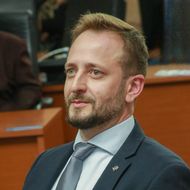
Gustavo Hermínio Salati Marcondes de Moraes
Dr Gustavo Hermínio Salati Marcondes de Moraes, Associate Professor at the University of Campinas, highlights that ‘the importance and value of this collection lie not only in its findings, but also in its mission to bring together the perspectives of three universities from three different countries. Knowledge grows richer when it is built through dialogue, diversity, and cross-border collaboration.’
This is the second collection of student research published jointly with international universities as part of the master’s programme. The initiative helps prepare students for careers at the intersection of research, innovation, and policy, offers valuable experience in collaborative research and publication, and strengthens intercultural academic ties.

See also:

Physicists Train AI to Optimise Particle Beams in Accelerators
Researchers from the AI and Digital Science Institute at the HSE Faculty of Computer Science and the Budker Institute of Nuclear Physics at the Siberian Branch of the Russian Academy of Sciences have developed RLABC (Reinforcement Learning for Accelerator Beamline Control), a framework that uses reinforcement learning to identify optimal settings for a particle accelerator. In a computer simulation, RLABC optimised the accelerator's parameters to achieve a particle transmission rate of 70%. The study has been published in Computer Physics Communications.
HSE Scientists Present Tensor Methods Research at International Conference in China
Researchers from the AI and Digital Science Institute at the HSE Faculty of Computer Science took part in the 3rd Conference–School on Tensor Methods in Mathematics and Artificial Intelligence Computing. The event was held in Shenzhen, China, in late October 2026. One of the institute's research projects received the Best Poster Award, placing among the conference's five best posters.
Fall into ML 2026: From Fundamental Research to Discussions on the Future of AI
On October 23–24, HSE University hosted Fall into ML 2026, the fifth conference on machine learning and AI. Over the past five years, the event has grown from a small gathering of researchers into a flagship platform that brings together leading machine learning specialists, early-career researchers, students, and representatives of technology companies. The fifth edition marked a new stage in the development of the conference, with a programme that included discussions with international speakers, presentations of joint research projects, and tutorials on the latest trends in AI.
Moscow Hosts Closing Ceremony of the First-Ever International Space Games
Teams of young people and students from eight countries—China, India, Kazakhstan, Kyrgyzstan, Mexico, Pakistan, Uzbekistan, and Russia—successfully completed the main mission of the International Space Games (ISG): ensuring the sustainable functioning of an autonomous settlement on another planet. The Games’ unique format, which dispenses with traditional competition aimed at securing victory for a single country, has proved its effectiveness. HSE University is the project operator.
The Future of Humanoid Robots in the Home Explored at Foresight Session
On October 23–24, HSE University hosted the landmark fifth Fall into ML 2026 Conference. During the foresight session titled ‘A Humanoid in Your Kitchen: When Will It Happen and What Can Prevent It?’ researchers explored why humanoid robot assistants have not yet become part of our everyday lives, what needs to change for this to happen, and who will be held responsible when such assistants make mistakes.
‘A Reliable Bridge Between a Laboratory Prototype and a Working Service’
The HSE Faculty of Computer Science will complete the development of the third phase of the SmartMLOps system by the end of the year. This enterprise platform simplifies and accelerates the deployment of AI models in production environments. The work is being carried out as part of HSE University’s ‘Multi-Agent Platform of AI Solutions for Industry-Specific Tasks.’ Hadi Saleh, Head of the Unit for Applied Technological Solutions at the AI and Digital Science Institute of the HSE Faculty of Computer Science, explains what makes the new system unique and what challenges it will be able to address.
The Future of Connectivity: 6G Technologies Under Development at HSE University
Sixth-generation (6G) communication will require new devices and technologies, and a development team at HSE University is working on solutions in microelectronics and photonics as part of the university's Strategic Technological Project 'Trusted 6G Communication Systems Technology Suite.' In 2026, the researchers developed models and prototypes of devices, experimentally tested their characteristics, and agreed with industrial partners on formats for collaboration. The HSE News Service spoke with project coordinator Alexander Shurakov, Associate Professor at the School of Electronic Engineering of HSE MIEM, about how these developments can move beyond the laboratory.
AI Helps Predict Industrial Equipment Failures Before Emergencies Arise
The AI and Digital Science Instituteat HSE Faculty of Computer Science (FCS) presented a multi-agent hardware–software system that analyses the electrical parameters of industrial equipment and helps detect signs of malfunction at an early stage. The solution is designed to shift maintenance from repairing equipment after failures occur to predicting its condition and scheduling interventions before an emergency arises. The system was presented at the 4th Professional Conference for the IT and Engineering Community in the Oil and Gas Industry.
HSE University Wins Autonomous Search Tech Contest for LizaAlert Search and Rescue Team
The navigation system, developed by specialists from the Laboratory for Intelligent Unmanned Systems at HSE MIEM, is designed to search for missing people and allows the unmanned vehicle to autonomously execute route missions without satellite navigation. The Autonomous Search competition is notable for its comprehensive verification of actual working technologies. Out of 50 applications submitted, 15 were admitted to the qualification round, and four teams advanced to the finals.
HSE University to Launch 11 Projects with Research Centres from Five Countries
HSE University has announced the results of its International Academic Cooperation (IAC) competition for joint fundamental research projects. Five projects have received full funding, while six more have been awarded partial funding. The research teams include scholars from Brazil, South Africa, China, India, and Oman. Alexander Balyshev, HSE University Vice President, shared details of the 2026 IAC competition winners.