

Scientists Discover Why Some People Wore Masks During COVID-19 While Others Did Not

Why do some people voluntarily follow new rules while others ignore them? Researchers at HSE University have found that the answer lies not so much in people's willingness to cooperate, as previously believed, but in their ability to empathise with others. Empathy proved to be the strongest predictor of whether people chose to wear face masks voluntarily during the COVID-19 pandemic. The findings have been published in Frontiers.
During the pandemic, millions of people had to adapt to new rules: wearing face masks, maintaining physical distance, and limiting social contact. Some followed these recommendations conscientiously without reminders, while others frequently ignored them. For many years, researchers have sought to understand why people respond differently to the same requirements and which psychological traits influence such behaviour.
For a long time, scientists assumed that compliance with social norms was closely linked to a person's general willingness to cooperate. If someone is prepared to sacrifice personal benefit for the common good, they are also likely to be more responsible in following public rules. To test this hypothesis, researchers from the HSE Institute for Cognitive Neuroscience, together with colleagues from the University of Zurich, examined behaviour during the COVID-19 pandemic, when wearing face masks became one of the most widespread new social norms.
To determine whether this relationship was universal or depended on cultural context, the researchers included participants from two countries with different social traditions. The study involved 135 volunteers from Russia and Switzerland. After excluding incomplete responses and statistical outliers, the final analysis was based on data from 122 participants. The choice of countries made it possible to compare societies with contrasting cultural traditions: people in Russia tend to place greater emphasis on collectivism and interpersonal relationships, whereas Switzerland is generally regarded as a more individualistic society.
During the experiment, participants first took part in a specially designed economic game in which they had to make decisions either in their own interest or for the benefit of the group. Such experiments are widely used to assess an individual's propensity for cooperation. The volunteers then answered questions about their attitudes towards mask-wearing during the pandemic and completed psychological assessments measuring empathy and personality traits, including the so-called Dark Triad of narcissism, machiavellianism, and psychopathy.
The findings turned out to be unexpected. A person's willingness to cooperate with others, as measured through the economic game, had almost no effect on whether they complied with mask-wearing requirements and other public health recommendations. In other words, a participant could readily cooperate in an experimental setting, yet this did not necessarily mean they would behave more responsibly in real life by following measures designed to protect against COVID-19.
Personal characteristics proved to be far more important. The strongest predictor of whether a person would comply with new public rules was empathy—the ability to understand and share the feelings of others and to care about their well-being. The more strongly this trait was expressed, the more likely participants were to report wearing face masks and following other preventive measures.
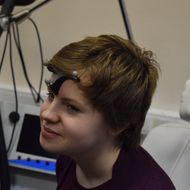
Oksana Zinchenko
‘We expected willingness to cooperate to be the main factor behind compliance with the new rules, but the results showed the opposite. What mattered much more was a person's capacity for empathy. When people think not only about themselves but also about the well-being of those around them, they are more willing to follow rules that protect society,’ said Oksana Zinchenko, Senior Research Fellow at the HSE Institute for Cognitive Neuroscience and one of the study's authors.
This pattern remained consistent regardless of participants' age, level of education, health status, the presence of chronic conditions, or other personal characteristics. In other words, empathy—not socio-demographic factors—was the strongest predictor of people's willingness to comply with the new rules.
The study also revealed interesting cultural differences. On average, Russian participants contributed more resources to the common fund in the economic game than their Swiss counterparts, demonstrating more generous cooperative behaviour. However, this did not translate into higher compliance with public health measures in everyday life. Overall, the frequency of mask-wearing was broadly similar in the two countries.
The reasons behind this behaviour, however, differed. Participants from Switzerland were more likely to report that they would comply with the rules if required to do so by the authorities, and they also expressed greater trust in information about COVID-19. Russian participants, by contrast, showed stronger emotional engagement with the pandemic.
The findings may help improve public communication during future epidemics and other emergency situations. According to the authors, people are more effectively motivated by explaining how following public health measures helps protect others—especially those who are most vulnerable—than by relying on prohibitions or the threat of punishment. In the researchers' view, concern for other people is more likely to encourage voluntary compliance with public rules.
The study was conducted with support from HSE University’s Basic Research Programme.

See also:

Window into the Body: Scientists Develop Neural Network to Detect Risk of 15 Diseases from Retinal Images
Russian universities, with the participation of HSE University, Sber, and Z-union, have developed a neural network that can simultaneously assess the risk of 15 types of pathology from retinal photographs, including not only eye diseases but also cardiovascular conditions. The AI system can help clinicians detect potentially concerning changes at an early stage, identify signs reflecting the condition of retinal blood vessels, and determine whether a patient may need further examination. The paper has been published in Frontiers in Medicine.
HSE Researchers Show How Congenital Motor Disorders Affect Brain Development
Researchers from HSE University’s Institute for Cognitive Neuroscience have synthesised the findings of their previous studies on brain development in children with obstetric brachial plexus palsy and arthrogryposis. Their analysis shows that impaired motor function in early childhood not only limits children’s motor experience but also affects memory, categorical thinking, and information processing. The study has been published in Frontiers in Psychology.
AI Users Earn Up to 41.8% More Than Non-Users
Research conducted by economists at HSE University has revealed a significant correlation between the regular use of GenAI in the workplace and higher pay among Russian employees. The study found that individuals who frequently use GenAI in their professional activities earn notably more than those who reject these new tools or resort to them occasionally. The salary premium for highly qualified specialists reaches 41.8%. The article was published in the Voprosy Ekonomiki journal.
Personal Interest in Doctoral Thesis Topic Most Important for Confidence in Successful Defence
A researcher at HSE University analysed data on 1,539 doctoral students from 161 Russian universities to identify which features of a thesis topic are associated with academic success and engagement. The most important factor was found to be personal interest in the research topic, which was associated with almost all key aspects of doctoral programme experience—from engaging with the academic supervisor to research activity and confidence about successfully defending the thesis. The findings have been published in Higher Education.
Researchers Develop Methodology to Assess the Quality of Legal Representation in Criminal Proceedings
Having a good defence attorney in criminal proceedings can largely determine whether a defendant retains their freedom, health and good name. Researchers at HSE University propose a method for predicting an attorney’s performance based on the outcomes of their previous cases. The methodology takes into account the severity of the charges, the complexity of the cases, and the most likely outcome, drawing on judicial statistics.
When Pictures Hinder Understanding: Illustrations May Impede Learning of Abstract Ideas
Illustrations can help remember specific actions but do not always make abstract ideas easier to learn. Researchers from HSE University and Humboldt University compared how people learn from texts with different levels of abstractness. They found that participants remembered illustrations better and performed better on related tasks after reading a multimedia text about yoga asanas than after reading an abstract text about the Nash equilibrium. The findings could help improve the selection of illustrations for educational and informational materials. The study has been published in Learning and Instruction.
Immunity to Chaos: How Personal Resources Help Us Cope with the Challenges of a Turbulent World
International conflicts, crises and digital overload—the modern world puts our minds to the test every day. Traditional psychology often focuses on the consequences: anxiety, depression, and psychosomatic disorders. But what if we looked at the problem differently—through the lens of the resources that prevent us from breaking down? Psychological immunity is precisely this set of resources. Alena Zolotareva and her group, Psychological Immunity as a Resource for Positive Functioning, are developing an integrative model of this phenomenon, adapting diagnostic tools and preparing for large-scale empirical research. Why do psychologists need to collaborate with medical professionals, and how could their research transform preventive care in clinics and corporations?
HSE University to Develop Predictive Analytics System for Icebreaker Motors
Industrial automation is one of the key applications of artificial intelligence. A predictive analytics system for large electric motors is among the solutions being developed for the industry as part of HSE University’s Strategic Technological Project ‘Multi-Agent Platform of AI Solutions for Industry-Specific Tasks.’ What is predictive analytics, how can it improve the operation of electric motors, and what specialists joined forces to develop this technology? Anton Zarubin, Dean of the School of Computer Science, Physics, and Technology at HSE University–St Petersburg and the project development coordinator, explains in this interview with the HSE News Service.
How to Assess Students’ Knowledge in the Age of AI
A researcher at HSE University has proposed a flowchart to help lecturers decide how to assess students who use artificial intelligence. It shows where the use of AI should be restricted and where it can be incorporated into the learning process. The article has been published in IT Professional.
Scientists Train Neural Network to Generate Process Plans from 3D Models
Researchers at the HSE FCS AI and Digital Science Institute have developed CAD2TechSpec, a framework that converts 3D models of mechanical parts into machining process plans—step-by-step instructions for machine tools. The solution aims to reduce the time required for the design and preparation of technical process documentation in mechanical engineering, aircraft manufacturing, and other high-tech industries. The study findings have been published in PeerJ Computer Science.