

Algebra, Geometry, and AI: Russian and Vietnamese Mathematicians Discuss Current Research

A delegation of scientists from Hanoi visited the HSE Faculty of Computer Science and then took part in a Russian-Vietnamese conference in St Petersburg. The events were part of the three-year project ‘Flexibility and Computational Methods.’ Over the course of the project, the researchers have prepared joint publications and obtained new mathematical results.
In August 2026, scientists from the HSE Faculty of Computer Science and the Institute of Mathematics of the Vietnam Academy of Science and Technology held two joint academic events—a seminar in Moscow and a conference in St Petersburg. The meetings took place as part of the ‘Flexibility and Computational Methods’ project. The participants discussed current problems in algebraic geometry and commutative algebra, presented their research findings, and identified areas for further cooperation.
Moscow Meeting: New Problems and Shared Research Interests
The Russian-Vietnamese Seminar on Algebraic Geometry and Commutative Algebra was held at the HSE Faculty of Computer Science from August 19 to 21, 2026. The delegation of scientists from Hanoi was led by Ngo Viet Trung, a full member of the Vietnam Academy of Science and Technology (VAST), President of the Vietnam Mathematical Society and Chief Research Fellow at the VAST Institute of Mathematics. The delegation also included Professors Do Trong Hoang, Nguyen Bich Van, and Nguyen Thi Thanh Tam.
Scientists from both sides delivered several lectures, including some for early-career researchers. The seminar provided an opportunity for the Vietnamese colleagues to learn more about HSE University and to exchange experience in teaching and research. Vietnamese students showed great interest in the lectures delivered by researchers from the Laboratory on Algebraic Transformation Groups.
Lectures by Vietnamese and Russian Scientists

Anton Shafarevich
‘We designed the programme to combine presentations of our new results with discussions of classical topics. The main goal was simple—to learn more about each other’s research interests and find new areas of overlap. At the HSE Faculty of Computer Science, I gave a talk on the classical Jung–van der Kulk theorem on automorphisms of the affine plane. This is one of the key results in affine algebraic geometry, and there are many proofs of it. I chose one based on the properties of algebraic group actions on varieties. This is a method that our laboratory is particularly familiar with, and I wanted to demonstrate clearly how it works,’ said Anton Shafarevich, Senior Research Fellow at the HSE Laboratory on Algebraic Transformation Groups.


Five-Day Discussions in St Petersburg
The Russia-Vietnam Conference on Algebraic Geometry, Algebraic Groups, Commutative Algebra, and Applications was held at the Leonhard Euler International Mathematical Institute from August 24 to 28, 2026. In St Petersburg, the delegation was joined by Professor Hoang Le Truong, head of the Vietnamese project team, who is known for his work in algebraic geometry and for developing software for computational experiments.
Over five days, the participants discussed a wide range of topics—from the regularity functions of powers of graded ideals to the flexibility of spherical varieties and the use of large language models for automated theorem proving.
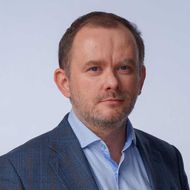
Ivan Arzhantsev
‘Our research interests and the research conducted at the VAST Institute of Mathematics complement each other very well, allowing each research group to strengthen its expertise. The presentations by the HSE University project participants focused on the structural theory of algebraic groups and the theory of algebraic transformation groups, while each of our Vietnamese colleagues gave a detailed presentation of their recent research findings. I would also like to highlight the involvement of mathematicians from St Petersburg, who delivered excellent presentations and actively participated in the discussions,’ said Ivan Arzhantsev, Dean of the HSE Faculty of Computer Science and Head of the Laboratory on Algebraic Transformation Groups.
He expressed his gratitude to the Leonhard Euler International Mathematical Institute for its hospitality and support in organising the conference. ‘We hope that our application to continue the joint project with the VAST Institute of Mathematics in Hanoi for another three years will receive support under the International Academic Cooperation of HSE University programme, allowing us to continue developing productive cooperation with Vietnamese mathematicians,’ he stressed.
Conference Topics and Speakers


‘Finding New Areas of Overlap’
The full member of the Vietnam Academy of Science and Technology (VAST), Ngo Viet Trung, highlighted the practical value of the Moscow seminar and St Petersburg conference for developing future joint research.

Ngo Viet Trung
‘The seminar at HSE University and the conference in St Petersburg were very useful for us. From the presentations by our Russian colleagues, we learned about new problems in both algebra and geometry that could eventually serve as a basis for joint research projects between Professor Ivan Arzhantsev’s research group and research groups working in algebra and geometry in Hanoi. We were very impressed by the reputation and infrastructure of HSE University, which represents a new model of education in Russia. We also had the opportunity to visit many interesting places in Moscow and St Petersburg. We were all impressed by the Russian people and culture. This trip will remain an unforgettable experience for us,’ said Ngo Viet Trung.
Hoang Le Truong, head of the Vietnamese team of the ‘Flexibility and Computational Methods’ project, also praised both the academic and personal aspects of the trip.

Hoang Le Truong
‘My trip to Russia was truly remarkable and, in many ways, opened up new horizons for me. To be honest, before arriving, I did not have a clear idea of what to expect, but the experience exceeded all my expectations and was full of pleasant surprises—from the warm hospitality of our hosts to the vibrant and stimulating intellectual atmosphere,’ he said.
Hoang Le Truong also mentioned that the conference had made a particularly strong impression on him. ‘It was incredibly dynamic and genuinely intense—not only because of the topics being discussed, but also because of the energy in the room. There were many fascinating presentations on the most up-to-date research, and I was particularly impressed by the large number of early-career researchers presenting work of a genuinely high standard. Their confidence, creativity, and rigorous methodology deserve special attention and made the discussions even more substantive and engaging. It was not only a productive academic event, but also a memorable and enriching experience, particularly in terms of discovering the history, culture, and people of Russia,’ Hoang Le Truong said.
Each research school has its own strengths, Anton Shafarevich noted. ‘We specialise in the theory of algebraic transformation groups, while our Vietnamese colleagues are experts in commutative algebra. At meetings like these, we can compare approaches, learn from one another, and see where our methods complement each other,’ he explained.

Anastasia Stavrova
Anastasia Stavrova, Senior Research Fellow at the St Petersburg Branch of the Steklov Mathematical Institute of the Russian Academy of Sciences and an invited speaker at the International Congress of Mathematicians 2026, also highlighted the atmosphere of the academic event. ‘I remember the conference for its very friendly and welcoming atmosphere. Our Vietnamese colleagues are highly accomplished specialists. In particular, their presentations on the use of artificial intelligence in mathematics attracted a great deal of interest,’ she said.
From Joint Publications to New Mathematical Results
The seminar and conference were held as part of the concluding three-year joint project ‘Flexibility and Computational Methods’ under the International Academic Cooperation of HSE University programme. The project is being carried out in 2024–2026 by the Laboratory on Algebraic Transformation Groups at the HSE Faculty of Computer Science and a research team from the Institute of Mathematics of the Vietnam Academy of Science and Technology.
During the project, the researchers have produced numerous publications, including joint papers, and solved a number of important problems. In particular, they proved the flexibility of the affine cone over the intersection of two quadrics—a result by Kirill Shakhmatov and Hoang Le Truong—and the flexibility of any non-degenerate affine spherical variety—a result by Anton Shafarevich.
The project received a positive assessment from the Russian-Vietnamese Intergovernmental Commission. In 2025, it was officially recognised as part of the Sixth Meeting of the Russian-Vietnamese Commission on Education, Science, and Technology Cooperation.
The St Petersburg Russian-Vietnamese conference was included in the Year of Russian-Vietnamese Cooperation in Science and Education. It was the second conference in a series of joint meetings held as part of the ‘Flexibility and Computational Methods’ project. The first conference took place in Hanoi in May 2025.
The project participants hope to continue their cooperation and develop joint research in algebra and algebraic geometry.

See also:

Physicists Train AI to Optimise Particle Beams in Accelerators
Researchers from the AI and Digital Science Institute at the HSE Faculty of Computer Science and the Budker Institute of Nuclear Physics at the Siberian Branch of the Russian Academy of Sciences have developed RLABC (Reinforcement Learning for Accelerator Beamline Control), a framework that uses reinforcement learning to identify optimal settings for a particle accelerator. In a computer simulation, RLABC optimised the accelerator's parameters to achieve a particle transmission rate of 70%. The study has been published in Computer Physics Communications.
HSE University Students Develop Socially Significant Project in Digital Healthcare
In October 2026, Sechenov University hosted MedITron, a medical innovation hackathon. Over three days, participants were challenged to develop a solution to one of the case studies prepared by leading MedTech organisations. Among the winners was Team Med404, which included two HSE students.
Fall into ML 2026: From Fundamental Research to Discussions on the Future of AI
On October 23–24, HSE University hosted Fall into ML 2026, the fifth conference on machine learning and AI. Over the past five years, the event has grown from a small gathering of researchers into a flagship platform that brings together leading machine learning specialists, early-career researchers, students, and representatives of technology companies. The fifth edition marked a new stage in the development of the conference, with a programme that included discussions with international speakers, presentations of joint research projects, and tutorials on the latest trends in AI.
Master’s Programmes and AI: Shaping the Future of Higher Education
From October 28 to 30, the 17th International Conference on Higher Education, ‘The (Non)Homogeneous Landscape of Higher Education: Institutions, Trajectories, Effects,’ took place at HSE University. Among the key topics discussed at the plenary sessions on the second and third days were the development of master's programmes and the application of AI in the learning process.
Moscow Hosts Closing Ceremony of the First-Ever International Space Games
Teams of young people and students from eight countries—China, India, Kazakhstan, Kyrgyzstan, Mexico, Pakistan, Uzbekistan, and Russia—successfully completed the main mission of the International Space Games (ISG): ensuring the sustainable functioning of an autonomous settlement on another planet. The Games’ unique format, which dispenses with traditional competition aimed at securing victory for a single country, has proved its effectiveness. HSE University is the project operator.
‘You Cannot Understand a Country from the Outside—You Have to Live in It, Struggle in It, and Let It Surprise You’
Syed Amir Ali Shah , from Islamabad, Pakistan, enrolled in the Master’s in Information Security and Artificial Intelligence Technologies to study in a modern, international environment with ample opportunities to develop outside the classroom. In his time at HSE University in Moscow, Syed Amir Ali has gained deeper insight into the relationship between information security and AI, presented his research to the university community, and volunteered at a wide range of university events. Read on to find out more in this interview.
The Future of Humanoid Robots in the Home Explored at Foresight Session
On October 23–24, HSE University hosted the landmark fifth Fall into ML 2026 Conference. During the foresight session titled ‘A Humanoid in Your Kitchen: When Will It Happen and What Can Prevent It?’ researchers explored why humanoid robot assistants have not yet become part of our everyday lives, what needs to change for this to happen, and who will be held responsible when such assistants make mistakes.
‘A Reliable Bridge Between a Laboratory Prototype and a Working Service’
The HSE Faculty of Computer Science will complete the development of the third phase of the SmartMLOps system by the end of the year. This enterprise platform simplifies and accelerates the deployment of AI models in production environments. The work is being carried out as part of HSE University’s ‘Multi-Agent Platform of AI Solutions for Industry-Specific Tasks.’ Hadi Saleh, Head of the Unit for Applied Technological Solutions at the AI and Digital Science Institute of the HSE Faculty of Computer Science, explains what makes the new system unique and what challenges it will be able to address.
The Future of Connectivity: 6G Technologies Under Development at HSE University
Sixth-generation (6G) communication will require new devices and technologies, and a development team at HSE University is working on solutions in microelectronics and photonics as part of the university's Strategic Technological Project 'Trusted 6G Communication Systems Technology Suite.' In 2026, the researchers developed models and prototypes of devices, experimentally tested their characteristics, and agreed with industrial partners on formats for collaboration. The HSE News Service spoke with project coordinator Alexander Shurakov, Associate Professor at the School of Electronic Engineering of HSE MIEM, about how these developments can move beyond the laboratory.
'Our Research Can Be Described as Being at the Forefront of Science'
The International Laboratory of Cluster Geometry at the HSE Faculty of Mathematics focuses on establishing a new scientific discipline that brings together knowledge from different areas of mathematics. The laboratory’s research has attracted considerable interest from both Russian and international colleagues. Its researchers study families of curves and develop methods that are used to investigate the physical microworld. The HSE News Service spoke with the laboratory’s head, Prof. Sergei Lando.