

Aritificial Intelligence Society Breeds Insecurity and Xenophobia
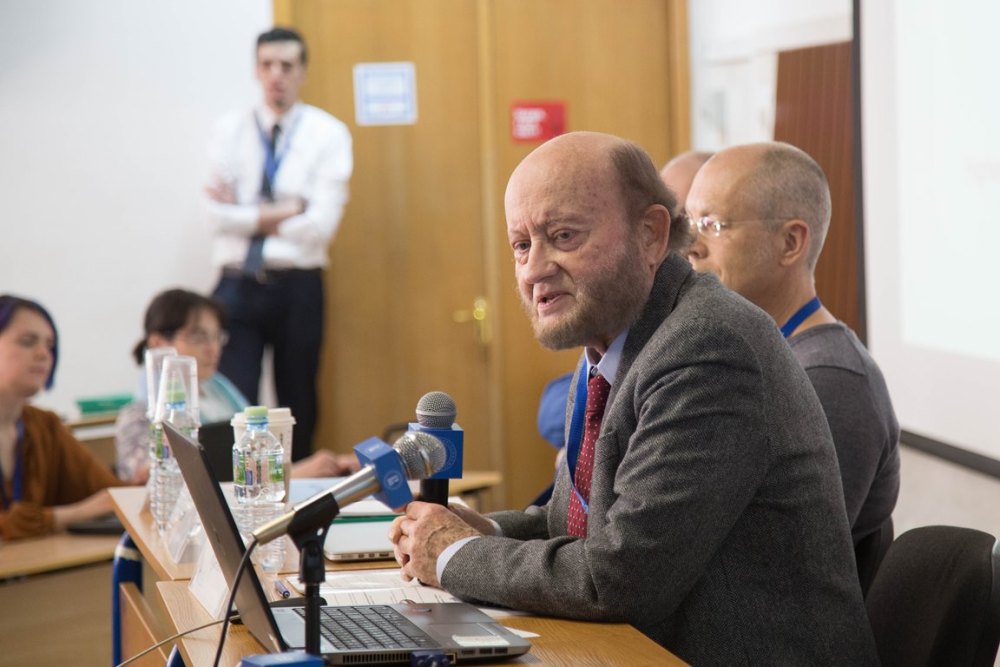
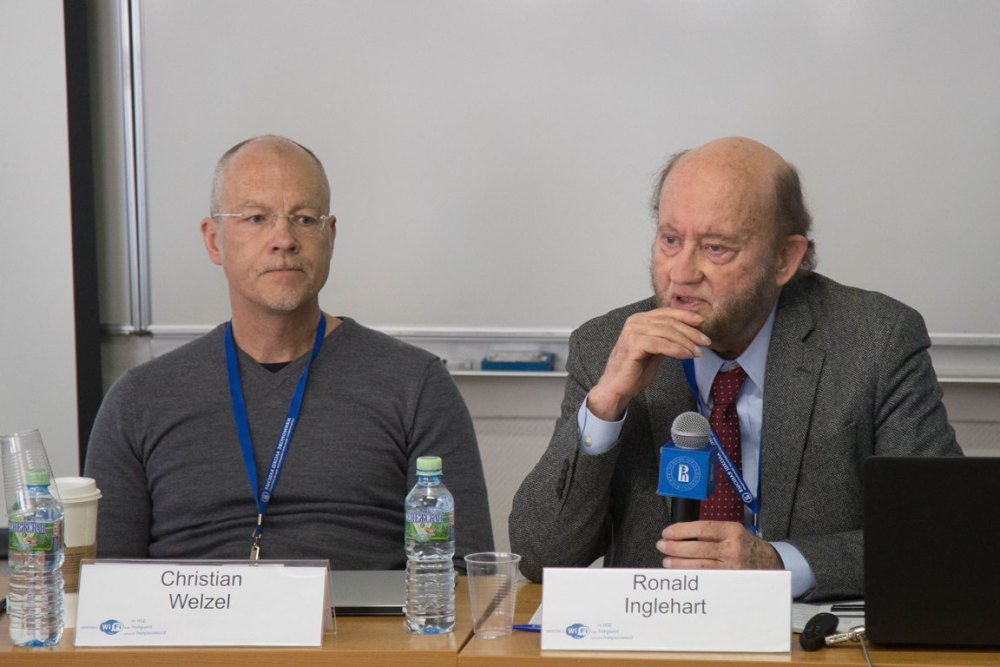
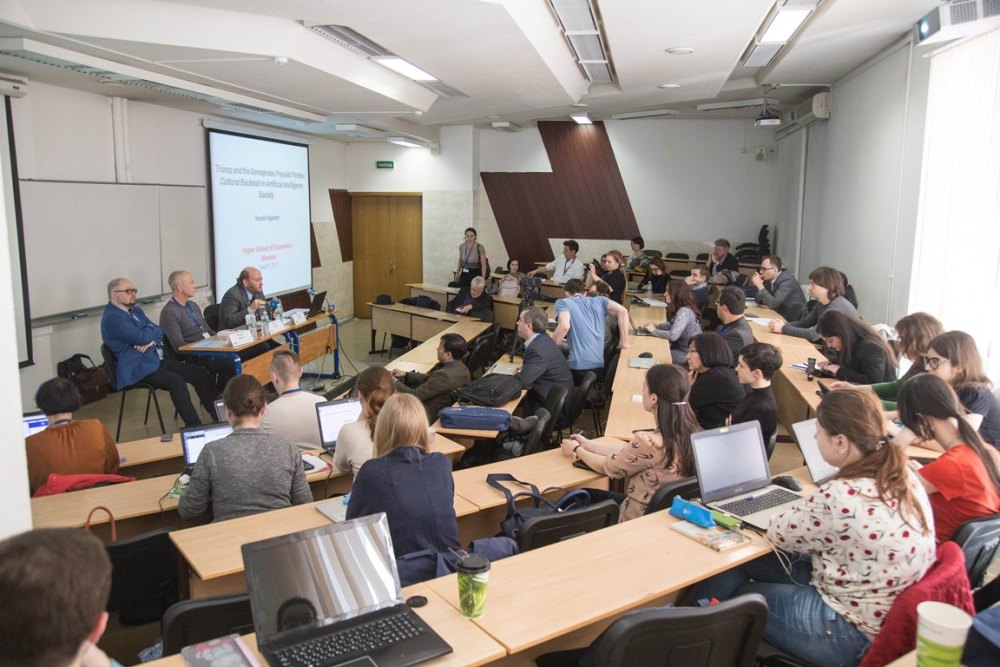
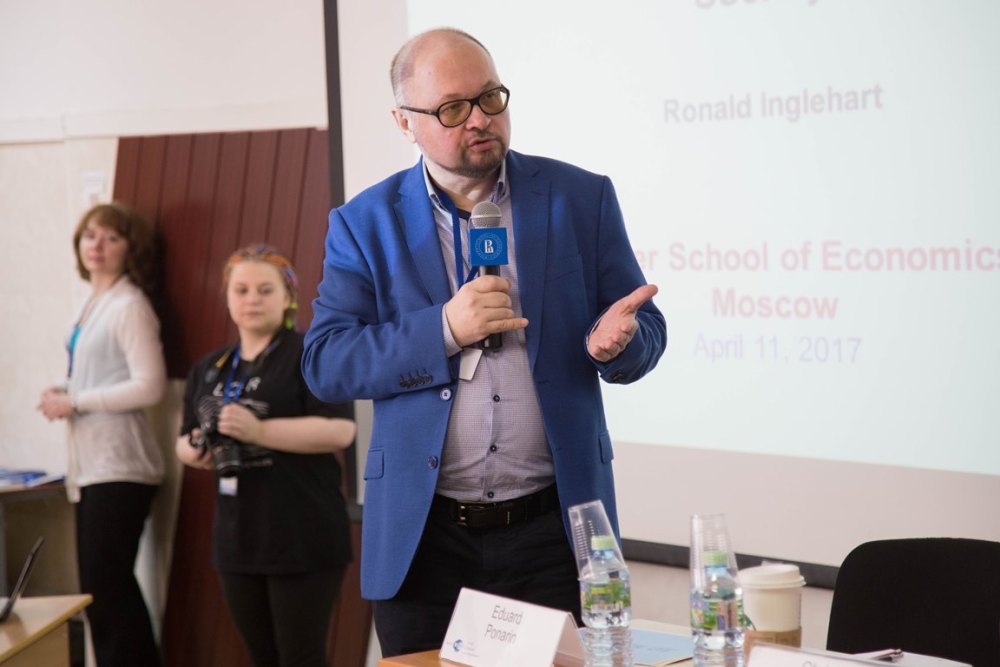



Why did Trump win the election? Who votes for right-wing xenophobic populist parties? How do we account for Brexit? Ronald Inglehart, Academic Supervisor of HSE Laboratory for Comparative Social Research, traces the change in public opinion to rising inequality and the resulting cultural xenophobic backlash and prevailing feeling of insecurity.
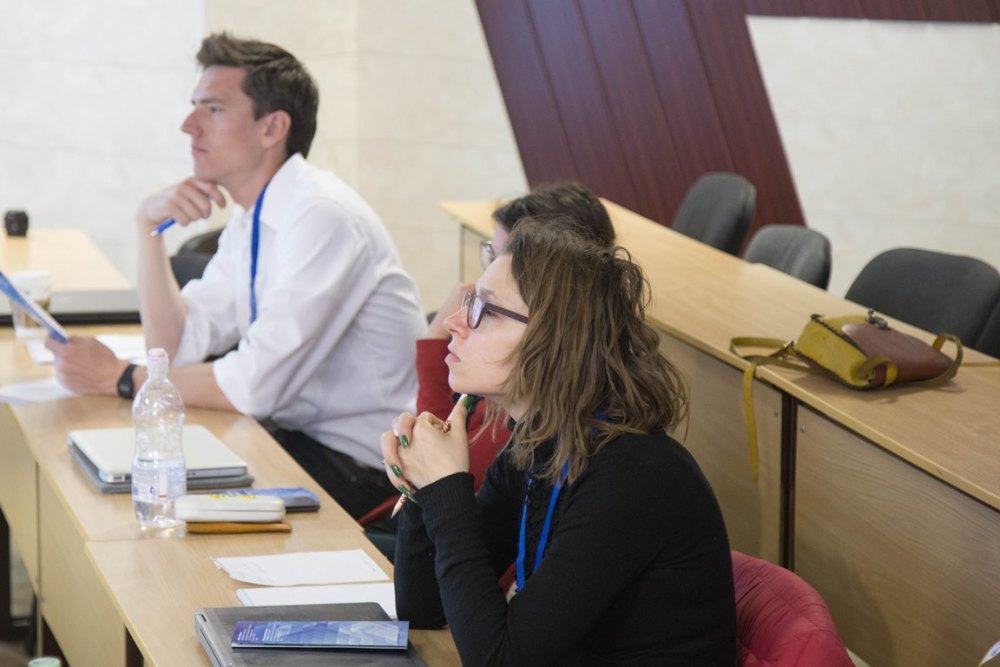
The talk, based on the book that is currently being prepared for publication, was delivered at the opening of the 7th LCSR International Workshop held within the framework of the XVIII April International Academic Conference on Economic and Social Development. This year the workshop is entitled ‘Subjective Well-being and Growing Inequality across the Globe’ and features discussions of such topics as subjective well-being, inequality, trust, social capital and corruption, human values and cultural change, gender attitudes and gender equality, tolerance, nationalism and migration.
The origins of inequality
Throughout the larger part of the 20th century, we saw a rise of industrial economy that brought larger equality with the redistribution of industrial income due to the influence of labor-based leftist parties. This period was characterized by a feeling of existential security, which encouraged such trends as emancipation of women, greater religious tolerance and acceptance of foreigners. That is all because high levels of existential security are conducive to a more tolerant, open outlook.
Then, with automation, the numbers of industrial workers have declined sharply; labor unions and labor-based leftist political parties have declined. With the rise of the service sector, many secure, well-paid industrial jobs were lost– but they were replaced by secure well-paid jobs in management, law, medicine, education, journalism, entertainment, research and development. With the shift from manufacturing to the service sector, the percentage of industrial workers in high-income societies declined. Globalization further weakened the bargaining power of Western workers: they were directly competing with low-cost workers in China, India and Southeast Asia.
Knowledge societies tend to have a winner-takes-all economy and are therefore inherently unequal. Industrial society produced a wide range of material products that competed on price, from very cheap to very expensive automobiles, for instance. But once you have produced a knowledge product (like Microsoft software, for instance) it costs almost nothing to produce and distribute additional copies. As a result, the top product dominates the market, not leaving room for product variations at different prices, which pushes many companies out of business. This leads to rising inequality – since 1980s especially, with the US going from more equal to being more unequal than European countries. Today, income inequality in the U.S. is even greater than it was in 1900. It is hardly the golden land of opportunity any more.
Another source of inequality is a general shift in social priorities. Postmaterialists emphasized new non-economic issues that cut across class lines. Postmaterialist causes such as environmental protection, anti-war movements and gender equality became increasingly prominent in the politics of developed societies, and emphasis on economic redistribution declined in political parties’ election campaigns.
Economic growth or equality?
Now we are moving into a new phase that goes beyond the knowledge economy – we are entering artificial intelligence society. AI society has a wonderful upside in that it brings stunning technological advances in many areas. However, in Artificial Intelligence society, almost anyone’s job– even highly-skilled ones – can be replaced by highly efficient computer programs that perform tasks much more accurately, faster, and cheaper than humans. Formerly secure and well-paid professions are declining. Today, artificial intelligence is not only replacing low-skilled jobs. It is replacing doctors, lawyers, journalists, professors, and other highly-educated professionals. Large corporations have taken over the medical profession, computerizing or outsourcing many jobs and reducing physicians to a commodity.
Market forces are moving toward an economy that doesn’t need a human workforce. Building tariff walls (or immigration walls) won’t solve this problem
Thus, this type of society is inherently conducive to evil because it brings massive income inequality with the economic gains going almost entirely to the top ten percent, mainly to the top one percent. In terms of household net worth, the top 0.01 percent of Americans own as much as the bottom 90 percent. According to Forbes, the net worth of the 400 richest Americans is greater than the net worth of 60 percent of all U.S. households.
Professor Inglehart cited some other stunning statistics: in 1965, the average CEO pay at the 350 largest U.S. companies was 20 times that of the average worker; in 1989, it was 58 times as high; and in 2012 CEOs were paid 354 times as much as the average worker. In other words, despite massive economic growth, since 1970, the real incomes of less-educated workers in the U.S. have been stagnant. The real incomes of working-class white males have actually declined (they are Donald Trump’s most fervent supporters). Since 1990, the real incomes of people with university degrees have been stagnant– this is even true of people with post-graduate degrees.
Although the decline of industrial jobs has been more than offset by rising employment in the service sector, for the most part this is producing relatively poorly-paid jobs. Jobs in the high-technology sector (such as Microsoft, Google, pharmaceuticals) are well-paid– but the percentage of people working in the high-technology sector has been flat in the last 25 years. Secure, well-paid jobs are disappearing—not just for the working class but even for the highly-educated.
This proves that if left to market forces, humans have diminishing bargaining power. Conservative economists argue that we should pay no attention to rising inequality– the only thing that matters is if the economy as a whole is growing: if it does, everyone will get richer, and it doesn’t matter if inequality is increasing. They claim that market forces alone will make everyone better off.
However, market forces are moving toward an economy that doesn’t need a human workforce. Building tariff walls (or immigration walls) won’t solve this problem. Without fundamental political changes, the vast majority of the workforce will have precarious, poorly-paid jobs. In an Artificial Intelligence Society, the central economic conflict is no longer between the working class and the middle class, but between the one percent and the 99 percent, or to be more precise, between humans and artificial intelligence.
How can non-market mechanisms help?
This all leads to declining existential security, which is now bringing a resurgence of xenophobic authoritarian movements in many countries, from France’s National Front, to the surge of support for Great Britain’s exit from the European Union, to the rise of Donald Trump in the U.S. The erosion of the old, familiar norms that one grew up with, also produces a sense of insecurity– especially among less secure groups. Motivated by an interaction between insecurity and cultural backlash, older, less-educated people with traditional cultural values support xenophobic authoritarian (“Populist”) movements.
Is all hope lost? Not necessarily, says Professor Inglehart. ‘In democratic polities, growing resources can be harnessed to maximize the quality of life. But democracies are not governed by market forces alone. A new coalition based on the 99 percent could redirect the state to reallocate an increasingly large GDP-- creating useful jobs for humans in health, education, research and development, infrastructure, environmental protection and the arts and humanities, in other words, meaningful jobs for human beings to the benefit of the society in general. The main goal should be maximizing the quality of life, instead of blindly maximizing GDP. Now we have new resources – we could design better societies and social sciences will play a crucial role in mapping out the new societies.’
Prepared by Maria Besova
See also:

Applications for Participation in XXVI April International Academic Conference Still Open
Applications can be submitted on the conference website until December 16, 2025. The programme has been developed around five research themes: Economics, Human Capital and Society, Instrumental Methods and Models, Foresight Research, and International Research. The heads of these areas have presented, in video format, the priority topics and sections for which they are expecting submissions.
Applications to Participate in April International Academic Conference Now Open
HSE University is now accepting proposals to present academic reports at the XXVI April International Academic Conference named after Evgeny Yasin. Applications can be submitted until December 16, 2025. The conference events will take place mainly on-site in Moscow from April 14 to 17, 2026.
24 Countries Represented at 25th Yasin International Academic Conference Held by HSE University
The Programme Committee of the 25th Yasin (April) International Academic Conference on Economic and Social Development has summed up the initial results. In 2025, 1,384 people from 24 countries and 29 Russian regions participated in the conference, with 335 of them delivering presentations.
Stuck in the Net: How Much Time Children Spend Online
On average, a schoolchild spends 48 hours a week on studies—equivalent to a six-day working week for an adult. This was highlighted by experts at the round table ‘Domains of Children’s Well-Being Evaluation for Human Potential and Evidence-Based Social Policy Development,’ held as part of the 25th Yasin (April) International Academic Conference.
Russian and Chinese Scholars Share Experience of Transformation of Doctoral Education
The Russian and Chinese postgraduate education systems originally borrowed their institutional frameworks from the Soviet Union. However, in the 21st century, they have evolved along different paths. While key performance indicators for postgraduate programmes in Russia are declining, China is seeing a rapid increase in the number of postgraduate students. These contrasting trajectories and the reforms undertaken in each country in recent decades were the focus of a roundtable discussion held as part of the 25th Yasin (April) International Academic Conference.
Nobel Laureate Proposes Solution to Markov Equilibrium Problem
In dynamic games, a Markov equilibrium involves strategies that guide players' behaviour based on the current state of the game, rather than its entire history. This approach is effective when players have access to complete information. But when uncertainty arises in the game—for instance, when players are unsure of who they are dealing with—this approach can become problematic. Eric Maskin, Nobel Laureate in Economics and Professor at Harvard University, addressed this issue in a paper presented at the XXV Yasin (April) International Academic Conference on Economic and Social Development held at HSE University from April 15 to 18, 2025.
‘The World Is Becoming More Complex and Less Predictable’: What Scientists Say about the Future
The future is now more difficult for researchers to forecast, and events that are hard to predict are playing an increasingly significant role. But there is good news too: scientists are confident that humanity will adapt to any changes. This was the focus of discussion at the International Symposium ‘Foresight in a Rapidly Changing World,’ which took place as part of the 25th Yasin (April) International Academic Conference.
Fragmentation and Bloc Formation: How the Global Economy is Changing
Sergey Dubinin, former head of the Bank of Russia and Professor of Finance and Credit at the Faculty of Economics at Moscow State University, has delivered an honorary address at the XXV Yasin (April) International Academic Conference. He spoke about the transformation of the global monetary and financial system, as well as the Russian economy.
More Children, More Happiness: HSE Experts Study Impact of Number of Children on Russians' Assessment of Happiness
Russians with children feel happier than those without children. At the same time, the number of children influences the assessment of happiness: the more children Russians have, the happier they feel. These conclusions were outlined inthe report ‘More Children, More Happiness: The Impact of the Number of Children on Russians’ Assessment of Happiness,’ presented at the XXV Yasin (April) International Academic Conference on Economic and Social Development, held on April 15–18 at HSE University. The study was conducted by Elena Churilova, Senior Research Fellow, and Dmitry Jdanov, Chief Research Fellowat HSE International Laboratory for Population and Health.
HSE Expands Cooperation with Gulf Countries
HSE University and the Centre for International Policy Research (Qatar) have agreed to collaborate in the field of social sciences, with plans for joint research, academic exchanges, and regular expert engagement. The agreement was signed during the roundtable ‘State Capacity and State Resilience in the Global South,’ held as part of the 25th Yasin (April) International Academic Conference at HSE University.