

HSE University Researchers to Speak at the International Congress of Mathematicians
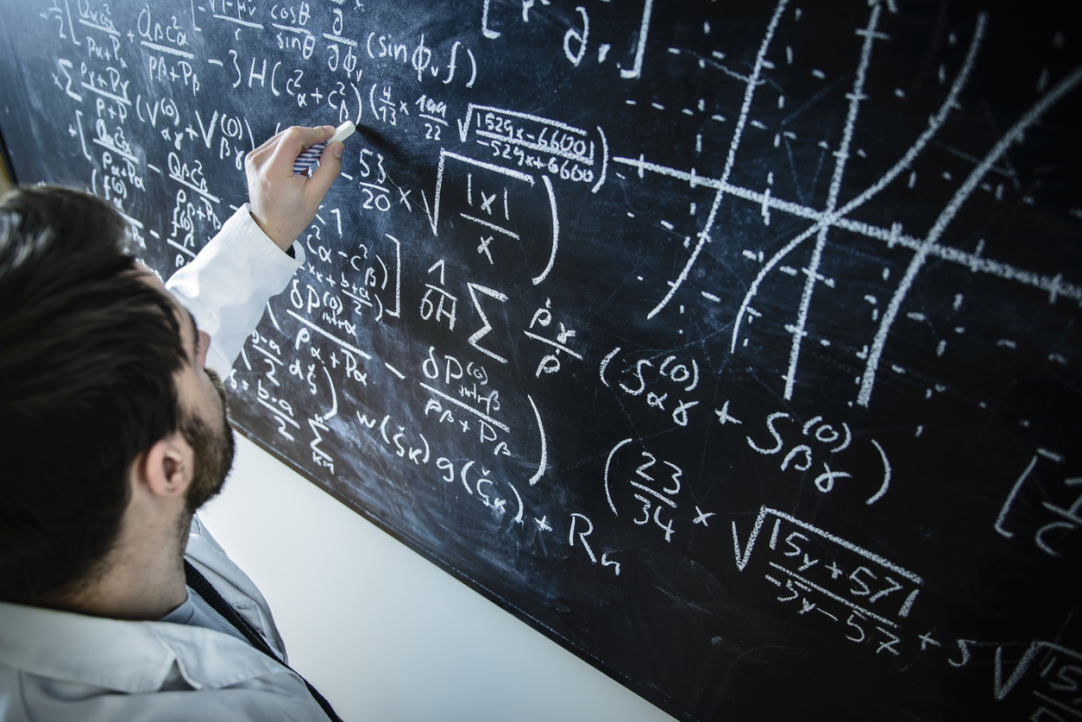
The speakers of the International Congress of Mathematicians, a key global mathematics event held every four years by the International Mathematical Union, have been announced. The next ICM will take place in St. Petersburg, Russia, in July 2022. Five researchers from the HSE Faculty of Mathematics will present their papers at the congress.
The congress is held in various countries across different continents and is a central event in the life of the global mathematics community. Major awards for outstanding achievements in mathematics, such as the Fields Medal, are given at the ICM. The first congress took place in Zurich in 1897; in 2018, it was held in Rio de Janeiro, and now, St. Petersburg has been chosen as the location for the 2022 event. In recent decades, several thousand mathematicians from all over the world have participated each year.
Academic presentations are an essential part of the congress. Speakers are carefully selected by the Programme Committee, whose members are chosen by the administration of the International Mathematical Union. An interesting fact: the list of Programme Committee members is not announced before the ICM opening ceremony in order to avoid pressure on committee members. Being invited to speak at the congress is a major honour for any professional mathematician.
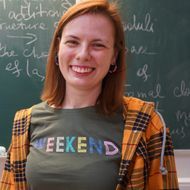
Alexandra Skripchenko, Dean of the HSE Faculty of Mathematics
The International Congress of Mathematicians is a key professional event for mathematicians from all over the world. It is a unique opportunity for academics to communicate their research results to leading experts in the field and meet their colleagues, and for beginner researchers to meet true celebrities in mathematics, attend presentations at the highest level, and probably decide on the field of their future research. We are very proud of our colleagues who were invited as plenary and section speakers. We are also actively participating in organizing the congress: some of our staff members are among the organizers of six satellite conferences, and even more will be invited speakers. Many of our students are going to be volunteers at the congress. I am very hopeful that it will be an important motivating event in their lives and will kick-start their bright academic careers.
An invitation to deliver a plenary speech at the ICM is a sign that the global academic community recognizes the researcher’s considerable global input into modern mathematics.
In 2022, the Congress Programme Committee selected 21 plenary speakers. They include two researchers from the HSE Faculty of Mathematics: Professor Igor Krichever and Aleksandr Kuznetsov, Research Fellow at the Laboratory of Algebraic Geometry and Its Applications. In addition, three researchers from the Faculty of Mathematics were invited to give sectional presentations. They are Alexander Efimov, Research Fellow at the International Laboratory for Mirror Symmetry and Automorphic Forms (in the sections ‘Algebra’ and ‘Algebraic and Complex Geometry’), Yuri Prokhorov, Senior Research Fellow at the Laboratory of Algebraic Geometry and Its Applications (in the section ‘Algebraic and Complex Geometry’) and Evgeny Feigin, Professor at the Joint Department with The Lebedev Physical Institute of the Russian Academy of Sciences (in the section ‘Lie Theory and Generalizations’).
This means that a total of five members of the faculty’s staff will be invited speakers at ICM 2022.
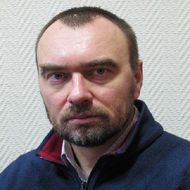
Yuri Prokhorov, Senior Research Fellow at the Laboratory of Algebraic Geometry and Its Applications
The congress has only been held in Russia once: in Moscow in 1966. For any university, an invitation for one of its researchers to speak at the congress reflects international acknowledgement that the university conducts mathematical research at the highest level. For a mathematician, speaking at the congress is a sign of clear recognition of their achievements. Usually, the topics of congress papers determine the development of mathematics for many years ahead, and congress materials are often cited and used for decades as a reflection of the contemporary state of mathematics.
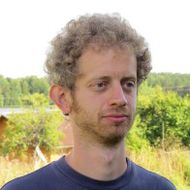
Evgeny Feigin, Professor at the Faculty of Mathematics Joint Department with The Lebedev Physical Institute of the Russian Academy of Sciences
The International Congress of Mathematicians is a major event in the life of the international mathematical community. The papers presented at the congress describe the situation in mathematics today and outline areas for further research. The ICM attracts an impressive list of participants. For any university in the world, having an employee give a presentation at the ICM is a good way to improve its reputation as a leading research centre and increase its global visibility. It is a huge honour for me to be invited to speak at the congress. I am grateful to my colleagues for the opportunity to present the results of my research to such a distinguished audience.

See also:

‘Seeing Red Square at Night and Sharing Time with Friends from Different Countries are Moments I Will Remember for a Long Time’
Sashadhar Dutta, from India, is a second-year PhD student at the Doctoral School of Economics at the HSE University–Moscow Faculty of Mathematics. He is currently working on his PhD thesis titled ‘On Some New Bounds Connected with Recurrent Sequences Modulo Prime’ under the academic supervision of Associate Professor Ilya Vyugin. Sashadhar spoke to the HSE News Service about why HSE deserves its good reputation, what he likes about Moscow, and how his time at HSE has changed his perceptions of both Russia and his own research.
Algebra, Geometry, and AI: Russian and Vietnamese Mathematicians Discuss Current Research
A delegation of scientists from Hanoi visited the HSE Faculty of Computer Science and then took part in a Russian-Vietnamese conference in St Petersburg. The events were part of the three-year project ‘Flexibility and Computational Methods.’ Over the course of the project, the researchers have prepared joint publications and obtained new mathematical results.
Four HSE Mathematics Graduates Win Russia’s Young Mathematicians Award
The winners of the Young Mathematicians of Russia Award were announced at the 6th Conference of Russia’s Mathematical Centres, held in Kazan in late August 2026. Four of the nine award recipients are graduates of the HSE Faculty of Mathematics: Associate Professor Alexander Kalmynin, PhD students Alexander Zaitsev and Petr Kucheryavyy, and researcher Dmitry Pirozhkov.
HSE Students Win Six Gold Medals at International Mathematics Competition for University Students
Students from the HSE Faculty of Computer Science (FCS) and Faculty of Mathematics have won six gold medals at the International Mathematics Competition for University Students (IMC). HSE students also received silver and bronze medals. One of the world’s most prestigious international university mathematics competitions, IMC 2026 was held in July–August this year in Blagoevgrad, Bulgaria.
‘AI Enables Researchers to Tackle More Complex and Important Problems’
In late July 2026, Dmitry Rybin, a graduate of the HSE Faculty of Mathematics who is now working in China, used ChatGPT to disprove a longstanding mathematical hypothesis. In an interview with the HSE News Service, he discussed AI's ability to make discoveries in mathematics, reflected on his time at HSE University, and spoke about his doctoral research at the Chinese University of Hong Kong.
‘The Conference Strengthened Our Sense of Belonging to the International Mathematics Community’
From July 13 to 17, 2026, the HSE Faculty of Mathematics hosted the international conference ‘Moduli, Dynamics, and Integrability,’ bringing together leading mathematicians from Russia, the United States, China, the United Kingdom, and other countries.
Fair Division: How Mathematics Helps to Divide the Indivisible
How can items be allocated among participants so that no one feels short-changed? Alexander Karpov, Assistant Professor at the Faculty of Economic Sciences, and his Singaporean colleague, Prof. Warut Suksompong, set out to find a mathematical answer to this question. In this interview, they discuss how a model of rational preferences is constructed, why one cannot rely on a simple sum of values, and where an algorithm that asks a minimal number of questions can be useful.
HSE Students Win Gold Medals at International Mathematics Olympiad in Turkmenistan
The VI Open Mathematical Olympiad for University Students (OMOUS-2026) was held in Ashgabat, bringing together teams from Russia, Germany, Greece, Hungary, the Netherlands, Turkmenistan, Tajikistan, Uzbekistan, Iran, and the UAE. Around 600 students took part in the competition.
'Sometimes, Finding Ways to Solve Problems Feels Like Trying to Cross Mountains without a Map'
Yulia Zaitseva became interested in mathematics in third grade, when her parents enrolled her in a math club, and she now holds a PhD. In this interview with the HSE Young Scientists project, she explains what an algebraic variety is, discusses operations beyond addition and multiplication, and shares her love for Kolomenskoye Park.
Mathematician from HSE University–Nizhny Novgorod Solves Equation Considered Unsolvable in Quadratures Since 19th Century
Mathematician Ivan Remizov from HSE University–Nizhny Novgorod and the Institute for Information Transmission Problems of the Russian Academy of Sciences has made a conceptual breakthrough in the theory of differential equations. He has derived a universal formula for solving problems that had been considered unsolvable in quadratures for more than 190 years. This result fundamentally reshapes one of the oldest areas of mathematics and has potential to have important implications for fundamental physics and economics. The paper has been published in Vladikavkaz Mathematical Journal.