

Problems of Arctic Development
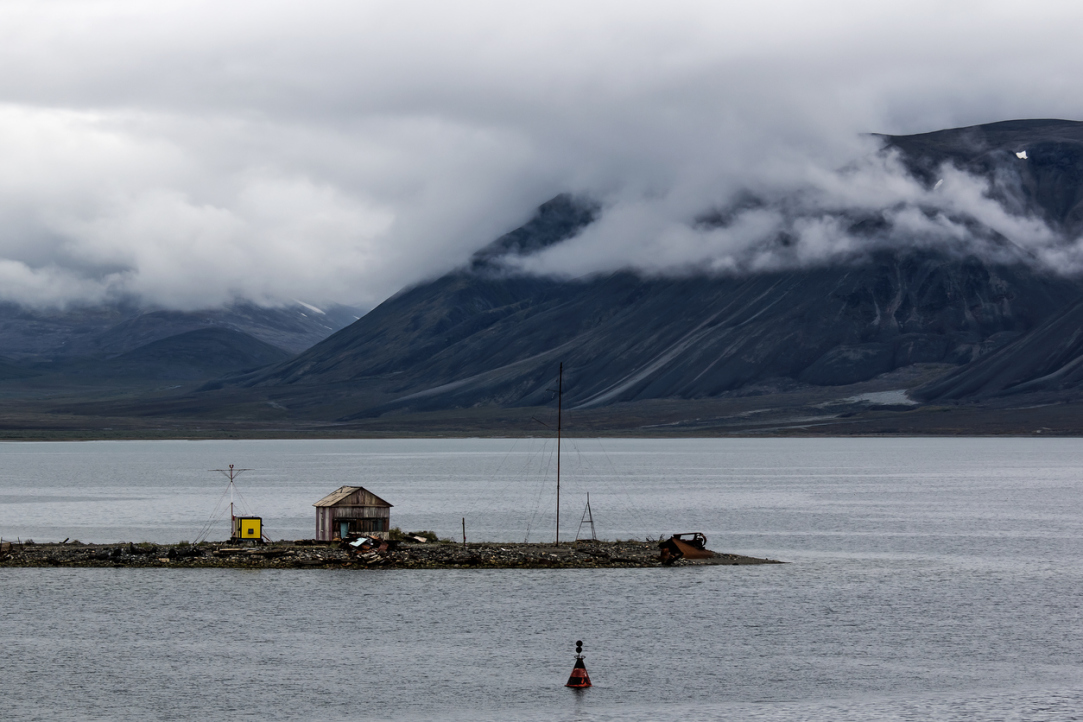
The Arctic is not only a strategic outpost in geopolitical affairs, but also a region with difficult living conditions. At the same time, global warming causes melting of glaciers and permafrost, changes in terrain, environmental pollution and negatively affects the living conditions of indigenous peoples. These and other topics were discussed at the session ‘Problems of Arctic Development’ at the XXIII Yasin (April) International Academic Conference on Economic and Social Development.
Jon Øyvind Odland, Professor at the Department of Public Health and Nursing at the Norwegian University of Science and Technology, drew attention to the contamination of Arctic surfaces with fluorinated compounds in his report ‘Reproductive and Environmental Health in the Arctic’.
These substances negatively affect reproduction and children’s health. According to the expert, the pollution is caused by climate change and the melting of continental ice, which travels south along the bottom of the Atlantic Ocean and brings harmful substances with it.
Ice melting and climate change have already become a real challenge for the indigenous population of the Arctic, with some local residents forced to change their usual lifestyles or habitats.
Dmitry Zamolodchikov, Professor at the Joint Department with the RAS Institute of Geography at the HSE Faculty of Geography and Geoinformation Technology, has studied the Chukotka Peninsula and noted the change in its local natural relief. In his report ‘Problems of Adaptation of Settlements of the Indigenous People of the Chukotka Peninsula to Changing Natural Conditions’ he highlighted the fact that the increased intensity of seasonal thawing leads to permafrost degradation and surface settling.
Due to these processes, cryogenic landslides on the coasts and ‘depressions’ (changes in relief – Editor’s note) can be observed more and more often in the area. In addition, since 2014, there has been a strong increase in the rate of coast indentation. All of these factors mean that ice houses (underground buildings for storing food. — Ed.) are at risk—they start to collapse and food rots, which impacts the lives of local residents.
As a solution, the researcher suggests reconstructing storage facilities, taking serious preventive measures, and utilising industrial refrigerators.
In addition to the climate, the Arctic region also suffers from a lack of developed infrastructure, which entails transport costs for such traditional crafts as reindeer herding and fishing.
Liana Nagimanova, student at HSE University in St Petersburg, focused on the significant remoteness of mining and processing enterprises from each other in her report ‘Analysis of the Features of the Location of Reindeer Herding and Fishing Enterprises in the Arctic Zone of the Russian Federation’.
‘Due to transport costs, undeveloped infrastructure and increased logistics costs, we suggest that it is necessary to place processing enterprises near production ones,’ says the student. It is important to note that reindeer herding and fishing are industries that mainly engage indigenous people who lead a nomadic lifestyle. Therefore, in this region, it is likely more economically profitable to subject products to primary processing at the production enterprise than to build costly infrastructure.
In general, undeveloped infrastructure and environmental, transport and social difficulties cause residents of Russia’s Arctic regions to leave for elsewhere. Educational migration is also increasing.
In her report ‘Universities beyond the Arctic Circle: Experience of an Expedition to Murmansk and the Murmansk Region’, Ksenia Romanenko, Associate Professor at the Department of Educational Programmes, used the example of Murmansk youth to raise an acute social issue: the transfer from school to university in the Arctic region.
This topic is often significant in difficult regions that are poorly adapted to life. Another problem is the conflict of interest between schools and higher education institutions: while secondary education institutions are proud of graduates who leave, universities lose potential applicants.
Author: Evgenia Romadanova, Research Assistant at the Laboratory for Economic Journalism
Dmitry Zamolodchikov
Professor, Joint Department with the RAS Institute of Geography
Ksenia Romanenko
Associate Professor, Department of Educational Programmes
See also:

25th Yasin (April) International Academic Conference Now Accepting Proposals
Reports on new research results will be presented and discussed as part of the conference’s sections. These reports will be selected based on reviews of proposals. As always, the conference programme features expert discussions of the most pressing economic, social, internal and external issues in the format of roundtables and associated events.
Academic Council: HSE University’s Contribution to Achieving National Goals and Development Priorities to Increase
HSE University’s Development Programme until 2030 will be improved in order to increase the university’s contribution to achieving national goals and implementing the priorities of the country’s scientific and technological development. This decision was made by the university’s Academic Council on April 26. The meeting also addressed the principles for the development of HSE University’s external communications, one of which is the creation of a high-quality information field around the university.
Keeping Up with the Neighbours: Envy as a Driver of Economic Growth
Classical economic theory assumes that economic agents are entirely self-interested and rational in their pursuit of material well-being, and that they are not affected by external factors. As a result, externalities are not considered in any way when constructing economic models. Nevertheless, some sociologists argue for a revision of modern economic theory to incorporate the ethical dimensions of economic agents' behaviour. Kirill Borissov, Professor of the Faculty of Economics at the European University in St Petersburg, spoke at the XXIV Yasin (April) International Academic Conference and shared his observations from creating his own economic model incorporating the factor of envy.
Structural Transformation and Drivers of Sustainable Growth in Russian Economy Discussed at HSE University
The Russian economy has demonstrated high resilience to unprecedented external pressure and has managed to largely adapt to new conditions. As early as this year, it can go from recession to growth. The issue of where to find drivers and resources for this was discussed at a plenary session titled ‘Russian Economy under Sanctions: From Adaptation to Sustainable Growth’ at the XXIV Yasin (April) International Academic Conference held at HSE University as part of the Decade of Science and Technology. Minister of Economic Development of the Russian Federation Maksim Reshetnikov took part in the discussion.
‘People Want to Receive Only Useful Content’
Experts say that interest in news has sharply increased among the Russian audience. At the same time, part of the audience deliberately avoids it. What kind of content is in demand and will people continue to watch TV? These and other issues were discussed at the plenary session ‘ Info-hygiene and Information Elitism: How to Consume Media Properly’ at the XXIV Yasin (April) International Academic Conference.
'The Emerging Trends in Africa Will Shape the World Order, and We Need to Be Prepared for That'
Africa has the potential to become a new economic giant. Today, African countries are interested in comprehensive cooperation and strengthening their positions in the global arena, and they look forward to receiving assistance from Russia and China in developing their technology, economy, and social sphere. Effective engagement with Africa requires training a greater number of professional African studies specialists. The XXIV Yasin (April) International Academic Conference at HSE University featured a plenary session on 'Africa in a Changing World'.
Learning a Foreign Language Can Delay the Onset of Dementia
Dementia, a debilitating form of cognitive impairment, can be preventable. According to Professor Jubin Abutalebi of the University Vita Salute San Raffaele, Italy, and the Arctic University of Tromsoe, Norway, the easiest way to prevent cognitive decline after the age of 60 is to learn and practice foreign languages – the more languages, the better, suggests Professor Abutalebi in his presentation 'Preventing dementia through bilingualism' at the XXIV Yasin (April) International Academic Conference.
‘The BRICS Strategic Partnership Offers the World Creative, Unifying, Forward-Looking Initiatives’
Today, BRICS has become an influential factor in modern international relations and is perceived as one of the pillars of a more just world order. This association is not based on one party’s dominance, but instead, is built on a sound balance of interests. The role of the association was discussed by the participants of the plenary session ‘BRICS Development Strategy: Equal Opportunities in an Unequal World’at the XXIV Yasin (April) International Academic Conference.
Sanctions Create New Opportunities for Russian Companies
Like any crisis, the sanctions of 2022, besides problems, have created new opportunities for Russian companies. This is the conclusion that HSE University’s experts have come to. Their study results are presented in the report ‘Adaptation of Russian Industrial Companies to Sanctions: First Steps and Expectations’, prepared by HSE University for the XXIV Yasin (April) International Academic Conference.
Search Query: How to Study Migration with Google Trends
Experts have calculated that the number of international students in Russia has grown six times over the last decade, and researchers say that many of those who are studying today would like to stay in the country. This, alongside issues such as why Google Trends are worth looking into, were covered at the HSE XXIV Yasin International Academic Conference on Economic and Social Development section on demography and labour markets.