

Talking Chinese, Writing Articles, and Drinking Tea: What Chinese Club Students Did this Year
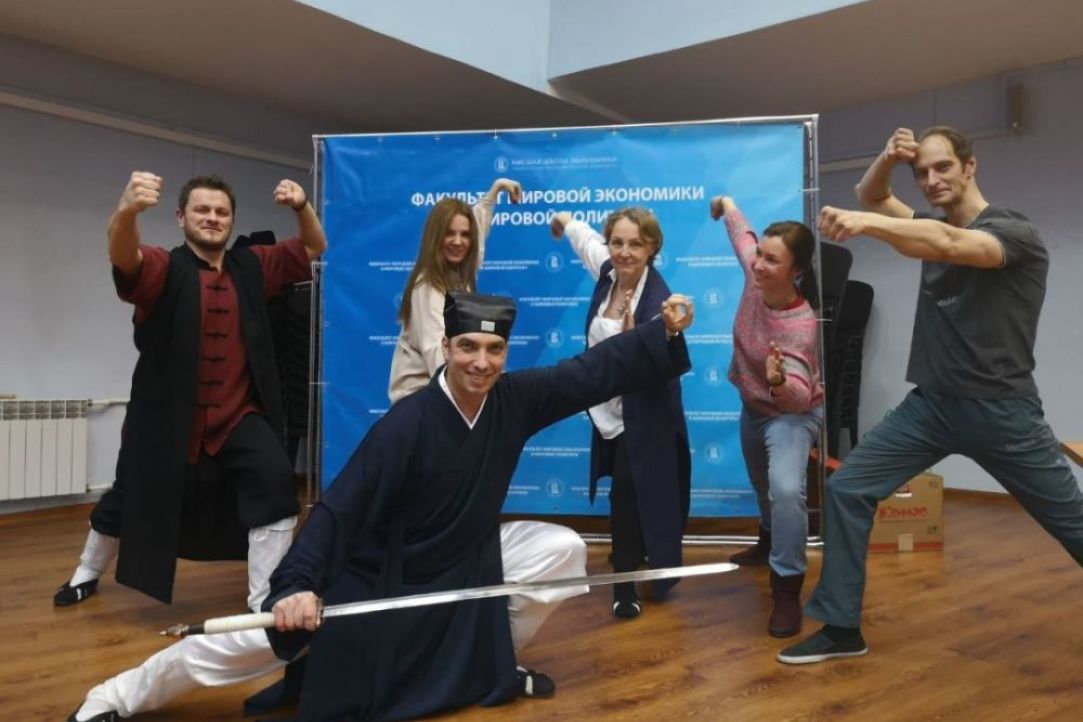
The HSE Chinese Student Club at the Faculty of World Economy and International Affairs School of Asian Studies has completed its 2021/22 season. Its participants and organisers talked to the HSE News Service about how they discuss China’s socio-economic, political, and cultural development as part of the club’s events.
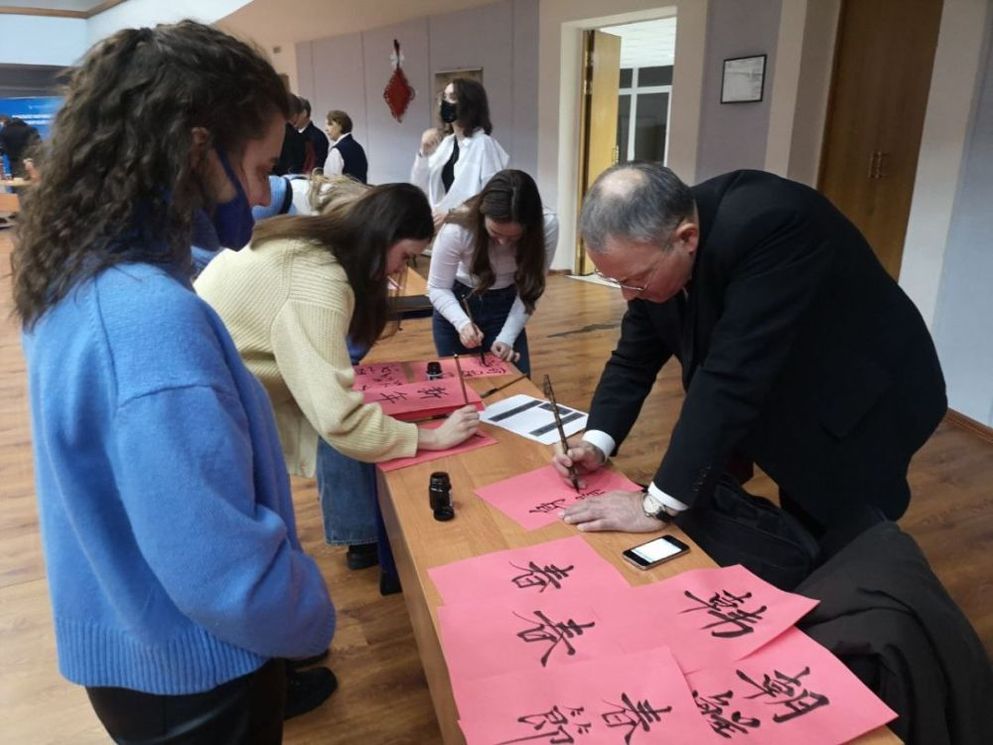
The mission of the HSE Chinese Student Club is to provide an environment for informal communication between lovers of the Chinese language and Chinese studies, as well as to popularise knowledge about China. Chinese Club hosts speaking meetings, screenings of films in Chinese with discussions, and meetings with scholars who study China. The Club’s participants prepare interviews with experts on China and publish educational materials on a variety of topics related to China’s traditional culture, history, arts, literature, economics, politics, and Russia-China relations.

Alexandra Sizova, Associate Professor, Deputy Head, School of Asian Studies, Faculty of World Economy and International Affairs
‘The club cooperates with the Chinese Department of the School of Asian Studies. We organise joint events. This year, our Chinese colleagues, School of Asian Studies lecturers Liu Jingpeng and Zhu Fan, participated in the Club’s activities, which are supervised by Maria Efimenko, who is also a lecturer at the School.’

Maria Efimenko, Lecturer at the Faculty of World Economy and International Affairs School of Asian Studies
‘The Club had ten speaking meetings this academic year. The students have met researchers, a calligrapher, a Guo Hua (traditional Chinese painting) artist, and other professionals. The Club’s members include about twenty students who organise meetings and communicate to speakers and guests.’
Vitaly Senotrusov, second-year student of the School of Asian Studies
‘What appeals to me about the Club is the team of likeminded people. Moscow, as well as Russia at large, has only a few places where one can network with people who study China, who love what they do and are willing to promote it.
I am thrilled with the range of the Club’s activities: from films and conversations, to discussing Chinese traditions and holidays, to telling each other about renowned China researchers
Over the year, we have participated in and organised a lot of events, both larger one-time ones and smaller regular meetings. These skills will be useful to us when we start working as professionals.
As a host of the speaking club, I was surprised to see that as we organised online meetings during the year, they attracted not only students of different Moscow universities, but people from various Russian cities, aged 30 to 40, who stopped learning the language a long time ago, but are willing to practice it. One of our regular online guests was Sergey, a plumber-engineer from Novosibirsk. Such a varied audience only piques our interest to continue the speaking club’s activity.
In the next academic year, we are going to continue exchanging experiences with Chinese clubs at other universities, and we will probably organise some joint events.’
Elizaveta Trubnikova, third-year student of the School of Asian Studies
‘I love how the club offers immersion in Chinese culture and informal communications. It is great to learn something new and read articles by students.
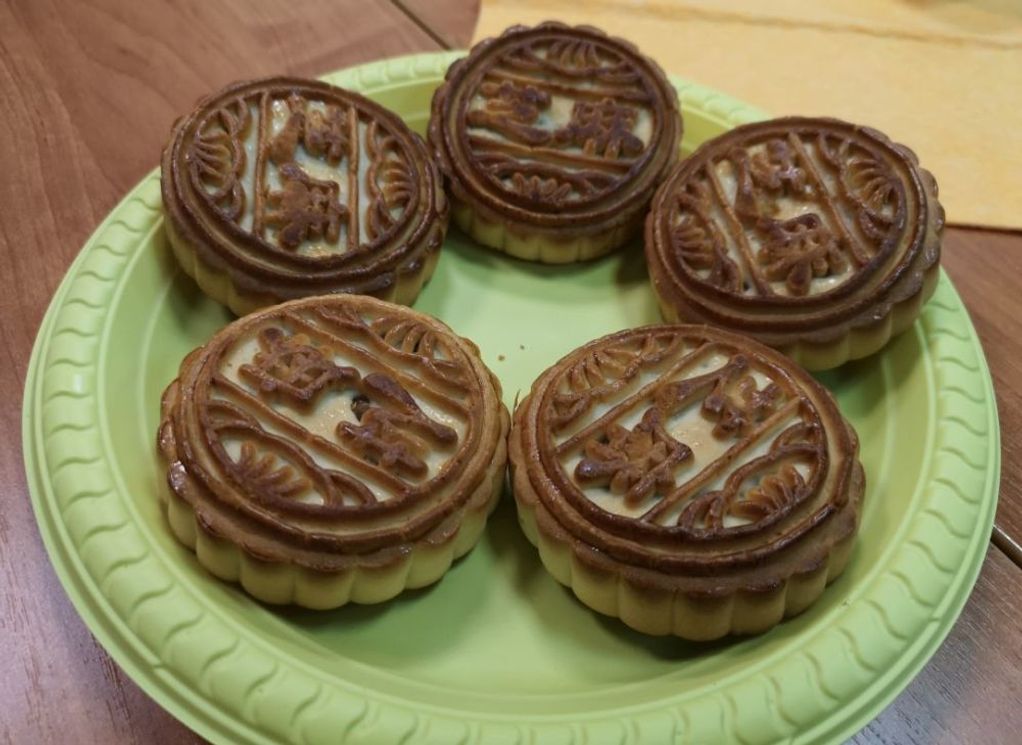
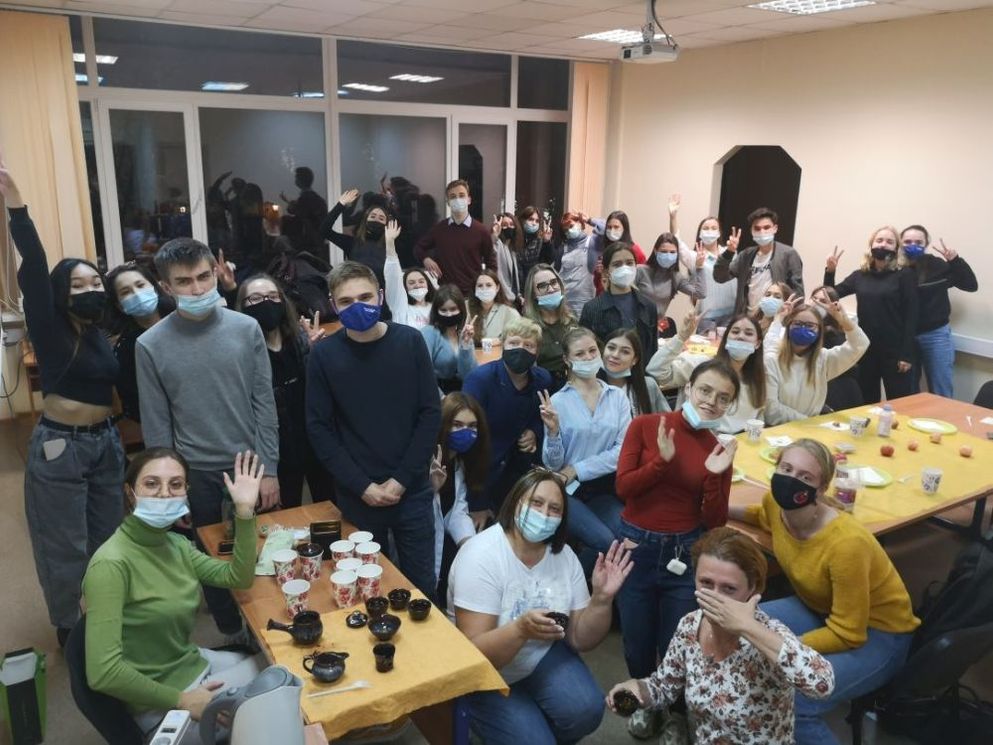
It’s always a pleasure to talk, to drink some Chinese tea, or watch a Chinese film
The cinema club is my favourite. We have watched films with other students and Chinese participants. The discussions that followed were thrilling—they gave me a different perspective on what I had heard and watched.’
Anastasia Kamalyagina, third-year student of the School of Asian Studies
‘Chinese club means new experiences, new friends, and, of course, new knowledge about Chinese culture. Each of us can choose a topic to their taste and dive into it, be it arts, literature, economics, green energy, or cinema.'
Talking in Chinese with people who love it as much as you do is always a powerful experience
Rinat Abzalilov, third-year student of the School of Asian Studies
‘The main advantage of Chinese Club is complete freedom. We are free to choose any China-related topic and work on it: write articles, organise meetings and events. The HSE Chinese Club has a lot of participants, and each chooses what they are interested in, but when we organise events, we join our efforts to make them as good as possible. I like the club’s participants: they are all interesting and smart people, and it is a pleasure to talk to them and just be in their company.
We are always happy to see new participants! Come next year—it will be interesting.’
Maria Efimenko
Lecturer, School of Asian Studies
Alexandra Sizova
Associate Professor, School of Asian Studies
See also:

‘High Grades Open Up Many Opportunities for You Here’
Bai Xinyi, 24, comes from Ankang, a small city in China. She is pursuing a master’s degree in Economics and Economic Policy, with a focus on Behavioural Economics, in the HSE Faculty of Economic Sciences. Below, she speaks about the application process, shares some details of her favourite courses, and reminisces about talking to friendly passers-by in the streets of Moscow.
‘If You Can Show that You Are Willing to Speak Russian, People Are So Friendly’
Jiayi Xu is a first-year student of the Master’s in Comparative Social Research at HSE University in Moscow. Having now spent five months living and studying in Moscow, Jiayi shares her thoughts about life in Moscow so far, her love of visiting the library, and the differences between education in China, the US, and Russia.
Tea Ceremony, Naruto and Norigae: HSE Celebrates Year of the Green Wood Dragon
On the day of the second new moon after the winter solstice, the HSE Cultural Centre welcomed admirers of Chinese, Japanese, Korean, and Vietnamese cultures. HSE students, teachers, and guests celebrated the Lunar New Year with South Korean hit songs and popular anime openings. They attended calligraphy and origami classes, tried regional sweets, and had Far Eastern teas. The festival ended with a big concert.
‘Winter in Russia is a Season of Romance and Cold, Solemnity and Vitality’
Over 450 international students from all over the globe currently study at the HSE Faculty of Economic Sciences. Some of them have recorded video greetings, talked about celebrations in their home countries, and shared their ideas on how to spend the winter holidays in Russia.
‘We and Our Chinese Colleagues Have a Common Approach to Solving Modern Challenges’
During a visit to China, an HSE University delegation headed by Vice Rector Victoria Panova arranged to extend cooperation agreements with Fudan University and East China Normal University (ECNU). Particular attention was paid to expanding students’ and teachers’ academic mobility between universities.
'It Is Crucial for HSE University to Strengthen the Positions of Russian Education and Science'
Delegations from Nanjing University and Renmin (People's) University of China have recently made their first visits to HSE University to explore potential areas of cooperation. The Chinese universities have expressed interest in initiating collaborative research projects, educational and academic mobility programmes.
Enhancing Cooperation between the Countries: East China Normal University Delegation Visits HSE
The delegation of the East China Normal University has visited HSE University’s Moscow campus. The representatives of both academic institutions confirmed their mutual interest in developing cooperation. The East China Normal University was the first Chinese institution to cooperate with HSE University. This partnership has been developing for quite a while, with the first memorandum signed on June 30, 2011, followed by two agreements on student mobility.
The China Puzzle: Building Business with the Celestial Empire
Cooperation with Chinese partners in all spheres of the economy is reaching a new qualitative level. At the same time, Russian entrepreneurs often lack knowledge about the specifics of doing business with China. Ways to solve this problem and strengthen the bilateral partnership were discussed at the ‘Russia—China: Business in a Multipolar World’ forum held at HSE University.
HSE University to Host First ‘Russia—China: Business in a Multipolar World’ International Forum
Experts from Russia and China will discuss new challenges and opportunities for business cooperation between the two countries, including those using advanced digital technologies. The event will take place on September 28 at the HSE building on Pokrovsky Bulvar. The forum is expected to be held annually.
Oriental Crazy Day 2023: Photos with Panda, Calligraphy and Oriental Hospitality
On May 21, HSE School of Asian Studies organised their traditional Oriental Crazy Day for 2023. Prospective students learnt more about HSE degree programmes and admission process, and met with students and university teachers at the ‘Meeting under the Stars’ held at the HSE Cultural Centre.