

HSE a Leader in Project 5-100 Ranking for Third Year in a Row
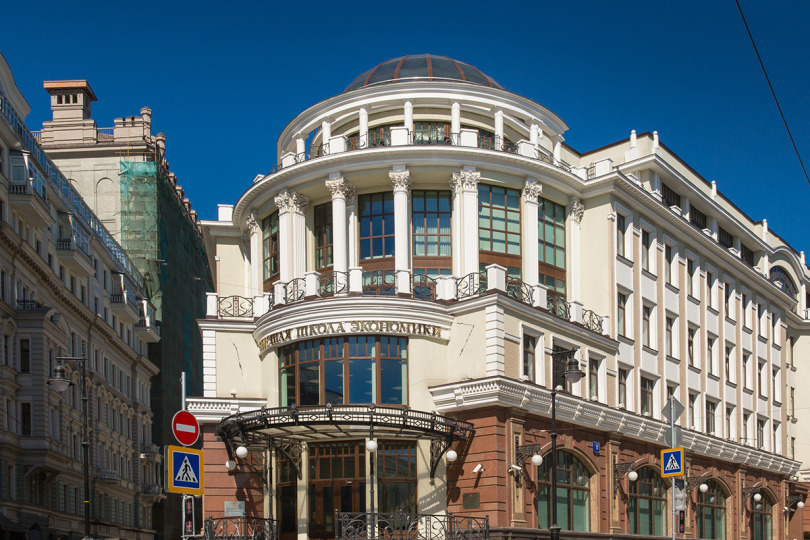
On March 18th and 19th, the Council on Enhancing the Competitiveness of Russia’s Leading Universities met in Moscow to discuss Russia’s role on the world academic stage. As a result, the Council recommended that the Ministry of Education and Science allocate subsidies to three groups of universities in 2016. HSE made it into the first group.
At the meeting, council members discussed how Project 5-100 universities carried out their development plans in 2015, as well as how these roadmaps will be adjusted in 2016 to meet the strategic development goals of each university (how Strategic Academic Units will function). In addition, the Council discussed the plans of the universities that joined the project just last year.
The Council paid special attention to whether the universities had clear developmental priorities for their educational and organizational activities. These activities in particular are what will guarantee that the universities maintain strong positions in the world academic system.
As a result of the meeting, the Council recommended that the Ministry of Education and Science allocate subsidies to three groups of universities, providing them with 900 million rubles, 500 million rubles, and 150 million rubles, respectively, in 2016. The Higher School of Economics was in the first group, which will receive 900 million rubles each in 2016. The group also included Kazan Federal University, the Moscow Institute of Physics and Technology, the National University of Science and Technology, National Research Nuclear University MEPhI, Novosibirsk State University, and ITMO University.
‘What made this year’s competition special was the fact that the universities had to use their “roadmaps” to determine the strategic academic areas they hoped to develop, as well as their organizational plan,’ notes HSE Rector Yaroslav Kuzminov. ‘The Higher School of Economics stood out considerably compared to its partners and competitors. We presented a project for creating eight strategic units, which included four larger consortiums of faculties, institutes, and departments, as well as four interdisciplinary research centres of excellence and post-graduate education. The international board supported our application, and for the third year in a row, HSE was among the leaders of the 5-100 project (which included seven universities), receiving the largest grant possible. In addition, the international council praised how much the university has advanced on the international stage, as demonstrated by the improvement HSE has made on various subject rankings,’ he concludes.
See also:

Higher Education and State-building: Methaphors of Universities Revisited
How has higher education influenced the evolution of nations since the Second World War—and vice versa? Stanford professor Mitchell Stevens and Institute of Education researcher Ekaterina Shibanova have tried to answer this question in a special issue of the European Journal of Higher Education. They invited renowned historians, political experts, sociologists and economists to develop ‘a consensus on the role of higher education in political and social history after 1945.’ The special issue was created with input from researchers from Canada, Luxembourg, Russia, Germany, France, the UK, and Sweden.
Researchers Assess Student Performance in Mathematics, Physics, and Critical Thinking
A group of researchers representing four countries summed up the results of the Supertest, a large-scale study of the academic performance of engineering students in Russia, China, India, and the United States. It is the first study to track the progress of students in computer science and electrical engineering over the course of their studies with regard to their abilities in physics, mathematics, and critical thinking and compare the results among four countries. The article about study was published in Nature Human Behavior.
How Academic Dishonesty Seeps into the Workplace
How does academic dishonesty of students correlate with honesty in further work? A group of scientists, including Evgenia Shmeleva, Research Fellow at the HSE Institute of Education, conducted research answering this question. During an open online seminar of a research group dedicated to ‘Academic Ethics in the Educational Context,’ Evgenia Shmeleva presented ‘Does Academic Dishonesty Seep into the Workplace? Evidence from a Longitudinal Study,’ which was prepared jointly with Igor Chirikov (University of California at Berkeley-HSE University) and Prashant Loyalka (Stanford University-HSE University)
Why High-Ability School Graduates Choose Low-Quality Universities
According to the findings of HSE researchers, up to one-quarter of school graduates in Moscow enrol in low-quality universities despite scoring highly on their Unified State Exam, the final school exam and a standard university admission mechanism in Russia. This academic mismatch limits their life opportunities and often stems from unequal starting conditions in the family and at school.
World Bank—HSE University Webinar Examines the Costs of School Closures During the Covid-19 Pandemic
On May 21, the joint webinar series, ‘Education under COVID-19: Problems, Solutions, Perspectives, Research’ began with a session about the effects of school closures under the pandemic. Harry Anthony Patrinos of the World Bank presented the results of a model that he and a team of researchers developed in order to predict the extent to which the closures may reduce learning and lead to future losses in labor productivity and earnings for today’s students. The webinar was moderated by Isak Froumin (Head of the HSE Institute of Education), while Professors Tommaso Agasisti (School of Management, Politecnico di Milano) and Sergey Kosaretsky (Director, HSE Centre of General and Extracurricular Education) served as discussants.
‘No One Expected Online Education to Receive Such a Powerful Impetus for Further Development’
On March 17, the Institute of Education hosted its annual seminar dedicated to issues in education. This year’s seminar addressed the topic, ‘Higher Education during an Epidemic: The Possibilities of Digital Technology’. For the first time in eight years, the seminar participants—representatives of Chinese, American, and Russian universities—participated in the event remotely.
A Journey of a Thousand Miles
Ruoqi Cao, from Harbin, China, graduated from HSE University’s Masters’ programme in International Business. She is now working on her PhD at the HSE Institute of Education, where her research focuses on the influence of higher education on the economics of the regions in Russia and China. She has shared with HSE News Service her story of coming to study and work in Russia.
International Higher Education Conference Opens at HSE University in Moscow
The tenth International Russian Higher Education Conference (RHEC) has commenced in Moscow this week and will last until October 25. This year’s conference focuses on ‘Contributions of Higher Education to Society and Economy: Global, National and Local Perspectives.’
American SemyonovAward Recipient to Look at Higher Education’s Relation to Civic Engagement in the Russia
Radomir ‘Ray’ Mitic just completed his PhD at New York University and will be joining the Council of Graduate Schools as a postdoctoral fellow this coming fall in Washington, D.C. This summer, he received an HSE SemyonovAward Research Internship to research civic engagement among Russian university students at the Institute of Education at HSE University. Last week, he participated in the International Summer School of Higher Education at HSE – St. Petersburg, and now he is conducting field research in Moscow. HSE News Service spoke with Ray about his research, his impressions of the two Russian cities, and his future plans.
International Advisory Committee Recommends a More Focused Approach
Members of the International Advisory Committee (IAC) and the HSE administration have discussed the results of the committee’s annual meeting.