

New Science: How Early-Career Researchers Reach New Heights

In the context of increasing global competition, countries are striving to ensure technological sovereignty. Those who can ensure economic development and concentrate intangible assets and human capital are emerging as leaders. The growing demand for qualified staff leads to an increase in the role of universities and the demand for early-career scientists. The challenges and opportunities for prospective specialists in the scientific community were discussed at the ‘StratPro Platform’ strategic session at HSE University.
On January 29, HSE University hosted the strategic session ‘StratPro Platform: Early-Career Researchers in the Priority 2030 Programme.’ Opening the event, Natalia Vatolkina, HSE Deputy Vice Rector, spoke about the Priority 2030 Federal Academic Leadership Programme and the strategic projects implemented by the university under this programme. Strategic projects are portfolios of thematically linked research initiatives that integrate social sciences, humanities, and digital sciences and contribute to the transformation of the university's research and innovation activities. In 2024, over a thousand researchers participated in the implementation of five strategic projects, with the total amount of funding exceeding 250 million roubles.

Natalia Vatolkina stressed that the number of projects supported on a competitive basis is increasing every year. Early-career research project competitions to implement strategic projects have been held since 2022. In 2024, the process for selecting such projects was significantly updated and standardised for all strategic projects and HSE campuses. The competition committee supported 24 projects out of the 45 applications received during the 2024 competition. Half of the supported projects were led by doctoral students and undergraduates, and the average share of early-career researchers, undergraduates, and doctoral students in supported teams exceeded 85%.
‘HSE University provides quite a lot of support programmes for undergraduate, graduate, and doctoral students. These include the Science Republic community, Science Battles, various research competitions, intensive courses, and an academic development programme. Early-career research project competitions in the framework of strategic projects complements these programmes,’ says Natalia Vatolkina.
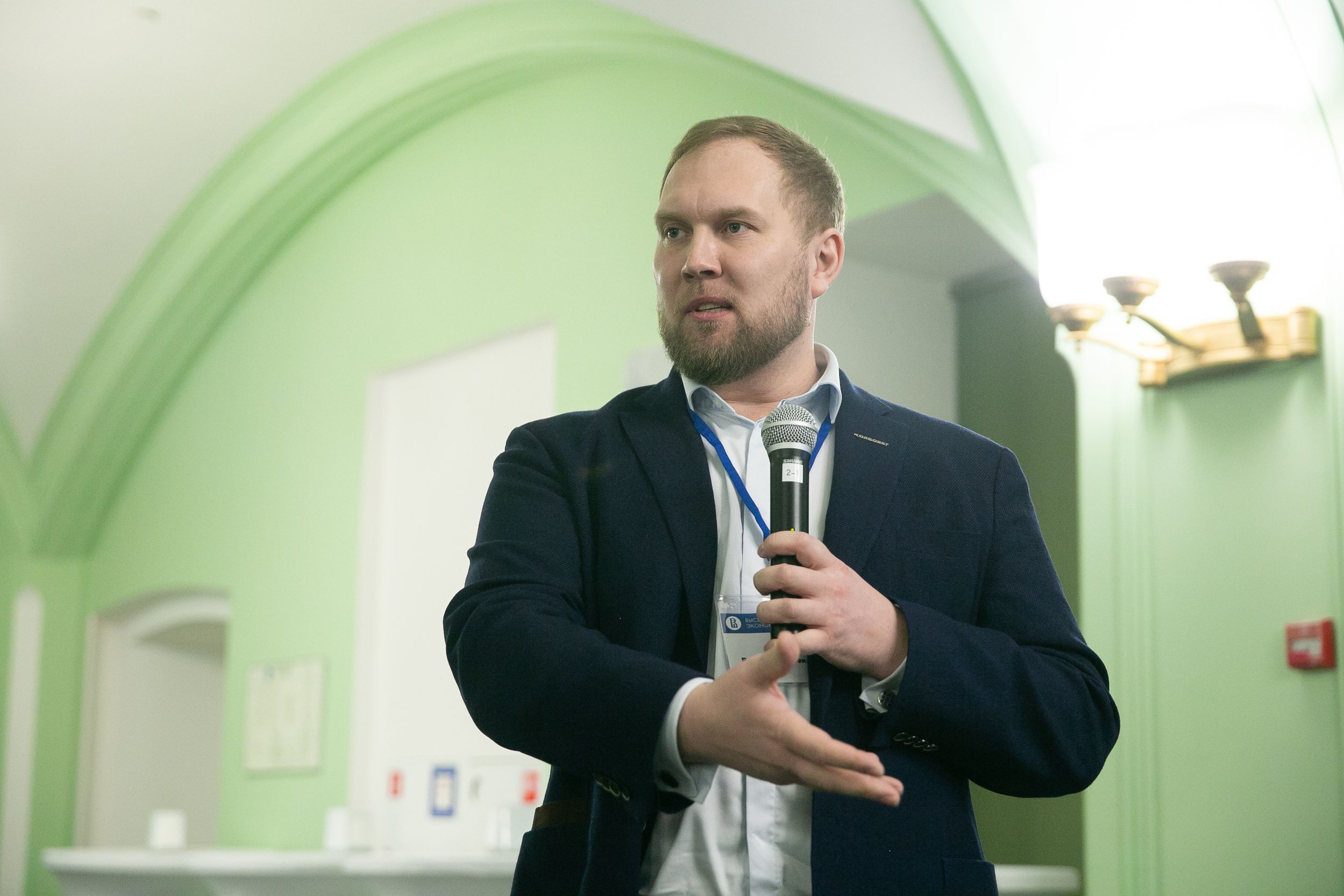
The involvement of early-career scientists in solving pressing tasks related to social and national development is a priority of the Decade of Science and Technology announced by Russian President Vladimir Putin. Vladimir Lazarev, member of the Coordinating Council for Youth in Science and Education under the Russian President's Council for Science and Education, spoke about key areas of the council’s work in forming an effective system for involving young people in research and development, and also shared his own research experience and work in the Coordinating Council.
Speaking about the most important elements, he recalled the Science-ID platform for early-career scientists (which consolidates information on measures to support prospective scientists in Russia, including scientific volunteering and popular science tourism), the Nasha Laba catalogue of scientific equipment and consumables, the ‘President, I have an idea!’ one-stop shop service for initiatives in scientific and technological development in Russia, and others. In total, there are about 280 measures of support for early-career researchers in Russia, including awards from regional governments, research grants, scholarships for scientific achievements, housing certificates, various benefits, internships, and more. The audience showed particular interest in initiatives to create communities of early-career scientists, including the ‘Youth Laboratories’ and ‘School for Early-Career Researchers’ projects, which will be developed in 2025. Vladimir Lazarev urged his colleagues to be persistent in their initiatives and emphasised the importance of effective communication between researchers, the government, and society.
‘Pay attention to popular science projects. As scientists, we need to tell the public about our research, and it also helps us find like-minded people,’ said Vladimir Lazarev.

Alexey Masyutin, Director of the AI and Digital Science Institute, discussed the increasing role of artificial intelligence technologies in science with early-career researchers. He presented the most striking examples of the use of AI in applied research, including innovative methods of protein generation and the latest methods for assessing the risks of various diseases. He highlighted the role of AI in fundamental science, giving an example of using a digital model of the muon magnetic reflector for the Large Hadron Collider. The speaker concluded by talking about the development of AI assistants for students and study offices, as well as AI assistants for accurately summarising scientific topics—something useful to researchers.


As part of the ‘My Project in the Priority 2030 Programme’ discussion platform, HSE early-career scientists spoke about their own research experience.
Centre for Language and Brain Research Fellow Olga Buivolova, who led a project on noninvasive brain stimulation to correct speech disorders, spoke about her journey from research assistant to a team leader who participated in two of the university’s strategic projects.
Anna Provorova, Junior Research Fellow at the Centre for Cognitive Neuroscience (HSE University in Perm), presented the NeuroSkate neural network for analysing the movements of young athletes during figure skating training, which is designed to improve the effectiveness of teaching in children's sports schools.
Anastasia Andreeva, Head of the Laboratory for Educational Innovation Research at the Institute of Education, shared her own experience of becoming an early-career manager and gave some practical tips to the participants.
Olesia Maibakh, Head of the Foresight Research Methodology and Organisation Unit at HSE ISSEK, presented the results of an analysis of the possibilities of using science-fiction methods to develop long-term forecasts of scientific, technological, and socio-economic development, sharing the plans of the research team and telling colleagues about the pitfalls of planning.
The session organisers paid special attention to the commercialisation of the scientific achievements of early-career researchers. Andrey Zizin, Deputy Senior Director for Financial Affairs, Associate Professor at the School of Innovation and Entrepreneurship, conducted a master class on the most important aspects of a successful commercialisation project, common errors, and measures to support research entrepreneurship at HSE University.


‘A commercialisation project doesn’t have to be at the same level of readiness on all scales at the same time or to advance symmetrically. However, large differences can become an obstacle to progress in entering the market with a new product and increase the risk of failure,’ explained Andrey Zizin.
The participants had an opportunity to put their knowledge into practice during the discussion session ‘Commercialisation of the Achievements of Early-Career Researchers: Brain Storm,’ during which interdisciplinary teams discussed research initiatives and determined the main obstacles to their commercialisation. During the brainstorming session, the participants defined ways to overcome these barriers both by stimulating the initiative of research teams and through support from the university, including the creation of a one-stop shop for packaging and promoting innovative products, a knowledge base and an AI assistant in the field of commercialisation, and more. The participants discussed their findings with invited experts, including Andrey Zizin; Anton Yanovsky, Director of the Centre for R&D Commercialisation and Technology Transfer; and Konstantin Sinyavsky, Director of the Legal Support Centre for Research Activities, Intellectual Property and Data Protection.


In the final part of the strategic session, Yulia Milshina, Senior Research Fellow at the International Research and Educational Foresight Centre at HSE ISSEK, spoke about global trends in scientific and technological development, their connection with current economic and social changes, as well as Russia's priorities in the new environment. Noting among the main challenges the ‘rising cost’ of science, the growth of scientific inequality between countries and the deglobalisation of science in favour of the formation of techno-economic blocs of countries, she stressed that the main barrier to the development of science is the shortage of personnel and the level of competence. The ability to produce highly qualified scientific personnel will be a key factor in the competitiveness of countries in the coming decades.
‘The requirements for the quality of staff, for training and retraining of personnel are growing many times. Your efforts, enthusiasm, and energy are aimed at the greatest goals, and I would like to wish you breakthroughs and interesting results so that this interest does not fade,’ said Yulia Milshina.
At the end of the strategic session, Natalia Vatolkina presented certificates to the winners of the 2024 Early-Career Research Project Competition, who carried out research within the framework of all five strategic HSE projects.

See also:

Fall into ML 2026: From Fundamental Research to Discussions on the Future of AI
On October 23–24, HSE University hosted Fall into ML 2026, the fifth conference on machine learning and AI. Over the past five years, the event has grown from a small gathering of researchers into a flagship platform that brings together leading machine learning specialists, early-career researchers, students, and representatives of technology companies. The fifth edition marked a new stage in the development of the conference, with a programme that included discussions with international speakers, presentations of joint research projects, and tutorials on the latest trends in AI.
The Future of Connectivity: 6G Technologies Under Development at HSE University
Sixth-generation (6G) communication will require new devices and technologies, and a development team at HSE University is working on solutions in microelectronics and photonics as part of the university's Strategic Technological Project 'Trusted 6G Communication Systems Technology Suite.' In 2026, the researchers developed models and prototypes of devices, experimentally tested their characteristics, and agreed with industrial partners on formats for collaboration. The HSE News Service spoke with project coordinator Alexander Shurakov, Associate Professor at the School of Electronic Engineering of HSE MIEM, about how these developments can move beyond the laboratory.
HSE University to Launch 11 Projects with Research Centres from Five Countries
HSE University has announced the results of its International Academic Cooperation (IAC) competition for joint fundamental research projects. Five projects have received full funding, while six more have been awarded partial funding. The research teams include scholars from Brazil, South Africa, China, India, and Oman. Alexander Balyshev, HSE University Vice President, shared details of the 2026 IAC competition winners.
Africa, Youth, and Civic Dialogue: Public Diplomacy Discussed at HSE University
In late September, HSE University hosted a roundtable discussion titled Civil Society in African Countries and Youth Participation in Public Diplomacy. Representatives of non-governmental organisations from Ghana, Ethiopia, and Russia, along with students from HSE University’s Bachelor’s Programme in Public Administration, discussed how young people without official diplomatic status can influence relations between countries and how the nonprofit sector can remain sustainable amid declining grant funding.
Window into the Body: Scientists Develop Neural Network to Detect Risk of 15 Diseases from Retinal Images
Russian universities, with the participation of HSE University, Sber, and Z-union, have developed a neural network that can simultaneously assess the risk of 15 types of pathology from retinal photographs, including not only eye diseases but also cardiovascular conditions. The AI system can help clinicians detect potentially concerning changes at an early stage, identify signs reflecting the condition of retinal blood vessels, and determine whether a patient may need further examination. The paper has been published in Frontiers in Medicine.
HSE Researchers Show How Congenital Motor Disorders Affect Brain Development
Researchers from HSE University’s Institute for Cognitive Neuroscience have synthesised the findings of their previous studies on brain development in children with obstetric brachial plexus palsy and arthrogryposis. Their analysis shows that impaired motor function in early childhood not only limits children’s motor experience but also affects memory, categorical thinking, and information processing. The study has been published in Frontiers in Psychology.
'We Did Not Limit the Time for Questions'
The International Laboratory for Supercomputer Atomistic Modelling and Multi-Scale Analysis at HSE University held a major conference on molecular dynamics. Participants had the opportunity to attend all the presentations, while speakers were given as much time as they needed to answer questions. The HSE News Service interviewed Grigory Smirnov, Head of the Laboratory, and Genri Norman, Chief Research Fellow, about the conference preparations and the discussions it generated.
HSE Faculty of Social Sciences Develops Partnerships with Chinese Universities
In summer 2026, the HSE Faculty of Social Sciences (FSS) took several steps towards establishing closer ties with leading Chinese universities. The Faculty signed a landmark memorandum with one of China’s top technical universities and also began talks with Peking University. In addition, the International Laboratory for Digital Transformation in Public Administration, affiliated with FSS, held an international summer school in Moscow with the participation of Chinese colleagues.
HSE Professor Discusses the ‘Quantum Leap’ at UNESCO Seminar
In mid-September 2026, UNESCO held an online seminar entitled ‘Quantum Science and the Future of Quantum Technologies.’ During a panel discussion, Alexander Sokolov, Director of the International Research and Educational Foresight Centre at the HSE Institute for Statistical Studies and Economics of Knowledge (ISSEK) and Chair of the UNESCO Chair on Future Studies at HSE University, presented the results of ISSEK’s Quantum Leap foresight study to international experts.
AI Robot for Environmental Recognition Tested at HSE University
Engineers and researchers at the HSE Institute for Robotics Systems have successfully run the first tests of an AI-powered environmental recognition model deployed on a robot dog. The robot navigated around the HSE Pokrovka building and Pokrovsky Bulvar, analysing the surrounding environment to identify its location.