

Algebra, Geometry, and AI: Russian and Vietnamese Mathematicians Discuss Current Research

A delegation of scientists from Hanoi visited the HSE Faculty of Computer Science and then took part in a Russian-Vietnamese conference in St Petersburg. The events were part of the three-year project ‘Flexibility and Computational Methods.’ Over the course of the project, the researchers have prepared joint publications and obtained new mathematical results.
In August 2026, scientists from the HSE Faculty of Computer Science and the Institute of Mathematics of the Vietnam Academy of Science and Technology held two joint academic events—a seminar in Moscow and a conference in St Petersburg. The meetings took place as part of the ‘Flexibility and Computational Methods’ project. The participants discussed current problems in algebraic geometry and commutative algebra, presented their research findings, and identified areas for further cooperation.
Moscow Meeting: New Problems and Shared Research Interests
The Russian-Vietnamese Seminar on Algebraic Geometry and Commutative Algebra was held at the HSE Faculty of Computer Science from August 19 to 21, 2026. The delegation of scientists from Hanoi was led by Ngo Viet Trung, a full member of the Vietnam Academy of Science and Technology (VAST), President of the Vietnam Mathematical Society and Chief Research Fellow at the VAST Institute of Mathematics. The delegation also included Professors Do Trong Hoang, Nguyen Bich Van, and Nguyen Thi Thanh Tam.
Scientists from both sides delivered several lectures, including some for early-career researchers. The seminar provided an opportunity for the Vietnamese colleagues to learn more about HSE University and to exchange experience in teaching and research. Vietnamese students showed great interest in the lectures delivered by researchers from the Laboratory on Algebraic Transformation Groups.
Lectures by Vietnamese and Russian Scientists

Anton Shafarevich
‘We designed the programme to combine presentations of our new results with discussions of classical topics. The main goal was simple—to learn more about each other’s research interests and find new areas of overlap. At the HSE Faculty of Computer Science, I gave a talk on the classical Jung–van der Kulk theorem on automorphisms of the affine plane. This is one of the key results in affine algebraic geometry, and there are many proofs of it. I chose one based on the properties of algebraic group actions on varieties. This is a method that our laboratory is particularly familiar with, and I wanted to demonstrate clearly how it works,’ said Anton Shafarevich, Senior Research Fellow at the HSE Laboratory on Algebraic Transformation Groups.


Five-Day Discussions in St Petersburg
The Russia-Vietnam Conference on Algebraic Geometry, Algebraic Groups, Commutative Algebra, and Applications was held at the Leonhard Euler International Mathematical Institute from August 24 to 28, 2026. In St Petersburg, the delegation was joined by Professor Hoang Le Truong, head of the Vietnamese project team, who is known for his work in algebraic geometry and for developing software for computational experiments.
Over five days, the participants discussed a wide range of topics—from the regularity functions of powers of graded ideals to the flexibility of spherical varieties and the use of large language models for automated theorem proving.
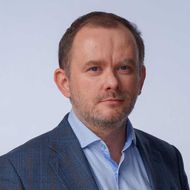
Ivan Arzhantsev
‘Our research interests and the research conducted at the VAST Institute of Mathematics complement each other very well, allowing each research group to strengthen its expertise. The presentations by the HSE University project participants focused on the structural theory of algebraic groups and the theory of algebraic transformation groups, while each of our Vietnamese colleagues gave a detailed presentation of their recent research findings. I would also like to highlight the involvement of mathematicians from St Petersburg, who delivered excellent presentations and actively participated in the discussions,’ said Ivan Arzhantsev, Dean of the HSE Faculty of Computer Science and Head of the Laboratory on Algebraic Transformation Groups.
He expressed his gratitude to the Leonhard Euler International Mathematical Institute for its hospitality and support in organising the conference. ‘We hope that our application to continue the joint project with the VAST Institute of Mathematics in Hanoi for another three years will receive support under the International Academic Cooperation of HSE University programme, allowing us to continue developing productive cooperation with Vietnamese mathematicians,’ he stressed.
Conference Topics and Speakers


‘Finding New Areas of Overlap’
The full member of the Vietnam Academy of Science and Technology (VAST), Ngo Viet Trung, highlighted the practical value of the Moscow seminar and St Petersburg conference for developing future joint research.

Ngo Viet Trung
‘The seminar at HSE University and the conference in St Petersburg were very useful for us. From the presentations by our Russian colleagues, we learned about new problems in both algebra and geometry that could eventually serve as a basis for joint research projects between Professor Ivan Arzhantsev’s research group and research groups working in algebra and geometry in Hanoi. We were very impressed by the reputation and infrastructure of HSE University, which represents a new model of education in Russia. We also had the opportunity to visit many interesting places in Moscow and St Petersburg. We were all impressed by the Russian people and culture. This trip will remain an unforgettable experience for us,’ said Ngo Viet Trung.
Hoang Le Truong, head of the Vietnamese team of the ‘Flexibility and Computational Methods’ project, also praised both the academic and personal aspects of the trip.

Hoang Le Truong
‘My trip to Russia was truly remarkable and, in many ways, opened up new horizons for me. To be honest, before arriving, I did not have a clear idea of what to expect, but the experience exceeded all my expectations and was full of pleasant surprises—from the warm hospitality of our hosts to the vibrant and stimulating intellectual atmosphere,’ he said.
Hoang Le Truong also mentioned that the conference had made a particularly strong impression on him. ‘It was incredibly dynamic and genuinely intense—not only because of the topics being discussed, but also because of the energy in the room. There were many fascinating presentations on the most up-to-date research, and I was particularly impressed by the large number of early-career researchers presenting work of a genuinely high standard. Their confidence, creativity, and rigorous methodology deserve special attention and made the discussions even more substantive and engaging. It was not only a productive academic event, but also a memorable and enriching experience, particularly in terms of discovering the history, culture, and people of Russia,’ Hoang Le Truong said.
Each research school has its own strengths, Anton Shafarevich noted. ‘We specialise in the theory of algebraic transformation groups, while our Vietnamese colleagues are experts in commutative algebra. At meetings like these, we can compare approaches, learn from one another, and see where our methods complement each other,’ he explained.

Anastasia Stavrova
Anastasia Stavrova, Senior Research Fellow at the St Petersburg Branch of the Steklov Mathematical Institute of the Russian Academy of Sciences and an invited speaker at the International Congress of Mathematicians 2026, also highlighted the atmosphere of the academic event. ‘I remember the conference for its very friendly and welcoming atmosphere. Our Vietnamese colleagues are highly accomplished specialists. In particular, their presentations on the use of artificial intelligence in mathematics attracted a great deal of interest,’ she said.
From Joint Publications to New Mathematical Results
The seminar and conference were held as part of the concluding three-year joint project ‘Flexibility and Computational Methods’ under the International Academic Cooperation of HSE University programme. The project is being carried out in 2024–2026 by the Laboratory on Algebraic Transformation Groups at the HSE Faculty of Computer Science and a research team from the Institute of Mathematics of the Vietnam Academy of Science and Technology.
During the project, the researchers have produced numerous publications, including joint papers, and solved a number of important problems. In particular, they proved the flexibility of the affine cone over the intersection of two quadrics—a result by Kirill Shakhmatov and Hoang Le Truong—and the flexibility of any non-degenerate affine spherical variety—a result by Anton Shafarevich.
The project received a positive assessment from the Russian-Vietnamese Intergovernmental Commission. In 2025, it was officially recognised as part of the Sixth Meeting of the Russian-Vietnamese Commission on Education, Science, and Technology Cooperation.
The St Petersburg Russian-Vietnamese conference was included in the Year of Russian-Vietnamese Cooperation in Science and Education. It was the second conference in a series of joint meetings held as part of the ‘Flexibility and Computational Methods’ project. The first conference took place in Hanoi in May 2025.
The project participants hope to continue their cooperation and develop joint research in algebra and algebraic geometry.

See also:

‘Seeing Red Square at Night and Sharing Time with Friends from Different Countries are Moments I Will Remember for a Long Time’
Sashadhar Dutta, from India, is a second-year PhD student at the Doctoral School of Economics at the HSE University–Moscow Faculty of Mathematics. He is currently working on his PhD thesis titled ‘On Some New Bounds Connected with Recurrent Sequences Modulo Prime’ under the academic supervision of Associate Professor Ilya Vyugin. Sashadhar spoke to the HSE News Service about why HSE deserves its good reputation, what he likes about Moscow, and how his time at HSE has changed his perceptions of both Russia and his own research.
AI Users Earn Up to 41.8% More Than Non-Users
Research conducted by economists at HSE University has revealed a significant correlation between the regular use of GenAI in the workplace and higher pay among Russian employees. The study found that individuals who frequently use GenAI in their professional activities earn notably more than those who reject these new tools or resort to them occasionally. The salary premium for highly qualified specialists reaches 41.8%. The article was published in the Voprosy Ekonomiki journal.
AI Robot for Environmental Recognition Tested at HSE University
Engineers and researchers at the HSE Institute for Robotics Systems have successfully run the first tests of an AI-powered environmental recognition model deployed on a robot dog. The robot navigated around the HSE Pokrovka building and Pokrovsky Bulvar, analysing the surrounding environment to identify its location.
Scientific Expedition to Hainan: HSE Scientists Organise Conference on Statistical AI in China
The Statistical AI Conference was held in Sanya, Hainan Island, China, from 24 to 28 August 2026. The international event brought together leading experts in statistics, machine learning, and applied AI. Alexey Naumov, Director of the AI and Digital Science Institute at the HSE Faculty of Computer Science, and Sergey Samsonov, Head of the International Laboratory of Stochastic Algorithms and High-Dimensional Inference, were among the conference organisers.
How to Assess Students’ Knowledge in the Age of AI
A researcher at HSE University has proposed a flowchart to help lecturers decide how to assess students who use artificial intelligence. It shows where the use of AI should be restricted and where it can be incorporated into the learning process. The article has been published in IT Professional.
Scientists Train Neural Network to Generate Process Plans from 3D Models
Researchers at the HSE FCS AI and Digital Science Institute have developed CAD2TechSpec, a framework that converts 3D models of mechanical parts into machining process plans—step-by-step instructions for machine tools. The solution aims to reduce the time required for the design and preparation of technical process documentation in mechanical engineering, aircraft manufacturing, and other high-tech industries. The study findings have been published in PeerJ Computer Science.
Researchers Assess Contributions of BRICS Countries to Leading ML/AI Conferences
The HSE Scientometrics Centre analysed more than 104,000 papers published between 2020 and 2025 and presented at ten top-level A* conferences ranked by ICORE 2026. The researchers examined the contributions of Brazil, Russia, India, China and South Africa. Together, these countries accounted for around 40,800 publications, or 39.2% of the total. However, the distribution is highly uneven, and a shared BRICS research space has yet to emerge.
Laboratory of Future Networks: HSE Telecommunications Research Institute Develops 5G/6G Research Testbed
The 5G/6G testbed at the HSE Telecommunications Research Institute is becoming a research platform, an educational laboratory, and a foundation for developing new software components for future networks. It makes it possible not only to observe how a mobile network operates, but also to change its operating conditions and measure the results: data-transmission speed, latency, errors, radio-resource utilisation, and other parameters. Based on the testbed, researchers plan to develop MIMO, O-RAN, xApp, and IAB technologies, as well as experiment with artificial intelligence.
Four HSE Mathematics Graduates Win Russia’s Young Mathematicians Award
The winners of the Young Mathematicians of Russia Award were announced at the 6th Conference of Russia’s Mathematical Centres, held in Kazan in late August 2026. Four of the nine award recipients are graduates of the HSE Faculty of Mathematics: Associate Professor Alexander Kalmynin, PhD students Alexander Zaitsev and Petr Kucheryavyy, and researcher Dmitry Pirozhkov.
Hybrid Intelligence: Competencies in the Age of AI Discussed at Technoprom-2026
Artificial intelligence is not creating new professions, but rather transforming the nature of existing ones. This was the conclusion reached by participants in the panel session ‘Hybrid Intelligence: Digital and Human Drivers of Development,’ organised by the Institute for Statistical Studies and Economics of Knowledge (ISSEK) at HSE University as part of the 13th International Forum of Technological Development (Technoprom-2026). The experts discussed how the nature of work is changing, which skills are becoming increasingly sought after, and what prevents companies from fully capitalising on new technologies.