

HSE University to Present Its Projects at the International Youth Festival


The International Youth Festival (IYF) will be held in Yekaterinburg from 11 to 17 September 2026. HSE University will take an active part in the event. The university's booth will present a space settlement mock-up, robots, and the iFORA big data analysis system. Fifty HSE students will visit festival venues, and experts will participate in the business programme.
HSE University is presenting its booth at the International Youth Festival for the first time. It is located in the Human Development exhibition space, organised by the Ministry of Science and Higher Education of the Russian Federation.
The interactive exhibition area ‘Explore and Dream’ will be available at the booth. It is centred on a space settlement mock-up, which is planned to be built at the Skolkovo Innovation Centre in 2026 to host the first International Space Games (ISG). The games will be held as part of the federal project ‘Personnel for Space’ of the national project ‘Cosmos,’ coordinated by the Ministry of Science and Higher Education and the Roscosmos State Corporation. HSE University will have the honour of operating the ISG.
The Robotics Laboratory of the HSE Faculty of Computer Science is also displaying its developments at the booth —a robotic arm, a robotic cargo platform, and a 3D printer. In addition, HSE University is demonstrating the intelligent big data mining system iFORA—a modern strategic analytics tool developed at HSE University to process and organise arrays of unstructured data, determine hidden connections, and identify specialised insights, trends, and atypical patterns to predict the future. The system is based on the university’s own language model, iFORA.LLM.
University experts will join panel sessions, and students will take part in numerous festival venues. In particular, they will present the Rediscovering Russia and Gosvyshka projects.
On September 13, Ivan Gruzdev, Director for Internal Monitoring and Student Academic Development at HSE University will moderate the session ‘AI and Humans: Technology, Labour Market, and the Future of Youth.’ The following day, HSE Vice President Dmitry Zemtsov will lead a session, ‘Value-shaping Projects: Student Experiences and Attitudes of Young People in Russia and the World.’

Vice President at HSE University
‘The International Youth Festival is a landmark event for Russia. Our country demonstrates unprecedented openness and willingness to unite talents in an effort to change the world for the better. Thousands of young people will gather in Yekaterinburg to exchange ideas, impressions, establish contact, and implement projects. This approach is in line with HSE University’s strategic development goals, which is why the university, our students, and experts take an active part in IYF 2026. We invite everyone to visit our booth and join our discussion sessions.’
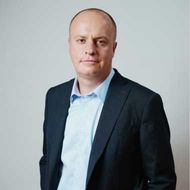
Senior Director at HSE University
‘This year, for the first time, HSE University will participate in the exhibition part of the International Youth Festival. Our booth is a precise reflection of the interactive exhibition area name— ‘Explore and Dream.’ We will show a dream—a dream about space, about space settlements, and projects in robotics and big data. Technologies of the future are the key priority areas of development for the university. Participation in large-scale projects such as the International Youth Festival is an opportunity to reach a global audience and communicate directly with those who will soon determine our future.’

See also:

HSE University to Launch 11 Projects with Research Centres from Five Countries
HSE University has announced the results of its International Academic Cooperation (IAC) competition for joint fundamental research projects. Five projects have received full funding, while six more have been awarded partial funding. The research teams include scholars from Brazil, South Africa, China, India, and Oman. Alexander Balyshev, HSE University Vice President, shared details of the 2026 IAC competition winners.
HSE University Expands Cooperation with Malaysia in Technology Foresight
HSE University researchers will take part in a study of the future of engineering education in Malaysia, while the Malaysian Industry-Government Group for High Technology (MIGHT) will use the iFORA big-data analysis system to validate the findings of its foresight research. These are the outcomes of a visit by HSE representatives to Kuala Lumpur.
Biologists Discover 'Molecular Fingerprint' of Preeclampsia
Researchers at HSE University employed a new method to model hypoxia in placental cells during pregnancies complicated by preeclampsia and identified molecular markers of tissue hypoxia. Since hypoxia is one of the key mechanisms underlying preeclampsia, these findings are important for a more accurate and timely diagnosis of the disease and for the development of effective treatment methods. The paper has been published in Placenta.
‘Hedgehog’ Versus ‘Relatives’: Researchers Measure How the Brain Responds to Unexpected Words During Natural Speech
Russian neurophysiologists, including researchers from HSE University, have demonstrated the feasibility of using event-related fields (ERFs) to study brain activity during natural speech perception. The researchers showed that this approach can be applied not only to individual words but also to continuous speech. Their findings indicate that words whose meanings differ significantly from the preceding context require longer processing times. The study also reveals that the brain processes function words in two stages: first, it identifies their grammatical role and then uses this information to predict the next word. The study has been published in Frontiers in Human Neuroscience.
Scientists Develop Algorithm for More Reliable Processors in Data Centres
Researchers from HSE MIEM and Samara University have developed the LRF-3D algorithm to automatically bypass idle nodes in three-dimensional networks-on-chip. Thanks to its hierarchical architecture, the algorithm outperforms existing solutions in both speed and path accuracy, improving processor reliability for use in data centres, supercomputers, and AI computing. The source code and test results are publicly available.
Researchers Rank Recommendation Algorithms Using Sports Tournament Model
Researchers from the AI and Digital Science Institute at the HSE Faculty of Computer Science have developed an approach for selecting recommendation algorithms more effectively. Their approach uses pairwise comparisons of algorithms to create a tournament table, with the overall ranking based on their performance across all datasets in the tournament. This can reduce the number of algorithms that need to be tested when developing new services, saving both time and money. The study was presented at the 32nd ACM SIGKDD Conference on Knowledge Discovery and Data Mining (KDD 2026).
Researchers Develop Method for Direct Generation of Regulatory DNA
Researchers at HSE University have developed a model for generating promoters and enhancers—DNA sequences that regulate gene activity. The model works directly with DNA nucleotides, without first transforming them into a continuous numerical representation. This solution could be useful for applications in synthetic biology and gene therapy. The study results were presented at the ICLR 2026 Workshop ‘Generative AI in Genomics (Gen^2): Barriers and Frontiers.’
Researchers at HSE University and Sber Train Neural Networks to Better Predict User Preferences
The HSE FCS AI and Digital Science Institute and Sber have introduced a new architecture for recommendation systems that combines two classes of models, enabling algorithms to better predict users’ interests and needs. A preprint of the paper has been published on arxiv.org and presented at Urban ML.
HSE Graduate School of Business and Alfa-Bank Hold Summer School for Students from China
Twenty-seven students from Chinese universities took part in the international summer school ‘Digital Product Management’ organised by the HSE Graduate School of Business and Alfa-Bank. Over the course of a week, participants explored the Russian economy and business environment, learned about current technology trends, and worked through the key stages of digital product development step by step—from researching user needs and defining a problem to developing a prototype and presenting their final project.
Physicists Discover What Happens Inside a Stable Vortex
Large vortices with characteristic spiral arms are often observed in the atmosphere and the ocean. Physicists from HSE University have explained how these structures form and why they retain their shape. The researchers found that velocities at points located along the same vortex arc remain correlated even over long distances. At the same time, this correlation weakens rapidly with increasing distance from the vortex centre. These differences help explain the formation of spiral arms and may improve models of atmospheric and oceanic currents. The findings have been published in Physical Review Fluids.