On November 21-22, HSE International Laboratory for the Study of Russian and European Intellectual Dialogue organized an international conference ‘Memory As a Historical and Cultural Phenomenon: Russia and the West, XX-XXI Centuries’. HSE News Service has talked with one of the conference speakers, Richard Tempest, Associate Professor and Director of Graduate Studies at University of Illinois at Urbana-Champaign, about his vision of historical memory and his research of Solzhenitsyn.
On October 18, Professor Kimmo Rentola (University of Helsinki) presented his recent book, Stalin and the Fate of Finland,in an event hosted by HSE’s International Centre for the History and Sociology of World War II and its Consequences. HSE News Service spoke with Professor Rentola about how he became interested in history, his book, and what brings him to HSE University.
Nikolai Pavlenko, a shadow entrepreneur and creator of a successful business in Stalin’s USSR, was executed by firing squad in 1955. Running a successful commercial enterprise right under the dictator’s nose in a strictly planned economy was a striking but not so uncommon case in the Soviet Union at the time, according to HSE professor Oleg Khlevniuk who made a number of unexpected findings having studied newly accessible archival documents. Below, IQ.HSE offers a summary of what his study reveals.
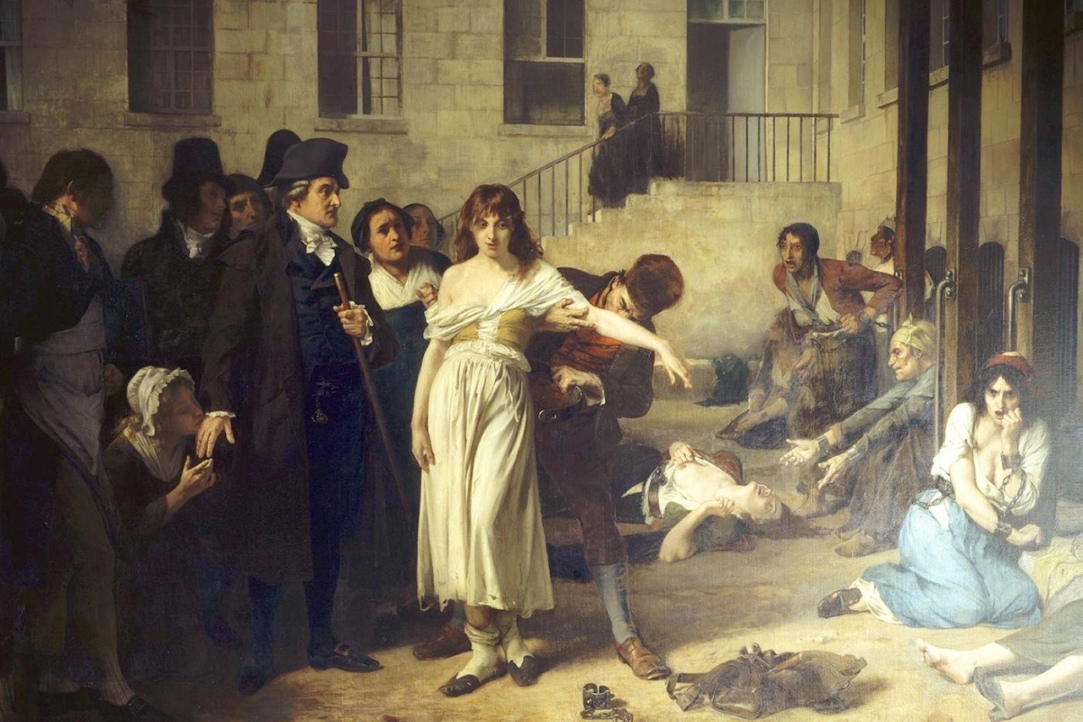
Mental health disorders are among the leading worldwide causes of disease and long-term disability. This issue has a long and painful history of gradual de-stigmatization of patients, coinciding with humanization of therapeutic approaches. What are the current trends in Russia regarding this issue and in what ways is it similar to and different from Western countries? IQ.HSE provides an overview of this problem based on research carried out by Svetlana Kolpakova.
On September 5, Laurie Manchester, Associate Professor of History at Arizona State University, presented her paper on voluntary repatriation of Russians from China to the Soviet Union between 1935 and 1960. The presentation was part of the research seminar, ‘Boundaries of History’, held regularly by the Department of History at HSE University in St. Petersburg. HSE News Service spoke with Laurie Manchester about her research interests, collaborating with HSE faculty members, and the latest workshop.
Medieval horror, vampires, sorcerers, mysterious monks and the rising dead, alongside real historical figures and stories about the Russian Civil War wrapped in the aura of mysticism – this is perhaps the shortest formula for Daurian Gothic. Alexei Mikhalev, Doctor of Political Science, discusses this phenomenon and its evolution.
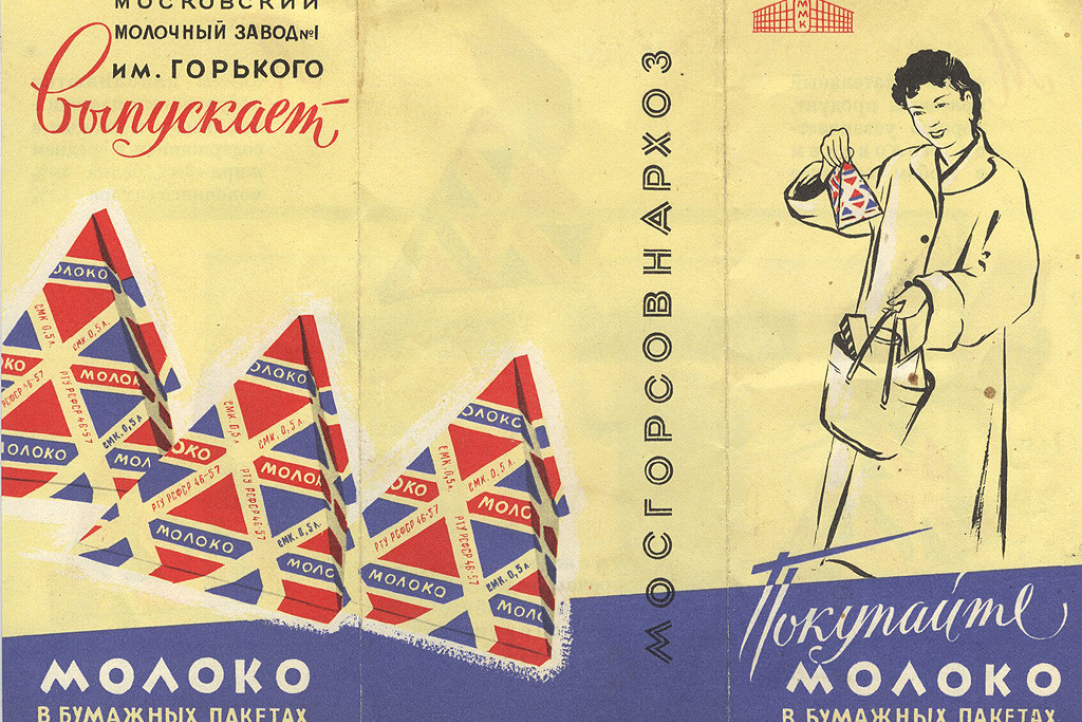
The cold war not only influenced the ideology and military sector of the Soviet Union, but served as an engine that jumpstarted its consumer economy — in particular, the food industry. In an article published in the journal Russian History, HSE historian Elena Kochetkova traces the development of the Soviet dairy industry and the production of dairy packaging in the post-war period. Her article recounts how milk became a staple of state propaganda and how Tetra Pak packaging came to be used in the USSR.
The International Centre for the History and Sociology of World War II and its Consequences at HSE University held a Graduate Student Seminar in Soviet History together with Sciences Po (France) on June 17 – 18, 2019. HSE News Service spoke with participants and instructors of the seminar, which examinedthe impact of WWII on the Soviet Union and surrounding regions, as well as aspects of the Soviet system from Stalin up to the 1980s.
On June 24-25, HSE University held the international academic conference, ‘The 1990s: A Social History of Russia’ organized by International Center for the History and Sociology of World World War II and its Consequences, the Boris Yeltsin Center, the Egor Gaider Foundation, and the Friedrich Ebert Foundation. HSE News Service spoke with Roberto Rabbia, one of the international participants, about how he became interested in Soviet history, why he reads Soviet newspapers, and what he has learned from his research.
When Professor Susanne Schattenberg set out to write a new biography of Leonid Brezhnev,her aim was to show the characteristics of Brezhnev as a ‘human being’ while at the same time analyse him in the context of Soviet politics and the culture in which he grew up.

.jpg "Introduction to Daurian Gothic: What It Is and How It Has Emerged in Transbaikalia")