EN

Tag "physics"

Researchers Determine Space Weather near Earth’s Closest Exoplanet

Researchers from the Higher School of Economics and Space Research Institute (Russia) have calculated the main parameters that determine space weather close to the nearest Earth-like exoplanet, Proxima Centauri b. Such parameters include solar wind, as well as galactic and solar cosmic rays. The results of the research were published in Astronomy Letters.

Thin Films Can Enhance Vorticity in the Ocean

Scientists from the Higher School of Economics and the Landau Institute for Theoretical Physics of Russian Academy of Sciences have investigated how vortex flows penetrate the interior of a liquid. The authors of the article have shown that specific (thin liquid and insoluble) films on the surface of water enhance eddy currents. These currents are produced by the interacting surface waves directed at an angle to each other.

Not Getting Lost in Space: Why It’s Important to Learn to Detect Signals from Neutron Stars

Not Getting Lost in Space: Why It’s Important to Learn to Detect Signals from Neutron Stars
The big scanning antenna at the Pushchino Radio Astronomy Observatory logs almost 90 GB of data every day. The data are usually processed by the astronomers manually. Vladimir Samodurov and Alexander Gorbunov, researchers at the HSE Faculty of Business and Management, decided to relieve the scholars from this hard work and give this job to neural networks. They shared the results of their work in the paper ‘Perspectives of intellectual processing of large volumes of astronomical data using neural networks’.

Predictions Only Hold Scientists Back

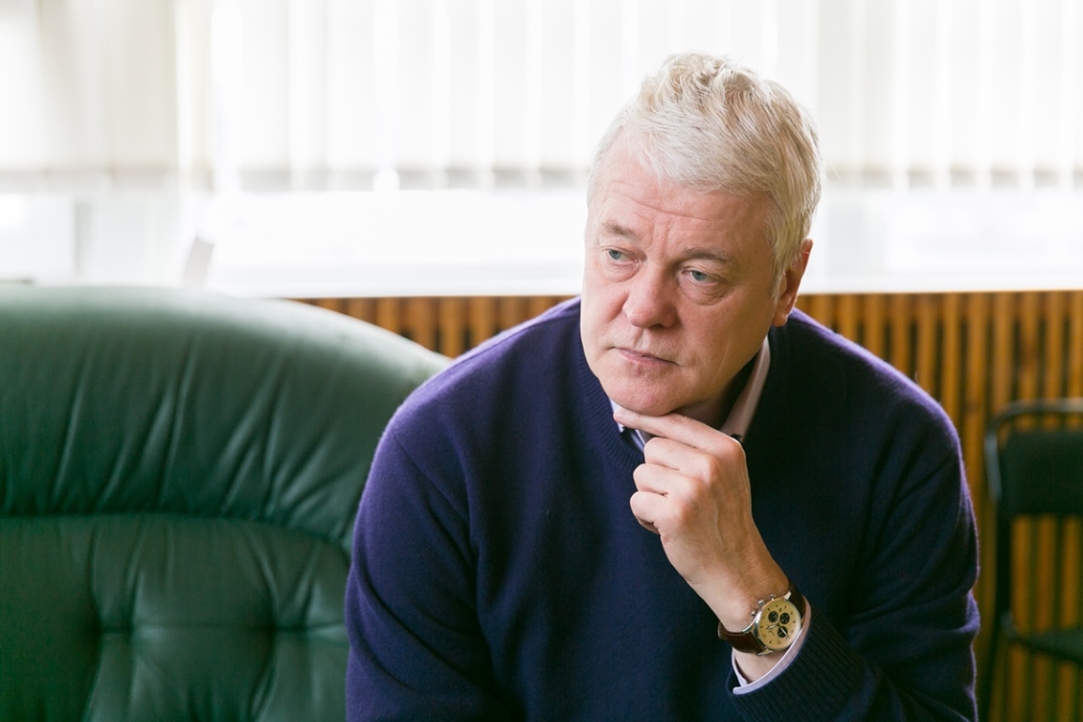
Igor Kukushkin, Chief Research Fellow at the Institute of Solid State Physics (Russian Academy of Sciences), Professor at the Faculty of Physics at the Higher School of Economics
Together with his colleagues, Igor Kukushkin, Chief Research Fellow at the Institute of Solid State Physics (Russian Academy of Sciences) and Professor at the Faculty of Physics at the Higher School of Economics, has founded two scientific-commercial enterprises. Their products are used in a range of areas, including pharmaceuticals and medicine, as well as to control the quality of various materials and even in the fight against terrorism. Igor Kukushkin spoke to the HSE news service about how to combine science and business.

Co-nonsolvency Explained: Researchers Publish Ground-breaking Findings

Co-nonsolvency Explained: Researchers Publish Ground-breaking Findings
Researchers from the Higher School of Economics and the University of Leipzig have created a model which enables the timely and effective prediction of polymer behavior in mixed solvents. This is the first scientific work to explain, using statistical mechanics, the effect of suppression of co-nonsolvency at high pressures. The findings have been published in the journal Soft Matter.

HSE MIEM Professor Elected Fellow of American Physical Society

HSE MIEM Professor Elected Fellow of American Physical Society
The American Physical Society (APS) has recognised HSE MIEM Professor Lev Shchur for his innovative use of computer simulations and the development of superior random number generators for their use in statistical physics. Professor Shchur is the only academic working in Russia to be selected as APS Fellow in 2017.

Second International Conference on Computer Simulation in Physics and beyond

On October 9-12, 2017 HSE holds the Second International Conference on Computer Simulation in Physics and beyond. Lev Shchur, the conference organizer, Professor at HSE Tikhonov Moscow Institute of Electronics and Mathematics (MIEM HSE), spoke about the event and its programme.

Alexei Starobinsky, Professor in Faculty of Physics, Elected Foreign Associate at U.S. National Academy of Sciences

Alexei Starobinsky, Professor in Faculty of Physics, Elected Foreign Associate at U.S. National Academy of Sciences
Alexei Starobinsky, Professor in the HSE Faculty of Physics, has been elected Foreign Associate at the U.S. National Academy of Sciences. Previously, he has served as an elected member of the National Academy of Sciences of Germany (Leopoldina), the Norwegian Academy of Science and Letters, and two Indian academies – the Indian National Science Academy (New Delhi) and the National Academy of Sciences (Allahabad).

HSE Experts Investigate How Order Emerges From Chaos

HSE Experts Investigate How Order Emerges From Chaos
Igor Kolokolov and Vladimir Lebedev, scientific experts from HSE’s Faculty of Physics and the Landau Institute for Theoretical Physics of Russian Academy of Sciences, have developed an analytical theory, which binds the structure of coherent vortices formed due to inverse cascades in 2-D turbulence with the statistical properties of hydrodynamic fluctuations. Uncovering this link can be useful in identifying the causes of the particular characteristics of such atmospheric phenomena as cyclones and anticyclones. Their research is presented in an article published in the ‘Journal of Fluid Mechanics’.

Sociologists Outlined Institutional Landscape of Russian Physics

Sociologists Outlined Institutional Landscape of Russian Physics
Social scientists from National Research University Higher School of Economics (NRU HSE) measured scientific capital of 39 physics institutions of Russian Academy of Sciences (RAS). More detailed information about research results can be found in the journal Scientometrics.