Explore the Frontiers of Non-Invasive Brain Stimulation
This school offers a comprehensive programme dedicated to transcranial magnetic stimulation (TMS) and related non-invasive techniques. Over the course of four days, participants will be introduced to the fundamental principles, current applications in cognitive neuroscience and clinical practice, as well as advanced methods in modelling and data analysis. Designed for researchers and clinicians, the programme provides a unique opportunity to engage with experts in the field, expand methodological expertise, and foster collaborative discussions on the future of brain stimulation research.
-
Day 1: Basics on Non-Invasive Stimulation
The first day lays the foundation for the entire programme, introducing participants to the principles of non-invasive brain stimulation, with a special focus on transcranial magnetic stimulation (TMS). Sessions will cover core concepts, mechanisms of action, safety guidelines, and methodological considerations—equipping attendees with the knowledge needed to engage with more advanced applications in the following days.
-
Day 2: Applications in Cognitive Neuroscience
Day two explores how non-invasive stimulation techniques can deepen our understanding of cognition and behaviour. Through lectures and case studies, participants will discover how TMS and related approaches are used to probe brain circuits underlying perception, memory, decision-making, motor control, and more. This day bridges theory with experimentation, showcasing the contribution of brain stimulation to cognitive neuroscience research.
-
Day 3: Applications in Clinical Practice
On the third day, the focus shifts toward clinical translation. Experts will present the current and emerging uses of TMS in neurology and psychiatry, including applications in depression, stroke rehabilitation, movement disorders, and beyond. Participants will gain valuable insights into how non-invasive stimulation is moving from the lab into real-world therapeutic contexts.
-
Day 4: fNIRS Method and Its Applications in Research
The final day is devoted to functional near-infrared spectroscopy (fNIRS): its physiological foudnations, capabilities and limitations, and its use in fundamental and clinical research. Lectures cover the principles of the method, practical experience of using it, and studies of neurostimulation effects combining fNIRS and tDCS. The afternoon includes a session on fNIRS preprocessing in practice and a practical session on combining fNIRS and tDCS. The day ends with a final visit to the labs, a Q&A and an open discusison.
Lecturers


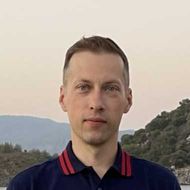
Alexandr Viazmin


Maria Nazarova

Vadim Nikulin


Alberto Benelli
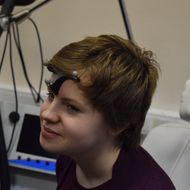

Pavel Bobrov
Workshop Instructors

Carlos Muriel Nieto Doval


Sergey Andreev

During the hands-on sessions, participants will practice:
- Fundamentals of TMS: learning the core principles of how transcranial magnetic stimulation works, with emphasis on international safety standards, accurate head registration, and procedures for determining the individual motor threshold.
- Combined TES and TMS protocols: applying transcranial electrical stimulation (TES) alongside TMS to investigate cortical excitability and interactions between different stimulation techniques.
- TMS–EEG methods: setting up simultaneous TMS and EEG recordings, handling stimulation-related artifacts, and exploring how brain responses to TMS can be measured in real time.
- fNIRS preprocessing: working through a typical fNIRS data-processing workflow in practice.


Educational Programme Schedule
-
Tuesday, November 24
- 9:30 am–10 am: Registration
- 10 am–10:30 am: Welcome speech & introduction - A. Shestakova, M. Feurra (HSE)
- 10:30 am–11:30 am: Transcranial Alternating Current Stimulation of the Human Motor System - M. Feurra (HSE)
- 11:30 am–12:00 pm: Coffee break
- 12:00 pm–1:00 pm: Mapping the Motor System Using TMS: What Questions May We Ask - M. Nazarova
-
1:00 pm–1:30 pm: Placebo controlled TMS studies - A. Vyazmin (HSE)
- 1:30 pm–2:30 pm: Lunch
- 2:30 pm–4 pm: Practical sessions (TMS basics) - М. Feurra, G. Perevoznyuk, E. Svirin
- 4:00 pm–4:30 pm: Coffee Break
- 4:30 pm–6 pm: Practical sessions (TMS basics) - М. Feurra, G. Perevoznyuk, E. Svirin
Wednesday, November 25
- 10:00 am–11:00 am: Interference in the work of the brain - E. Blagoveshchensky (HSE)
- 11 am–11:30 am: Using TMS to study the neural mechanisms of decision-making - K. Panidi (HSE)
- 11:30 am–12 pm: Coffee break
- 12 pm–1 pm: From signals to conclusions: challenges in interpreting electrophysiological (EEG/MEG/LFP) data - V. Nikulin (HSE)
- 1 pm–2 pm: Lunch
- 2 pm–2:30 pm: Non-invasive brain stimulation for language research and rehabilitation - S. Malyutina (HSE)
- 2:30 pm–3 pm: Multifocal transcranial direct current stimulation in cognitive neuroscience - A. Zabirova (Russian Center of Neurology and Neurosciences)
- 3 pm–4 pm: Practical sessions (TMS-TES) - E. Svirin, G. Perevoznyuk, C. Nieto Doval
- 4:00 pm–4:30 pm: Coffee Break
- 4:30 pm–6 pm: Practical sessions (TMS-TES) - E. Svirin, G. Perevoznyuk, C. Nieto Doval
Thursday, November 26
- 10 am–11 am: Advanced therapeutic transcranial magnetic stimulation - I. Bakulin (Russian Center of Neurology and Neurosciences)
- 11 am–11:30 am: Personalized TMS treatment for depression: the role of EEG-guided approaches - S. Tugin (HSE)
- 11:30 am–12 pm: Coffee break
- 12 pm–1 pm: TMS as diagnostic tool - E. Blagoveshchensky (HSE)
- 1 pm–2 pm: Lunch
- 2 pm–3 pm: Neurophysiology and neuromodulation of cognitive fatigue in healthy subjects, multiple sclerosis patients and astronauts - S. Rossi & A. Benelli (University of Siena)
- 3 pm–4 pm: Translingual neurostimulation (TLNS): The Current Clinical Applications and Future Perspectives - Y. Danilov (University of Wisconsin)
- 4:00 pm–4:30 pm: Coffee Break
-
4:30 pm–6 pm: Practical sessions (TMS-EEG) - E. Blagoveshchensky, G. Perevoznyuk, C. Nieto Doval
Friday, November 27
- 10 am–11:00 am: fNIRS: Principles, capabilities, and limitations of the method in fundamental and clinical research - A. Shestakova (HSE)
- 11:00 am–11:45 am - Functional near-infrared spectroscopy, physiological foundations, characteristics, and practical experience - P. Bobrov (HSE)
- 11:45 am–12:15 pm: Coffee break
- 12:15 pm–1 pm: Study of neurostimulation effects using fNIRS and tDCS - O. Zinchenko (HSE)
- 1 pm–2 pm: Lunch
- 2 pm–3:30 pm: Light Work? fNIRS Preprocessing in Practice - N. Arzumanyan, S. Andreev
- 3:30 pm–4:00 pm: Coffee Break
- 4:00–5:30 pm: Practical session (fNIRS and tDCS) - N. Arzumanyan, S. Andreev
-
5:30 pm–6 pm: Final visit to the labs, Q&A, and open discussion
Organisers
Carlos Muriel Nieto Doval

Андерсон Сара Олувафуншо

Ruslana Raemgulova
Contact
tmsschool_cdm@hse.ru
