

The Beauty of Daily Life in the Moscow Metro
Used by more than nine million passengers on weekdays, the Moscow metro can be described as busy and overcrowded (especially at rush hours), but a very convenient and fast means of transport. It is so familiar to Moscow dwellers that they can easily forget how marvellous it is.
From the very beginning, it was designed to be a source of pride and a demonstration of Russia’s power and prosperity. Forty of its stations are considered cultural heritage sites, but which is the most beautiful of all? While there is no definitive answer, those built in the 1930–50s and situated in the city centre are definitely on the ‘must-see’ list. Adorned with statues, wall paintings, mosaics and stained-glass artworks, they are underground palaces and monuments to architecture.
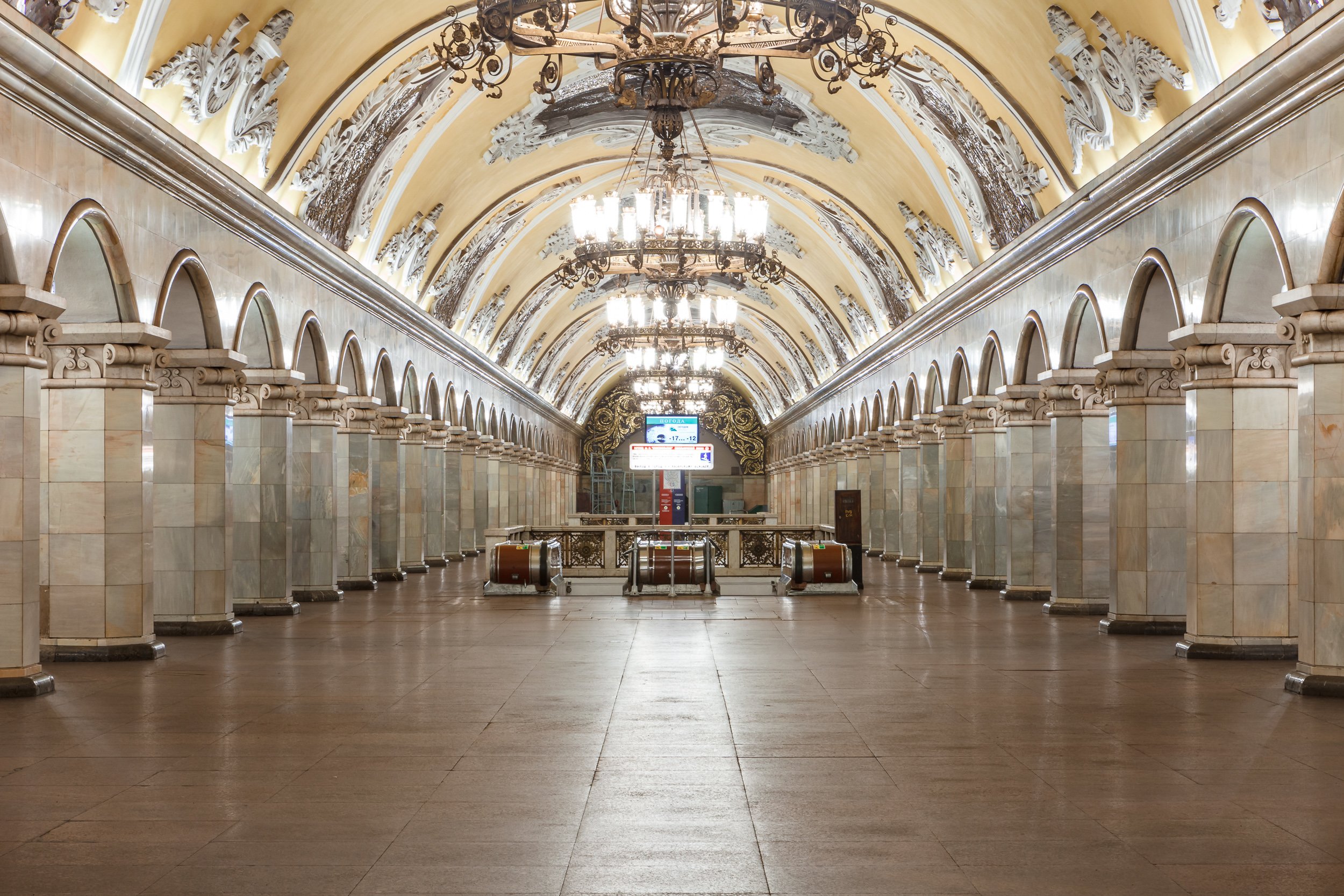
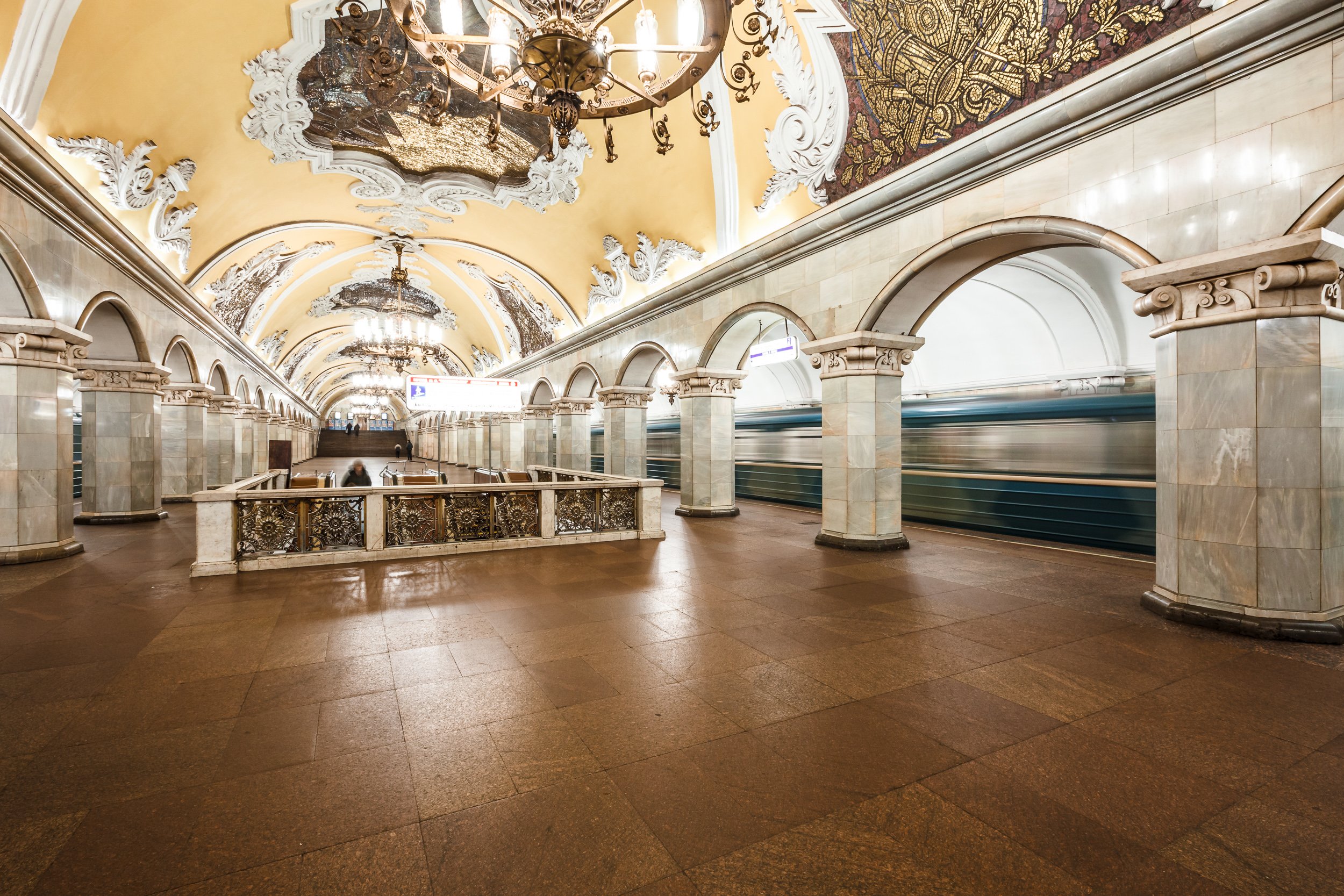


Komsomolskaya metro station, created by the great architect Alexey Shchusev, is one of most opulent. It connects three railway stations and was considered to be of great importance. This 'triumphal gate' of Moscow welcomes arrivals with two rows of gigantic marble columns (68 in total), gilded wall carvings and bronze chandeliers, stucco work and twelve splendid smalti mosaics on the ceiling. Opened in 1952, the station symbolises victory in the Second World War and glorifies fearless warriors and defenders of Russian independence, including Alexander Nevsky, Michael Kutuzov, and WWII soldiers represented in mosaic panels.
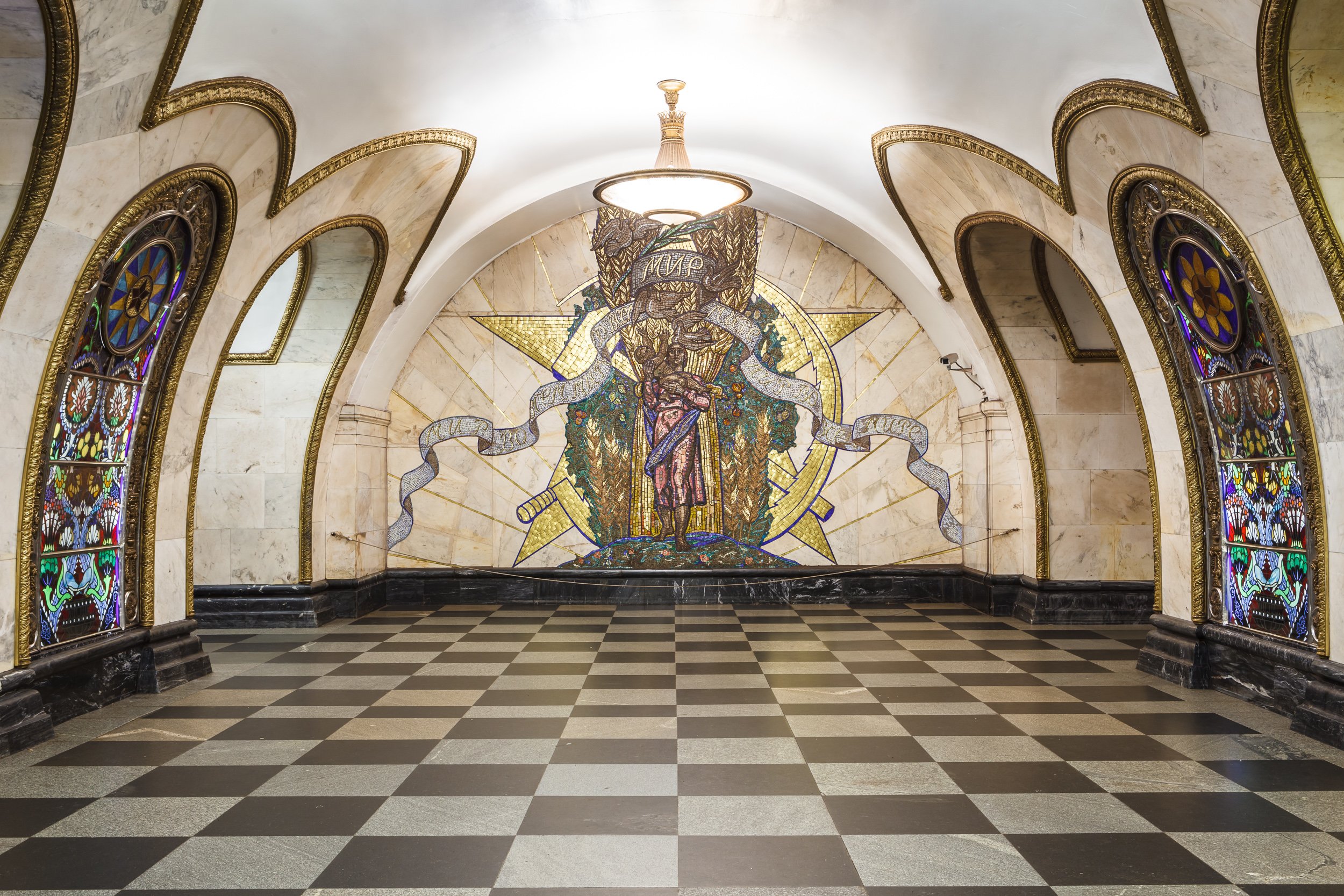
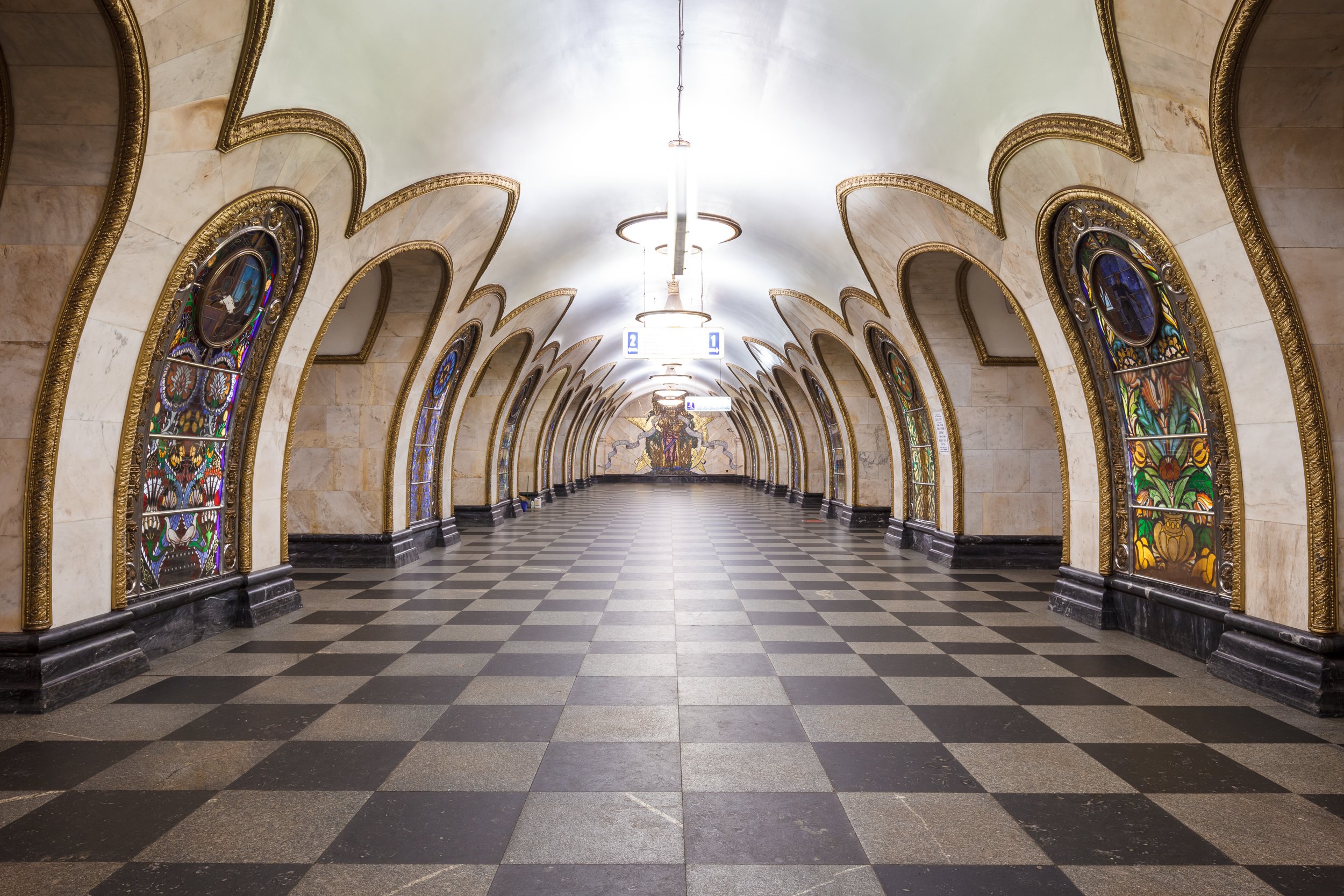


Novoslobodskaya station, with its walls covered in marble and golden ornament, is reminiscent of a myth or legend. The centrepieces of the station are its 32 stained-glass panels with lamps inside them to illuminate pictures of dreamlike flowers and birds. Above them are medallions depicting various professions—sculptors, geographers, agriculturists, musicians. At the end of the stained-glass arch gallery is a 'Peace to the World' panel featuring a mother holding a child who is reaching for a dove. The background is made up of golden beams, stars, wheat heads, fruit trees, and the hammer and sickle.


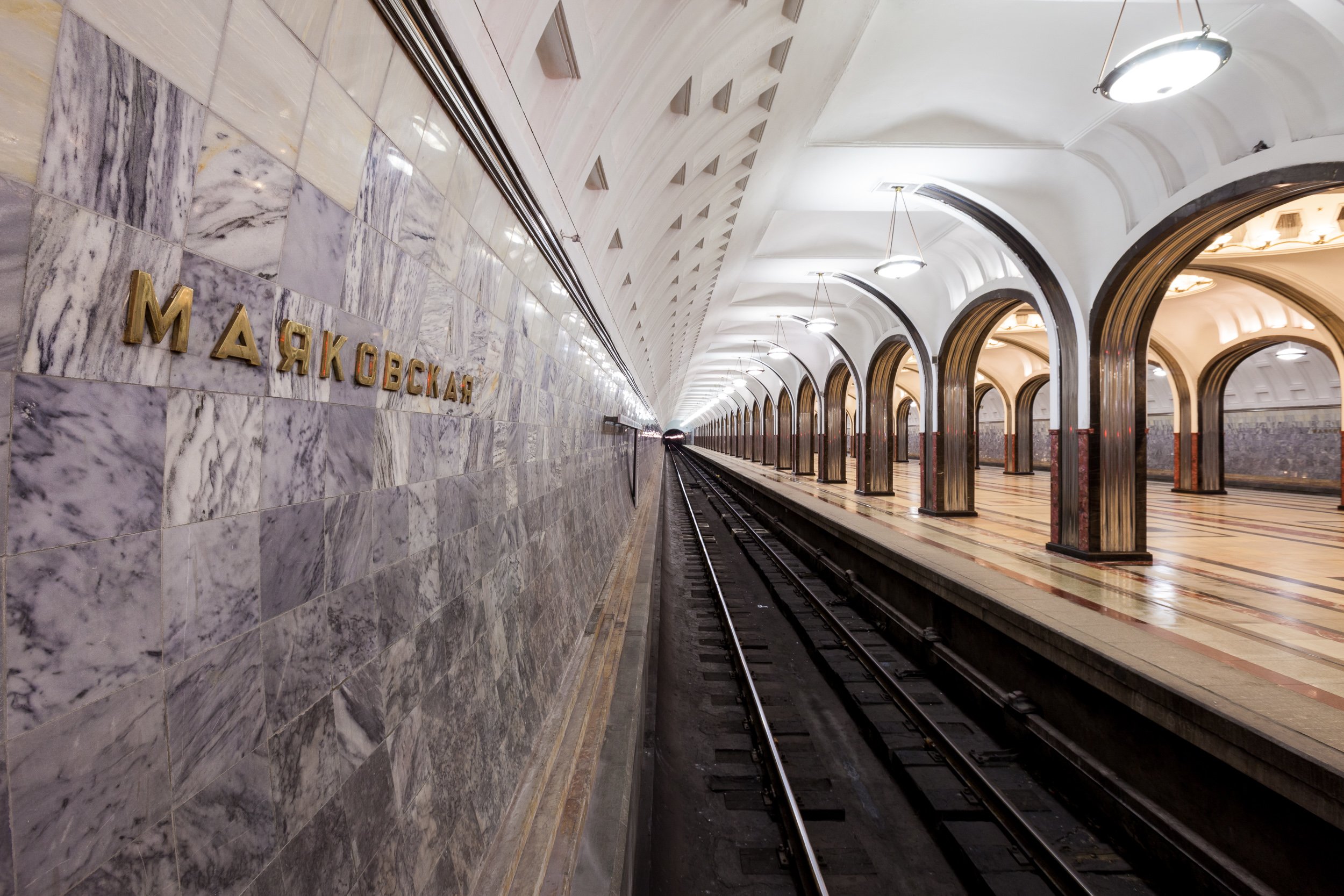
Mayakovskaya station was internationally recognised even before it was built—the architectural project first drew attention at the World Fair in Paris in 1937. Two years later, it won the grand-prix at the international fair in New York. Given how modern it looks today, in 1930s it seemed like something out of the future. Its high arched ceilings are decorated with mosaic panels, while the gigantic chandeliers give the spacious hall a feeling of daytime light. Its elegant, perfect columns add to the Art Deco, high-tech style of the station.


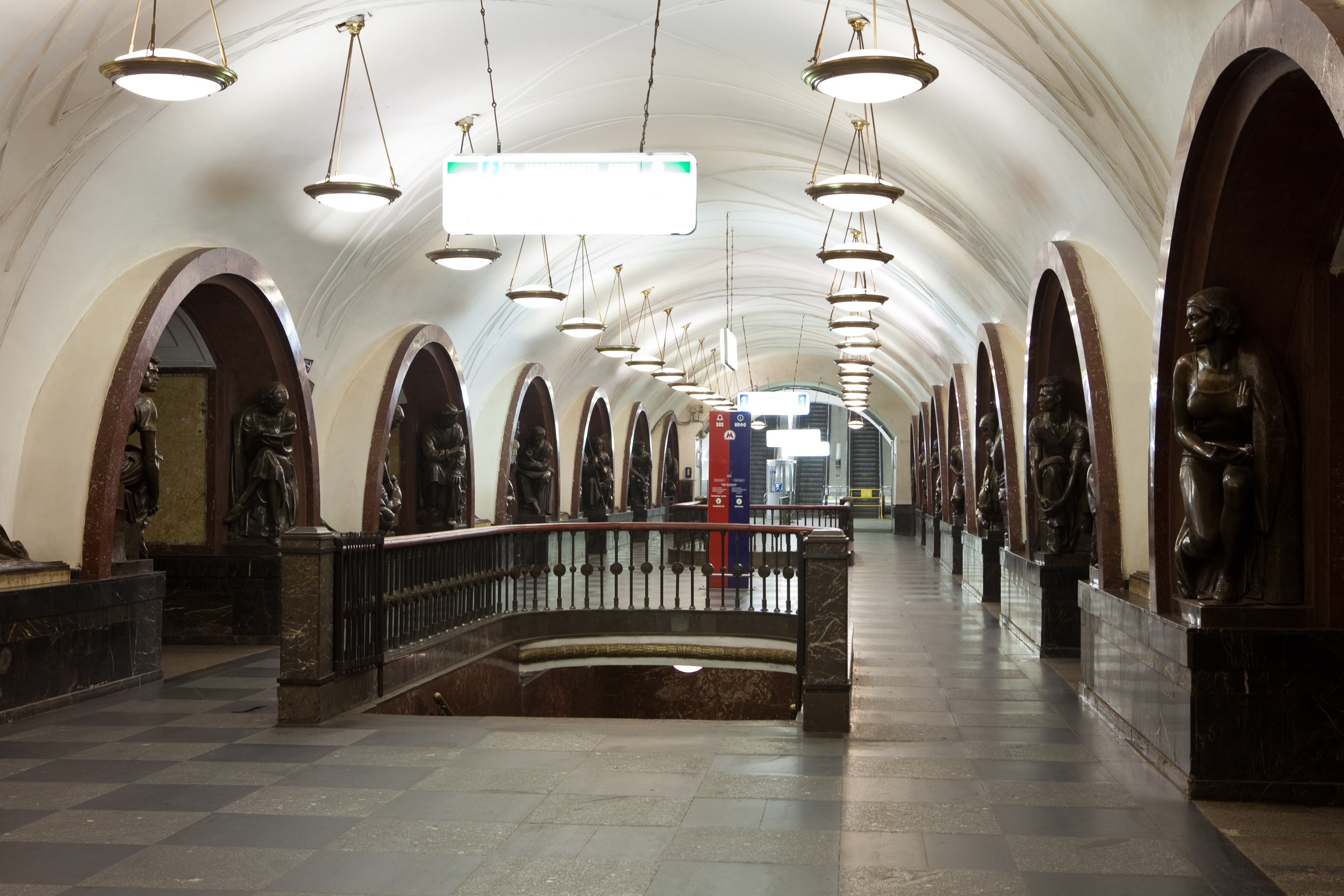
The theme of Ploshchad Revolyutsii station is the rise of the young USSR. Famous Soviet sculptor Matvey Manizer created 76 bronze sculptures for the station depicting soldiers, pioneers, sailors, border guards, and students who symbolised the prosperity and happiness of their country. Moscow locals believe them to be magic—for example, those looking to heal a broken heart should call on the student girl and touch her shoe. It is also said that one of the guards' dogs can help students to pass an exam with flying colours (though that remains to be seen).
The older stations built in 20th century are notable, but modern ones like Park Pobedy and Troparyovo are also remarkable public buildings. The Moscow Metro project is a grandiose one—not only does it make living in the city more comfortable, but also adds some extra beauty to it.
On a final note, here are 10 interesting facts about the Moscow metro:
1. The first line opened on May 15, 1935. It consisted of 13 stations and stretched 11 km from Sokolniki station to Okhotniy Ryad.
2. As such, the Metro's birthday is May 15. Big celebrations are held every year, including concerts and a parade of retro trains.
3. The first metro project, proposed in 1875, was not approved by the Russian Orthodox Church and so was not realised. The reason was supposedly that it was not acceptable for Christians to descend underground.
4. In the winter of 1931, heavy snowfall caused a three-day traffic jam of all surface transport, including trams and horse-drawn carriages. After that, work began on the Moscow metro.
5. To build the metro, people did voluntary work on Saturdays (a Soviet practice known as a ‘Subbotnik’).
6. The building of new stations continued during the Second Word War, with seven new stations built and opened. The Moscow metro also served as a bomb shelter.
7. A major building project started in 2012 added a new circle line, bringing the number of lines up to 15 and the number of stations to more than 250.
8. The minimum wait between trains is only 90 seconds, which is the shortest in the world.
9. The metro employs 60,000 thousand people in more than 200 professions.
10. The Moscow Metro Museum at Vystavochnaya station is open every day from 10 am to 6 pm. It is referred to as a ‘vocational guidance centre’ as it also teaches visitors how the Metro works in addition to covering its history. Admission is free of charge.
Text by Olga Nozdrina, first-year master’s student of ‘Contemporary History Studies in History Instruction at Secondary Schools’, intern at the HSE University English website team