

‘The Programme is Unique not Only for Russia, but also for the Best Universities of the World’
Sergey Lando, Dean of the HSE Faculty of Mathematics and Head of the master’s programme in Mathematics, told us about some innovations in the Faculty’s master’s courses.
— Dr. Lando, what are the main features of the master’s programme in Mathematics which you are head of? What are the key elements of the courses and specializations?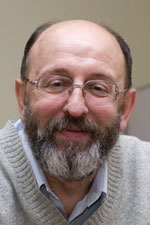
Sergey Lando
— The master’s programme in Mathematics is only in its second year at our Faculty. Up to now, it has only enrolled graduates from other Russian universities: the first graduation from our undergraduate programme will take place this year. This means that we had planned the expansion of the master’s programme in 2012 even before it was initially launched. We hope that the programme participants have consciously chosen the route of a researcher. The basic courses in the programme are focused on two areas which are the most active at the Faculty – topology and algebra (particularly algebraic geometry). Topology is taught by one of the best topologists in the world – Viktor Vasiliev, member of the RAS (Russian Academy of Sciences), President of the Moscow Algebraic Society, Chief Research Fellow at the RAS Steklov Institute of Mathematics. Algebra courses are taught by Alexei Rudakov, invited speaker at the International Congress of Mathematicians, and Marat Rovinsky, a young mathematician and Doctor of Physics and Mathematics. But the main part of the education is received by students on an individual basis; they have a choice of a large variety of special courses and seminars at the Faculty. After the first weeks of study, each student chooses an academic supervisor, who, in addition to supervising work on their master’s thesis, recommends courses to study.
— You’ve started teaching the programme in English. Why did you make this decision?
— There are several reasons to begin teaching in English. The university is moving up to an international level, and this means we need to attract foreign students. It is natural to do this at the level of master’s studies, which determines the research character of the university. On the other hand, attracting well-prepared international students will make the faculty and the university as a whole more attractive for strong Russian students. We, in our turn, are interested in casting our net wide for future researchers.
In terms of mathematical education, we have something to offer to the graduates of both Western and Eastern universities. The faculty has a staff of the highest-level lecturers. A considerable part of the staff are young lecturers with experience of education and teaching abroad. In fact, teaching in English is not an obstacle today: if there is someone in a seminar who doesn’t understand Russian, the speaker can easily switch to English.
We have accumulated a vast experience of teaching and many materials for the courses as part of the Math in Moscow programme. This programme was established over 10 years ago by the Independent University of Moscow (IUM), and over recent years it has been jointly organized by the IUM and the HSE. Students of the best North-American universities come to participate in it; they spend one semester here, attend mathematical courses in English and take examinations. Many of the lecturers in this programme are members of our faculty.
— What can you say about the demand for the programme among students and professionals?
— We expect that the programme will be of interest for university graduates from several different groups of countries. First of all, we mean Russia and the CIS. For our fellow citizens, the opportunity to find themselves in an international research environment, while at the same time staying in the framework of their culture, can be very attractive.
We also expect interest from Western European students, for example, from the French, with whom we have very strong ties in mathematics. Some of our students already have experience of working with them as part of the international summer camp in Bremen; next year this camp will be based in Lyons. We are also specifically interested in Great Britain. Education there is rather expensive and the price is growing, as well as the cost of living, so our programme may be of interest for British students.
According to our experience of the Math in Moscow programme, education in Moscow can also be of interest to U.S. and Canadian graduates. Graduates of this programme have formed an active internet community where potential participants ask for advice. If they decide that the quality of our programme is as good as that offered in the best American universities, but it is easier to enter, this may well bring some people here.
We also see a huge potential for participation from China and Japan. The Chinese actively invest in educating their students abroad. The Japanese may be attracted by the fact that we have two Japanese professors among our staff.
And, last but not the least, are our own graduates. We very much look forward to both their criticism and support.
Of course it would be naïve to think that during the first year of the programme’s activity each or at least several of those groups mentioned above will make a big contribution to the programme. But continuous work over several years should bring results. The Math in Moscow programme started in 2000 with one student. And only after 2 or 3 years, when leading U.S. universities began acknowledging it as an interesting international partner, it became sustainable, and now it attracts 10 or 20 students each semester.
— What are the career opportunities for the programme graduates?
— We expect that research-oriented graduates will enter the master’s programme. If their work is successful, a natural step for them after the master’s programme will be to enter a doctoral (aspirantura) programme. And not necessarily ours. For example, the doctoral programme of the future Skolkovo University of Technology is tempting for graduates of our master’s programme who are interested in applied mathematics. We also have close ties with the RAS Steklov Institute of Mathematics (there is its vocational training department at our faculty), the Institute for Information Transmission Problems and many other research teams. We also expect that starting from the next year our aspirantura programmes – the existing course in Mathematics of Logic, Algebra and Number Theory and the new Geometry and Topology – will be included in the HSE programme of academic aspirantura. The participants of this programme get a monthly stipend of 25 thousand roubles, which means they can focus on their studies rather than looking for work and this makes postgraduate education even more attractive.
See also:

HSE University Wins Seven Medals at International Mathematics Competition for University Students
HSE students were among the winners of the International Mathematics Competition for University Students (IMC), which was held in August in Bulgaria. The medallists are students of the HSE Faculty of Computer Science (FCS) programme in Applied Mathematics and Information Science and the Faculty of Mathematics programme in Mathematics.
‘Our Result Was Recognised Not Only Within the Project Defence but Also on International Scale’
This year, the European AI Conference (ECAI 2025) accepted an article titled ‘Multi-Agent Path Finding for Large Agents is Intractable’ by Artem Agafonov, a second-year student of the Applied Mathematics and Information Science Bachelor’s programme at HSE University’s Faculty of Computer Science. The work was co-authored by Konstantin Yakovlev, Head of the Joint Department with Intelligent Technologies of System Analysis and Management at the Federal Research Centre ‘Informatics and Management’ of the RAS and Associate Professor at the Faculty of Applied Sciences. In the interview, Artem Agafonov explained how he came up with the idea for the article and how he was able to present it at an A-level conference.
'Today, Human Existence Without Mathematics Is Difficult; Tomorrow, It Will Be Simply Impossible'
Mathematicians around the world share a common language and continue to collaborate despite the challenges of recent years. The hub of mathematical networking has been shifting to China, where scientists from various countries meet at conferences and other academic events. Partnerships with leading Chinese universities offer promising opportunities to strengthen existing ties and forge new ones. In this interview with the HSE News Service, Valery Gritsenko, Head of the HSE International Laboratory for Mirror Symmetry and Automorphic Forms, discusses this and other topics, including what AI is and why the state should engage with mathematicians.
HSE Scores Best Results among Russian Universities at International Olympiad in Uzbekistan
At the Third Al-Khorezmi International Mathematical Olympiad (AKHIMO), held at Urgench State University in Uzbekistan, students from HSE University's Faculty of Computer Science scored best results among participants from Russian universities. The olympiad also featured contestants from Brazil, the USA, China, India, South Korea, Malaysia, Japan, Vietnam, Serbia, Kyrgyzstan, Kazakhstan, Tajikistan, Turkey, Turkmenistan, and Uzbekistan.
Russian Scientists Assess Dangers of Internal Waves During Underwater Volcanic Eruptions
Mathematicians at HSE University in Nizhny Novgorod and the A.V. Gaponov-Grekhov Institute of Applied Physics of the Russian Academy of Sciences studied internal waves generated in the ocean after the explosive eruption of an underwater volcano. The researchers calculated how the waves vary depending on ocean depth and the radius of the explosion source. It turns out that the strongest wave in the first group does not arrive immediately, but after a significant delay. This data can help predict the consequences of eruptions and enable advance preparation for potential threats. The article has been published in Natural Hazards. The research was carried out with support from the Russian Science Foundation (link in Russian).
'The Six Handshakes Rule Applies to Social Media'
Ivan Samoylenko specialises in graph theory; in his third year of university, he developed an idea that later became the foundation of a highly cited academic article. In this interview with the HSE Young Scientists project, he speaks about the Watts-Strogatz small-world model, being a performer in the Bolshoi Children's Choir, and making the choice between science and industry.
‘HSE Is a Very Good Place: Intelligent Students, a Strong Teaching Staff’
Since March 2025, the HSE Faculty of Mathematics has welcomed a leading Russian mathematician, Doctor of Physical and Mathematical Sciences, Honorary Professor at the University of Edinburgh, National Professor of China, and recipient of the Lyapunov Prize—Sergey Kuksin. In an interview with the HSE News Service, he spoke about the role of the individual in mathematics, KAM theory, and why analysis is so relevant today.
Scientists Disprove Bunkbed Conjecture
Mathematicians from Russia, including two HSE graduates, have disproven a well-known mathematical conjecture that, despite lacking solid proof, had been considered valid for 40 years. The ‘Bunkbed Conjecture’ belongs to percolation theory—a branch of mathematics that studies the formation of connected structures in independent environments.
'Our Mathematics Is for Far-Reaching Minds'
Anna Presnova focuses on automatic control theory, a branch of science that addresses global problems. In this interview with the HSE Young Scientists project, she talks about her aspiration to achieve practical results, the energy she gains from teaching, and why she would be interested to meet with Alexandr Lyapunov, founder of stability theory.
'It Was a Great Learning Experience for the New Generation of Mathematicians'
From November 5 to 9, 2024, HSE University hosted a five-day conference on algebraic geometry and mathematical physics, organised jointly with the Beijing Institute of Mathematical Sciences and Applications. Over 30 mathematicians from the world's leading universities, including early-career scientists, participated in the event.