News

HSE Researchers Develop New Method for Analysing Genetic Admixture of Populations

HSE Researchers Develop New Method for Analysing Genetic Admixture of Populations
Researchers of the HSE International Laboratory of Statistical and Computational Genomics together with their international colleagues have proposed a new statistical method for analysing population admixture that makes it possible to determine the time and number of migration waves more accurately. The history of Colombians and Mexicans (descendants of Native Americans, Spaniards and Africans) features two episodes of admixture that occurred about 350 and 200 years ago for Mexicans and 400 and 100 years ago for Colombians. The results were published in the Plos Genetics journal.

A Scientific Supervisor Has Appeared in the Laboratory of Landscape Ecology

A Scientific Supervisor Has Appeared in the Laboratory of Landscape Ecology
Russian-Israeli scientist Fyodor Tatarinov joined the laboratory.

‘A Melting Pot of Students with Different Educational Backgrounds from Different Countries’

‘A Melting Pot of Students with Different Educational Backgrounds from Different Countries’
The HSE ISSEK English-language Master’s programme in Governance of Science, Technology and Innovation is accepting applications. Studies in English, practical skills, extensive networking—former and current students shared their impressions with the HSE News Service, while Academic Supervisor Dirk Meissner talked about what to expect in the new academic year.

New articles by Tatiana Zhuravleva

In the first half of 2022, 2 articles were published by an employee of the laboratory Tatiana Zhuravleva. The first is co-authored with Alice Guerra under the title Do women always behave as corruption cleaners? published in the prestigious magazine Public Choice. The second is Corruption: A cross-country comparison of contagion and conformism, co-authored with Arthur Scream and Jin Di Zheng published in the highly regarded Journal of Economic Behavior and Organization.

How do digital technologies affect human well-being?

How do digital technologies affect human well-being?
The Human Capital Multidisciplinary Research Center has published the 12th issue of the scientific digest. It presents the results of a comparative study of the conditions created for the impact of digital technologies on well-being and quality of life in Russia and the OECD, carried out by the Institute for Statistical Studies and Economics of Knowledge (HSE University).

The Scientists of the Laboratory Could not Take Part in the European Congress of the Association of Landscape Ecology

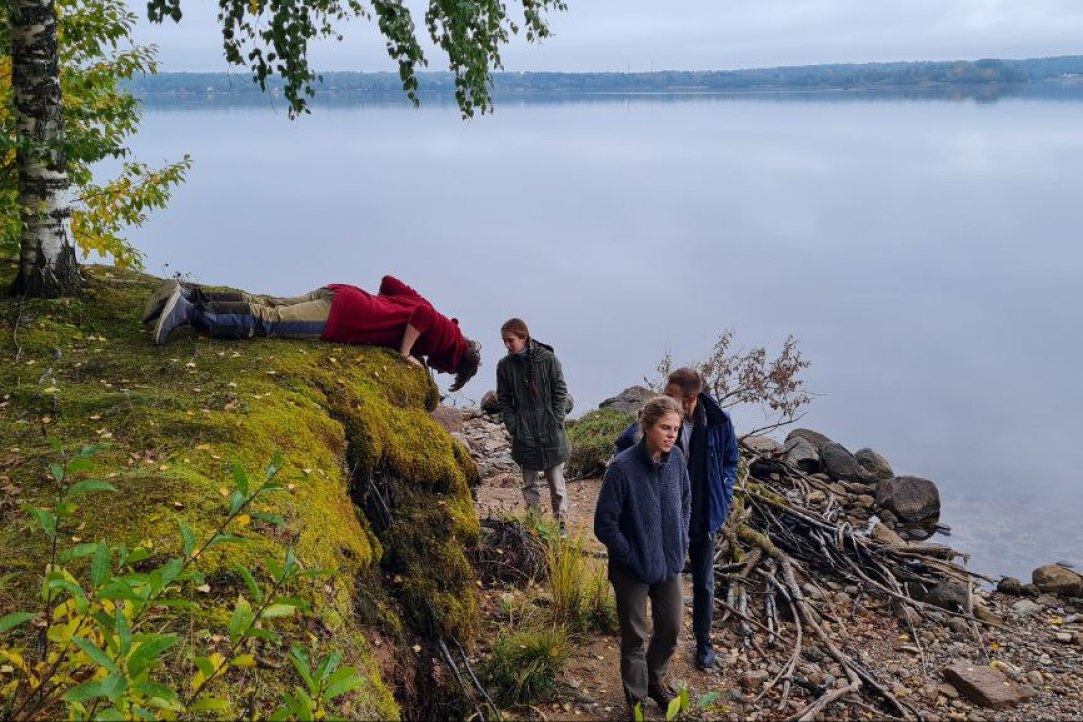
On July 11-15, 2022, the largest event of the last two years in the field of landscape ecology took place – IALE European Landscape Ecology Congress 2022. For the first time since its foundation, the Congress was held without the participation of Russian scientists.

Seminar: gene overexpressionSeminar

On June 24, 2022, the International Laboratory of Microphysiological Systems hosted a joint seminar with the Laboratory for Research on the Molecular Mechanisms of Longevity, dedicated to the issue of miRNA overexpression in human cells, a process that leads to an excess amount of transcript produced by the genome.

The new paper of the Center for Language and Brain in Human Brain Mapping

The new paper of the Center for Language and Brain in Human Brain Mapping
Vardan Arutiunian has published a paper in Human Brain Mapping that touches on the age-related changes of gamma oscillations in the auditory cortex of primary-school-aged typically developing children.  

8th The Role of State in Varieties of Capitalism (SVOC) Conference

The Institute of World Economics of the Centre for Economic and Regional Studies (in collaboration with the Democracy Institute) is organizing the 8th The Role of State in Varieties of Capitalism (SVOC) Annual International Conference in Budapest, on 24-25 November 2022.

TALD (Typological Atlas of the Languages of Daghestan) v. 1.0.0 Now Public

TALD (Typological Atlas of the Languages of Daghestan) v. 1.0.0 Now Public
The Linguistic Convergence Laboratory has released TALD: the Typological Atlas of the Languages of Daghestan. This new resource provides information about linguistic structures that are characteristic of Daghestan, and offers different types of map visualizations to illustrate the geographical and genealogical distribution of features.