About Success Builder
How do you find your place in life? How do you find something to do that both comes naturally to you and makes you happy? The answer is that you have to apply the knowledge you’ve gained from university and from life itself correctly. The Success Builder Project features HSE University graduates who have discovered themselves through an interesting business or an unexpected profession. The protagonists share their experiences and lessons learnt and talk about how they’ve made the most of the opportunities they were given.
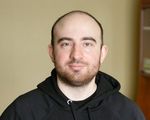
Andrey Oparin, a graduate of the HSE Faculty of Economics (now the Faculty of Economic Sciences), founded Renowell—a company specialising in construction and renovation—in 2006. Today, its portfolio includes dozens of completed retail projects as well as the headquarters of major Russian companies. In this interview with Success Builder, Andrey discusses goal setting, the satisfaction of seeing happy clients, and why an entrepreneur’s mind needs rest to stay resourceful.
You recently attended the HSE Donors Club Autumn School. When was the last time you took part in this event?
I attended a similar event in 2016 or 2018. But when it comes to people, I’ve always maintained a connection with the university. Our cohort at HSE was very close. There are now more than 100 members in our alumni chat—almost everyone who studied at the same time as I did. We hold an alumni meetup every year, and this year it will take place in late November. All my best friends are from HSE University, and we stay in touch one way or another.
What do you feel when you return to your alma mater?
The building on Pokrovka is, of course, impressive. You can immediately sense the unique university atmosphere there. But this building didn’t exist when I was a student. I studied in the buildings on Ordynka and Myasnitskaya, and whenever I walk through those parts of the city or drive past them, I inevitably feel nostalgic.
Were you a good student?
Since I wasn’t from Moscow, I had to start working at the end of my first year of university. That’s probably why I didn’t graduate with honours. Still, all my grades were above a C, and I consistently performed well in the core subjects of my field.
Where are you from and how did you end up at HSE University?
The story of how I was admitted to HSE University is an illustration of the saying, 'Fortune favours the bold.' I am from Olenegorsk, a town in Murmansk Oblast north of the Arctic Circle. In 1996, when I was in 10th grade, economics was an extremely popular field. Like many others, I wanted to pursue it and looked into the top universities known for strong economics programmes: MSU, the Finance Academy, and Plekhanov University. Quite by chance, I discovered HSE University and learned that it might be the best economics school of all—so I immediately decided to apply. Naturally, my teachers and school principal were sceptical. They asked, 'Where do you think you’re going? To Moscow? To a top university?' Olenegorsk has a large mining and processing plant, a major Severstal operation, so we were generally expected to apply to mining universities in Moscow or St Petersburg (Leningrad at that time). But I was firmly set on HSE University. In 1998, I went to Moscow and… failed the entrance exams. My knowledge of mathematics and English simply wasn’t sufficient. I needed a place to live in Moscow, so I enrolled at the Mining University, which was easy to do since I had graduated from school with a silver medal. By November, ahead of schedule, I had successfully passed all the tests and exams for the first examination period—and after that, I never attended classes there again. Instead, I stayed in the dormitory, studying mathematics and English to bring my knowledge up to the level required for admission to HSE University. Ultimately, I was admitted as a winner of the Mathematical Olympiad held in May. I think I took third place, and as a winner I was supposed to be enrolled without entrance exams. At least, that’s what I was told—though I was never given any official document to confirm it. So, when the time came, I went and took the entrance exams along with everyone else. In parallel, I was also accepted to MSU, the Finance Academy, and Bauman University.
But you remained loyal to HSE University.
Yes, it was the first university I applied to and stuck with it. Besides, by the time I attended my first class, I already knew about thirty other students in our course, as I had studied with them in the preparatory department.
You mentioned that you started working in your first year at university. Was it because you had free time or because you needed the money?
Of course, I needed the money. It was 1999, the year after the financial crisis. My parents were helping, but even with their support, I barely had enough to cover basic living expenses. And it was Moscow—I wanted to go to the movies and enjoy student parties. So, while still in my first year, I got a job at Guta Bank, which was one of the ten largest banks in Russia at the time. I worked in the bank’s valuation department. Valuation is needed when someone applies for a loan and provides collateral. It could be real estate, but more often we valued businesses, and this work was closely related to what I was studying at university. There were no other employees with a degree in economics in my department. At best, they had completed some appraiser courses, but certainly they weren’t trained to value a business using formal economic methods. It so happened that I took part in the valuation of Krasny Oktyabr and Babaevsky before they were incorporated into the United Confectioners Holding, as well as many other factories in Moscow. The work was project-based, with a flexible schedule—which was convenient for full-time students: you study until lunchtime and then work, sometimes until ten or eleven in the evening. Starting in my second year at university, I became financially self-sufficient and even involved a friend from HSE University in my work. We studied and worked together.
Working for several years with major Moscow enterprises must have been a goldmine for networking. Did you make any valuable connections?
Of course, being inside a bank gave me the opportunity to network, promote myself, and even ask to attend board of directors’ meetings to get noticed. But our department was fairly isolated—not even in the main building, but in a neighbouring one. And to be honest, I wasn’t thinking about networking at that time. I only realised later how important communication is for career development. Back then, I had just two goals: to graduate from university and to earn a living.
If you had the chance to go back in time, would you change anything?
I think I would. If I could go back, I would probably focus more on my studies—delving deeper into subjects, taking additional courses, seeking internships at various companies, and trying out different fields. For example, some of my classmates aimed for careers in investment banking, which offers immediate access to top-tier businesses from a networking perspective. Investment banks work with large companies, so even as a first-year analyst, you start interacting with top managers, CFOs, CEOs, and business owners. And that’s not even mentioning the size of their bonuses. But at the time, I was focused less on my long-term development and more on meeting immediate needs, and there was no one around to guide me. Looking back, I realise I wasn’t making the best choices.
Goal setting should begin in childhood—or at the very least, by high school
Did your career in banking end at Guta Bank?
No, I had another experience. In my fifth year at university, I was offered an exciting position at Nikoil Investment and Commercial Bank, which was among the top five banks at the time. I worked there for two weeks and realised that the banking sector wasn’t for me. So I left—I don’t want to do something I don’t enjoy.
You didn’t enjoy it so much that it pushed you to start your own business?
Not immediately. After that, I worked for three more years at a large retail chain, where I rose to Director of Development within the first six months, handling finance, strategic development, and more. Even after founding Renowell, I took positions at other companies a couple of times. At the time, I justified it to myself by saying I was gaining additional experience on the side. When you work for someone, you can learn from other people’s mistakes. But when you run your own business, you can only learn from your own. Sooner or later, I would have left employment for my own business anyway, because entrepreneurship a mindset.
What kind of mindset?
A rebellious mindset—being willing to push boundaries, take risks, and assume responsibility. There’s a certain intangible but visible chemistry that makes people entrepreneurs. I often observe candidates for project head positions at Renowell who clearly have entrepreneurial potential. I can literally see it in them. But there’s always something that holds them back, like the hard work entrepreneurs have to put in.
Is that not true?
I know two completely opposite types of entrepreneurs. Some work 24/7, never take vacations, never go out with friends, are the first to arrive at the office and the last to leave—and believe that this is the only path to success. Then there’s another, also quite numerous, category of entrepreneurs who believe that the brain must always be in a resourceful state. To achieve this, they take far more rest than the standard time off, spend days away from the office, and follow other similar practices. I probably belong to the second category. For interesting strategic ideas to come to me, I need to free my mind as much as possible from mundane daily tasks. I try to maintain a work–life balance, dedicating time to my family, myself, and sports. But that’s another story. For example, I don’t have a clear boundary between when my workday ends and my day off begins, because for me, work is also a hobby that brings great enjoyment.
Have you ever experienced burnout?
Of course. In 2019, just before the pandemic, I was working extremely hard and remember thinking to myself that the construction business was 'evil' and that I couldn’t do it anymore. During the pandemic, I stayed in the countryside, rested, regained my emotional balance, and even started two new businesses. One didn’t take off, but the other is still running. These experiences helped me realise that my construction business was actually a great venture—I had just been running it without a clear strategy.
By that time, how long had Renowell been in operation?
Quite a while. I founded the company in 2006. Initially, we focused on constructing new supermarkets for retail chains that were expanding rapidly—Pyaterochka, Perekrestok, Magnit. A year later, to gain more experience, I simultaneously took on the role of CEO at the largest vending machine operator in Russia. After that, I returned to my own business, and then later left again to work as the director of a real estate development company for three years. In 2011, I decided I was done working as an employee and focused on developing my own business. I wanted it to grow and create something big and exciting. I visited the then-new shopping malls, Atrium and Metropolis, noted all the companies there, and started reaching out to their offices by phone and email. I couldn’t find any contacts for H&M’s Russian office, so I simply wrote a letter in English, including a presentation, and sent it to their head office. A year later, I received a call from H&M’s Moscow office: 'We were contacted by Sweden, and they said we should work with you. Come over and we’ll take a look.' When I attended that meeting, I realised I had hit the jackpot and could now build a serious, sustainable business. I immediately sat down and designed a large 2,500-square-meter store from scratch. Over the next ten years, we built around 30 stores for this brand alone. Looking at Renowell’s entire 19-year history, we’ve served 83 clients, completed over 300 projects in more than 50 cities across Russia, plus two in Belarus, totalling 235,000 square meters of space.
Surely with such volumes, you must have a business strategy?
I only came up with a strategy two years ago. Before I turned 40, we didn’t have clearly defined business goals. We simply built stores for well-known companies and enjoyed the work. Of course, we were growing and aiming to earn more. But it’s important to distinguish dreams from goals. A goal is always formalised—preferably in a digital format.
What prompted the change in your approach?
As I understand it, every person evolves over their lifetime. Perhaps by the time I reached 40, my personality had matured, and I completely changed my approach to business. On top of that, I was very tired of retail and wanted to shift my focus to a different target audience—moving to a higher league by designing headquarters for leading companies, given especially that Moscow is a huge and capital-intensive market. The cost of fitting out an A-class office within a concrete shell is almost as high as constructing the shell itself. But the emotional payoff is completely different. In retail, it’s uncommon for contractors to receive praise—you do your job, and strangers use the product without giving it a second thought. But when you design and create an impressive office, the client or a top manager can reach out directly and say, 'Thank you, this is truly remarkable.' That kind of feedback provides a huge boost of motivation.
And for that, you just needed to move from one segment to another?
It might seem that walls, drywall, and wiring are the same everywhere—but they’re not. The technologies, materials, and tasks are all different. To participate in competitive bidding, you need at least five completed office projects in your portfolio. Without that, they simply won’t consider you. But we were fortunate. When we completed a store in a business centre, the developer—MR Group—couldn’t believe we had built it within a concrete shell in a record 58 days. They were so impressed that they invited us to renovate their headquarters. Gradually, we began to enter the office market, establish a foothold, and now we feel quite comfortable there. Today, Renowell’s portfolio includes the offices of VK, VTB, Surgutneftegas, and other major companies. This journey began in 2022, and by 2024, our revenue had doubled.
Is this about the benefits of having a strategy?
Exactly. I began by organising a training course for my company’s executives. Over six months, we spent one weekend each month in coaching sessions, learning the skills an executive needs today—delegation, personal performance management, staff motivation, effective negotiation, and conducting job interviews.
Did you train alongside your staff?
Yes, and I gained a lot from it. In particular, it prompted a mental shift, as I became aware of my own weaknesses and have since been working to address them.
Like what?
For example, poor goal-setting. I’ve always been strong in consistency and creativity, but my sense of purpose wasn’t as developed. Now I’m actively working on improving that. I’m also aware of my tendency to impose my opinions on others—employees, to a lesser extent clients, and even friends and family. I’m now focusing on being more empathetic and, in my interactions, understanding other people’s perspectives, goals, and desires. I’m striving to become more flexible.
What is your favourite part of your work?
It’s when our clients officially open their new office. When people—managers and regular employees alike—walk in, they might not say anything, but you can see on their faces how much they love it. Another equally satisfying part is, of course, getting paid for the work you’ve done.
Can you give three tips for those considering entrepreneurship?
First, you need to do something you enjoy—money shouldn’t be your primary motivation. When you convey your passion, customers can feel it, and they are prepared to return and pay more. Second, set a clear goal for three to five years ahead. The simplest example is deciding on the revenue you want to achieve—be specific. But it could also be something like aiming to make it to the top of the Forbes list. It’s crucial for your goal to be as specific and realistic as possible, while also being very, very ambitious. Then, plan in detail for the period leading up to the goal: what steps must I take to reach it? Once you know where you’re headed, your vision and strategy start to take shape. You begin to identify the competencies you and your employees need to develop, and your networking circle starts to evolve. The third key point is to build strong social connections. I would also add a fourth: be patient. Miracles don’t happen overnight, and major success rarely comes in just one year—even if it may seem that way from the outside.