Researchers from the Higher School of Economics conducted a meta-analysis by compiling data across 17 neuroimaging studies on working memory in children.The data obtained shows concordance in frontoparietal regions recognized for their role in working memory as well as regions not typically highlighted as part of the working memory network, such as the insula.
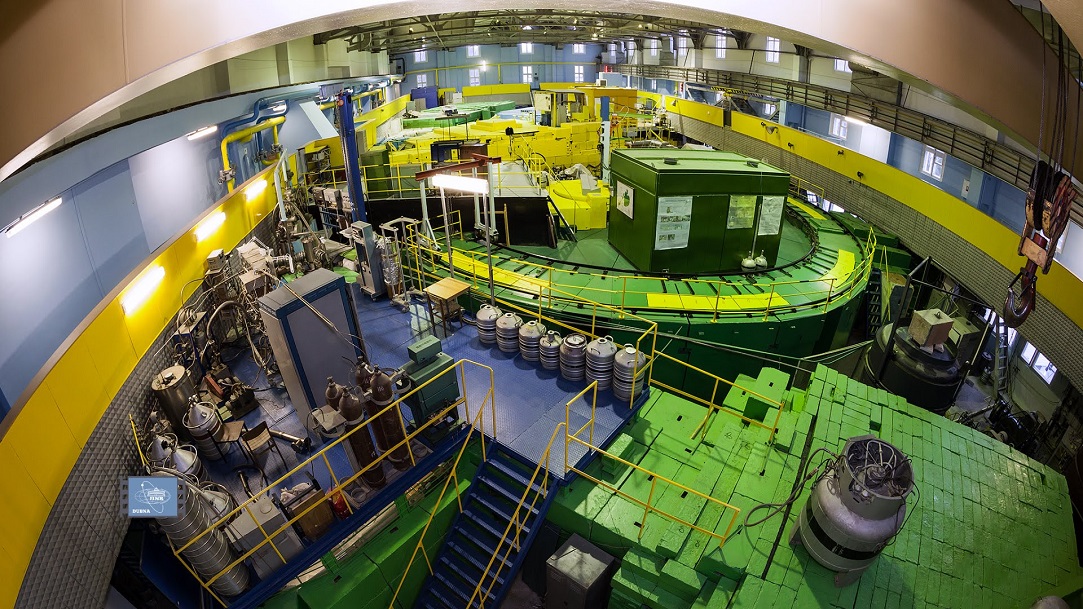
The HSE Faculty of Physics and the Joint Institute for Nuclear Research (JINR) have reached an agreement on a joint partnership. From the beginning of the next academic year, students from the faculty will be able to carry out internships at the institute’s various research laboratories.
Dmitry Abbakumov is the first researcher from a Russian university to present their work at the Psychometric Society conference, founded in 1935. He told the HSE new service about his study of online learning and why Russia has not played a major role on the international psychometrics scene – until now.
Scientists from Higher School of Economics and the Federal Scientific Research Centre ‘Crystallography and Photonics’ have synthesized multi-layered nanowires in order to study their magnetoresistance properties. Improving this effect will allow scientists to increase the accuracy of indicators of various measuring instruments, such as compasses and radiation monitors.
In the recently published article ‘Association of MAOA-uVNTR Polymorphism with Subjective Well-Being in Men,’ a team of researchers was able to statistically monitor the impact of the monoamine oxidase A gene (MAOA) on the subjective evaluation of well-being among men. This work became the latest step towards an understanding of how genes can affect social phenomena.
Anna Efimova and Denis Strebkov from the Higher School of Economics were awarded the Elizabeth H Nelson Prize at the 71st Annual Conference of the World Association for Public Opinion Research (WAPOR), Marrakech, June 27-30, 2018.
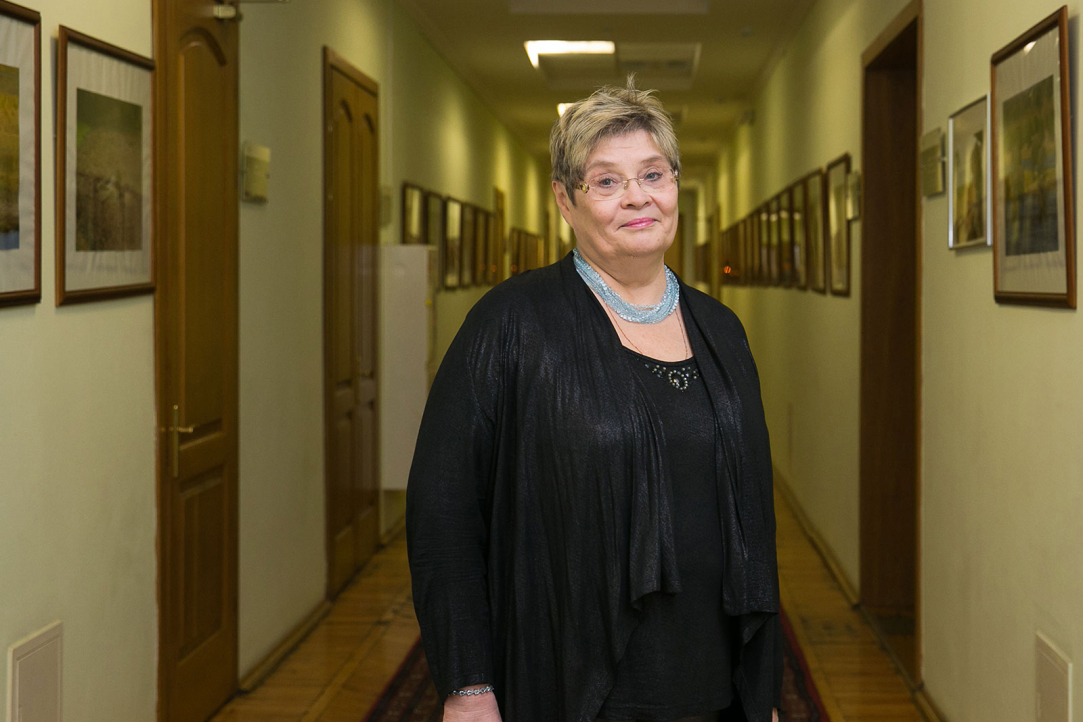
Irina Abankina, Director of the HSE Institute of Education, Tenured Professor and Member of the HSE Academic Council, spoke about her life in academia and work at HSE, for the project ‘Research at HSE: For School and for Life’.
It is possible to enrol at a Russian university without sitting the Unified State Exam (USE) via a 'hybrid' vocational track originally created to encourage upward mobility of disadvantaged social groups. According to the authors of Slipping Past the Test: Heterogeneous Effects of Social Education in the Context of Inconsistent Selection Mechanisms in Higher Education, this pathway to university is also frequently used as a strategic option by students from upper-class families. These individuals constitute almost 40% of those entering university via a vocational track.
Luca Iemi from HSE University, jointly with Niko A Busch from Westfälische Wilhelms-Universität, have found that the state of excitability of the brain — indexed byspontaneous neural oscillations - biases a person’s subjective perceptual experience, rather than their decision-making strategy. The findings will be published in eNeurounder the title ‘Moment-to-moment fluctuations in neuronal excitability bias subjective perception rather than decision-making’.
The Laboratory of Algorithms and Technologies for Networks Analysis (LATNA) in Nizhny Novgorod is one of HSE’s international laboratories. It is co-supervised by Panos Pardalos, Distinguished Professor at the University of Florida, and Valery Kalyagin, Professor and Department Head at the Department of Applied Mathematics and Informatics. Professor Kalyagin told The HSE Look about the lab’s research projects, its work with students, and engagement in the educational life of the campus and HSE at large.