

BRICS Expert Council–Russia Launched at HSE University


The official presentation of the BRICS Expert Council–Russia has taken place at HSE University. The Council will be responsible for the information, analytical and expert support of the Russian BRICS Chairship 2024.
The BRICS Expert Council–Russia was established according to the decision of the Government of the Russian Federation at HSE University at the initiative of the Ministry of Foreign Affairs and the Ministry of Finance of the Russian Federation. The Council will be engaged in expert, analytical and scientific activities on current issues of political, socio-economic, and humanitarian cooperation within BRICS.
Victoria Panova, Head of the BRICS Expert Council and Vice-Rector of HSE University, notes that this shows the high level of trust in HSE by Russia’s leadership. ‘Today HSE University is one of the leading Russian centres in the field of international educational, scientific and expert cooperation,’ she says. ‘HSE University has an exceptional set of competencies in these areas, and our employees enjoy well-deserved renown and have the highest reputation and authority in their fields.’
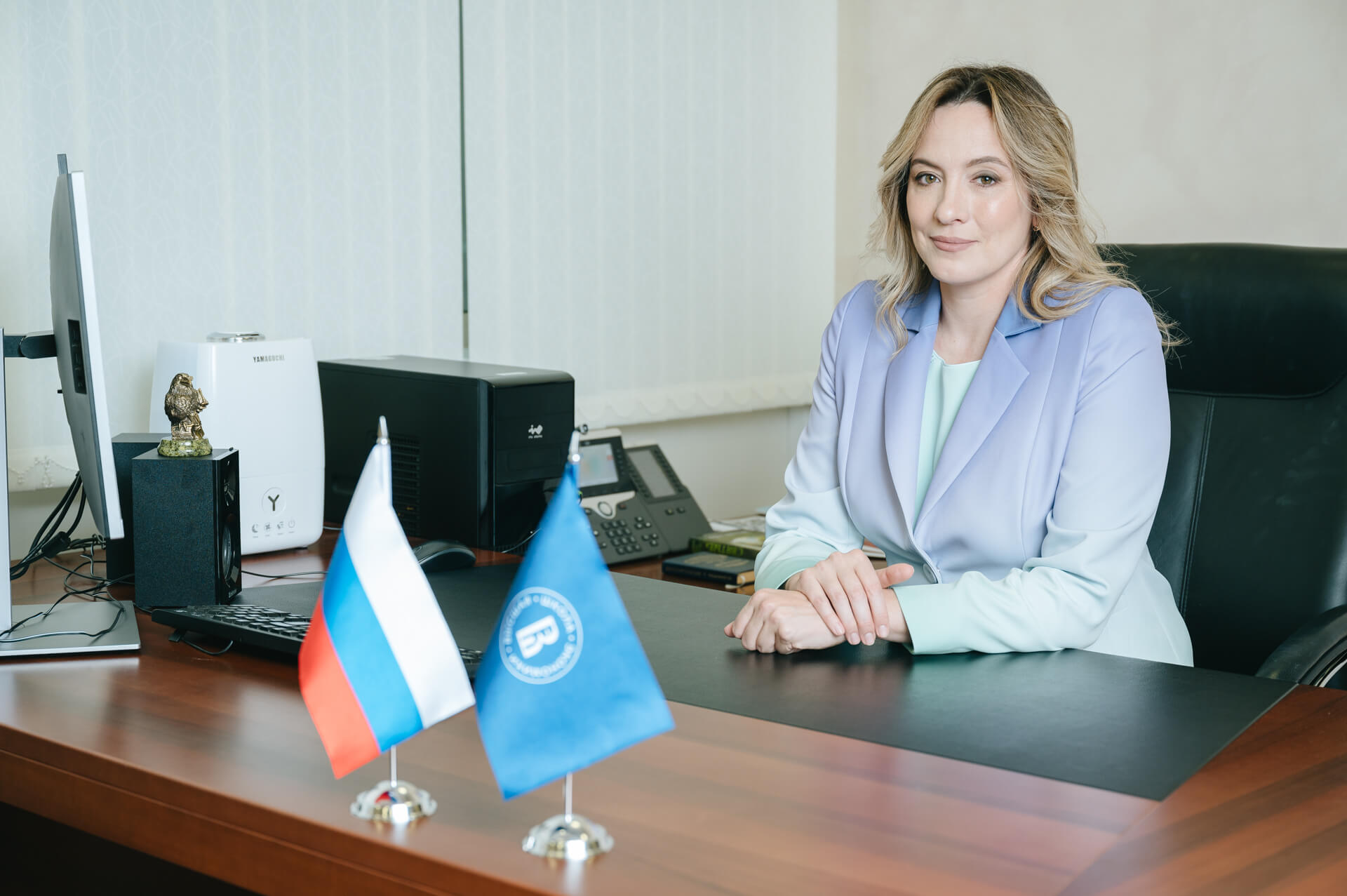
Victoria Panova highlighted the primary role of the expert track in building effective cooperation among the association’s member countries in terms of track II diplomacy.
‘2024 marked the start of a new chapter in the history of BRICS. Russia, as the inaugural chair of the expanded BRICS group, needs to ensure the smooth integration of new member countries into the association’s work. BRICS is effectively developing track II diplomacy, i.e. informal initiatives of academic, expert and civil society communities that interact with government institutions. Our Expert Council is vested with responsibility to act as a national coordinator for BRICS expert track since 2024,’ she added.
This year, the council will hold a number of expert events to collect recommendations on the development of comprehensive cooperation between the member countries for the leaders of BRICS. The main results of this expert track work will be presented at the BRICS Academic and Civil Forums, which will be held in Moscow on May 22nd-24th and July 3rd-4th, respectively.
BRICS Expert Councill–Russia was presented in February at HSE University as part of the strategic session entitled ‘Russian BRICS Chairship 2024: Role of the Expert Track’. Leading Russian experts and scientists from HSE University, IMEMO RAS, RANEPA, MGIMO, the Russian International Affairs Council, etc. all took part in its work. Lilia Rizvanova, BRICS Office, Russian Foreign Ministry, and Evgenia Drozhshchikh, Deputy Director of the Department for Multilateral Economic Cooperation and Special Projects of the Ministry of Economic Development of the Russian Federation, spoke about the main priorities of the Russian BRICS chairship.
Since January 1st, 2024, BRICS officially expanded to include ten countries: Russia, Brazil, India, China, South Africa, Egypt, Iran, the United Arab Emirates, Saudi Arabia and Ethiopia. In 2024, Russia is chair of the BRICS group. The theme of the Russian chairship is ‘Strengthening multilateralism for equitable global development and security.’ A summit between leaders of the BRICS countries will be held in Kazan.

See also:

HSE University Hosts 10th BRICS International School
The 10th BRICS International School: The New Generation was held at HSE University in Moscow from October 26 to 28, 2026. It brought together 100 young leaders from more than 20 countries. Leading HSE University professors and researchers provided the intellectual framework for the event, setting the strategic direction for the discussions.
Researchers Assess Contributions of BRICS Countries to Leading ML/AI Conferences
The HSE Scientometrics Centre analysed more than 104,000 papers published between 2020 and 2025 and presented at ten top-level A* conferences ranked by ICORE 2026. The researchers examined the contributions of Brazil, Russia, India, China and South Africa. Together, these countries accounted for around 40,800 publications, or 39.2% of the total. However, the distribution is highly uneven, and a shared BRICS research space has yet to emerge.
BRICS Launches Joint Study on Competition in Global Grain Trade
At the UN Trade and Development (UNCTAD) headquarters in Geneva, experts and representatives of competition authorities and international organisations discussed competition in the global grain trade. The discussions resulted in the establishment of a BRICS project task force that will prepare the bloc’s first joint sectoral study of the grain market. The initiative was presented by the BRICS Competition Law and Policy Centre based at HSE University.
BRICS International School Held in Delhi
The results of the BRICS International School: New Generation, which was held in Delhi, proved that young people have become key participants in the global dialogue. The event brought together 200 young leaders from leading universities and expert centres in India. The programme was organised by the BRICS Expert Council–Russia, based at HSE University, together with the Russian House in New Delhi with the support of the Ministry of Foreign Affairs of the Russian Federation.
‘BRICS Leaders Expect a Genuine Transformation of Grain Trade Mechanisms’
On February 4–5, 2026, the HSE BRICS Competition Law and Policy Centre (BRICS Competition Centre), together with the Egyptian Competition Authority (ECA), held a meeting of the BRICS Working Group for the Research of Competition Issues in Food Markets in Cairo. The antimonopoly authorities agreed to launch a joint analysis of the grain sector to be conducted with the support of the BRICS Competition Centre and based on the centre’s research report. On the sidelines of the event, a cooperation agreement was also signed between the St Petersburg International Mercantile Exchange (SPIMEX) and the Egyptian Mercantile Exchange.
‘National Symbols of States Are an Integral Part of Cultural Code’
In December 2025, HSE University hosted the first Forum of the BRICS Law Schools Consortium organised by the HSE Faculty of Law. The forum brought together 42 international delegates (including 10 deans) from 14 universities in Belarus, China, South Africa, India, and Indonesia. The programme included expert discussions, the signing of cooperation agreements, and the adoption of decisions on the future areas of activity of the BRICS Law Schools Consortium, which was established at the initiative of the HSE Faculty of Law.
‘Cities Are Key Actors of Interaction in the Global Arena’
The HSE Faculty of Urban and Regional Development (FURD) and India’s leading research centre, the Observer Research Foundation (ORF), have agreed to strengthen their partnership comprehensively in the study and analysis of urban development across BRICS countries. In addition, students and experts from Russia and India will take part in joint academic events and research projects.
HSE University Holds HSE CS × BRICS Ideathon
On November 9, 2025, the HSE CS × BRICS Ideathon—a large-scale intensive event for students aimed at developing international project skills and finding solutions to current challenges facing BRICS countries—took place at HSE University’s Pokrovsky Bulvar campus. The event was organised by the Multilateral Strategic Projects Office with the support of the BRICS Expert Council–Russia , the Faculty of Computer Science (FCS), and the HSE FCS Hackathon Club
‘To Help Make the World More Sustainable, Fair, and Humane’
The BRICS International School: New Generation has concluded at HSE University, bringing together more than 100 participants from 38 BRICS and Global South countries. The attendees included early-career researchers, diplomats, entrepreneurs, journalists, and civil society representatives.
‘Regulators Must Understand That Absolute Predictability is Unattainable’
On October 10–11, 2025, the BRICS Competition Law and Policy Centre at HSE University (the BRICS Centre) hosted a two-day international seminar, ‘Platform Economy: Competition Law and the Market Power of Digital Platforms,’ in Tashkent, Uzbekistan. The event brought together competition authorities from BRICS+ nations and leading antitrust experts from around the world.