

How Modern Robots Are Developed
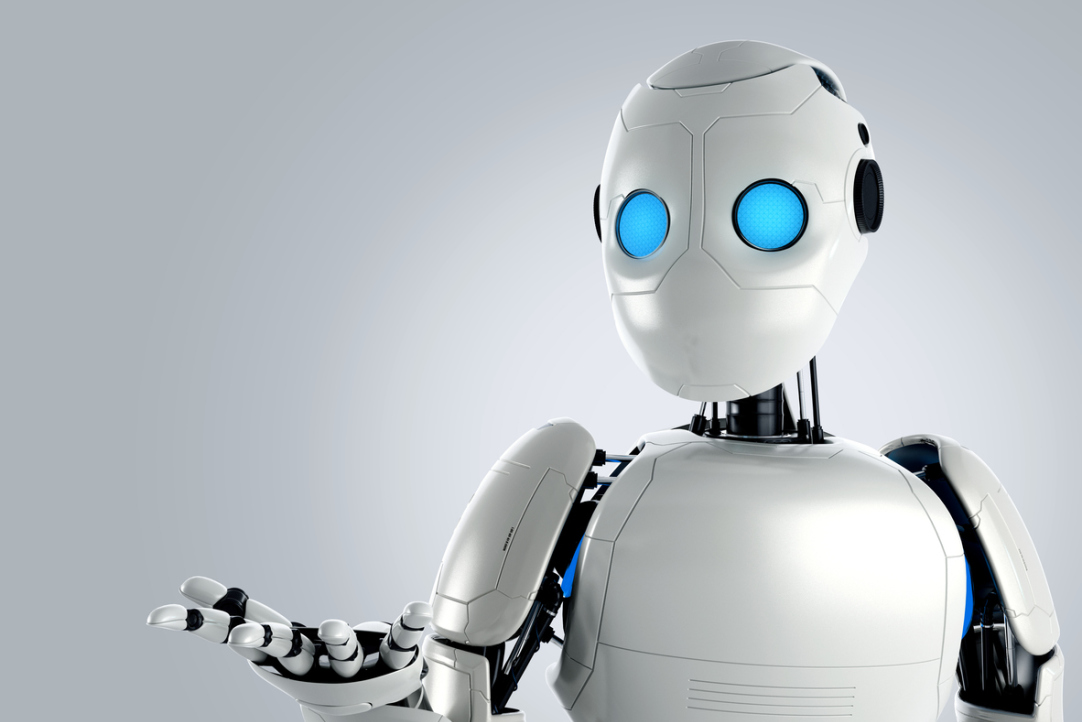
Today, neuroscience and robotics are developing hand in hand. Mikhail Lebedev, Academic Supervisor at HSE University’s Centre for Bioelectric Interfaces, spoke about how studying the brain inspires the development of robots.
Robots are interesting to neuroscience and neuroscience is interesting to robots —this is what our article ‘Neuroengineering challenges of fusing robotics and neuroscience’ was about in the journal Science Robotics. Such collaborative development contributes to progress in both fields, bringing us closer to developing more advanced android robots and a deeper understanding of the structure of the human brain. And, to some extent, to combining biological organisms with machines, to create cybernetic organisms (cyborgs).
Neuroscience for Robots
Robots often resemble humans in their make-up. This is true for robots that are meant to mimic human actions and behaviour — neuroscience is less important to industrial machines.
The most obvious thing to use in the design of a robot is to make it look human. Robots often have two arms, two legs and a head, even if it is not necessary from an engineering point of view. This is especially important when the robot will interact with people — a machine that looks like us is easier to trust.
It is possible to ensure that not only the appearance, but also the ‘brain’ of the robot resembles that of a human. In developing the mechanisms for perception, information processing, and control, engineers are inspired by the structure of the human nervous system.
For example, a robot's eyes — TV cameras that can move on different axes — mimic the human visual system. Based on the knowledge of how human vision is structured and how the visual signal is processed, engineers design the robot's sensors according to the same principles. In this way the robot can be endowed with the human ability to see the world in three dimensions, for example.
Humans have a vestibulo-ocular reflex: the eyes apply stabilisation using vestibular information when we move, allowing us to maintain the stability of the picture we see. There may also be acceleration and orientation sensors on a robot's body. These help the robot to take body movements into account to stabilise the visual perception of the outside world and improve agility.
In addition, a robot can experience the sense of touch just like a human — a robot can have skin, it can feel touched. And then it doesn't just move randomly in space: if it touches an obstacle, it senses it and reacts to it just like a human does. It can also use this artificial tactile information to grip objects.

Robots can even simulate sensations of pain: some forms of physical contact feel normal and some cause pain, which drastically changes the robot's behaviour. It starts to avoid pain and develop new behaviour patterns, i.e. it learns — like a child who has been burned by something hot for the first time.
Not only sensory systems, but also a robot's body control can be designed analogously to that of humans. In humans, walking is controlled by so-called central rhythm generators — specialized nerve cells designed to control autonomous motor activity. There are robots in which the same idea is used to control walking.
In addition, robots can learn from humans. A robot can perform actions in an infinite number of ways, but if it wants to mimic a human, it must observe the human and try to repeat their movements. When it makes mistakes, it compares itself with how a human performs the same action.
Robots for Neuroscience
How can neuroscience use robots? When we build a model of a biological system, we begin to better understand the principles by which it works. Therefore, developing mechanical and computer models of human nervous system movement control brings us closer to understanding neurological functions and biomechanics.
And the most promising area of using robots in modern neuroscience is in designing neurointerfaces — systems for controlling external devices using brain signals. Neurointerfaces are necessary for the development of neuroprostheses (for example, an artificial arm for people who have lost a limb) and exoskeletons — external frames or skeletons for a human body to increase its strength or restore lost motor ability.
A robot can interact with the nervous system through a bi-directional interface: the nervous system can send a command signal to the robot, and the robot from its sensors can return sensory information to the human, causing real sensations by stimulating nerves, nerve endings in the skin, or the sensory cortex itself. Such feedback mechanisms make it possible to restore the sensation of a limb if it has been lost. They are also necessary for more precise movements of the robotic limb, since it is on the basis of sensory information received from the arms and legs that we correct our movements.
There is an interesting question that arises here: Should we control all degrees of freedom of the robot through a neural interface? In other words, how should we send specific commands to it? For example, we can ‘order’ the robotic arm to pick up a bottle of water, and it will perform specific operations: it will lower its arm, turn it, and unclench and clench the fingers on its hand — all on its own. This approach is called combined control — we give simple commands through a neural interface, and a special controller inside the robot selects the best strategy for implementation. Or we can create a mechanism that will not understand the ‘take the bottle’ command: it needs to be sent information about specific, detailed movements.
Current Studies
Neuroscientists and robotic scientists study various aspects of brain operation and robotic devices. For example, at Duke University I conducted experiments with neural interfaces on monkeys, since interfaces need to be directly connected to brain areas for them to work accurately and such experimental interventions are not always possible to be performed on humans.
In one of my studies, a monkey walked along a path and the activity of its motor cortex, which is responsible for leg movement, was read and triggered a robot to start walking. At the same time, the monkey observed this walking robot on a screen placed in front of it.
The monkey used feedback, so it corrected its movements based on what it saw on the screen. This is how the most effective neural interfaces for implementing walking are developed.
The Cybernetic Future
Such research leads us to innovative developments in the future. For example, creating an exoskeleton to restore the movements of completely paralysed people no longer seems like an unattainable fantasy — it just takes time. Progress may be held back by the lack of computer power, but development over the past ten years has also been enormous here. It is likely that we will soon see people around us using light, comfortable exoskeletons rather than wheelchairs or strollers to get around. Human cyborgs will become commonplace.
Commercial development of such systems is taking place all over the world, including in Russia. For example, the famous ExoAtlet project is developing exoskeletons for the rehabilitation of people with motor disabilities. The HSE Centre for Bioelectric Interfaces participated in the development of algorithms for these machines: Centre Head, Professor Alexey Ossadtchi, and his doctoral students developed a neurointerface that triggers the walking movements of the exoskeleton.
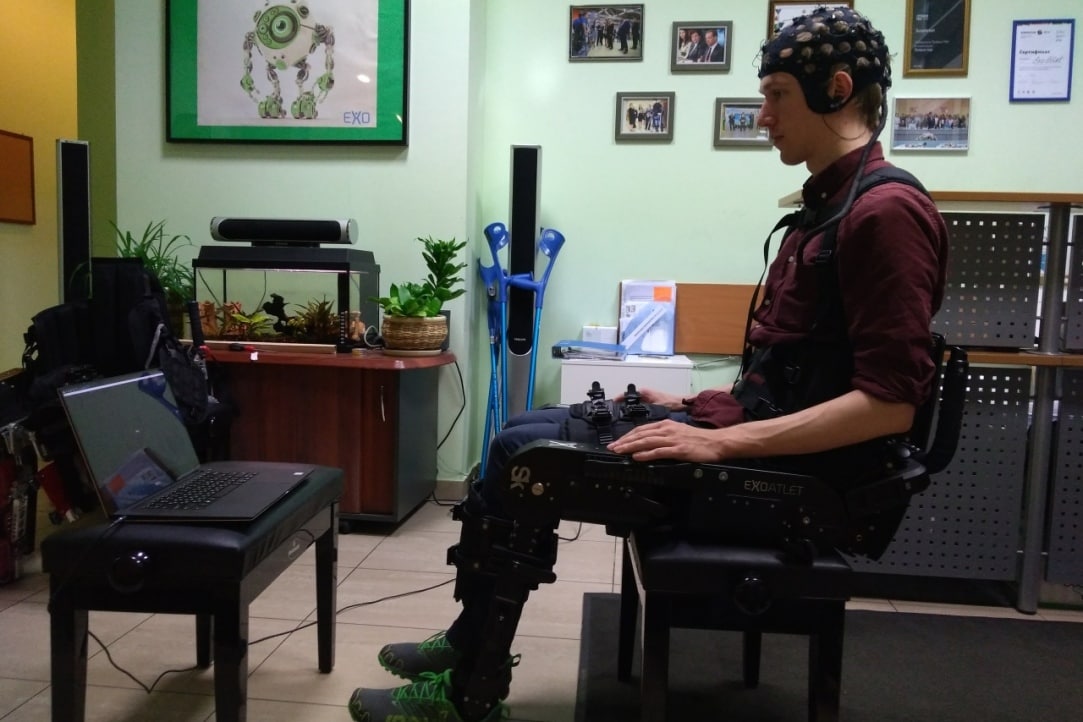
The rapid development of humanoid robots is also becoming a reality. It is likely that we will soon have robots walking around imitating us in many respects —moving like us and thinking like us. They will be able to do some of the work previously available only to humans.
Obviously, we will see the development of both robotics and neuroscience, and these fields will converge. This not only opens up new opportunities, but also creates new ethical questions, such as how we should treat android robots or human cyborgs.
And yet, so far, humans are better than robots in many ways. Our muscles are the most economical: eat a sandwich and you will have enough energy for the whole day. The robot will have a flat battery in half an hour. And although it may be much more powerful than a human, it is often too heavy. When it comes to elegance and energy capacity optimisation — so far, a human is still superior to a robot.
It is not far into the future when this will change — there are tens of thousands of talented scientists and engineers working towards this goal.
Interviewed by Anastasia Lobanova
See also:

Scientists Uncover Why Consumers Are Reluctant to Pay for Sugar-Free Products
Researchers at the HSE Institute for Cognitive Neuroscience have investigated how 'sugar-free' labelling affects consumers’ willingness to pay for such products. It was found that the label has little impact on the products’ appeal due to a trade-off between sweetness and healthiness: on the one hand, the label can deter consumers by implying an inferior taste, while on the other, it signals potential health benefits. The study findings have been published in Frontiers in Nutrition.
Internal Clock: How Heart Rate and Emotions Shape Our Perception of Time
Our perception of time depends on heart rate—this is the conclusion reached by neuroscientists at HSE University. In their experiment, volunteers watched short videos designed to evoke specific emotions and estimated each video's duration, while researchers recorded their heart activity using ECG. The study found that the slower a participant's heart rate, the shorter they perceived the video to be—especially when watching unpleasant content. The study has been published in Frontiers in Psychology.
Scientists Develop New Method to Detect Motor Disorders Using 3D Objects
Researchers at HSE University have developed a new methodological approach to studying motor planning and execution. By using 3D-printed objects and an infrared tracking system, they demonstrated that the brain initiates the planning process even before movement begins. This approach may eventually aid in the assessment and treatment of patients with neurodegenerative diseases such as Parkinson’s. The paper has been published in Frontiers in Human Neuroscience.
HSE Scientists Test New Method to Investigate Mechanisms of New Word Acquisition
Researchers at the HSE Centre for Language and Brain were among the first to use transcranial alternating current stimulation to investigate whether it can influence the acquisition of new words. Although the authors of the experiment have not yet found a link between brain stimulation and word acquisition, they believe that adjusting the stimulation parameters may yield different results in the future. The study has been published in Language, Cognition and Neuroscience.
When Thoughts Become Movement: How Brain–Computer Interfaces Are Transforming Medicine and Daily Life
At the dawn of the 21st century, humans are increasingly becoming not just observers, but active participants in the technological revolution. Among the breakthroughs with the potential to change the lives of millions, brain–computer interfaces (BCIs)—systems that connect the brain to external devices—hold a special place. These technologies were the focal point of the spring International School ‘A New Generation of Neurointerfaces,’ which took place at HSE University.
How the Brain Responds to Prices: Scientists Discover Neural Marker for Price Perception
Russian scientists have discovered how the brain makes purchasing decisions. Using electroencephalography (EEG) and magnetoencephalography (MEG), researchers found that the brain responds almost instantly when a product's price deviates from expectations. This response engages brain regions involved in evaluating rewards and learning from past decisions. Thus, perceiving a product's value is not merely a conscious choice but also a function of automatic cognitive mechanisms. The results have been published in Frontiers in Human Neuroscience.
Electrical Brain Stimulation Helps Memorise New Words
A team of researchers at HSE University, in collaboration with scientists from Russian and foreign universities, has investigated the impact of electrical brain stimulation on learning new words. The experiment shows that direct current stimulation of language centres—Broca's and Wernicke's areas—can improve and speed up the memorisation of new words. The findings have been published in Neurobiology of Learning and Memory.
HSE Researchers Discover Simple and Reliable Way to Understand How People Perceive Taste
A team of scientists from the HSE Centre for Cognition & Decision Making has studied how food flavours affect brain activity, facial muscles, and emotions. Using near-infrared spectroscopy (fNIRS), they demonstrated that pleasant food activates brain areas associated with positive emotions, while neutral food stimulates regions linked to negative emotions and avoidance. This approach offers a simpler way to predict the market success of products and study eating disorders. The study was published in the journal Food Quality and Preference.
HSE Neurolinguists Create Russian Adaptation of Classic Verbal Memory Test
Researchers at the HSE Centre for Language and Brain and Psychiatric Hospital No. 1 Named after N.A. Alexeev have developed a Russian-language adaptation of the Rey Auditory Verbal Learning Test. This classic neuropsychological test evaluates various aspects of auditory verbal memory in adults and is widely used in both clinical diagnostics and research. The study findings have been published in The Clinical Neuropsychologist.
Researchers at HSE Centre for Language and Brain Reveal Key Factors Determining Language Recovery in Patients After Brain Tumour Resection
Alina Minnigulova and Maria Khudyakova at the HSE Centre for Language and Brain have presented the latest research findings on the linguistic and neural mechanisms of language impairments and their progression in patients following neurosurgery. The scientists shared insights gained from over five years of research on the dynamics of language impairment and recovery.