

HSE University and National Academy of Sciences of Kazakhstan Agree on Cooperation

In early February, HSE University's campus on Pokrovsky Bulvar hosted a meeting between HSE Vice Rector Victoria Panova and Abay Serikkanov, Vice President of the National Academy of Sciences of the Republic of Kazakhstan. The parties explored potential areas of cooperation and concluded the meeting by signing a memorandum of intent.
During their meeting in Moscow, representatives of HSE University responsible for international cooperation engaged in discussions with the Vice President of the National Academy of Sciences of the Republic of Kazakhstan (NAS RK) regarding potential opportunities for collaboration across various fields. NAS RK operates as a non-commercial joint-stock company under the auspices of the President of the Republic of Kazakhstan.
Established in 1946, the academy plays a key role in identifying priority areas for the advancement of science in Kazakhstan. It compiles an annual National Science Report for the head of state and considers international cooperation to be one of its primary activities. In 2022, the academy was given the status of a government agency, and in 2023, it was renamed ‘The National Academy of Sciences of the Republic of Kazakhstan.' Today, the academy has partnerships with 12 national academies of sciences and 8 other organisations internationally.
Vice Rector Panova introduced HSE as a multidisciplinary international research university that welcomes collaboration with partners from various countries. She emphasised that HSE University was among the first group of universities to win a grant in the 'Leadership in Research' track of the Priority 2030 programme, a strategic academic leadership contest established by the Ministry of Science and Higher Education of the Russian Federation. In 2021, HSE University was also awarded a grant to create its AI Research Centre following a competition held as part of the federal 'Artificial Intelligence' project aimed at stimulating the development and implementation of AI technologies in Russia. The AI Research Centre currently implements 25 projects involving eight faculties at the HSE campus in Moscow and researchers at other campuses.
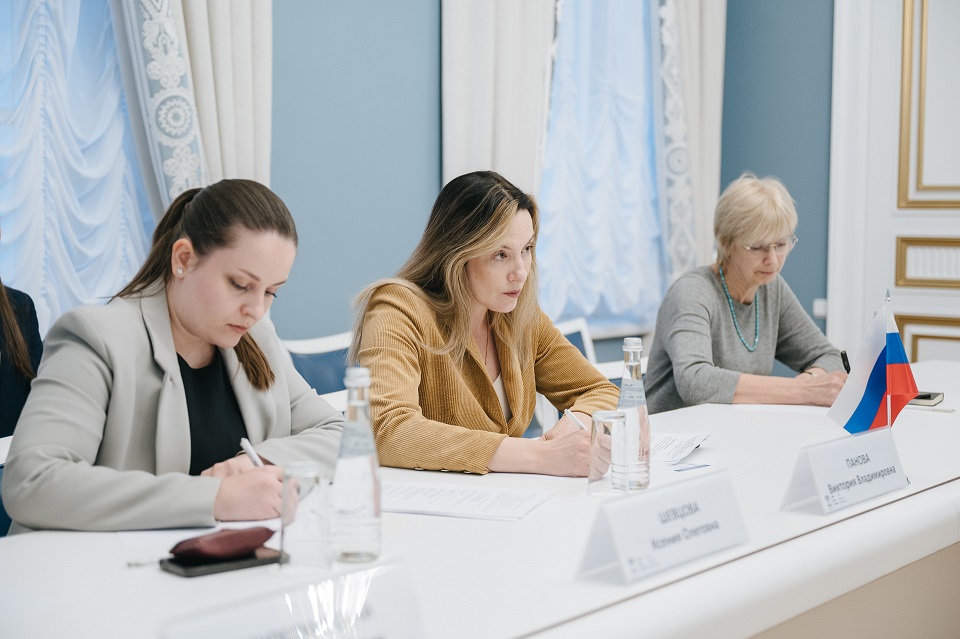
'It is significant that our meeting is taking place on the eve of the Day of Russian Science and the 300th anniversary of the Russian Academy of Sciences. Kazakhstan is our friend, neighbour, and strategic partner. We are open to discussing various formats of scientific and educational cooperation, as well as joint projects of social significance and new partnerships,' Victoria Panova said.
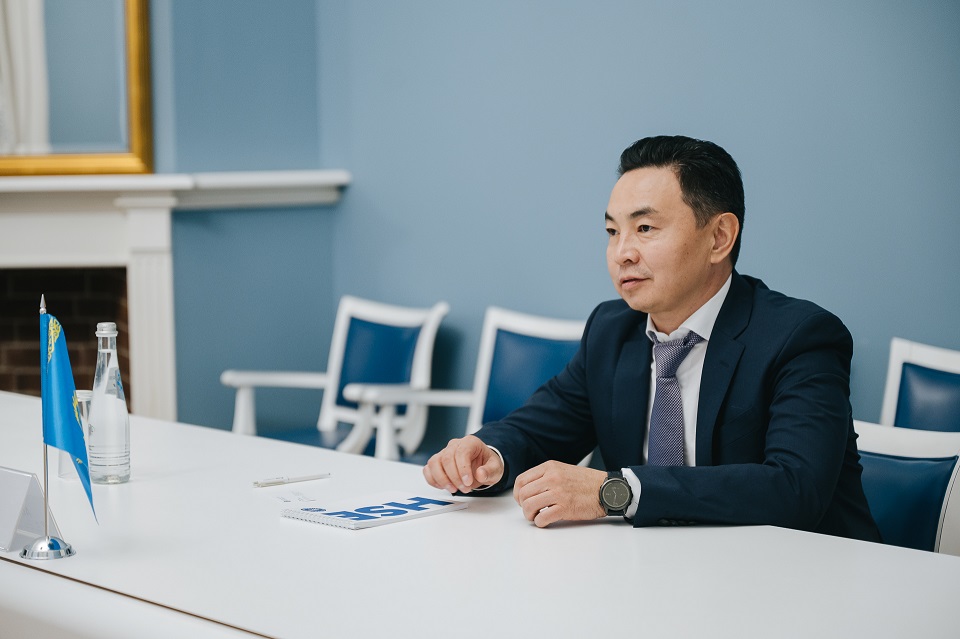
During the meeting, Abay Serikkanov elaborated on measures implemented in Kazakhstan to support scientists, such as housing policies, foreign internship programmes, and other financial mechanisms. The Vice President of NAS RK also said that earlier that day, he had met with the staff of the HSE Institute for Statistical Studies and Economics of Knowledge (ISSEK). Since 2002, ISSEK has been conducting research in various spheres, including the statistics of science, technology, innovation, education, digital economy and information society, long-term forecasting (foresight), and policies in the areas of science, technology, and innovation, while also engaging in international scientific cooperation. 'Foresight is recognised in the current legislation of Kazakhstan as a priority vector for the development of science, technology, and society, and it is integrated into the activities of the National Academy of Sciences of the Republic of Kazakhstan. Our collaboration will facilitate the exchange of knowledge, resources, and expertise, enabling joint research and ensuring its quality, and will have a broader positive impact on science policy,' according to Abay Serikkanov.
Victoria Panova supported NAS RK's initiative to collaborate in the field of scientific and technological foresight. She also identified other areas of science and education which are strong at HSE University and align well with the academy's interests, including research in demography and human capital, labour and urban studies, physics and mathematics, and computer science. 'The cooperation between our two organisations can expand beyond academic, research, and scientific exchanges, encompassing other areas of mutual interest. I am confident that today's signing of the memorandum of intent will mark the beginning of a fruitful collaboration,' Panova emphasised.
During the meeting between HSE University and NAS RK, the parties not only identified relevant areas for further cooperation, but also agreed to explore the potential for collaboration in doctoral and post-doctoral studies.
The Vice Rector invited Abay Serikkanov and other colleagues from Kazakhstan to attend upcoming flagship events hosted by HSE University—the 25th Yasin (April) International Academic Conference on Economic and Social Development in April and International Partners' Week in June.
See also:

HSE University among Top Universities in Digital Economy
HSE University took second place in the new 2023 ranking of universities in the digital economy in Moscow and St Petersburg, having lost only to Bauman Moscow State Technical University. HSE University outperformed specialised IT universities such as Moscow Institute of Physics and Technology (third place) and ITMO University (fifth place), as well as Moscow State University (fourth place).
‘Our Beloved University Continues to Stride Forward with Unwavering Confidence’
HSE Rector Nikita Anisimov has congratulated university students, teachers, and staff on the upcoming New Year. ‘May each and every one of you spend these festive days in a heartwarming atmosphere, rejuvenating and reuniting with your families. I hope that the upcoming 2024 is filled with positive events in your lives, studies, and careers,’ he said.
‘University Life in Partnership with Artificial Intelligence’
HSE University is one of the leaders in IT education and research in the field of artificial intelligence (AI). Thanks to this, the university recently received the highest grant of the Priority 2030 programme. The integration of AI technologies into education is set to become a strategic direction for the university’s development over the next five years. What changes are coming to HSE University in this regard and how they will affect students and teachers? These issues were discussed at a meeting of HSE University’s Academic Council on December 20.
'While it May Sound Futuristic, It Holds Great Promise': Olga Dragoy Shares Her Thoughts on Language Function Restoration and the Future of Neurotechnology
In the spring of 2023, the fifth strategic project of the Priority 2030 programme, 'Human Brain Resilience: Neurocognitive Technologies for Adaptation, Learning, Development and Rehabilitation in a Changing Environment,' was launched at HSE University. The strategic project brings together researchers from all campuses of HSE University. In her interview with the HSE News Service, Olga Dragoy, head of the strategic project and Director of the HSE Centre for Language and Brain, shares an overview of the advanced technologies neuroscientists are creating today, the underlying inspiration driving these efforts, and the operational dynamics of interdisciplinary applied projects.
HSE University Receives Highest Grant under Priority 2030 Programme
HSE University has proved its leading position in the first group of the ‘Research Leadership’ field under the Priority 2030 programme. The university has also received the highest grant for teaching digital competencies to students, demonstrating its educational leadership in the fields of digital technologies and AI.
HSE Launches English-Language Strategic Development Website
The new website makes information on the university’s strategic development initiatives and opportunities available to international colleagues and partners. The Strategic Development Programme Office has launched anEnglish-language website to promote the implementation of HSE University’s integrated development programme. The website is an ‘entry point’ for international partners and students, informing them about the university’s strategic priorities, goals, and plans.
‘It Was Great to Look at Scientific Achievements through the Eyes of a Journalist, not a Scientist’
HSE University in Nizhny recently hosted the 2nd Autumn Neuro-linguistic School ‘NeuroSciCom: Popularising Language and Brain Studies’ for scientists and students at the HSE Centre for Language and Brain Studies in Nizhny Novgorod. The school was held as part of the 'Human Brain Resilience: Neurocognitive Technologies for Adaptation, Learning, Development and Rehabilitation in a Changing Environment' Strategic Project of the Priority 2030 programme.
HSE in India: ‘Cooperation Is Formed by the Development of Live Communication Between People’
HSE University is taking part in the Annual International Conference and Global Summit (AICGS-2023), which began in Phagwara, India, on October 30. This year’s topic of discussion was the new model of international cooperation in the field of sustainable development, as well as the prospects and global challenges faced by universities in the development of international ties today.
XIV International Conference on Higher Education Took Place at HSE University
This year’s conference topic was ‘Student Experience at a Modern University: from an Enrollee to a Graduate’. Over the three days, researchers from Russia and other countries discussed the individual and institutional factors that determine students' educational experience, the impact of this experience on educational performance, and its influence on labour market success. The conference took place from October 25–27 and featured over 90 presentations.
Shanghai Ranking Names HSE Top Russian University in 11 Subjects
HSE University is this year’s leading Russian university in 11 subjects in the Shanghai Ranking. In seven of these, the university is the only Russian higher education institution to appear. This year, the university was ranked among the top universities for Communications for the first time and returned to the ranking for Sociology.