

Towards Finding Practical Solutions to Socially Significant Healthcare Problems
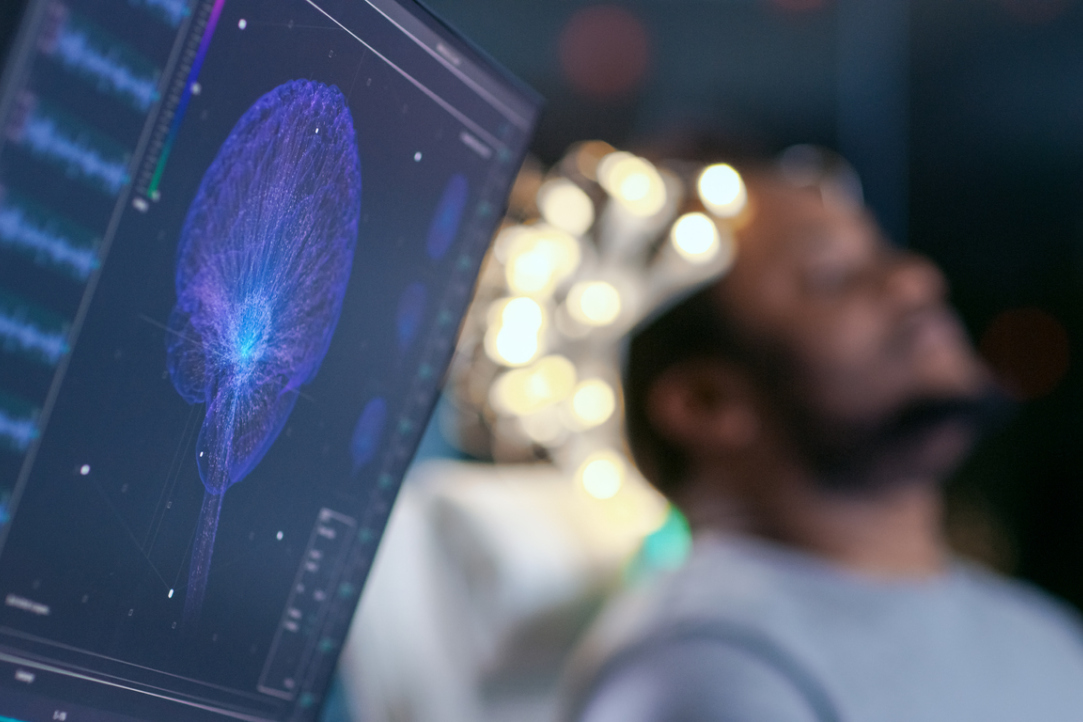
The Centre for Language and Brain in Nizhny Novgorod started operations in September 2020. Today, it is comprised of a team of linguists - teachers and students - who are researching the relations between speech and parts of the brain. The Director of the Centre, Natalya E. Gronskaya, spoke to the HSE Look about how the neuro-linguistic laboratory appeared in Nizhny Novgorod, as well as current tasks and prospects the Centre can offer the students and the region.

Natalya E. Gronskaya, Director of the Centre for Language and Brain Studies
The opening of the Centre at the Faculty of Humanities in HSE Nizhny Novgorod was possible thanks to the support of Olga Dragoy, the Director of the HSE Centre for Language and Brain in Moscow, who received a research grant from the Russian Science Foundation in 2020.
The staff in Nizhny Novgorod has been closely cooperating with the Moscow Centre for Language and Brain for several years. Empirical and scientific research between the Centre for Language and Brain in Moscow and linguists at HSE Nizhny Novgorod, as well as neurosurgeons from the Privolzhsky Research Medical University (PRMU), began, in the fall of 2017, to perform language testing during awake brain surgeries (for the removal of brain tumors). The new laboratory institutionalizes a research group that already was working out of Nizhny Novgorod, while also setting the foundation for the future formation of a distributed inter-campus Centre for Language and Brain.
Today, the Centre serves as a unique scientific structure in the region that carries out fundamental and applied tasks related to the cerebral basis of language. In addition to research activities, the Centre has an educational function and can serve as a base for programmes in neurolinguistics that are unique in Russia regions.
We have a combination of the resources and competencies of three major institutions (HSE Nizhny Novgorod, the Centre for Language and Brain in Moscow, and PRMU) with plans for further collaboration with other universities and clinical organizations in the region. The opening of the Centre at the Faculty of Humanities allows us to combine theoretical linguistics and applied context (awake surgeries, patients with speech impairments).

The Centre’s regional research agenda is oriented towards finding practical solutions to socially significant healthcare problems in the Nizhny Novgorod Region and the Volga Federal District - rehabilitation of patients with speech impairment - a study of speech disorders in the elderly and correction of speech disorders in children (including those with autistic spectrum disorders).
Our theoretical research will address what happens to the ‘tongue-brain’ connection after surgeries and injuries, cases of language delay and speech impairment in children, and whether it is possible to influence these processes.
This empirical research will include experimental activities (e.g., development and validation of various types of tests both for adults and children, mapping different parts of the brain during surgeries, collecting and processing Big Data, etc.), development of new methods for testing and the rehabilitation of patients with speech impairments, creation of alternative communication devices for adults and children with speech disorders.
Centre’s Goals
The development of the Centre is line with the strategic goals of the HSE Nizhny Novgorod with respect to scientific/academic development, i.e., its development as an advanced regional research centre. We aim to create and develop a neuro-linguistic school in Nizhny Novgorod through the introduction of a specifically neuro-linguistic approach to the educational process at the Faculty of Humanities, as well as train and get HSE Nizhny Novgorod students involved in neuro-linguistic experiments in order to popularize the Centre’s work.
We also aim to transform our scientific results into replicated and demanded practical tools, e.g., the application of the findings from brain injury research in clinical and pedagogical practice (in children with speech disorders trying to learn foreign languages), as well as the further possible commercialization of these developments. Moreover, the multidisciplinary nature of neurolinguistics itself will contribute to research activities at HSE Nizhny Novgorod through bringing together researchers from the various branches of science.
We plan to expand the Centre’s activities to address speech disorders in children, develop and improve existing speech therapy programmes for adults and children with subsequent clinical testing and implementation in clinical practice.
Natalya E. Gronskaya
Director, Centre for Language and Brain in Nizhny Novgorod
Olga Dragoy
Director, Center for Language and Brain
See also:

'Science Is Akin to Creativity, as It Requires Constantly Generating Ideas'
Olga Buivolova investigates post-stroke language impairments and aims to ensure that scientific breakthroughs reach those who need them. In this interview with the HSE Young Scientists project, she spoke about the unique Russian Aphasia Test and helping people with aphasia, and about her place of power in Skhodnensky district.
Neuroscientists from HSE University Learn to Predict Human Behaviour by Their Facial Expressions
Researchers at the Institute for Cognitive Neuroscience at HSE University are using automatic emotion recognition technologies to study charitable behaviour. In an experiment, scientists presented 45 participants with photographs of dogs in need and invited them to make donations to support these animals. Emotional reactions to the images were determined through facial activity using the FaceReader program. It turned out that the stronger the participants felt sadness and anger, the more money they were willing to donate to charity funds, regardless of their personal financial well-being. The study was published in the journal Heliyon.
Spelling Sensitivity in Russian Speakers Develops by Early Adolescence
Scientists at the RAS Institute of Higher Nervous Activity and Neurophysiology and HSE University have uncovered how the foundations of literacy develop in the brain. To achieve this, they compared error recognition processes across three age groups: children aged 8 to 10, early adolescents aged 11 to 14, and adults. The experiment revealed that a child's sensitivity to spelling errors first emerges in primary school and continues to develop well into the teenage years, at least until age 14. Before that age, children are less adept at recognising misspelled words compared to older teenagers and adults. The study findings have beenpublished in Scientific Reports .
Meditation Can Cause Increased Tension in the Body
Researchers at the HSE Centre for Bioelectric Interfaces have studied how physiological parameters change in individuals who start practicing meditation. It turns out that when novices learn meditation, they do not experience relaxation but tend towards increased physical tension instead. This may be the reason why many beginners give up on practicing meditation. The study findings have been published in Scientific Reports.
Processing Temporal Information Requires Brain Activation
HSE scientists used magnetoencephalography and magnetic resonance imaging to study how people store and process temporal and spatial information in their working memory. The experiment has demonstrated that dealing with temporal information is more challenging for the brain than handling spatial information. The brain expends more resources when processing temporal data and needs to employ additional coding using 'spatial' cues. The paper has been published in the Journal of Cognitive Neuroscience.
'Language Surrounds Us at All Times'
The most likely place to find Anton Buzanov is at the HSE building on Staraya Basmannaya Ulitsa, where the researcher spends nearly all his time. In his interview with the HSE Young Scientists project, he recounts his experience of leading a field expedition to Sami communities, shares his affection for teenage television shows, and observes that engaging solely in activities that bring joy can prevent burnout.
Neuroscientists Inflict 'Damage' on Computational Model of Human Brain
An international team of researchers, including neuroscientists at HSE University, has developed a computational model for simulating semantic dementia, a severe neurodegenerative condition that progressively deprives patients of their ability to comprehend the meaning of words. The neural network model represents processes occurring in the brain regions critical for language function. The results indicate that initially, the patient's brain forgets the meanings of object-related words, followed by action-related words. Additionally, the degradation of white matter tends to produce more severe language impairments than the decay of grey matter. The study findings have been published in Scientific Reports.
New Method Enables Dyslexia Detection within Minutes
HSE scientists have developed a novel method for detecting dyslexia in primary school students. It relies on a combination of machine learning algorithms, technology for recording eye movements during reading, and demographic data. The new method enables more accurate and faster detection of reading disorders, even at early stages, compared to traditional diagnostic assessments. The results have been published in PLOS ONE.
HSE University and Adyghe State University Launch Digital Ethnolook International Contest
The HSE Centre for Language and Brain and the Laboratory of Experimental Linguistics at Adyghe State University (ASU) have launched the first Digital Ethnolook International Contest in the Brain Art / ScienceArt / EtnoArt format. Submissions are accepted until May 25, 2024.
Parietal Cortex Influences Risk-Taking Behaviour
Making decisions in situations involving risk and uncertainty is an inherent aspect of our daily lives. Should I obtain luggage insurance for my flight, cross the road when the light is red, or leave my current job for a new opportunity? Researchers at the HSE Institute for Cognitive Neuroscience conducted an experiment to clarify the role the parietal cortex plays in decision-making in the context of risk. They found that suppression of activity in the parietal cortex resulted in subjects being less inclined to take risks. A paper with the study findings has been published in Cerebral Cortex.