

‘Education Helps Us Learn New Things Quickly and Adapt to New Conditions’
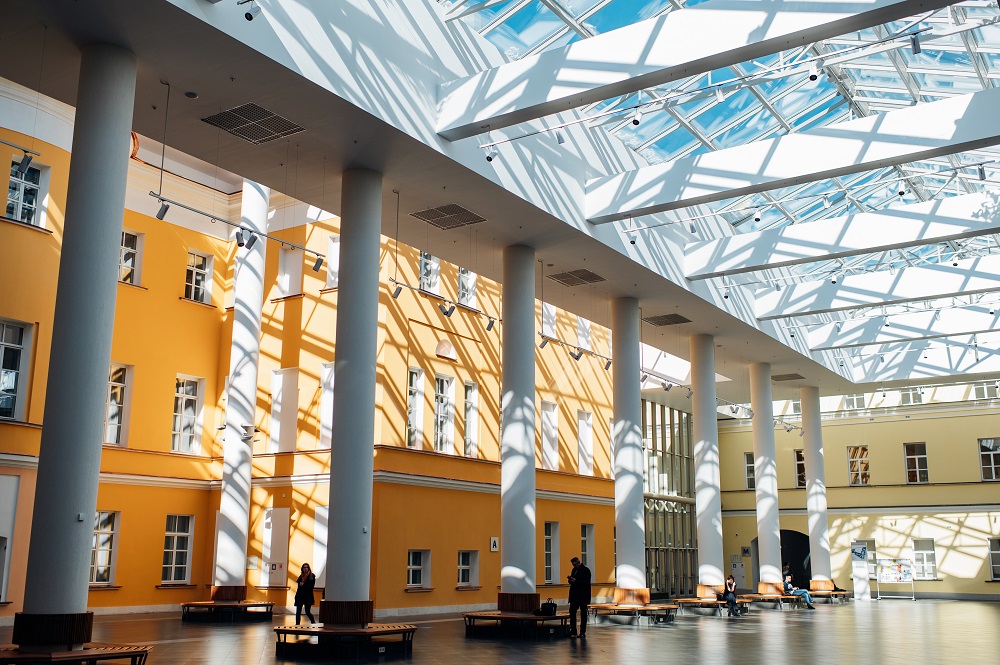
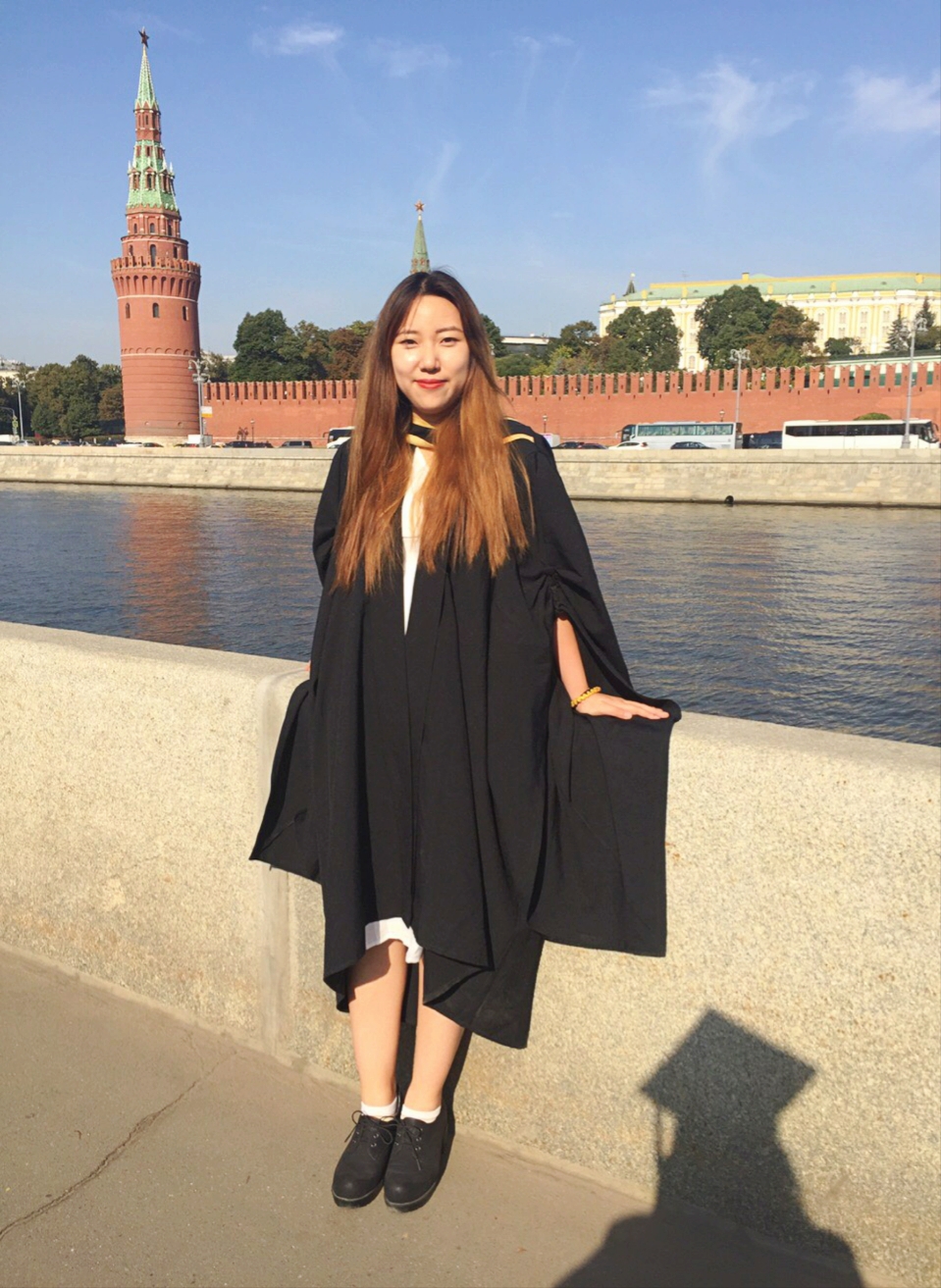
Hyen Jin Han is doing her Master's in Financial Economics at HSE International College of Economics and Finance. In her interview, she talks about her passion for economics, studying at the ICEF, and career aspirations.
Hyen Jin Han is originally from South Korea but went to high school in Moscow, Russia, so she learned Russian from an early age. However, she decided to study in an English-taught programme attracted by a double degree track with University of London.
When I first had heard about HSE in high school, I decided to study economics for my future career. I was not familiar with this subject, but I had a strong academic background in mathematics and I knew that HSE has good programmes in Economics.
During the consultation with HSE's international student admission director, I was encouraged to consider ICEF which would be a better fit for me as it teaches both economics and finance at superior level. Such suggestion together with state exam (Unified State Exam – standardized test in Russia) results, which were sufficient for the maximal scholarship, led me to the ICEF.
At the ICEF, I received not only the knowledge but also the reasoning and critical thinking skills. After 4 years of the bachelor's programme, I was confident about ICEF's teaching quality and standards, so I decided to continue my studies at ICEF's master’s programme.
Focus on Economics
When I was a first-year, one of the hardest subjects for me was Economics. After four years of studying, it became one of my favorites. Now I enjoy studying Microeconomics and Econometrics.
As a foreign student studying economics and finance, I think that my educational background is a double-edged sword because I have a great advantage in understanding two different economies, but to do so I need to dig deeper and wider than others to have the whole picture. Also I have to keep an eye on digitalization and to develop my skills accordingly.
Modern economies suffer from crises, for instance, pandemics or oil price volatility. As a result, there is a big income gap between the poor and the rich. It causes distortions that interfere with the global economy.
I read different scientific journals and websites such as Financial Times, Journal of Financial Economics and The Journal of Finance. On a daily basis, I also enjoy telegram and youtube channels related to economics and finance. For instance, I follow Chong Wang and Ilya Strebulaev. Ilya focuses on mysteries of capital structure, which fuels my interest in venture capital baсked firms. These researchers are studying the mysteries of economics and finance, connecting theory with practice.
ICEF Is a Comfortable Place to Study
At ICEF most of the professors and class teachers are available either offline after the classes and during office hours or online. Any issue can be brought for discussion and consultation. I received a lot of support in my last year of studies when I unexpectedly had to take a break in the first semester due to some health issues. The study office and many of the ICEF teachers helped me so that I could recover and catch up with the material and solve some organizational issues. I am particularly thankful to Svetlana Nedostup from the study office and ICEF teachers Olesya Kondrakhina and Daniil Esaulov.
The great advantage of Financial Economics programme is the opportunity to choose the future career direction. Obligatory courses are more research-oriented and focus on theoretical models with mathematical proofs. They provide a solid foundation for future academic career. There are also classes on Bloomberg terminal and research seminars, where students share their research topics and progress.
At the same time, the programme provides diverse practical courses, which students can choose according to their interests. For instance, this year I took ‘R Programming and Applications to Finance’ course to develop my practical skills. For my Master’s thesis next year, I am planning to forecast the Russian birth rates using the econometric models with online search engines.
I feel that choosing a practice-oriented programme along with gaining sound expertise in risk management make me almost invincible in the business world
Starting a Career
During my bachelor’s, I concentrated more on studying and had only short-term work experiences on HSE admission committee, as well as at various B2B business meetings and internships. At business meetings, I helped with the communication between Korean and Russian companies by introducing the product and discussing the possibility of future cooperation and partnerships. In summer, I had an internship at ACRA, the credit rating agency in Russia, where I first learned the SQL.
This year I am working as a consultant at Deloitte & Touche CIS. My position is in the Risk Advisory department that focuses on credit risks. I mainly work with data and on research projects. The recently published research studied the possible difference in financial effectiveness of Russian companies with women and men as CEOs. Multiple metrics were taken including the credit history of the company.
As for the future, I hope to build my career in risk management where I will be able to capitalize on my experience as an international student
ICEF holds a wide range of career events and meetings with the graduates. ICEF Career Service Centre also provides a lot of support and information. Education cannot give the full knowledge and skills necessary for work, but it can prepare us to quickly learn new things and adapt to new conditions. ICEF definitely develops such abilities in students.
Online Consultations for ICEF Undergraduate Applicants
Admissions to HSE’s Bachelor's and Master’s programmes are now open. International students can apply online. To learn more about HSE University, its admission process, or life in Moscow, please visit International Admissions website, or contact the Education & Training Advisory Centre at: inter@hse.ru, or via WhatsApp at: +7 (916) 311 8521.
Undergraduate applicants can take mock exams online to evaluate their chances of being accepted. Graduate applicants can register for preliminary portfolio assessment.
See also:

‘Teaching Is a Learning Experience for Me—Every Question Is an Opportunity to Update My Lecture Material’
Kemal Kivanc Akoz is an Assistant Professor of the Department of Theoretical Economics at the Faculty of Economic Sciences. He has been at HSE University for six years and his current activities include research into marriage market dynamics and information agreements among groups of agents. In this interview with the HSE News Service, Kemal talks about the subjects of his research, the teaching approach that led to him being named one of the university’s Best Teachers, his favourite places to get a coffee in Moscow, and more.
‘I Hope You Have Entered the Economic Profession Consciously’
On November 11, 2024, the HSE Faculty of Economic Sciences hosted a celebration for Economist Day. Many of the university's partners came to congratulate HSE on the occasion. The atrium on Pokrovsky Bulvar hosted booths from VkusVill, Ozon, HeadHunter, Wildberries, and other leading companies. Students and professors participated in quizzes, spun the wheel of fortune, painted, and crafted.
Maxim Reshetnikov: ‘An Effective Open Market Economy Has Been Built in Russia’
On November 11, 2024, during Economist Day in Russia, Maxim Reshetnikov, Russian Minister of Economic Development, spoke to students of the HSE Faculty of World Economy and International Affairs about Russia’s foreign economic activities, how the country managed to withstand unprecedented sanctions pressure, and the current state of its development.
FES Announces the Winner of the Nobel Prize in Economics 2024 Prediction Contest
The HSE Faculty of Economic Sciences summarised the results of its traditional prediction contest. FES holds this contest annually on the eve of Nobel Week. This year, the contest once again attracted participants from different regions of Russia and countries around the world. Remarkably, one participant managed to predict all three laureates of the 2024 Economics Prize.
Try Your Hand at Predicting the 2024 Nobel Prize Winner in Economics
The Faculty of Economic Sciences is launching its annual prediction contest. On October 14, the Nobel Committee will announce the winners of the Sveriges Riksbank Alfred Nobel Prize in Economic Sciences live on air. You have time to prepare and explore the landscape of contemporary economic thought. What topics and areas are considered particularly important and promising at the moment? Anyone can win.
Choosing the Right Server Results in Better Outcomes in Doubles Tennis
The Roland Garros tennis tournament, one of the most prestigious in the world, began on May 26. The prize money for this year's French Open totals nearly 54 million euros, with athletes competing in both singles and doubles events. In doubles tennis, choosing the right strategy for a match is crucial. Athletes' ability to adapt to the dynamics of the match and strategically choose the server can earn the pair up to 5% more points, according to Nikolai Avkhimovich, doctoral student and research fellow at the Laboratory of Sports Studies of the HSE Faculty of Economic Sciences. A paper with the study findings has been published in Applied Economics.
Consumer Prices Decrease in Densely Populated Areas
HSE University economists have proposed a novel approach to modelling monopolistic competition with heterogeneous firms and consumers. The results of collaborative research carried out by Alexander Tarasov from Moscow, his co-authors from HSE University–St Petersburg, together with the Norwegian School of Economics, the University of Pennsylvania, and the Free University of Brussels, have been published in American Economic Journal: Microeconomics.
Football Players Cover Greater Distances During Critical Derby Matches at Home Arena
Researchers at the HSE Faculty of Economic Sciences examined the level of effort that professional football players are willing to exert during a match in absence of financial incentives. It appears that the primary factors driving players to strive harder for victory are the strength of the opponent and the significance of the match for the club. This is particularly noticeable in derby matches between teams from the same city, such as the Moscow derby between CSKA and Spartak on April 25, 2024. The study has been published in the Journal of the New Economic Association.
Participation in Crowdfunding Can Generate up to 73% in Returns Annually
Backers of projects on crowdfunding platforms can expect rewards from their pledges. For example, funding someone's idea on Kickstarter can result in an average annual return of 11.5%, with design projects known to deliver returns as high as 70%. However, it is important to note that these returns do not come in the form of direct cash payments but rather as savings on the purchase of the product once it hits the market. This has been demonstrated in a study by researchers at the HSE Faculty of Economics published in Economic Analysis Letters.
Economists Suggest Using Media's Attention to Bitcoin to Predict its Returns
Researchers at the HSE Faculty of Economic Sciences have studied the relationship between the changes in the bitcoin prices and the media attention to this cryptocurrency. The researchers examined the mentions of bitcoin in the media between 2017 and 2021 and built a mathematical model that revealed the strong relationship between media attention and bitcoin prices. The study was published in the Applied Stochastic Models in Business and Industry journal.