

Participants of Russian-Chinese Summer School on International Affairs Tackle Trade, International Institutions, and More

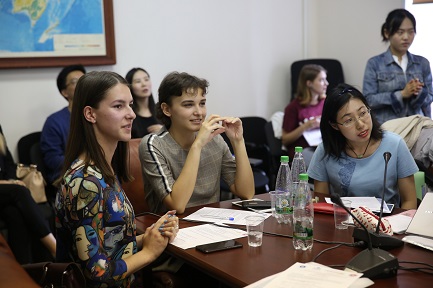


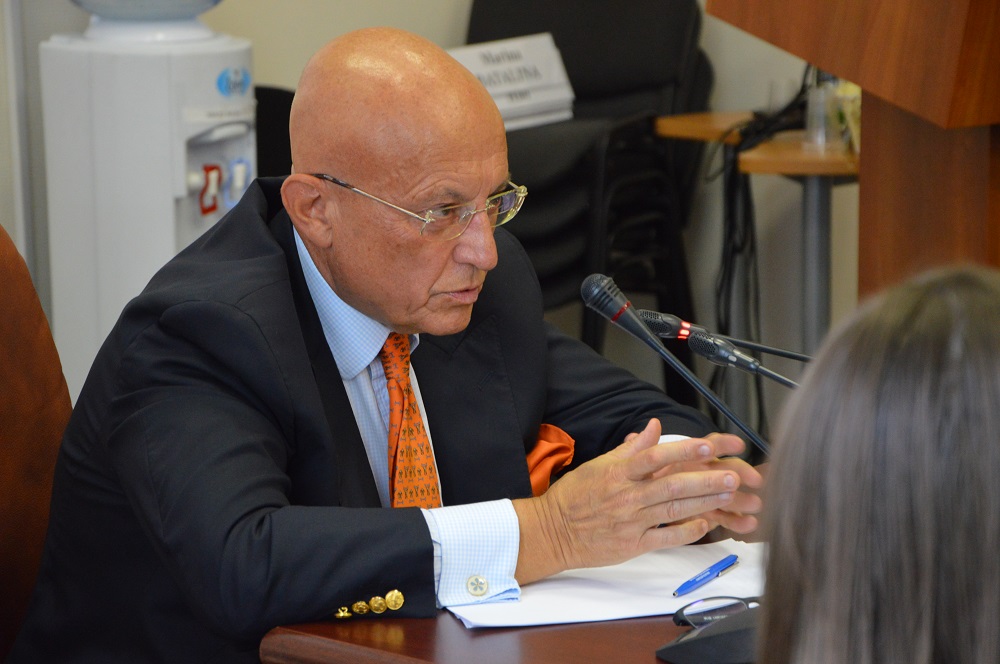
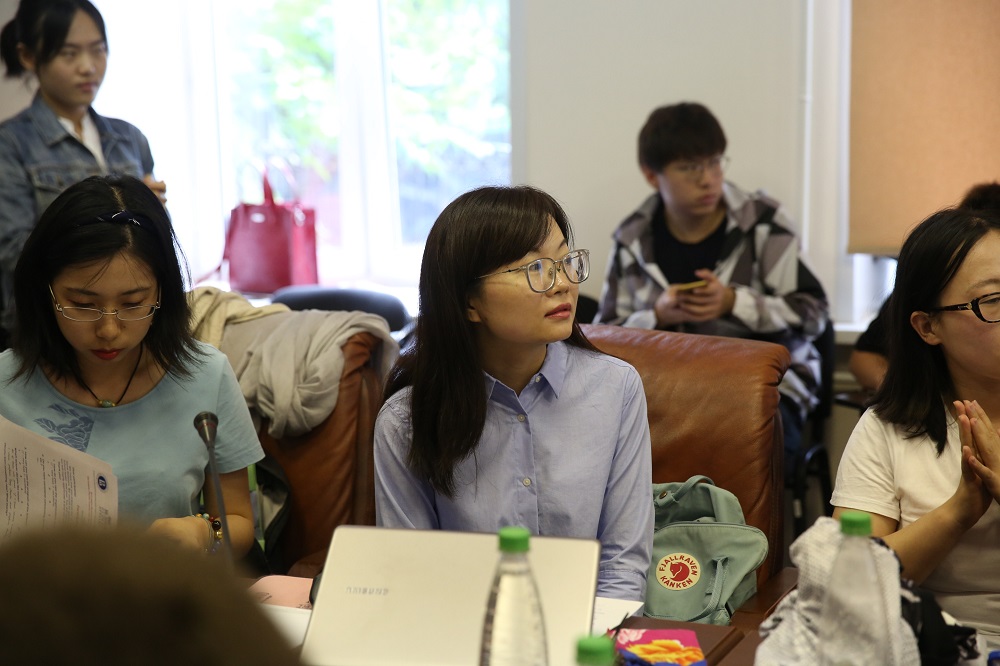

On Thursday, July 11, students and faculty of the International Russian-Chinese Summer School on International Affairs bid farewell with a festive awards ceremony and closing lecture by Professor Sergey Karaganov, Academic Supervisor and Dean of the Faculty of World Economy and International Affairs.
The 2019 session was held from July 4-11 at the HSE Faculty of World Economy and World Politics together with master’s students and faculty of East China Normal University (Shanghai, China). HSE University hosts the School in cooperation with East China Normal University (ECNU) with support from the Gorchakov Fund Public Diplomacy Fund. The summer school annually brings together undergraduates, master’s students and faculty members from HSE’s Faculty of World Economy and International Affairs and the ECNU School of Advanced International and Area Studies to explore key issues affecting Russian-Chinese relations in a hands-on format.
A Week of Lectures, Case Studies, and Group Project Work
This year’s theme was ‘Fighting Protectionism and Promoting Diversity in the Changing Political Landscape.’ Students analysed, debated, and proposed possible solutions to issues related to the global world order in an era in which isolationism is gaining popularity in the US and Western Europe, and the global economy and political landscape is shifting more and more towards Asia. Over the course of the week, students examined case studies and broke up into small project groups to explore issues such as the US-China trade war, the green economy, the Shanghai Cooperation Organisation, Chinese investment abroad, and more.
Along with professors and instructors from HSE University and East China Normal University, leading Russian and Chinese experts, representatives of state and international organizations, and international companies led gave lectures and led discussions with students of the school. Shaolei Feng, Dean of the ECNU School of Advanced International and Area Studies, Alexey Kupriyanov, Research Fellow of the Primakov National Research Institute of World Economy and International Relations at the Russian Academy of Sciences, and Bin Yu, Professor of Political Science, Wittenberg University (Ohio, USA) were among the numerous invited speakers.
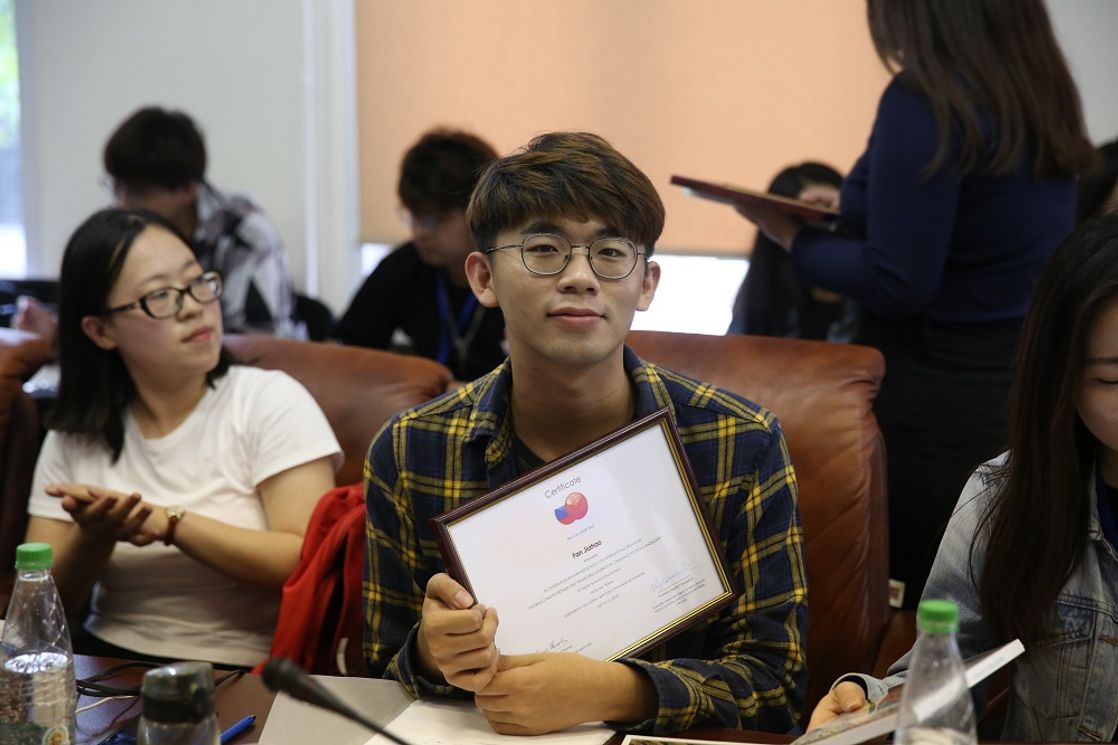
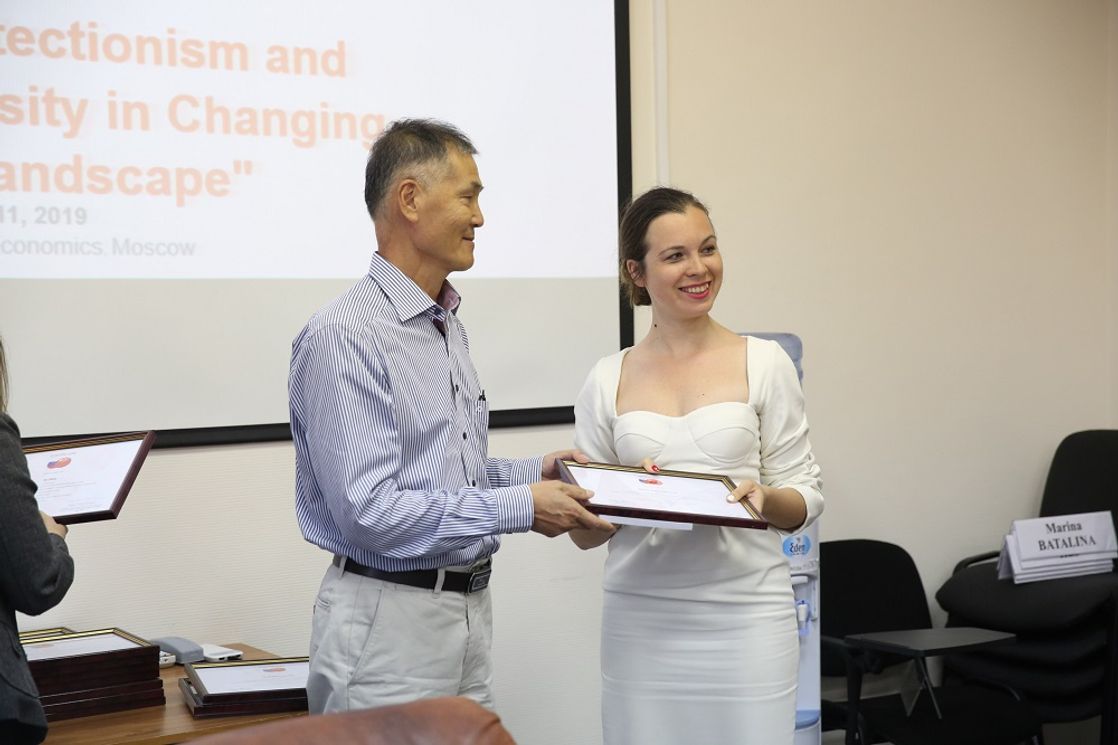
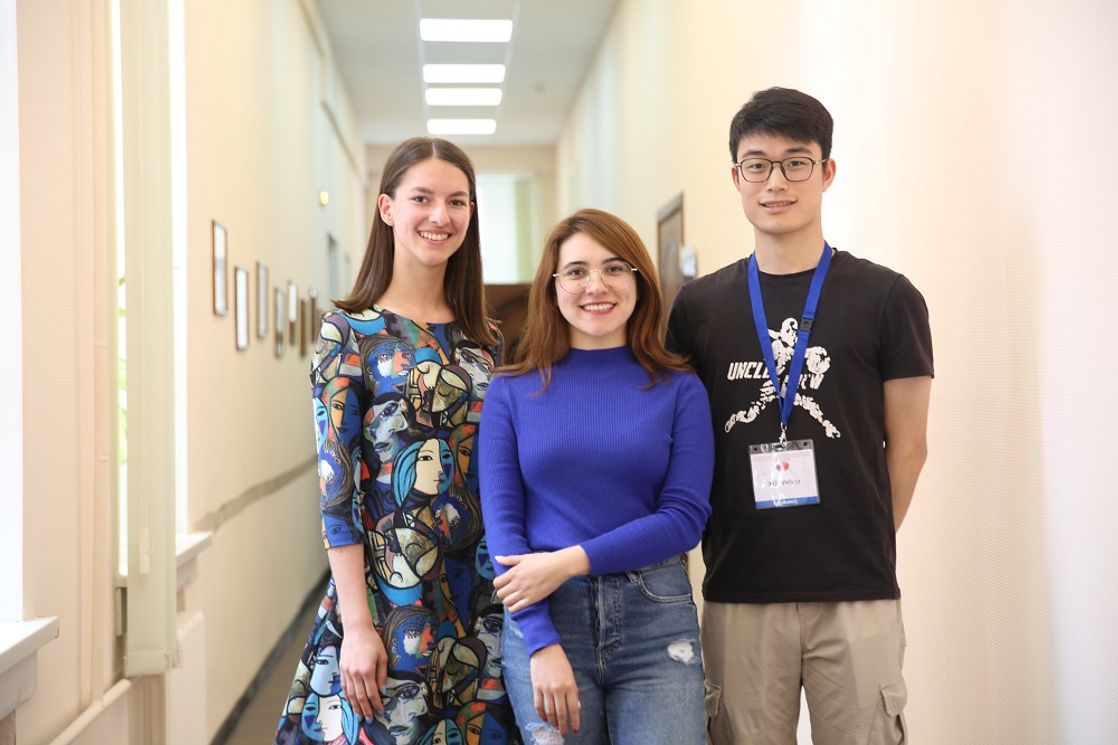
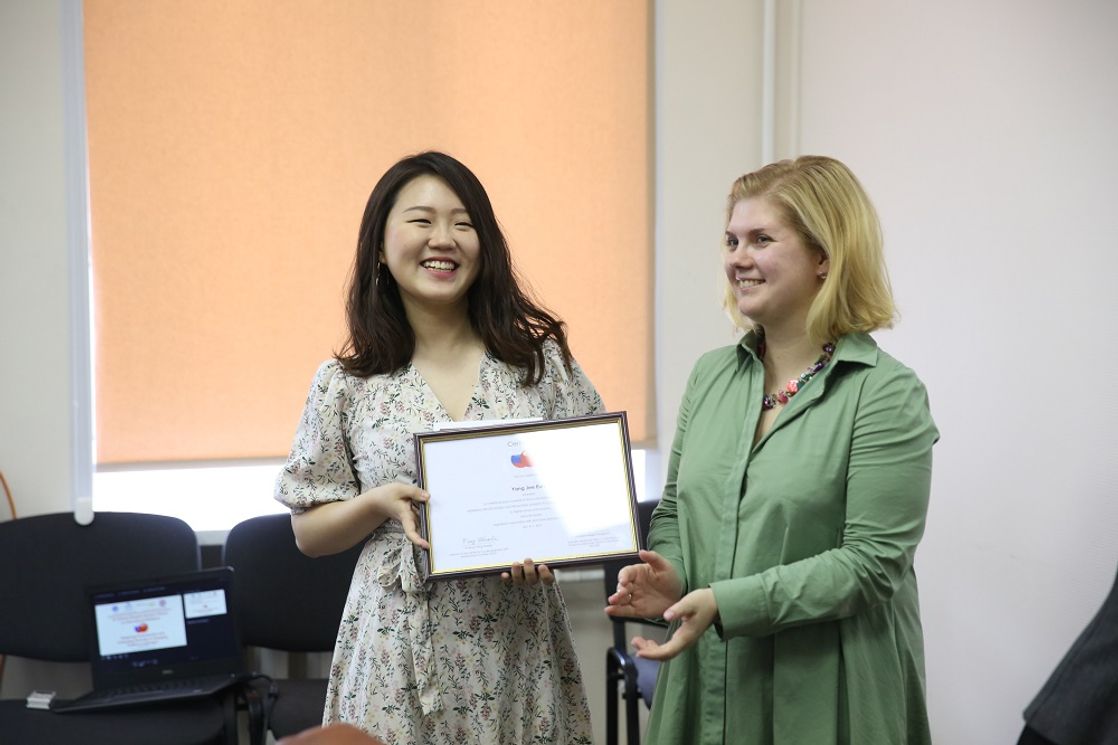


Farewell Ceremony
On the final day of the programme, students and faculty gathered for a farewell lecture by Professor Sergey Karaganov, Academic Supervisor and Dean of the Faculty of World Economy and International Affairs and former presidential advisor to both Presidents Yeltsin and Putin. His lecture, entitled ‘The Military and Political Foundations of the Shift in Global Geoeconomics’, gave a candid reflection upon the past 500 years of world history and the roles of the West, Russia, and China within it. He emphasized the importance of Russian-Chinese cooperation in preventing further polarization of the world and building a new world order.
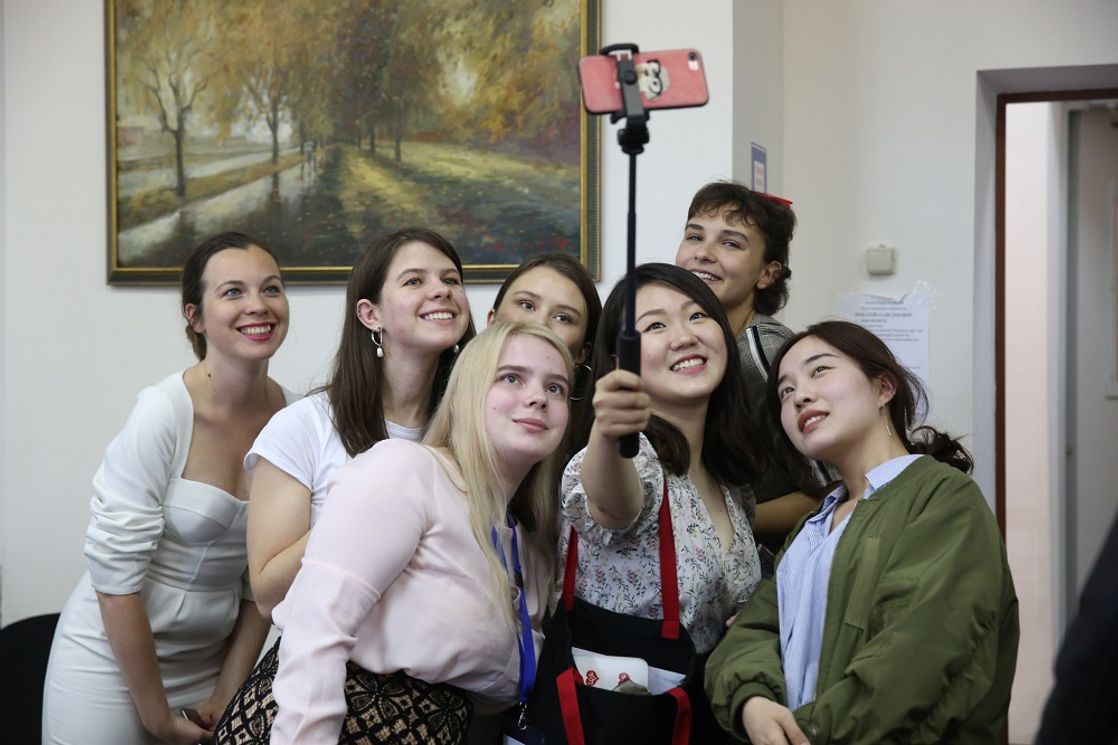
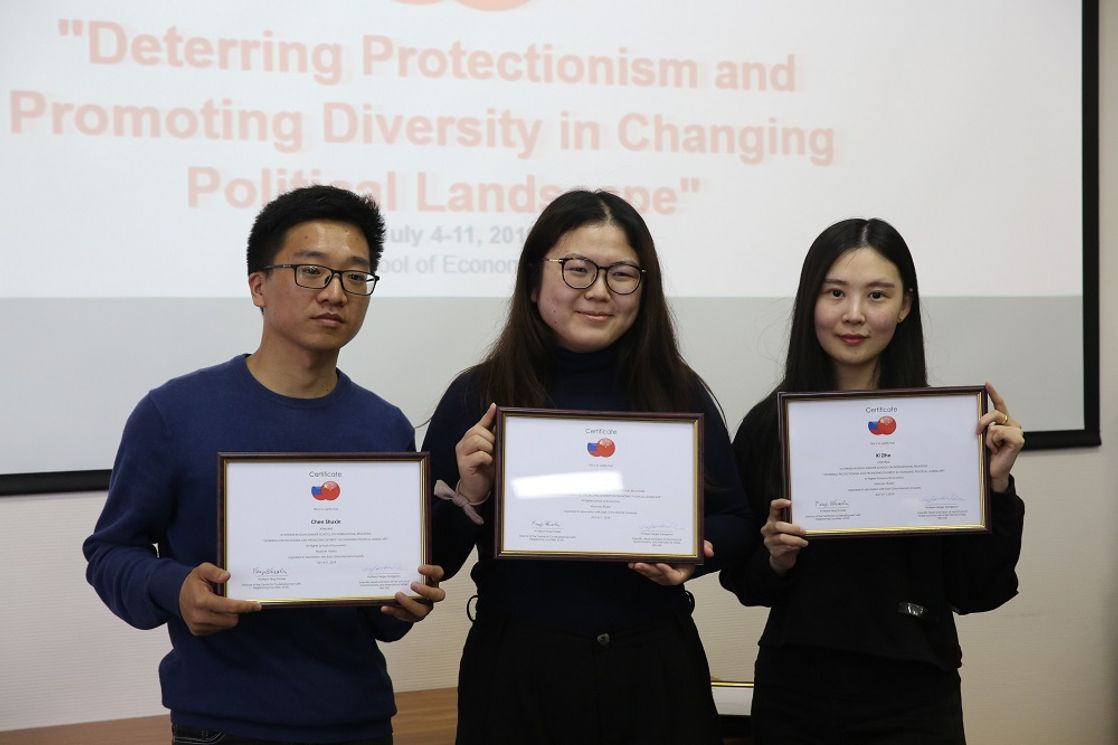
After a lively question and answer session, Professor Huasheng Zhao, Director of the Center for SCO Studies at Fudan University (Shanghai, China) and Associate Professor Anastasia Likhacheva of HSE University presented awards and certificates of acknowledgement to the students. In congratulating the students on a fruitful week, Professor Zhao noted the importance of international dialogue, saying that it not only helps one learn more about the other culture, but one’s own. ‘Learning different traditions and ideas is important,’ he said. ‘I often take what I’ve learned and apply it to my own culture.’
‘I hope that you sustain this energy you have for knowledge and new projects,’ Anastasia Likhacheva said. ‘Never get too tired to become amazing. Because if you remain as bright and dedicated as you were this week, you will be able to do anything—in Russia and in China and beyond.’
Xu Weixin, China, East China Normal University
‘One of the most interesting parts of the summer school for me was our project discussions. In the project discussions, we worked in groups on a given topic, so we heard ideas and views about current issues that were sometimes very controversial, such as the US-China trade war, for example. It was really interesting to hear different points of view from people with different backgrounds. And during that process we really enjoyed brainstorming different approaches or solutions and coming to a consensus.
‘At the same time, while we discussed these more academic topics, we also talked about daily life in Moscow and daily life in Shanghai—what a normal day consists of, what we do in our free time—and that was really interesting, too. And actually, I remember a professor who gave a presentation on public diplomacy, and it made me think about how we ourselves are engaging in public diplomacy. I think it is a good thing when young people of major world powers develop relationships with each other.’
Diane Fararoni, Mexico, East China Normal University
‘I am in my first year of the master’s programme in international relations at East China Normal University. Before coming here, I can’t say that Russia was something I thought about on a daily basis. So this has been a great opportunity. We covered a wide range of topics: the green economy, the Shanghai Cooperation Organisation, potential crises of international institutions, Chinese investment in Germany, and China’s relationship with high tech… I’ve now learned a lot about Russia first-hand, and my experience here will certainly enrich my future studies in international relations.’
Deniza Berezovskaya, Russia, HSE University - Moscow
I’m from HSE University, and I’ve just completed my first year as an undergraduate student here. I study international relations and economics. I came to this summer school, because I thought it would contribute to my knowledge and skills. Also, I’m learning Chinese, so it’s really interesting to see how Chinese participants react and ask questions. I really enjoyed our project discussions, because, working in small groups, we not only collaborated on an academic level, but on a personal level as well. Some of the topics were completely new to me. For example, my group’s topic was the green economy. Before this school, I had never read any books or articles about it, and now I know a lot about it.
It was also great to be a part of cooperation between our two countries. I think that the young generations should be aware of problems of their time, so that they can maybe work together and solve them in the future. So that’s why this summer school is really helpful for all the participants here representing different countries (mostly China and Russia, of course).
300 Alumni and Counting
Approaching its tenth year, the School already has a robust alumni community. In her closing remarks to the participants, Anastasia Likhacheva noted, ‘Next year we’re going to celebrate the 10th anniversary of the School. We’ll be happy to host you again next year as we mark this occasion and really push our school to a new level, and I hope that you will be an active part of the alumni of this school. We have more than 300 alumni members and some of them are already experts working in international relations. We’re very happy to see how they grow and become more and more active and successful in the field.’
Students who are interested in participating in next year’s summer session are encouraged to check for updates on the School page.
Sergey A. Karaganov
Dean of the Faculty of World Economy and International Affairs
Anastasia Likhacheva
Associate Professor at the School of International Affairs
See also:

'These Are Unforgettable Impressions, I Will Cherish Them Forever'
HSE St Petersburg International Summer School is in full swing—right now, international students from 12 countries are attending lectures and enjoying the cultural programme. The HSE News Service talked to the participants about their most vivid impressions.
HSE University-St Petersburg Hosts Students from 12 Countries at the International Summer School
On July 10, HSE University-St Petersburg launched the International Summer School—a series of classes for students from India, Vietnam, the Republic of Korea and other countries. Foreign guests are getting to know the university, attending lectures in six fields of study, and enjoying an inspiring cultural programme.
The XI Russian-Chinese Summer School on International Relations Kicks Off at HSE University
On July 1, 2024, the opening ceremony of the XI International Russian-Chinese Summer School on International Relations, titled ‘Partnership and Cooperation in the New World Order,’ took place. The event was organised by the HSE Faculty of World Economy and International Affairs in collaboration with HSE Centre for Comprehensive European and International Studies (CCEIS). Graduate and postgraduate students from various countries have come to Moscow to study international relations and collectively envision a new world order.
HSE University Holds 10th Summer School ‘Eye-tracking in the Lab and Beyond’
This year, more than 100 students from Russia and abroad took part in the 10th summer neurolinguistic school, ‘Eye-tracking in the Lab and Beyond’. The school is held annually by the HSE Center for Language and Brain. Leading experts spoke about advanced developments and research in the field of video-oculography.
Data Analysis and Personalised Medicine: Summer School in Cardiogenetics
The Continuing Professional Development Centre of the HSE Faculty of Computer Science has recently hosted the summer school 'Cardiogenetics: From Sequencing to Constructing a Cardio Panel'. The school programme was co-organised by the Russian Academy of Sciences' Institute of Analytical Instrumentation and Institute of Spectroscopy and the Syntol company.
‘Interest in the Application of Machine Learning in Bioinformatics Is Growing by the Year’
On August 28–30, HSE University’s Faculty of Computer Science held the 4th Summer School on Machine Learning in Bioinformatics. This year, 670 people registered for the event, and over 300 visited in person. The programme included lectures and seminars on various spheres of bioinformatics: applied bioinformatics and the bioinformatics of DNA, RNA, and proteins; elementary genomics; modern methods of data analysis and molecular biology. The lectures were complemented by practical tasks aimed at different levels of knowledge.
HSE Faculty of Computer Science Holds Summer School on Software Engineering
At the beginning of July, a summer school on software engineering was held at the HSE Faculty of Computer Science. This is the successor to the school on mobile applications development, which was held at the FCS from 2015 to 2022. The school’s partners for this event included 1C, Sber, the community of authors of the Indicator games, and the Samsung Innovation Campus IT School.
‘This Summer School Made Me Realise How Important Data Analytics Actually Is Nowadays’
From July 4–8, the 14th Summer School ‘Methods and Tools for Analysing Social Networks’ was held by the International Laboratory for Applied Network Research (ANR Lab). The dissemination of knowledge about the most recent methods of network analysis is one of the goals of the laboratory. Social network analysis is an interdisciplinary field that studies networks of interactions between different objects (such as people, organisations, institutions, countries, words in texts, texts on the internet) and identifying hidden patterns within them.
HSE Faculty of Computer Science Holds Summer School on Entrepreneurship
In early July, HSE Faculty of Computer Science held the 2nd Summer School on Entrepreneurship. It was organised by the faculty Centre for Internships, Projects and Entrepreneurshiptogether with Tinkoff Bank, and industry partners including Yandex, Sber Student and Otkritie Bank. More than 40 students from the Faculty of Computer Science and other HSE faculties took part in the school.
HSE Students Explore Environmental Problems at Summer School in South Urals
The summer school 'Space in/for Environmental Humanities: Reconsidering the Global through Studying Peripheries' explored the impact of human activity on natural environments and their transformation. It was co-organised by the School of Environmental and Social Studies (Anthroposchool) at the University of Tyumen (TSU) and the HSE Poletayev Institute for Theoretical and Historical Studies in the Humanities (IGITI), with support from the Mirror Labs programme of HSE University.