

Students from HSE and Other Universities Carry Out Research Expedition at New Chersonesos

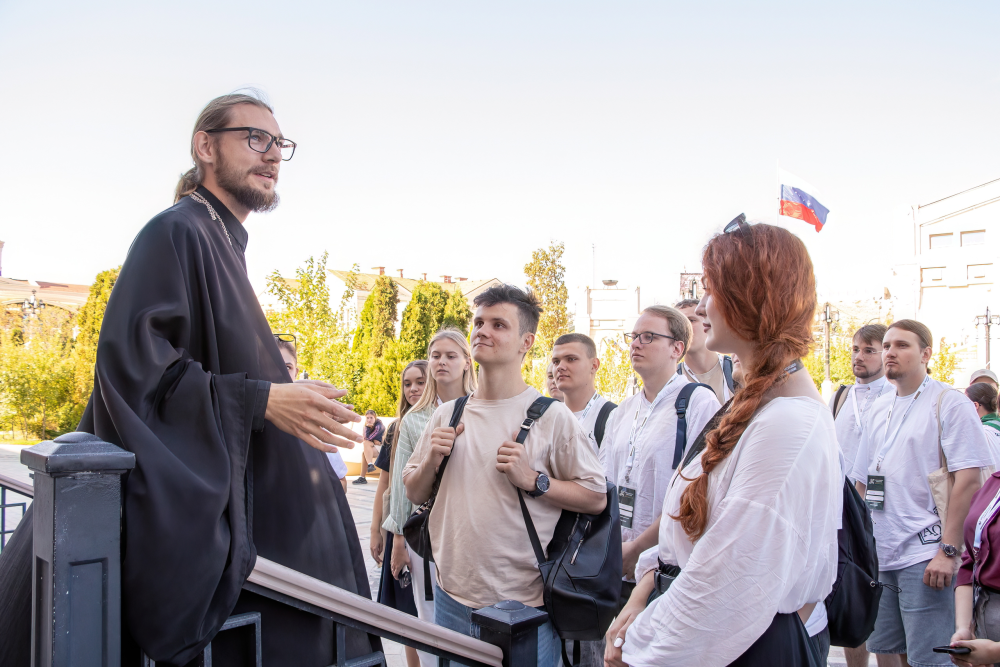


As part of the Rediscovering Russia student expedition programme, HSE University organised a research trip under the framework of the School for Young Humanities Scholars to the New Chersonesos museum and church complex in Sevastopol. The results of this expedition will form the basis for proposals on educational projects aimed at shaping young people’s historical memory of the role of Chersonesos, Crimea, and the Byzantine legacy in the history of Russian culture and statehood.
The expedition took place on September 13–20 and involved 30 participants—students from HSE and other universities selected through an application process. The expeditions are supported by Rosmolodezh’s ‘More than a Trip’ programme and the ‘Russia—Land of Opportunity’ presidential platform.
During the trip, students from across Russia conducted a sociological study of young people’s historical memory regarding the Baptism of Rus’ by Prince Vladimir and the influence of Orthodoxy and Byzantium on the formation of the Russian civilisation. They also analysed existing practices and projects of the New Chersonesos museum and church complex.
Chersonesos is the site where, in 988, Prince Vladimir was baptised together with his army and married the sister of the Byzantine emperor. Then he returned to Kiev as a Christian and subsequently baptised the inhabitants of Kiev and Novgorod, the largest cities in Rus’. New Chersonesos is a museum and church complex covering 22.4 hectares. Its territory includes museums of Christianity, Crimea and Novorossiya, Antiquity and Byzantium; an archaeological park; an amphitheatre; and a reconstructed Byzantine quarter with a mint, an ancient villa, craft workshops, and a winemaker’s estate.
In addition, students took part in an educational intensive course organised by the School for Young Humanities Scholars Over the course of a week, they attended lectures, met with clergy, and went on guided tours.

‘I was delighted by the students’ interest in the historical significance of New Chersonesos and by the enthusiasm with which they engaged in the research. In a short time, they completed a large volume of work and launched an important applied study. I hope the process will not stop here, that more visitors to the complex will be surveyed, and that more data will be collected—data that we, the staff of New Chersonesos, can rely on in our future work and planning,’ said Daria Khavchenko, Head of Event Management at the My History Charitable Foundation of the New Chersonesos museum and church complex, and Head of the Tochka Opory Crimean Youth Centres.

Dmitry Zemtsov, HSE Vice Rector, noted that this was the first project of the Rediscovering Russia programme and the School for Young Humanities Scholars. ‘We conceived the expeditions as an opportunity for students to discover their own country and put part of their soul into it. We managed to hold such an expedition here, in Chersonesos, where Russia inherited the legacy of the Roman (Byzantine) Empire and adopted Orthodoxy. And from the students’ reports, from the look in their eyes, I could see that this was also very important for them. They truly felt the spirit of this place and came to love it sincerely. I am sure we will continue with these formats, bringing more young researchers here to contribute to Chersonesos. It is a remarkable place,’ he stressed.
The School for Young Humanities Scholars’ session at the New Chersonesos site, held jointly with HSE University, was a vivid example of the synthesis of education, science, and practice, according to Natalia Karmazina, Vice Rector of Crimean Federal University.

‘It was important for us to create an environment where students could apply theoretical knowledge in real conditions. The philosophy group explored the value foundations of the complex, the sociology group conducted fieldwork with visitors, and the media team documented the implementation of the school’s programme. We see the results in the participants’ high-quality projects, their professional growth, and a well-tested model of cooperation between the university and cultural institutions. This experience confirms the effectiveness of a practice-oriented approach to training a new generation of humanities scholars,’ she noted.
Participants of the expedition shared their impressions of working at the New Chersonesos museum and church complex.

‘Our main task in the media group is to translate the vast layers of history, archaeology, and spirituality into formats that are accessible and engaging for young people,’ said Vitalia Prosyanik, a second-year master’s student on the Interactive Media and Digital Industries programme at HSE University. ‘We, the media team, are in constant contact with philosophers and sociologists, which allows us to see the project from different angles—from the deep meanings embedded by the creators of the complex to practical demands. Part of our responsibility is to help plan the future of the new complex. While preparing materials, we decided to make a film about people’s lives and how they changed after encountering New Chersonesos. Every day we attended lectures, visited museums, archaeological sites, churches, and parishioners in order to collect material and prepare our project on the development of the complex. We are looking for answers to the question of how to make the site personally meaningful for everyone who engages with it—especially for those who have never been here before. Why might it interest them? Which places should they visit in order to learn more about their past, about their history? How can we unite the spiritual with the popular in the present day? We want this place to become not just a dot on the map, but a true discovery.’

‘The New Chersonesos museum and church complex has inestimable historical significance. As a historian, I simply could not miss this trip,’ said Nikita Butyaev, a third-year student at Yaroslavl Demidov State University. ‘I would not call myself a practising believer, but I have great respect for Orthodoxy and fully recognise its immense cultural, historical, and political significance for our country. The main topics of my academic interest are medieval Rus’ architecture and medieval pilgrim guides to holy places, which are directly linked to Byzantium and the Greek world. I wanted to take part in the expedition and contribute to achieving positive results in our work.’ The student went on to explain how participants gathered opinions from experts—those shaping the meanings and policies of New Chersonesos. ‘We learnt about their contribution to this complex,’ he noted. ‘We also stayed in close contact with the sociologists—another of our teams. They shared with us how young people, the project’s target audience, express what they want to find in New Chersonesos, and what we could propose to the organisers in this respect. We considered which directions to take to ensure that the complex becomes even more attractive, more profound, and an even more historically significant project in the history of modern Russia.’
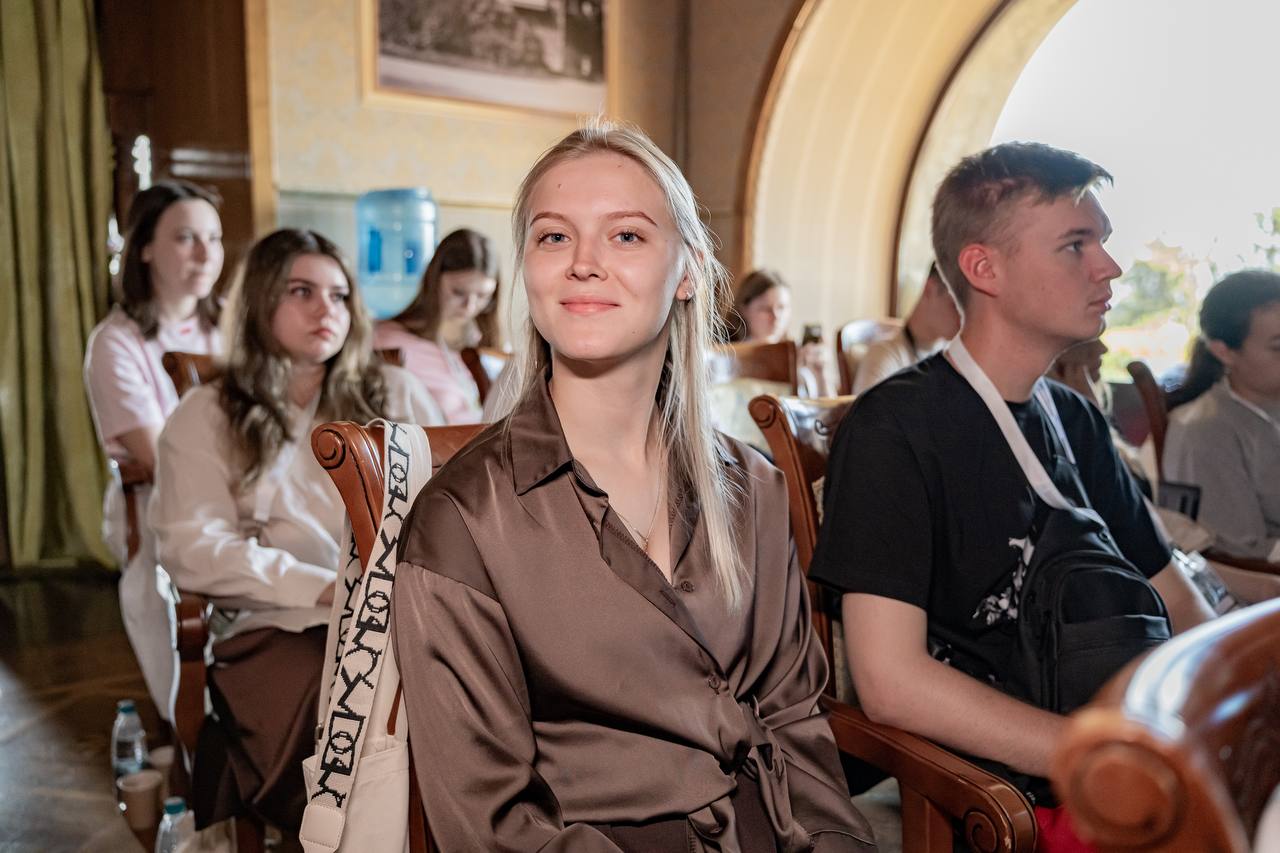
Ksenia Avdonina, a second-year master’s student in Sociology at the Financial University under the Government of the Russian Federation, was part of the team of sociologists. Their aim was to analyse the audience of New Chersonesos: its composition, interests, perceptions, and motivations. ‘We deliberately focused on young people and how to attract them to the complex,’ Ksenia added. ‘We were also interested in finding out the views of those who had never visited the site: what they knew about it and about the Baptism of Rus’—the event linked to the founding of New Chersonesos.’ The team of sociologists conducted an exploratory study with 49 respondents, using a quantitative semi-structured survey to obtain a more detailed assessment. The researchers found that young people did not fully grasp some of the narratives of the complex, particularly the religious one. Most often, young visitors came to New Chersonesos for tourist purposes. ‘They may pick up the historical context, but even here the indicator is weak: only about half (55%) recognised this narrative,’ noted Ksenia Avdonina. ‘We also observed a trend that older visitors (aged 37+) were more likely to say that New Chersonesos is connected with the Baptism of Rus’ (65%). They were also more likely to mention that religion is important in their lives. Another point we recorded: the more important religion was in a person’s life, the more clearly they understood the religious meanings of the complex. In addition, 35% of young people aged 18–25 said that their favourite elements of the complex were the zoo and the pond. This is linked to the fact that these spaces and activities are free. The main problems young visitors identified were the high cost of excursions and the lack of information boards explaining the exhibits within New Chersonesos.’
The expedition participants designed a special route for young visitors. Its key advantage lies in combining not only museums for educational enrichment but also free activities for leisure. ‘We have genuinely become enthusiastic about Chersonesos, and we plan to continue our research. During our work we formulated many hypotheses that we would like to test in the next stage, with a larger-scale survey,’ Ksenia Avdonina concluded.
From July to October 2025, the Simferopol and Crimean Diocese, with the support of Crimean Federal University, Sevastopol State University, HSE University, Kuban State University, Samara State University of Economics, Tauride Theological Seminary, Sretensky Theological Academy, and the regional branches of the Russian Society Znanie in the Republic of Crimea and Sevastopol, is holding eight sessions of the School for Young Humanities Scholars.

See also:

Fall into ML 2026: From Fundamental Research to Discussions on the Future of AI
On October 23–24, HSE University hosted Fall into ML 2026, the fifth conference on machine learning and AI. Over the past five years, the event has grown from a small gathering of researchers into a flagship platform that brings together leading machine learning specialists, early-career researchers, students, and representatives of technology companies. The fifth edition marked a new stage in the development of the conference, with a programme that included discussions with international speakers, presentations of joint research projects, and tutorials on the latest trends in AI.
HSE University to Launch 11 Projects with Research Centres from Five Countries
HSE University has announced the results of its International Academic Cooperation (IAC) competition for joint fundamental research projects. Five projects have received full funding, while six more have been awarded partial funding. The research teams include scholars from Brazil, South Africa, China, India, and Oman. Alexander Balyshev, HSE University Vice President, shared details of the 2026 IAC competition winners.
Africa, Youth, and Civic Dialogue: Public Diplomacy Discussed at HSE University
In late September, HSE University hosted a roundtable discussion titled Civil Society in African Countries and Youth Participation in Public Diplomacy. Representatives of non-governmental organisations from Ghana, Ethiopia, and Russia, along with students from HSE University’s Bachelor’s Programme in Public Administration, discussed how young people without official diplomatic status can influence relations between countries and how the nonprofit sector can remain sustainable amid declining grant funding.
Window into the Body: Scientists Develop Neural Network to Detect Risk of 15 Diseases from Retinal Images
Russian universities, with the participation of HSE University, Sber, and Z-union, have developed a neural network that can simultaneously assess the risk of 15 types of pathology from retinal photographs, including not only eye diseases but also cardiovascular conditions. The AI system can help clinicians detect potentially concerning changes at an early stage, identify signs reflecting the condition of retinal blood vessels, and determine whether a patient may need further examination. The paper has been published in Frontiers in Medicine.
HSE Researchers Show How Congenital Motor Disorders Affect Brain Development
Researchers from HSE University’s Institute for Cognitive Neuroscience have synthesised the findings of their previous studies on brain development in children with obstetric brachial plexus palsy and arthrogryposis. Their analysis shows that impaired motor function in early childhood not only limits children’s motor experience but also affects memory, categorical thinking, and information processing. The study has been published in Frontiers in Psychology.
'We Did Not Limit the Time for Questions'
The International Laboratory for Supercomputer Atomistic Modelling and Multi-Scale Analysis at HSE University held a major conference on molecular dynamics. Participants had the opportunity to attend all the presentations, while speakers were given as much time as they needed to answer questions. The HSE News Service interviewed Grigory Smirnov, Head of the Laboratory, and Genri Norman, Chief Research Fellow, about the conference preparations and the discussions it generated.
HSE Faculty of Social Sciences Develops Partnerships with Chinese Universities
In summer 2026, the HSE Faculty of Social Sciences (FSS) took several steps towards establishing closer ties with leading Chinese universities. The Faculty signed a landmark memorandum with one of China’s top technical universities and also began talks with Peking University. In addition, the International Laboratory for Digital Transformation in Public Administration, affiliated with FSS, held an international summer school in Moscow with the participation of Chinese colleagues.
HSE Professor Discusses the ‘Quantum Leap’ at UNESCO Seminar
In mid-September 2026, UNESCO held an online seminar entitled ‘Quantum Science and the Future of Quantum Technologies.’ During a panel discussion, Alexander Sokolov, Director of the International Research and Educational Foresight Centre at the HSE Institute for Statistical Studies and Economics of Knowledge (ISSEK) and Chair of the UNESCO Chair on Future Studies at HSE University, presented the results of ISSEK’s Quantum Leap foresight study to international experts.
AI Robot for Environmental Recognition Tested at HSE University
Engineers and researchers at the HSE Institute for Robotics Systems have successfully run the first tests of an AI-powered environmental recognition model deployed on a robot dog. The robot navigated around the HSE Pokrovka building and Pokrovsky Bulvar, analysing the surrounding environment to identify its location.
Algebra, Geometry, and AI: Russian and Vietnamese Mathematicians Discuss Current Research
A delegation of scientists from Hanoi visited the HSE Faculty of Computer Science and then took part in a Russian-Vietnamese conference in St Petersburg. The events were part of the three-year project ‘Flexibility and Computational Methods.’ Over the course of the project, the researchers have prepared joint publications and obtained new mathematical results.