

Baltic Practice 2014: Exploring the Ways to Bridge Russia and Europe through Research and Debates
'Baltic practice' summer school is an international interdisciplinary research platform that brings together students, professors, instructors, experts and prospective students for intensive professional interaction in an environment where all participants are treated as equals.
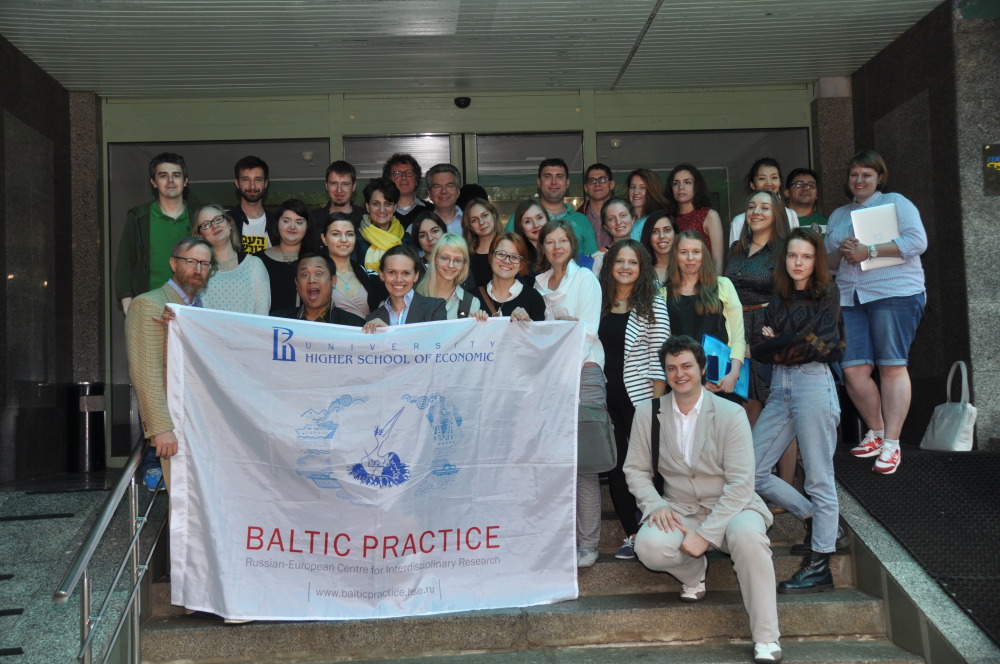
The aim of the 2014 event is to address the cultural, social and ideological constructs which exist in cooperation with Europe, and to see which avenues of cooperation can bring Russia closer to Europe — culture, science, or business.
The fun has just begun. We were waiting for so long to start this adventure of scientific euphoria together with the HSE Public Policy Department and our professors from all over the world.
To tell you the truth, you don't expect anything good from a journey that starts in a train crowded with religious kids and grumpy priests. What’s more, you certainly don't think that something good may occur in the middle of nowhere. However, the first day of the Baltic Practice Summer School changes your attitude to something far more positive.
The first day was devoted to the drivers of democratic change in Europe and Russia: values and actors. The main focus was on the protest public as an actor and riots, revolts and revolutions as a means of change. The first issue discussed by the participants was the conceptual and methodological issues emerging from discussions about the causes of revolts and revolutions. Mahama Tawat (PhD, Visiting Scholar, Institute for European Studies and Centre for Migration Studies, Jagiellonian University, Krakow) presented his understanding of what revolts and revolutions are and why they break out. Other issues raised in the presentation brought about a long discussion among the participants: How do values relate to revolutions and why is there collective action and a collective behavior towards change?
The second presentation by the group co-leader Dmitiry Zaytsev (Associate Professor, HSE, Public Policy Department) went deeper into the issue of public protests as the drivers of political change, with the protesting public seen as a major actor. The main focus of Professor Zaytsev's work is the impact of protesting public on situational change, policy and institutions. The audience quickly responded with more questions: Do you think that situational changes are more important than institutional ones? It seems that actors and their actions often have a greater impact than institutions, especially in Russia. Has the influence of the protesting public changed since recent developments in the Ukraine (if, indeed, their influence remains at all)? What is the difference between protestors in Russia and Brazil?
The first session ended with a comparative study of protest movements in Egypt and Turkey, presented by the HSE's Public Policy Department Master’s student Aleksandr Anufriev. Experts and fellow students also followed up with further questions to explore in his presentation and research: Why were Turkey and Egypt chose for comparison? What is the main difference in their situation? What was the impact of protests in Egypt and Turkey and how did it differ?
The second session of the day was devoted to group work, allowing each group member to deepen their understanding of the chosen topics:
- Drivers of Democratic Change in Europe and Russia: Values and Actors
- European ombudsman, ECHR and Human Rights Education beyond Europe
- Ethics, Economics and Development : between public and private interests
- National Cultures and Multiculturalism : cultural policy and politics of identity
- Framing Public Dialogue in Public Sphere
The groups held workshops and discussion clubs, which gave the students a chance to work together with experts in an informal atmosphere. Another important thing is that right from the start, students need to present and develop the topic of their scientific interest, and they then receive feedback from highly qualified international scholars and practitioners in political and social sciences, media studies, law, philology and economics. This is exactly the time to challenge oneself and become a true researcher.
The first day concluded with a discussion “Research Frontiers in Measuring and Explaining Democratization and Good Governance”, moderated by professors Mahama Tawat and Dmitry Zaytsev. The discussion concentrated on three topics: measurement of democracy, national identity and discursive environment. The students worked in groups to propose their measurement scales, and then presented and defended their choices of concept, their breakdown of measurable indicators and their proposed methods and scale of measurement.
Finally, the day finished with a professor and student meeting. Here students could exercise their social control and civic involvement into the decision-making process. Each group delegated a representative to observe student grading and participated in setting the next day's agenda. The topic of the final debates offers the chance for for the teams to present their arguments and undermine their opponents’ positions with tricky questions on the following issue: will it be science, arts and culture or business and economic relations which can bridge the growing gap between Russia and Europe?
Stay tuned for the results of the school!
Daria Chernysheva, Alexandr Anufriev, Svetlana Kosmakova
Dmitry Zaytsev
See also:

From Sequencing to Constructing a Cardio Panel: Summer School in Cardiogenetics
From August 19 to 29, the Continuing Professional Development Centre of the HSE Faculty of Computer Science hosted the summer school 'Cardiogenetics: From Sequencing to Constructing a Cardio Panel,' organised in collaboration with the Russian Academy of Sciences' Institute of Analytical Instrumentation (IAI) and Institute of Spectroscopy (ISAN), and the Syntol company. The summer school was conducted within the framework of the Federal Research Programme for Genetic Technologies Development for 2019–2027 (Project 15.IP.21.0004).
'These Are Unforgettable Impressions, I Will Cherish Them Forever'
HSE St Petersburg International Summer School is in full swing—right now, international students from 12 countries are attending lectures and enjoying the cultural programme. The HSE News Service talked to the participants about their most vivid impressions.
HSE University-St Petersburg Hosts Students from 12 Countries at the International Summer School
On July 10, HSE University-St Petersburg launched the International Summer School—a series of classes for students from India, Vietnam, the Republic of Korea and other countries. Foreign guests are getting to know the university, attending lectures in six fields of study, and enjoying an inspiring cultural programme.
The XI Russian-Chinese Summer School on International Relations Kicks Off at HSE University
On July 1, 2024, the opening ceremony of the XI International Russian-Chinese Summer School on International Relations, titled ‘Partnership and Cooperation in the New World Order,’ took place. The event was organised by the HSE Faculty of World Economy and International Affairs in collaboration with HSE Centre for Comprehensive European and International Studies (CCEIS). Graduate and postgraduate students from various countries have come to Moscow to study international relations and collectively envision a new world order.
HSE University Holds 10th Summer School ‘Eye-tracking in the Lab and Beyond’
This year, more than 100 students from Russia and abroad took part in the 10th summer neurolinguistic school, ‘Eye-tracking in the Lab and Beyond’. The school is held annually by the HSE Center for Language and Brain. Leading experts spoke about advanced developments and research in the field of video-oculography.
Data Analysis and Personalised Medicine: Summer School in Cardiogenetics
The Continuing Professional Development Centre of the HSE Faculty of Computer Science has recently hosted the summer school 'Cardiogenetics: From Sequencing to Constructing a Cardio Panel'. The school programme was co-organised by the Russian Academy of Sciences' Institute of Analytical Instrumentation and Institute of Spectroscopy and the Syntol company.
‘Interest in the Application of Machine Learning in Bioinformatics Is Growing by the Year’
On August 28–30, HSE University’s Faculty of Computer Science held the 4th Summer School on Machine Learning in Bioinformatics. This year, 670 people registered for the event, and over 300 visited in person. The programme included lectures and seminars on various spheres of bioinformatics: applied bioinformatics and the bioinformatics of DNA, RNA, and proteins; elementary genomics; modern methods of data analysis and molecular biology. The lectures were complemented by practical tasks aimed at different levels of knowledge.
HSE Faculty of Computer Science Holds Summer School on Software Engineering
At the beginning of July, a summer school on software engineering was held at the HSE Faculty of Computer Science. This is the successor to the school on mobile applications development, which was held at the FCS from 2015 to 2022. The school’s partners for this event included 1C, Sber, the community of authors of the Indicator games, and the Samsung Innovation Campus IT School.
‘This Summer School Made Me Realise How Important Data Analytics Actually Is Nowadays’
From July 4–8, the 14th Summer School ‘Methods and Tools for Analysing Social Networks’ was held by the International Laboratory for Applied Network Research (ANR Lab). The dissemination of knowledge about the most recent methods of network analysis is one of the goals of the laboratory. Social network analysis is an interdisciplinary field that studies networks of interactions between different objects (such as people, organisations, institutions, countries, words in texts, texts on the internet) and identifying hidden patterns within them.
HSE Faculty of Computer Science Holds Summer School on Entrepreneurship
In early July, HSE Faculty of Computer Science held the 2nd Summer School on Entrepreneurship. It was organised by the faculty Centre for Internships, Projects and Entrepreneurshiptogether with Tinkoff Bank, and industry partners including Yandex, Sber Student and Otkritie Bank. More than 40 students from the Faculty of Computer Science and other HSE faculties took part in the school.