

From Sequencing to Constructing a Cardio Panel: Summer School in Cardiogenetics

From August 19 to 29, the Continuing Professional Development Centre of the HSE Faculty of Computer Science hosted the summer school 'Cardiogenetics: From Sequencing to Constructing a Cardio Panel,' organised in collaboration with the Russian Academy of Sciences' Institute of Analytical Instrumentation (IAI) and Institute of Spectroscopy (ISAN), and the Syntol company. The summer school was conducted within the framework of the Federal Research Programme for Genetic Technologies Development for 2019–2027 (Project 15.IP.21.0004).
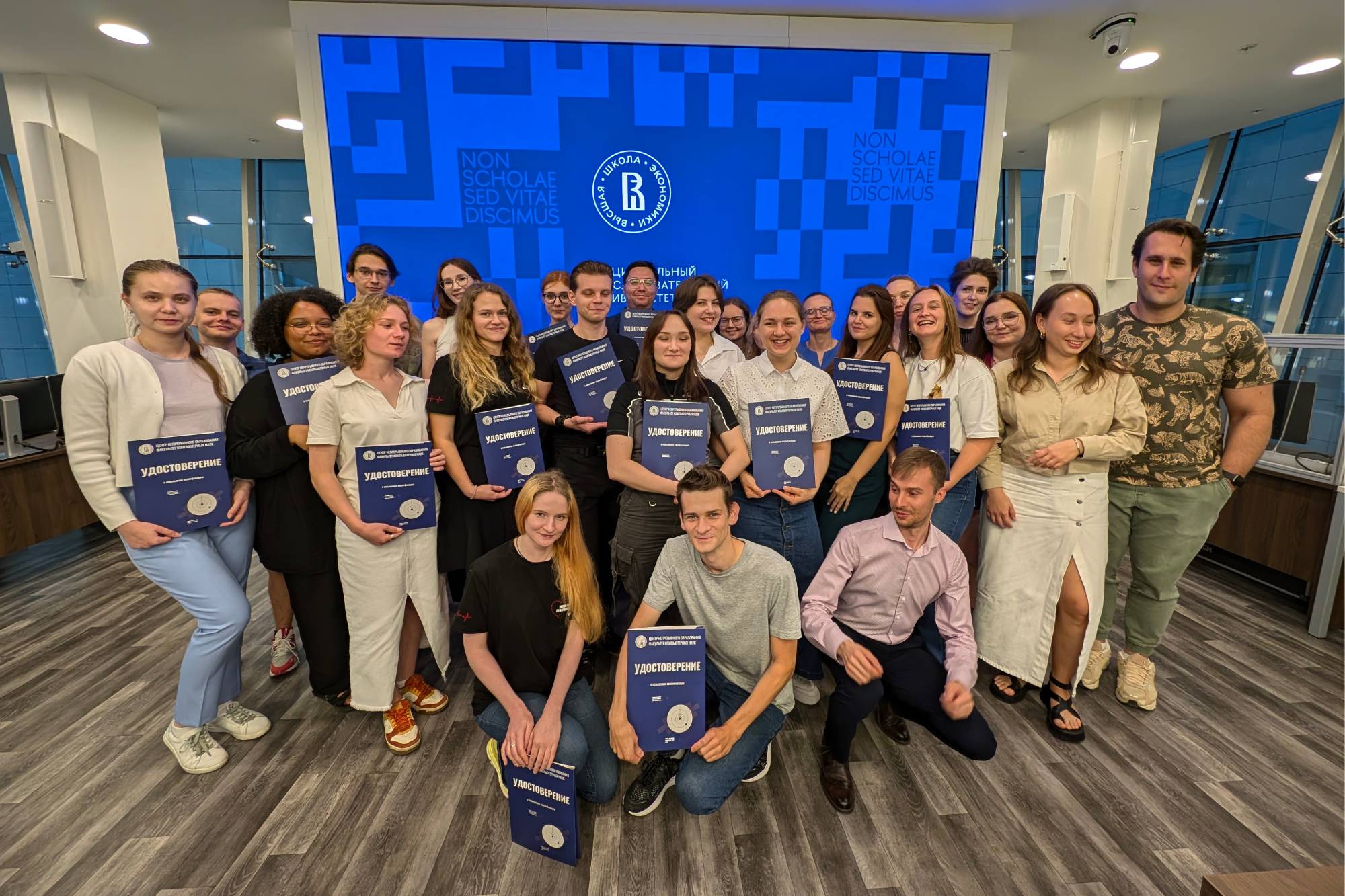
Yandex Cloud served as the technology partner for the summer school, making the company's facilities and services available to learners during training. Admission was granted free of charge, contingent upon the outcomes of a competitive selection process. The organisers received more than 100 applications, of which 25 were selected by the school's organising committee.
The programme was designed to help learners master data analysis tools with a focus on cardiogenetics. The programme was open to a diverse group of students and professionals, including biologists interested in applying Data Science tools to biological entities, bioinformaticians aiming to explore the specifics of cardiogenetics, as well as data analysts and programmers.

Maria Poptsova, Head of the International Laboratory of Bioinformatics, Academic Supervisor of the Master's Programme 'Data Analysis in Biology and Medicine,' and Associate Professor at the FCS Big Data and Information Retrieval School
'This is the second consecutive year we are hosting the summer school on cardiogenetics. It turns out to be interdisciplinary not only by design but also in the composition of its participants, attracting representatives from various universities and faculties—including computer science, biology, and medicine—as well as professionals from actual genetic companies. The participants had a unique opportunity for sharing experiences and expertise among themselves.'
The school programme consisted of several stages. The first stage of the programme focused on processing sequencing data in a Linux environment. This year, Yandex Cloud provided each participant with virtual machines equipped with ample RAM and disk space. The participants were able to process complete exomes in real time.
The second stage included a tour of the Biotechnology Campus, where students were introduced to the so-called 'wet' laboratory— a facility where liquids and other wet materials are used in experiments—and to the '100,000+ Me' Russian Genome Project.
The third stage included an introduction to experimental sequencing technologies led by Pavel Melentyev, a physicist involved in the development of Russian DNA sequencers. This stage also featured a trip to Troitsk to visit the ISAN's Laboratory of Optical Methods for DNA Molecule Sequencing.
The fourth stage offered an immersion in medical practice, featuring a lecture by a practicing cardiogeneticist. He explained how knowledge of genetic mutations aids specialists in the treatment and diagnosis of specific diseases, and how the results of analyses are interpreted.
During the training, the participants worked on projects focused on identifying pathogenic variants using a cardiogenetic mini-panel. The concluding day of the summer school was dedicated to the defence of final projects. Learners who successfully completed the programme received advanced training certificates.
Kirill Kuzmichev, participant of the summer school, Assistant at the Department of Endocrinology and Internal Diseases of the Volga Region Research Medical University and cardiologist at State Clinical Hospital No. 13 in Nizhny Novgorod
'Under the guidance of the department head Ilya Pochinka, who is also my academic supervisor and teacher, we have been conducting several projects aimed at identifying potential clinical and genetic prerequisites for adverse events in patients with myocardial infarction.
Undoubtedly, genetics represents the future of medicine, particularly in terms of personalised and precision approaches to patient care. However, for us as clinicians, the field of scientific genetics remains terra incognita, where we are only just beginning to take our first steps. In order to effectively organise research and accurately interpret results, live communication with geneticists is essential.
At the summer school organised by HSE University, I had this opportunity to engage directly with practicing geneticists. The classes provided insights into modern genome sequencing methods, and it was particularly fascinating to learn about monomolecular sequencing from ISAN Associate Professor Pavel Melentyev firsthand. It was an unforgettable and inspiring experience. In the context of my current scientific work, the most valuable takeaway was gaining an understanding of the methods for processing results and searching for genetic associations within vast data sets. This is true Big Data. Ultimately, I firmly believe that acquiring at least basic programming and bioinformatics skills is essential, as without them, it is impossible to become a true specialist in this field.'
See also:

Cardiogenetics of the Future: Sequencing Helps Treat Heart Disease
Future cardiologists, geneticists, and IT specialists gathered at HSE University to learn how to 'read' DNA for diagnosing cardiovascular diseases. They explored modern sequencing methods and the complexities of working with digital twins of cardiac patients.
Archival Impulse: Dubna Hosts Summer School Organised by HSE University and JINR
The Joint Institute for Nuclear Research (JINR) in Dubna hosted the Archival Impulse Summer School, co-organised by JINR physicists, historians from the HSE Faculty of Humanities, and staff from the Archives of the Russian Academy of Sciences (ARAS). This first archival summer school continued the joint initiative of HSE University and JINR to examine and preserve the unique historical legacy of physicists.
'Biotech Is Booming Worldwide'
For more than five years, the International Laboratory of Bioinformatics at the HSE Faculty of Computer Science has been advancing cutting-edge research. During this time, its scientists have achieved major breakthroughs, including the development of CARDIOLIFE—a unique genetic test unmatched worldwide that predicts the likelihood of cardiovascular disease. With the active participation of HSE students, including doctoral students, the team is also working on a new generation of medicines. In this interview with the HSE News Service, Laboratory Head Maria Poptsova shares insights into their work.
HSE Shares Its Experience of Urban Strategies at International Summer School in China
In the context of intensifying global geopolitical and technological competition, leading Chinese educational institutions—Zhejiang International Studies University and Peking University—organised an International Summer School. Their joint programme focused on studying global, regional, and urban development strategies. The HSE Faculty of Urban and Regional Development took part in this event.
HSE GSB and Alfa-Bank Host Summer School for Chinese Students
The international summer school Digital Product Management, a joint educational project by the HSE Graduate School of Business (HSE GSB) and Alfa-Bank, brought together over 30 students from leading Chinese universities.
HSE University Students and Postgraduates Take Part in Peking University International Summer School
In July 2025, Peking University hosted its annual Quantum Molecular Dynamics Summer School, which has moved onto an international stage. Its first foreign guests were students and postgraduates from the HSE Tikhonov Moscow Institute of Electronics and Mathematics (MIEM). They took part in an extensive academic programme and had the opportunity to visit a laboratory that works with optoelectronic materials and energy devices.
‘Student Ideas Shed Light on Key Challenges for Urban Development’
The first international joint summer school of the Vysokovsky Graduate School of Urbanism (GSU) at both the HSE Faculty of Urban and Regional Development and Brest State Pushkin University (BrSU), hosted by BrSU, has come to a close. The programme focused on studying buffer zones along the railway lines encircling the city centre. Participants included students from the GSU’s Urban Planning degree programme, as well as students from BrSU and Brest State Technical University.
‘A Laboratory at 3,000 Metres’: HSE University–St Petersburg to Start Call for First Summer School in Himalayas
HSE University–St Petersburg has announced the call for the Summer School in the Himalayas, which will take place from June 30 to July 13, 2025. The Summer School is the follow-up to two expeditions in the Himalayas organised by the St Petersburg School of Social Sciences in 2024. The programme allows bachelor's, master's, and PhD students to immerse themselves in research on climate change and sustainability in local communities in the unique natural laboratory of the Himalayan region.
Genotek Becomes a Partner of HSE’s Master’s Programme ‘Data Analysis in Biology and Medicine’
In September 2024, employees of Genotek Medical Genetics Centre will act as instructors and supervisors for students’ term papers and master's theses in the ‘Data Analysis in Biology and Medicine’ programme at the HSE Faculty of Computer Science. Genotek’s expertise in Big Data analysis and bioinformatics processing of sequencing data has allowed the revision of the curriculum to include modern data analysis methods in biology and medicine.
'These Are Unforgettable Impressions, I Will Cherish Them Forever'
HSE St Petersburg International Summer School is in full swing—right now, international students from 12 countries are attending lectures and enjoying the cultural programme. The HSE News Service talked to the participants about their most vivid impressions.