

‘I See a Great Need for Organisations That Support Russian and Chinese Businesses’
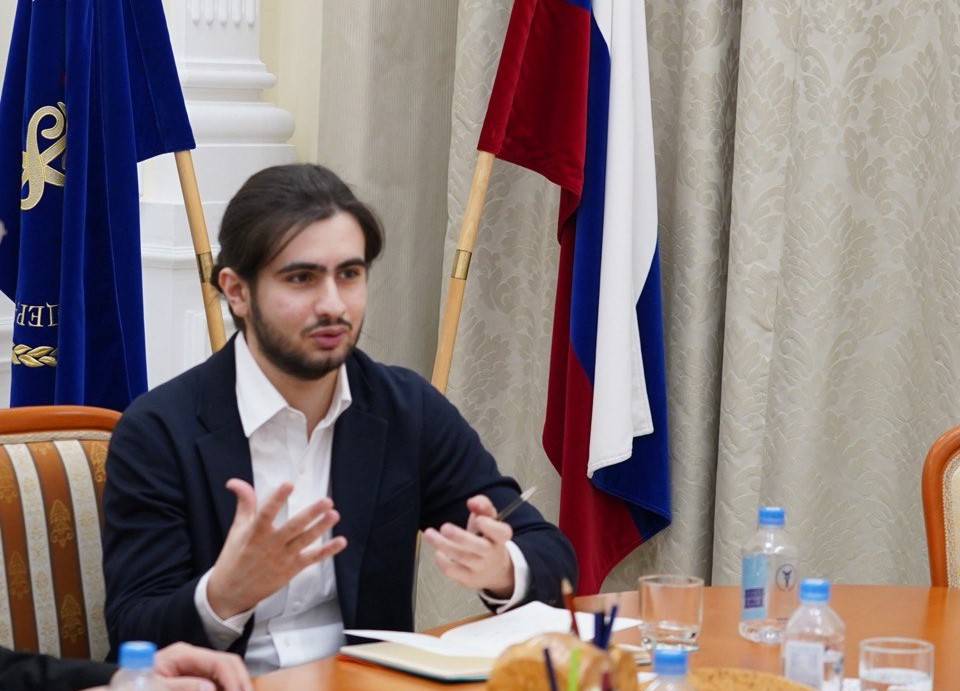
Anastas Karagadaev, a graduate of the master’s programme ‘Science, Technology and Innovation Management and Policy’ at the Institute for Statistical Studies and Economics of Knowledge (ISSEK) at HSE University, achieved significant career success even during his student years. Back then, he actively participated in the Laboratory for Science and Technology Studies at ISSEK and founded his own start-up. Currently, he is working on developing projects within the Russia–China Centre for Innovation Cooperation in Nanjing.
Anastas Karagadaev spoke with the HSE News Service about his past and current projects, his studies at HSE, and his advice for university students.
Working at the Centre for Innovation Cooperation
— Our centre supports joint projects between Russia and China. We work with business organisations, start-ups, as well as scientific and educational projects, including universities. We collaborate with Chinese organisations based on their needs—whether it is finding a partner in Russia or developing a project there. The same applies to Russian organisations in China. Regarding our latest projects, we have helped several Russian start-ups enter the Chinese market, actively support young Russian entrepreneurs in developing their projects in China, and work with Russian universities such as MISIS.

I am learning Chinese, but it has been much more difficult than I expected. While I have made progress, I am not fluent yet. Nevertheless, I am very happy with my career development and choices. There are plenty of challenges, of course. For instance, there is a cultural barrier—we are different peoples with our own cultural concepts, linguistic challenges, and many other traditions that can be difficult to grasp at first due to differences in mentality.
HSE University
— Almost all of the knowledge I gained at university has been useful in my work. Both the study materials and the projects we completed have come in handy, as has the experience of intercultural communication. In this regard, HSE has given me a lot. My programme was entirely in English, with an international focus. We studied innovation management, policy in this field, and how different countries structure their work with innovations, science, and technology. I really enjoyed my programme; the materials, the lecturers—everything turned out to be highly relevant.
Working at the Laboratory for Science and Technology Studies at ISSEK
— Since my programme involved extensive research activities, I became deeply engaged in it at some point—especially with my master’s thesis, which I invested a lot of effort in. Alongside my studies, I started working in the department on a project related to artificial intelligence. Our task was to develop a classification of technologies. We had a wide range of partners, which made the work interesting, and we achieved certain successes.
The Tertiarm Start-Up
— The start-up was in the field of robotics, focusing on an educational robot that schoolchildren could build and program during lessons or extracurricular activities. This meant they could study robotics and engineering. The idea stemmed from my own interests—since childhood, I have been fascinated by robotics, participated in various competitions, and built things myself. Even then, I felt there was a lack of a product like this.

Some of my classmates shared the same vision, as they were also passionate about children’s robotics. We decided to develop this idea into a start-up. I helped shape the project vision, so I developed it, secured grants, and applied to accelerators, while my two colleagues were responsible for the technical and educational aspects. For three years, we actively developed the project in Russia—we created several robot prototypes and launched an online course. The project is currently on hold, but the course remains available online, with around 1,300 people enrolled. However, further development of the robot itself is paused for now.
Advice for HSE Students
— Participate in as many activities as possible and meet as many different people as you can. Show genuine interest in them and their work—not necessarily with a specific goal in mind, but simply to make new friends and connections. This opened up many opportunities for me.
Future Plans
— For now, I plan to continue developing in my current field because I see a great need for organisations that support Russian and Chinese businesses. These two countries interact a lot, but often, an extra push, assistance, or continuous support is needed. I believe Russia and China have great potential for cooperation. We are already working closely together, but in the future, we can further strengthen and expand our friendship and mutually beneficial partnership.
See also:

Eighth International U4U Online Seminar Unites Experts from 14 Countries
The HSE Online Campus hosted a two-day international U4U (Universities for Universities) seminar, which traditionally serves as a platform for exchanging expertise in online learning. This year, the event has reached a global scale, attracting international experts and representatives of universities from around the world. Together, they discussed key challenges and strategies for the development of online education. The online meeting was held in mid-November.
‘Keep Working, Keep Publishing—Consistency Matters’
Ziyuan Zhu, from Beijing, China, is an international PhD student at the Institute for Public Administration and Governance at HSE University in Moscow. In this interview with the HSE News Service, Ziyuan talks about how studies can influence one’s outlook on life, comparing public service models in different countries, and why being a Chinese student in Russia is advantageous in research.
Under a Blooming Magnolia: How Russian and Chinese Scientists Create Solar Cells of the Future
Schola continues to introduce the winners of the International Academic Cooperation competition. In today's issue, Professor Andrey Vasenko, Deputy Head of the Scientific and Educational Laboratory of Quantum Nanoelectronics at Tikhonov Moscow Institute of Electronics and Mathematics (MIEM), speaks about the joint project between his laboratory and the Peking University research team— ‘Engineering of highly efficient and stable perovskite solar cells.’
Graduate School of Business MBA Students Take Part in Offsite Module in China
MBA students of the HSE Graduate School of Business HSHSE have recently completed the international component of their studies at the School of Economics and Management at Tsinghua University. The module focused on developing business through innovation. The participants discussed the impact of new technologies on corporate structures and visited companies operating in robotics and renewable energy.
Meeting with Xinhua Delegation: Discussion on Contemporary Journalism at HSE
On October 22, 2025, HSE University hosted an open meeting with representatives of the Chinese news agency Xinhua, led by Sun Zhiping, Chief of Staff to the Director General. Participants discussed current challenges in journalism and the operational specifics of news agencies in today’s media landscape. Many students took the opportunity to ask questions and practise speaking Mandarin. The visit was organised by the Faculty of World Economy and International Affairs in collaboration with the HSE Institute of Media and the TASS news agency.
HSE Participates in Conference on International Exchange of Professionals in China
From October 21 to 24, 2025, the 23rd Conference on International Exchange of Professionals took place in Shanghai and Beijing, bringing together more than 7,000 scientists and experts from around the world. HSE University was represented by Ivan Arzhantsev, Dean of the Faculty of Computer Science, and Vasily Gromov, Head of the Laboratory for Semantic Analysis of the Centre for Language and Semantic Technologies.
‘It Was Interesting to See How Our Chinese Colleagues Work’: HSE Researchers Take Part in Hefei Summer School
This summer, Diana Sukhoverkhova, Daria Mazur, and David Kagramanyan, research assistants at the MIEM HSE Laboratory for Computational Physics, spent five weeks in China. At the Future Scientist Exchange Program (FuSEP) summer school in Hefei, they worked in new fields of science together with their Chinese colleagues. HSE's promising scientists spoke to the HSE News Service about their intense and productive time in China.
Works of HSE Art and Design Students Presented at Pingyao International Photography Festival
On September 19, the 25th Pingyao International Photography Festival (PIP) opened in Pingyao, Shanxi Province, China. The exhibition features the works of 16 students of the Faculty of Creative Industries at the HSE Art and Design School, selected following the results of the HSE Creative Open / Photoproject international competition, which received more than 300 entries.
‘I Wish Summer Were Quarterly’
Practicing and teaching yoga, chilling in Moscow parks, writing academic papers, travelling around Russia, and volunteering—these are only a few of the things HSE international students have tried over their summer break. Now, as they are getting back to studies, the students reflect on their summer experiences in academic work, professional development, travel, and leisure.
Ringing in the New Term
On September 1, campuses across Russia ring in the new academic year with the traditional ‘first bell’—flowers for teachers and welcomes for first‑years—while international students at HSE University share how studies begin in their home countries, from Ghana’s Akwaba week to China’s student club fair, the Democratic Republic of the Congo’s blue-and-white uniforms, and India’s Teachers’ Day.