

Hormones Can Help Brain Recover after Injury
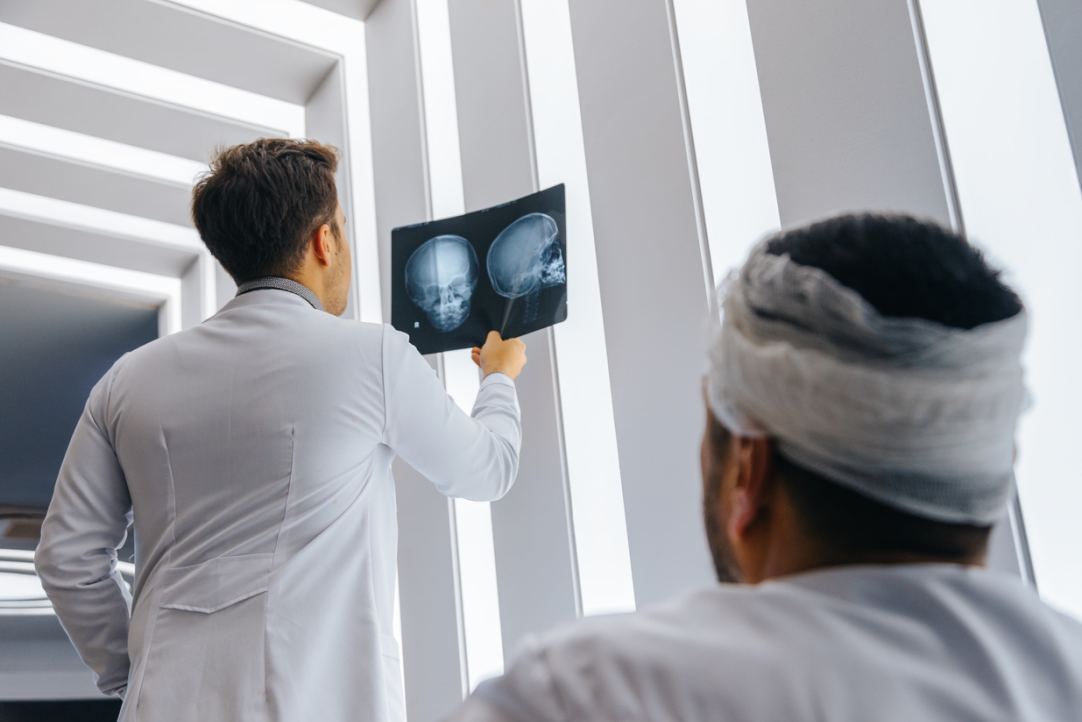
An international team of researchers including Alexander Tonevitsky, Professor at HSE’s Faculty of Biology and Biotechnology, found that pituitary hormones may produce different effects on the left and right sides of the body following a traumatic brain injury. These differences can accelerate the development of motor disorders. Researchers are trying to determine whether treatment that blocks the corresponding hormones can counteract these effects. The results of the study were published in the journal eLife.
Brain injury or stroke can cause problems with control of muscles and limbs. As a rule, if a haemorrhage occurs in the right hemisphere, it causes movement difficulties in the left side of the body, and vice versa. Scientists and doctors have long been interested in how disorders in the nervous system occur after brain tissue damage.
The authors of the article found a possible answer to this question. In a new study, they observed how rats develop limb paralysis after a brain injury. These experiments involved both healthy rats and animals with a damaged spine and paralysis of the hindlimbs.
The experiments have shown that the probability of partial paralysis of the left or right side of the rat body depended on how active their pituitary gland was. This is a small part of the brain that is responsible for the production of various hormones. When scientists damaged or removed the pituitary gland of rats, the animals did not have movement problems affecting only one side of the body.
To investigate further, the researchers tracked what would happen if healthy rats were injected with pituitary hormones, which are produced when the brain is damaged. As a result, functional disorders of the right or left side of the body began on their own.
When scientists blocked the production of two pituitary hormones, ß-endorphin and Arg-vasopressin, there were no more limb problems in rats with brain injury. This means that these hormones, and probably others produced by the brain and the body as a whole, can affect the left and right halves of the body in different ways.
The results obtained by the article’s authors suggest that the endocrine system can selectively affect the left and right sides of the body. This is an unusual phenomenon requiring verification in further experiments on animals and people who have experienced a stroke. The scientists suggest that if future research shows that blocking these hormones is beneficial, then a new method to address the consequences of strokes or brain injuries could become available.
Neurophysiologists and biologists from Sweden, Russia, Denmark and Portugal took part in the study. ‘I was lucky to work with a team of outstanding scientists from four countries working at six universities, including Professor Alexander Tonevitsky,’ says Georgy Bakalkin, one of the study authors, Professor at Uppsala University. ‘When it comes to molecular and genetic projects, this is a common thing, but in physiology it can be an exceptional case. This is a good example of how a common goal can bring together such different people in one team.’

Alexander Tonevitsky, Professor at HSE’s Faculty of Biology and Biotechnology
‘This is an exciting line of research, and this study opens multiple opportunities for further collaboration that may result in development of conceptually novel pharmacological treatment of motor deficits secondary to stroke and brain trauma, which are currently the leading causes of permanent disabilities.’

Georgy Bakalkin, Professor at Uppsala University
‘As a new concept, this research led to long and interesting discussions between editors, reviewers and authors before publication. This phenomenological article presents the first evidence of the presence of an endocrine mechanism specific for side effects, and leaves functional and mechanistic questions for further research. Now, when the article has been published, we can start analysing the main mechanisms and the role of this phenomenon in our body functioning and in neurological disorders.’
See also:

Biologists at HSE University Warn of Potential Errors in MicroRNA Overexpression Method
Researchers at HSE University and the RAS Institute of Bioorganic Chemistry have discovered that a common method of studying genes, which relies on the overexpression of microRNAs, can produce inaccurate results. This method is widely used in the study of various pathologies, in particular cancers. Errors in experiments can lead to incorrect conclusions, affecting the diagnosis and treatment of the disease. The study findings have been published in BBA.
Researchers Discover Genetic Bridge between Ancient and Modern Populations of North Caucasus
Although the North Caucasus played a crucial role in the ancient colonisation of Eurasia and the shaping of its cultural and genetic heritage, the genetic history of its indigenous cultures has not yet been fully explored. Scientists have, for the first time, conducted deep sequencing of ancient DNA from members of the Koban culture that emerged in the late Bronze Age in the North Caucasus and compared this genetic data with that of modern populations of the Caucasus. Their findings confirm the role of Koban culture carriers as an ancient genetic bridge between the Bronze and Iron Ages in the North Caucasus. The study has been published in the European Journal of Human Genetics.
Early Molecular Diagnosis of Cancer Proven More Cost-Effective Than Subsequent Treatment of Advanced Disease
Applying expensive diagnostic methods in clinical practice will ultimately cost society 5 to 10 times less than the expenditures associated with late-stage cancer treatment, including subsequent disability pensions and sick leave payments—these are the findings from a study conducted by researchers at the HSE Faculty of Economic Sciences Marina Kolosnitsyna and Anastasia Vladimirskaya in collaboration with colleagues at EVOGEN, a medical genetic laboratory, and the Department of Health of the Yamalo-Nenets Autonomous Okrug. The study results have been published in Social Aspects of Population Health.
Scientists Discover Cause of Metastasis Formation in Patients with Colorectal Cancer
An international team of researchers including scientists at the HSE Faculty of Biology and Biotechnology has identified factors which can increase the aggressiveness of tumours in patients with colorectal cancer. An isoform of CD44 protein has been found to play a pivotal role in the development of metastases. The study findings have been published in Molecular Oncology.
Scientists Have Developed a Model of Malignant Prostate Tumour and Used It to Test Drug Efficacy
Researchers from HSE University and the Russian Ministry of Health National Medical Research Radiological Centre have successfully generated a three-dimensional laboratory model of prostate cancer and used the model for testing an anti-tumour drug. In the future, this approach has the potential to significantly enhance the efficacy of cancer treatment for patients. The study’s findings have been published in Cancer Urology.
Nanai and Chukchi Found Intolerant to 'Mushroom Sugar'
A team of researchers from HSE University, the RAS Research Centre for Medical Genetics, and the Moscow State University Institute of Anthropology have examined the impact of the human genotype on the production of trehalase, an enzyme responsible for metabolising 'mushroom sugar'. The researchers examined 1,068 DNA samples collected from inhabitants of northern and Arctic regions of Russia and found that the overall risk of trehalase deficiency in certain indigenous northern populations can be as high as 60–70%. The paper has been published in Problems of Nutrition.
Conserved microRNAs and Flipons Shape Gene Expression
An international team, including researchers of the HSE Faculty of Computer Science, has discovered a new mechanism of gene regulation in which microRNA assumes a central role. These non-coding molecules influence the DNA regions within genes that govern embryonic development. The study contributes to our understanding of the mechanisms underlying the diverse genetic programs found in complex multicellular organisms. The paper has been published in the International Journal of Molecular Sciences.
Research Finds Genes Associated with Most Aggressive Kidney Cancer
HSE researchers have found genes characteristic of the most aggressive subtype of clear cell renal carcinoma. Having studied data on tumour samples from 456 patients, Grigory Puzanov, research fellow at the HSE Faculty of Computer Science International Laboratory of Bioinformatics, identified cancer subtypes associated with either a favourable or unfavourable course of the disease. The paper is published in Scientific Reports.
Microfluidic Chip Used to Test Drug Toxicity
A team including HSE researchers has developed a way to use microfluidic chips to assess the toxic effects of drugs on humans. This device will help identify and minimise the side effects of drugs during the preclinical trial stage and reduce the need for animal experiments. The study is published in Bulletin of Experimental Biology and Medicine.
Pivot to the East: A Comprehensive Study of the Cultural and Civilisational Centres of the Non-Western World is the Top Priority
China and the Chinese world, South Asia, Southeast Asia, the Arab countries, Iran, Turkey, Central Asia and Africa are gaining new significance in Russia’s foreign policy. However, we do not know enough about the Eastern countries. It is necessary to change the priorities in education, starting from grammar school. Prospects for the development of domestic Oriental studies in the context of the new stage in the development of the system of international relations were discussed at a round table at HSE University.