

‘I Want to See Studies Emanating from Africa Contributing Substantially to Cognitive Science’
Abdul-Raheem Mohammed from Ghana has recently defended a PhD dissertation in cognitive psychology at HSE University via remote procedure. Abdul-Raheem and his academic supervisor, Dmitry Lyusin, talked to the HSE News Service about their cooperation, the advantages and complications of remote PhD defence at HSE University, and the prospects of cognitive science in African countries.
Abdul-Raheem Mohammed defended his dissertation on ‘The Role of Executive Functions in Emotion Regulation’ for a PhD degree in Psychology at HSE University in April 2022. His academic supervisor was Dmitry Lyusin, Associate Professor at the HSE School of Psychology and Leading Research Fellow at the HSE Laboratory for Cognitive Research.
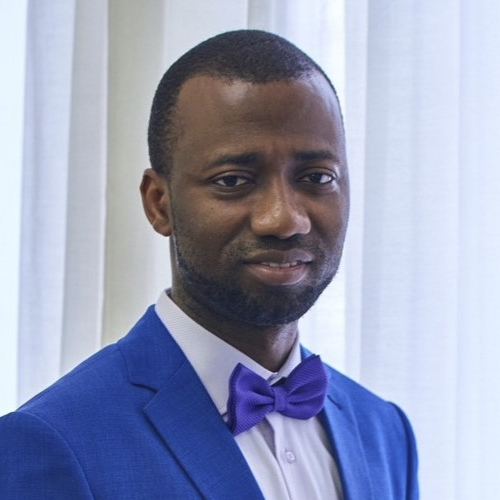
Abdul-Raheem Mohammed, lecturer, University for Development Studies in Tamale, Ghana
Abdul-Raheem Mohammed, 32, comes from Savelugu in the Northern Region of Ghana. He is currently a lecturer at the University for Development Studies in Tamale, Ghana. In 2013, He completed a bachelor's degree in Psychology with Sociology with First-Class Honours from the University of Ghana.
In 2016, he was admitted to the HSE University Master’s programme in Cognitive Sciences and Technologies: From Neuron to Cognition, from which he graduated with honours. He proceeded onto a doctoral programme in Psychology at HSE University and successfully completed it in October 2021.
Research Opportunities at HSE University
I had a wonderful experience at HSE University during my master’s and doctoral studies. The university is well-equipped with modern scientific laboratories for experiments in psychology. I had the opportunity to prepare my thesis at the HSE Laboratory for Cognitive Research.
This laboratory has leading researchers who are available to support students. I received valuable mentorship from my supervisor during the process
Moreover, I had several opportunities to present my findings during laboratory meetings for discussions and feedback, which helped to fine-tune my work.
At HSE University, a dissertation can be prepared based on two tracks: a collection of publications or a traditional dissertation made up of several chapters. Although I was qualified to go with the first option at the time of writing my thesis, I decided to go with the second option because I wanted to describe the main ideas of my thesis in a very detailed way to my readers. The process did not go as smoothly as initially expected, but, with the support of my supervisor, I was able to surmount this hurdle. He was constantly available to read my work and provide useful feedback. When the dissertation was finally ready, I had a pre-defence at the Laboratory for Cognitive Research with two external reviewers. I got unanimous positive feedback on the dissertation, which then allowed me to submit it to the dissertation council. As for the defence, the preparation went smoothly. After receiving feedback from the reviewers, I had enough time to prepare my responses.
Executive Functions: The Ability to Regulate Emotions
My dissertation was devoted to the concept of emotion regulation and how mental skills influence our ability to regulate emotions. The ability to influence when and how we experience emotions has many benefits, such as overall improvement of mental health, psychosocial wellbeing, and attainment of goals. Since this ability is considered desirable, then what are some of the factors that could facilitate the ability to regulate one’s emotions? I focused on a special group of mental skills called ‘executive functions’. Executive functions are an advanced form of mental skills which includes working memory, flexibility in thinking, and self-control. I was interested in investigating how these functions could help harness the ability to regulate one’s emotions.
The results from a series of experiments suggest that our ability to update information in our working memory (a time-limited memory system) is positively associated with the ability to reappraise negative emotional information. This means that individuals who are able to quickly update information in their working memory are also more likely to reappraise negative information in order to have a reduced emotional impact. Again, the ability to inhibit automatic responses when necessary was positively associated with the ability to suppress a negative emotional experience.
The practical implication of the research is a potential application of the findings in clinical psychology, cognitive psychology, and cognitive neuroscience as well.
Clinicians, in their efforts to help people with inabilities to regulate their emotions, could utilise training programs aimed at improving executive functions
Science without Borders: Defending a Dissertation Remotely
Before the day of my defence, I was quite anxious about two major issues: a stable internet connection and the laptop for the defence. I tried several locations and different internet service providers in Ghana to determine which would offer me the best internet connection. After settling on the location and internet service provider, I also prayed that there wouldn’t be any disruptions on that day. I had backup internet and a laptop available just in case. Fortunately, on the day of the defence, everything went smoothly. The presentation of my dissertation went well; I was able to answer all the questions and address the comments. In the end, the feedback was quite positive. I was also encouraged to continue to explore unanswered questions in the topic under investigation.
Using HSE University’s Expertise to Advance Cognitive Science in Sub-Saharan Africa
My immediate plans are to continue researching cognitive processes and emotions. I have just been appointed as a lecturer responsible for teaching psychology-related courses and conducting research. I also look forward to getting a postdoctoral research opportunity where I can improve my research skills.
Cognitive Science is a relatively young field, and thus it is uncommon in Ghana and sub-Saharan Africa
It is my ultimate aim to introduce this field of study to Ghana and to promote research in cognitive processes. Presently, research on cognitive processes is mainly conducted outside the African continent. I therefore want to see studies emanating from Africa contributing substantially to cognitive science.
I am quite hopeful that I can get the opportunity to partner with leading universities like HSE University in the near future on joint projects in cognitive processes
Dmitry Lyusin, Leading Research Fellow at the Laboratory for Cognitive Research, Abdul-Raheem Mohammed’s Academic Supervisor
I am interested in working with international graduate and postgraduate students, since they have a different cultural and educational background. This means that they have a slightly different perspective on the material we study, and sometimes suggest quite unexpected interpretations and ideas. In addition, as we often work in research teams. Such communication enriches the experiences of Russian graduate and postgraduate students.
When Abdul-Raheem started studying on the master’s programme, he asked me to be his academic supervisor. He proved to be a very good student and proceeded onto his doctoral studies, where I was happy to continue supervising his research.
The defence process went well; we had a fruitful discussion with the reviewers, and their overall evaluation of the work was positive. We had some complications as we were preparing the defence process, since following our rules, at least one member of the Dissertation Committee should be a foreigner. But after the start of the military operation, some of our international colleagues were unable to participate, and we had to urgently look for a replacement.
Such cooperation is useful for HSE University—it is becoming more visible internationally. Our graduates, including our PhD degree holders, work in different countries and continue collaborating with HSE University. For example, Abdul-Raheem and I are planning to write another paper together and are thinking about further cooperation.
Dmitry Lyusin
Leading Research Fellow, Laboratory for Cognitive Research
See also:

‘Employers Know That HSE Graduates are Well-Prepared, Analytical, and Adaptable’
Warda Tariq, from Pakistan, completed her Master’s in Data Science at HSE University–Moscow in 2024. She is now undertaking a PhD at the Faculty of Computer Science while working remotely as an AI/ML developer. Warda spoke to the HSE News Service about blending theory and practice, what an HSE education provides apart from academic knowledge, and her advice for making the most of university.
‘Keep Working, Keep Publishing—Consistency Matters’
Ziyuan Zhu, from Beijing, China, is an international PhD student at the Institute for Public Administration and Governance at HSE University in Moscow. In this interview with the HSE News Service, Ziyuan talks about how studies can influence one’s outlook on life, comparing public service models in different countries, and why being a Chinese student in Russia is advantageous in research.
‘Start Working on Your Articles from the Very Beginning of Your PhD’
Andrés Castañón Rincón, from Spain, is a doctoral student at the HSE School of Philosophy and Cultural Studies in Moscow working on the history of Soviet Marxism philosophy. In his interview with the HSE News Service, he explains why studying Soviet Marxism is relevant today, talks about the advantages and challenges of his work in Moscow as an international researcher, and gives some advice to beginner PhD students.
‘I Wish Summer Were Quarterly’
Practicing and teaching yoga, chilling in Moscow parks, writing academic papers, travelling around Russia, and volunteering—these are only a few of the things HSE international students have tried over their summer break. Now, as they are getting back to studies, the students reflect on their summer experiences in academic work, professional development, travel, and leisure.
Ringing in the New Term
On September 1, campuses across Russia ring in the new academic year with the traditional ‘first bell’—flowers for teachers and welcomes for first‑years—while international students at HSE University share how studies begin in their home countries, from Ghana’s Akwaba week to China’s student club fair, the Democratic Republic of the Congo’s blue-and-white uniforms, and India’s Teachers’ Day.
HSE Scientists: Social Cues in News Interfaces Build Online Trust
Researchers from the HSE Laboratory for Cognitive Psychology of Digital Interface Users have discovered how social cues in the design of news websites—such as reader comments, the number of reposts, or the author’s name—can help build user trust. An experiment with 137 volunteers showed that such interface elements make a website appear more trustworthy and persuasive to users, with the strongest cue being links to the media’s social networks. The study's findings have been published in Human-Computer Interaction.
‘HSE University Has Given Me a Solid Foundation in Both Theory and Practice’
Gideon Apomasu, from Ghana, West Africa, has recently graduated from the HSE University Master’s programme in Population and Development at the Faculty of Social Sciences. He talked to the HSE News Service about his impressions and experience of living in Moscow, being part of the HSE student community, and his future career plans.
‘Moscow Offers a Unique Academic and Cultural Experience’
Stephen Sodoke, from Ghana, is a recent graduate of the Master’s degree in Population and Development at HSE University in Moscow. Having completed his programme at the end of June 2025, he now plans to continue his research work on a doctoral programme. In this interview with the HSE News Service, Stephen talks about what surprised him about life in Russia, his involvement in extracurricular academic activities, and more.
‘Unlearn, Relearn, and Do Not Study Alone’
Celestina Adu, from Ghana, is pursuing her Master’s in Economics and Economic Policy at the HSE Faculty of Economic Sciences. Recently, she won silver at a scientific student conference in Nizhny Novgorod. In her interview, she delves into her research on AI and its impact on education, offering advice for prospective international students based on her experiences in Russia.
‘Education is the Mother of all Disciplines’
Moses Oluoke Omopekunola, from Nigeria, is a second-year student of the Science of Learning and Assessment (SOLA) programme. Intent on pursuing a career in psychometrics, he has already joined the PhD programme in Education to deepen his knowledge of the theory and methodology of learning. In this interview with the HSE News Service, Moses explains how his master’s programme aligns with his future plans, recalls the challenges he has faced, and shares the most valuable lessons he has learned so far.