

Neural Network Developed at HSE Campus in Perm Will Determine Root Cause of Stroke in Patients
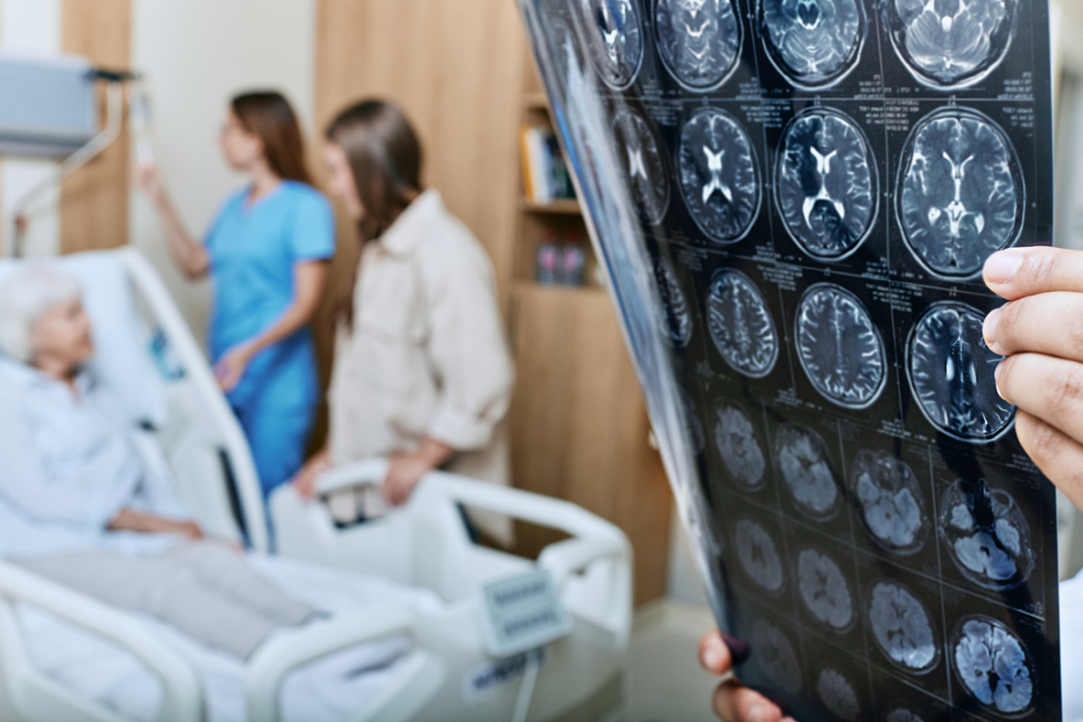
Specialists at HSE Campus in Perm and clinicians at Perm City Clinical Hospital No. 4, have been collaborating to develop a neural network capable of determining the root cause of a stroke. This marks the world's first attempt to create such a system, the developers note.
According to Sofya Kulikova, Senior Research Fellow at the Centre for Cognitive Neuroscience, HSE Campus in Perm, specialists at her centre have been collaborating with their colleagues at City Hospital No. 4 since 2019. During this period, they have co-authored multiple papers and hosted two workshops on employing various tools for data analysis in neurology.
They began collaborative efforts to develop a new AI tool for identifying the cause of strokes about a year ago, after winning a competition for Research and Study Groups.
Identifying the cause of a stroke is a crucial task for preventing any reoccurrences, which tend to be even more severe than primary strokes, according to Kulikova. A substantial amount of data is required for designing neural network-based tools capable of handling such a task.
'Therefore, colleagues from the clinic have been actively collecting and marking up data, while also involving their peers from other regions in the study. Simultaneously, our group has been developing and testing a tool designed to automatically identify not only the location of the lesion but also the potential underlying cause of the stroke using an MRI image.'
Data for the project is submitted by physicians from various Russian clinics, and over 1,000 images have so far been uploaded to the database. These images are used to train the neural network to identify the most probable cause of a stroke in each instance, the Perm Region Ministry of Health told TASS.
A stroke is an acute interruption of blood supply to the brain, which can be either ischemic or haemorrhagic. In an ischemic stroke, blood vessel blockage by a thrombus or atherosclerotic plaque impedes blood flow to the brain, resulting in oxygen deprivation and subsequent neuronal death. In a haemorrhagic stroke, a cerebral vessel ruptures, causing bleeding into surrounding tissues, which also results in neuronal death. Ischemic strokes are more likely to cause severe forms of disability, such as impaired speech, memory, coordination, and motor functions, while haemorrhagic strokes often result in death. Additionally, there are transient ischemic attacks, often referred to as micro-strokes. They occur when blood flow in the cerebral arteries is briefly interrupted, leading to focal brain lesions, but the symptoms typically dissipate quickly. As a result, patients often disregard the symptoms until the condition becomes critical. According to the World Health Organization (WHO), stroke ranks among the top ten leading causes of death worldwide. Furthermore, half of stroke patients experience recurrent strokes, with up to 15% experiencing them up to four times.
According to the WHO, 75% of strokes are avoidable through timely prevention measures combined with medical supervision. That is why identifying the underlying cause of the condition is so crucial. To achieve this, each patient hospitalised with an ischemic stroke undergoes a comprehensive set of studies, including CT or MRI of the brain, visualisation of cerebral vessels, ultrasound of the vessels in the neck, heart, arteries, and veins of the lower extremities, as well as electrocardiography and Holter ECG monitoring.
However, according to Professor Alexey Kulesh, Head of the Neurology Department at Clinical Hospital No. 4, in 40% of cases, these studies do not provide a clear understanding of the underlying cause of the disease. The percentage of recurrent strokes does not decrease, indicating that the underlying cause of the acute pathology has not been determined, resulting in ineffective preventative therapy being prescribed.
Until now, there hasn't been a systematic analysis, recognised by medical practitioners worldwide, correlating the shape of the lesion with the cause of stroke. This inspired the idea of creating a database of stroke lesion images and using AI to group them according to common characteristics.

Alexey Kulesh
'Certain patterns are evident, and artificial intelligence can already provide insights with a high degree of probability regarding the cause of a particular stroke. Certainly, the standard examination of a patient with an ischemic stroke will be conducted by default. However, with the assistance of a neural network, we will be able to place a diagnostic emphasis in the most probable area, enabling us to do so more efficiently. During a single hospital stay, the patient will receive treatment, rehabilitation, and recommendations for preventing recurrent strokes.'
Currently, there is an experimental version of the tool that has been tested by Kulikova and her colleagues 'on open data related to another brain disease, with very promising results.' Some of these results were presented at the Sixth International Cognitive Neuroscience Forum in Yekaterinburg. Experts are hopeful that after completing data collection and testing the tool on its own database, it will prove valuable for a wide range of medical practitioners.
See also:

Final of International Yandex–HSE Olympiad in AI and Data Analysis Held at HSE University
Yandex Education and the HSE Faculty of Computer Science have announced the results of the international AIDAO (Artificial Intelligence and Data Analysis Olympiad) competition. Students from 14 countries took part. For the second year in a row, first place went to the team AI Capybara, which developed the most accurate AI model for an autonomous vehicle vision system.
AI Lingua Included in Compilation of Best International AI Practices in Higher Education
HSE University has been acknowledged internationally for its pioneering efforts in integrating artificial intelligence into higher education. The AI Lingua Neural Network developed at HSE was included in the renowned international collection ‘The Global Development of AI-Empowered Higher Education: Beyond the Horizon.’ The compilation was prepared by the Institute of Education (IOE) of Tsinghua University with the support of the Ministry of Education of the People's Republic of China and a global advisory committee, which included experts from Oxford, UCL, Sorbonne, Stanford, and other leading academic centres.
Technological Breakthrough: Research by AI and Digital Science Institute Recognised at AI Journey 2025
Researchers from the AI and Digital Science Institute (part of the HSE Faculty of Computer Science) presented cutting-edge AI studies, noted for their scientific novelty and practical relevance, at the AI Journey 2025 International Conference. A research project by Maxim Rakhuba, Head of the Laboratory for Matrix and Tensor Methods in Machine Learning, received the AI Leaders 2025 award. Aibek Alanov, Head of the Centre of Deep Learning and Bayesian Methods, was among the finalists.
HSE University to Join Physical AI Garage Project by Yandex
Yandex is collaborating with leading Russian universities to launch a new educational programme called Physical AI Garage. This initiative unites five universities—HSE University, ITMO, MIPT, MAI, and MEPhI—to train future professionals in physical artificial intelligence by tackling real-world industrial challenges. The programme is free, and participants will receive scholarships.
Larger Groups of Students Use AI More Effectively in Learning
Researchers at the Institute of Education and the Faculty of Economic Sciences at HSE University have studied what factors determine the success of student group projects when they are completed with the help of artificial intelligence (AI). Their findings suggest that, in addition to the knowledge level of the team members, the size of the group also plays a significant role—the larger it is, the more efficient the process becomes. The study was published in Innovations in Education and Teaching International.
HSE Researchers Assess Creative Industry Losses from Use of GenAI
Speaking at the IPQuorum.Music forum on October 15, Leonid Gokhberg, HSE First Vice Rector, and Daniil Kudrin, an expert at the Centre for Industry and Corporate Projects of HSE ISSEK, presented the findings of the first study in Russia on the economic impact of GenAI on creative professions. The analysis shows that creators’ potential losses could reach one trillion roubles by 2030.
‘Fall into ML Has Firmly Established Itself as a Landmark Event in Russia’s AI Scene’
On October 24–25, 2025, the AI and Digital Science Institute of the HSE Faculty of Computer Science will host the fourth annual Fall into ML 2025 conference at the HSE Cultural Centre. The event is once again supported by its general partner, Sber. The focus this year is on breakthrough research and the future of fundamental AI.
Critique of Obscure Reason: Artificial Intelligence in the Perception of Mathematicians
Mathematicians at HSE University believe that there is no need to fear losing jobs because of the widespread use of AI, while at the same time they warn against uncritical acceptance of works and projects prepared with its help. AI, however, can be a useful tool in research, creating models and processing large volumes of information.
Registration for Russian Olympiad in Artificial Intelligence 2025 Now Open
Registration for the fifth season of the Russian Olympiad in Artificial Intelligence has opened. This year, the competition has gained international status. The event is open to students in the 8–11 grades both in Russia and abroad. The winners will receive benefits when applying to Russian universities.
Global AI Trends Discussed at International Foresight Workshop at HSE University
At an international foresight workshop on artificial intelligence held at HSE University, Russian and foreign scholars discussed the trends and challenges arising from the rapid development of AI.