

HSE ‘Mirror Laboratories’ Project Marks Five Years since Start
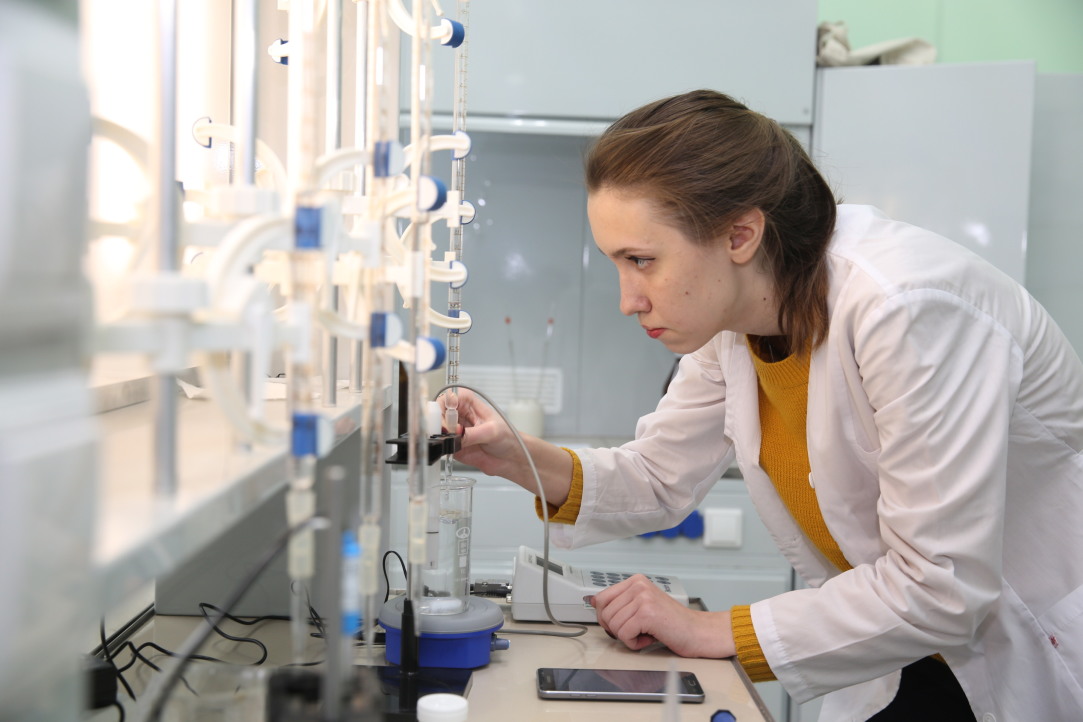
‘Mirror Laboratories’ is one of the flagship programmes of the HSE University aimed at developing domestic scientific partnerships. During the implementation of the project, 41 research projects were initiated in partnership with 30 regional universities and scientific organisations. A series of round tables timed to coincide with the fifth anniversary of the ‘Mirror Laboratories’ project, were held at the HSE University on April 24–25, 2024.
The programme started at HSE University in the spring of 2020. For the first time, the university initiated cooperation aimed at developing domestic scientific collaborations, increasing the effectiveness of interaction in the research and educational fields between HSE University and research teams from other regions of Russia.
The ‘Mirror Laboratories’ project is based on the principle of parity and mirror financing (both partners allocate equal amounts to the project). It brings together research resources of the participants, including access to equipment and data. It also allows for the exchange methods and scientific results, seminars and internships. In addition, the involvement of young researchers, students and doctoral students in the project is an essential feature.

Director of Advanced Research at HSE University
‘The fifth anniversary is a timeframe, with which we can sum up the first results of the “Mirror Laboratories” project. The development of domestic collaborations is an important component in the implementation of the university's strategy. The “Mirror Laboratories” project has become a good driver for the expansion of not only basic, but also applied research. We are currently holding the fifth competition to launch new projects, and the interest from both our university research projects and our partners is increasing. It’s nice to note that the project has permanent partners who implement projects in several directions at once.’
Permanent partners of the Mirror Laboratories project:
- Southern Federal University
- Ufa University of Science and Technology
- Tomsk State University
- Yaroslav-the-Wise Novgorod State University
At HSE University, the Faculty of Social Sciences and HSE campus in St Petersburg are the leaders in project engagement. ‘We are very grateful to our colleagues for their active participation and support,’ said Marina Litvintseva.
Currently, ‘Mirror Laboratories’ projects are being implemented in various fields of science: mathematics, computer science, nanoelectronics, electrical engineering, physics, economics, sociology, linguistics, education, psychology, and modern history.
Several projects initiated in the framework of the ‘Mirror Laboratories’ feature practical application. These range from the development and application of machine intelligence methods for searching and creating new materials to the study of scenarios for the social inclusion of regional youth in educational migration, from the development of machine learning technology in predicting the outcomes of acute coronary syndrome to the development of a hardware and software package for testing and implementing psychological methods for controlling a person's emotional status.
‘An important result of the “Mirror Laboratories” was access to interdisciplinary research by our mathematicians from HSE University in Nizhny Novgorod and our colleagues from the Faculty of Computer Science,’ noted Marina Litvintseva.
The ‘Mirror Laboratories’ project is an additional tool for involving students in research: 682 students and 234 adult researchers participated in projects over five years. In the last two years, students have become co-authors of 22 publications.
-
Over the five years since the project’s implementation:
161 papers were published
237 joint internships were conducted
60 different databases were created
As part of the project’s fifth anniversary, round tables were held on April 24–25 at the HSE University building on Pokrovsky Bulvar, where the most significant results and achievements of joint research by teams from HSE and partner organisations were presented.
See also:

Fuad Aleskerov: 'Decision-Making under Deep Uncertainty'
In an interview for HSE News Service, Fuad Aleskerov, Distinguished Professor of HSE University and Member of Academia Europaea, shares his insights into making decisions under deep uncertainty, highlights the crucial role of cooperation in this context, and unveils plans for the upcoming launch of a specialised course on decision-making and the establishment of a mirror laboratory at HSE University.
HSE University and University of Technology Malaysia Launch Mirror Lab
HSE University in St Petersburg and University of Technology Malaysia (UTM) have launched a mirror lab in social entrepreneurship. The agreement was signed in Kuala Lumpur on November 9 during a meeting of the Joint Russian-Malaysian Commission on Economic, Scientific, Technical and Cultural Cooperation. The document was signed by Anna Tyshetskaya, Director of HSE University-St Petersburg, and Rosli Illias, UTM Deputy Vice Chancellor for Research & Innovation.
HSE and National University of Uzbekistan to Open Mirror Laboratory on Economics
HSE University and the National University of Uzbekistan have agreed to launch a mirror laboratory for the study of topical economic issues. The Protocol of Intent was signed by HSE University Rector Nikita Anisimov and NUU Rector Inom Majidov as part of the Interregional Conference for University Rectors of Russia and the Republic of Uzbekistan.
Joint Project of Scientists from HSE University and Surgut State University to Help Prevent Recurrent Heart Attacks and Strokes
One of the winning projects of a competition held by HSE University’s Mirror Laboratories last June focuses on the use of machine learning technologies to predict the outcomes of acute coronary syndrome. It is implemented by HSE University’s International Laboratory of Bioinformatics together with the Research and Educational Centre of the Medical Institute at Surgut State University. Maria Poptsova, Head of the International Laboratory of Bioinformatics and Associate Professor at HSE University’s Faculty of Computer Science, talks about how this joint project originated, how it will help patients, and how work to implement it will be organised.
‘Our Experimental Economics Community Welcomes Everyone from Professors to Bachelor’s Students’
From September 19–27, 2023, the Third Pacific School Conference on Experimental Economics (PSEE) will take place in Vladivostok. The conference has been organised by the HSE UniversityInternational Laboratory for Experimental and Behavioural Economics as part of the Mirror Laboratories project with the Research Laboratory for Modelling Socio-Economic Processes at Far Eastern Federal University. The conference will be held in an in-person format, and foreign participants can take part online.
Results of HSE University’s Mirror Laboratories Contest Announced
This year, HSE University held the Mirror Laboratories project contest for the fourth time. A total of 19 applications were submitted to the contest from 16 HSE University research departments partnered with 16 organisations from 14 Russian regions. Following the contest results, 10 research projects received support.
How Semiconductors Are Studied and Created for Nanophotonics
Between March 27 and May 17, applications are open for the Mirror Lab Project Competition. As part of the new applications campaign, the HSE University bulletin (Okna Rosta) is publishing a series of interviews with the winners of last year's competition. In this issue, Natalia Kryzhanovskaya and Maxim Solodovnik speak about nano- and quantum technologies, as well as cooperation between HSE and Southern Federal University (SFedU).
HSE University Launches Fourth Mirror Laboratories Competition
The competition is open to HSE University research units planning to conduct joint projects with academic institutions, research organisations and state academic centres of the Russian Federation.
Mathematicians and Practicing Surgeons to Fight Venous Diseases
One million people in Russia suffer from venous diseases. The ‘Intelligent data analysis for healthcare information systems’ Mirror Lab project brings together expertise in mathematics and medicine in order to better diagnose various conditions in phlebology. Project leader Vasilii Gromov talked to The HSE LooK about its achievements and prospects.
An Economics and Engineering Approach to Energy Supply Development in Remote Areas of Russia
Ilya Dolmatov, Director of the HSE Institute of Economics and Utility Regulation, heads a Mirror Lab project titled ‘Models of Energy Infrastructure Development in Russia’s Remote and Isolated Territories’ and implemented together with a university in Irkutsk. Why is energy efficiency a particularly pressing problem in remote territories? How can economics and engineering work together to solve it? Ilya Dolmatov addressed these and other issues in his interview for The HSE LooK.