

Results of HSE University’s Mirror Laboratories Contest Announced

This year, HSE University held the Mirror Laboratories project contest for the fourth time. A total of 19 applications were submitted to the contest from 16 HSE University research departments partnered with 16 organisations from 14 Russian regions. Following the contest results, 10 research projects received support.
The main goal of the competition is to develop domestic scientific partnerships, as well as to support research projects implemented by HSE University research departments together with colleagues from Russian universities and research centres.
In the process of implementing a ‘mirror project’, HSE University and a partner organisation pool their research resources. They provide each other with the necessary access to equipment and data, exchange knowhow and scientific results, conduct workshops for each other, and send employees on internships. Research work is carried out by a joint project team that includes young researchers, students, and graduate students.
This year, HSE University research departments have new research partners at the Federal Research Centre of Coal and Coal Chemistry of the Siberian Branch of the Russian Academy of Sciences, Sakhalin State University, Vitus Bering Kamchatka State University, Saratov State Medical University, Tomsk State Pedagogical University, and Pskov State University.
The most active participants in the contest were the research teams of Tomsk State University and HSE University’s Institute of Education.
Three of the winning projects will be implemented in partnership with universities and research institutes that have not previously participated in the Mirror Laboratories project.
Winning Projects
1. ‘Transformation of value chains of the coal industry and related industries in the conditions of global energy transition and sanctions pressure on the Russian economy’ by HSE University’s Centre for Industrial Policy Studies and the Institute of Coal of the Federal Research Centre of Coal and Coal Chemistry (Siberian Branch of the Russian Academy of Sciences). Anna Fedyunina is the project leader on the part of HSE University.
2. ‘Machine learning technologies in predicting the outcomes of acute coronary syndrome’ by HSE University’s International Laboratory of Bioinformatics and the Research and Educational Centre of the Surgut State University Medical Institute. Maria Poptsova is the project leader on the part of HSE University.
3. ‘Industrial culture: digital solutions for the research ecosystem’ by the Laboratory of Interdisciplinary Empirical Studies (HSE University in Perm) and the Sector for Industrial Technical Heritage Research at Sakhalin State University. Lilia Panteleeva is the project leader on the part of HSE University.
4. ‘Professional strategies of higher education teachers in modern Russia’ by HSE University’s Institute of Education and the Educational and Research Centre for University Identity and Career (Ufa University of Science and Technology). Anna Garmonova is the project leader on the part of HSE University.
5. ‘Assessment and development of human potential in regions with difficult natural, climatic and geographical conditions in remote territories’ by HSE University’s Institute of Education and the Laboratory for Studies of Regional Problems of Kamchatka Territory Education System (Vitus Bering Kamchatka State University). Ekaterina Orel is the project leader on the part of HSE University.
6. ‘Mathematical and radiophysical modelling of the complex dynamics of living systems for the development of methods for analysing experimental data’ by the Laboratory of Topological Methods in Dynamics of HSE University in Nizhny Novgorod and the Research Institute of Cardiology (Saratov State Medical University). Natalya Stankevich is the project leader on the part of HSE University.
7. ‘AI in education (AIED): diffusion of innovation, conditions for implementation, and transformation potential’ by HSE University’s Laboratory for Educational Innovation Research and the Research Laboratory of Cyber Socialisation and the Formation of the Digital Educational Environment of the Park of Innovative Educational Practices (Tomsk State Pedagogical University). Daria Tomasova is the project leader on the part of HSE University.
8. ‘Studying human-centred barriers to the implementation of digital technologies on the example of local communities’ by HSE University’s International Laboratory for Digital Transformation in Public Administration and the Research and Educational Centre for Regionological Studies at Pskov State University. Evgeny Styrin is the project leader on the part of HSE University.
9. ‘Algebraic topology, hyperbolic geometry, and computer data analysis’ by HSE University’s International Laboratory of Algebraic Topology and its Applications and the Research and Educational Mathematical Centre at National Research Tomsk State University. Yakov Veryovkin is the project leader on the part of HSE University.
10. ‘Development of a hardware-software complex for testing and implementing psychological methods for controlling a person’s emotional status’ by HSE University’s Centre for Cognition and Decision Making of the Institute for Cognitive Neurosciences and the Laboratory of Neurotechnologies of the Centre for Interdisciplinary Research and Development (Yaroslav-the-Wise Novgorod State University). Anna Shestakova is the project leader on the part of HSE University.
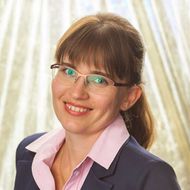
Elena Vakulenko, Associate Professor of the Department of Applied Economics at HSE University’s Faculty of Economic Sciences, member of the contest committee
‘It was my first time participating in the jury of the Mirror Laboratories competition and it was an interesting and useful experience for me. The applications were very versatile and diverse—from history and jurisprudence to artificial intelligence and medicine—which made it possible to get to know my colleagues and significantly broaden my horizons. I was pleased with the geographic scope of the participants and the fact that colleagues from HSE University found common points of interaction and mutually beneficial cooperation with colleagues from universities located in the most remote corners of Russia. I wish all the competition participants success in their work on the announced projects, even if they do not receive the requested funding. Judging by the activity and passion with which the participants presented their projects, they are sure to succeed.’

Alexander Balyshev, Acting Vice Rector, Senior Director for Basic Research at HSE University, member of the contest committee
‘The Mirror Laboratories contest is one of the key events aimed at developing scientific cooperation, exchanging best practices, and increasing academic mobility. In the current wave of the competition, it is especially nice to see the high level of applications (only budget limitations prevented us from supporting more projects), the breadth of the participants' geographical coverage (from Pskov to Kamchatka), and the variety of thematic areas. I would like to wish the winners successful work and great results!’

Marina Litvintseva, Director for Advanced Research at HSE University, Chair of the contest committee
‘I am very glad that the Mirror Laboratories project is developing so actively and dynamically. This was the fourth competition; there were many good and strong applications, and some of our research teams began their cooperation with partners even before submitting documents for the competition. Based on the results of this contest, a new cluster of projects for cooperation between our scientists and leading medical centres started forming at our university. Without doubt, access to such interdisciplinary research is one of the most important results of the project. The most active participant in the current competition on our part was the Institute of Education, which presented a diverse pool of applications in various areas of research. I would also like to mention our colleagues from Nizhny Novgorod—the mega-grant in mathematics, which began to be implemented in 2019 under the leadership of Olga Pochinka, was a great start. Our colleagues received support through an inter-campus competition last year, and today they can be congratulated for creating the first mirror laboratory on campus. A total of 21 university teams and 18 partners from all across the country are already participating in our project. Following the competition results, ten new HSE University research teams and seven more partner organisations will be involved in the project. I congratulate all the winners and wish them successful implementation of their projects!’
See also:

HSE ‘Mirror Laboratories’ Project Marks Five Years since Start
‘Mirror Laboratories’ is one of the flagship programmes of the HSE University aimed at developing domestic scientific partnerships. During the implementation of the project, 41 research projects were initiated in partnership with 30 regional universities and scientific organisations. A series of round tables timed to coincide with the fifth anniversary of the ‘Mirror Laboratories’ project, were held at the HSE University on April 24–25, 2024.
Fuad Aleskerov: 'Decision-Making under Deep Uncertainty'
In an interview for HSE News Service, Fuad Aleskerov, Distinguished Professor of HSE University and Member of Academia Europaea, shares his insights into making decisions under deep uncertainty, highlights the crucial role of cooperation in this context, and unveils plans for the upcoming launch of a specialised course on decision-making and the establishment of a mirror laboratory at HSE University.
HSE University and University of Technology Malaysia Launch Mirror Lab
HSE University in St Petersburg and University of Technology Malaysia (UTM) have launched a mirror lab in social entrepreneurship. The agreement was signed in Kuala Lumpur on November 9 during a meeting of the Joint Russian-Malaysian Commission on Economic, Scientific, Technical and Cultural Cooperation. The document was signed by Anna Tyshetskaya, Director of HSE University-St Petersburg, and Rosli Illias, UTM Deputy Vice Chancellor for Research & Innovation.
HSE and National University of Uzbekistan to Open Mirror Laboratory on Economics
HSE University and the National University of Uzbekistan have agreed to launch a mirror laboratory for the study of topical economic issues. The Protocol of Intent was signed by HSE University Rector Nikita Anisimov and NUU Rector Inom Majidov as part of the Interregional Conference for University Rectors of Russia and the Republic of Uzbekistan.
Joint Project of Scientists from HSE University and Surgut State University to Help Prevent Recurrent Heart Attacks and Strokes
One of the winning projects of a competition held by HSE University’s Mirror Laboratories last June focuses on the use of machine learning technologies to predict the outcomes of acute coronary syndrome. It is implemented by HSE University’s International Laboratory of Bioinformatics together with the Research and Educational Centre of the Medical Institute at Surgut State University. Maria Poptsova, Head of the International Laboratory of Bioinformatics and Associate Professor at HSE University’s Faculty of Computer Science, talks about how this joint project originated, how it will help patients, and how work to implement it will be organised.
‘Our Experimental Economics Community Welcomes Everyone from Professors to Bachelor’s Students’
From September 19–27, 2023, the Third Pacific School Conference on Experimental Economics (PSEE) will take place in Vladivostok. The conference has been organised by the HSE UniversityInternational Laboratory for Experimental and Behavioural Economics as part of the Mirror Laboratories project with the Research Laboratory for Modelling Socio-Economic Processes at Far Eastern Federal University. The conference will be held in an in-person format, and foreign participants can take part online.
How Semiconductors Are Studied and Created for Nanophotonics
Between March 27 and May 17, applications are open for the Mirror Lab Project Competition. As part of the new applications campaign, the HSE University bulletin (Okna Rosta) is publishing a series of interviews with the winners of last year's competition. In this issue, Natalia Kryzhanovskaya and Maxim Solodovnik speak about nano- and quantum technologies, as well as cooperation between HSE and Southern Federal University (SFedU).
HSE University Launches Fourth Mirror Laboratories Competition
The competition is open to HSE University research units planning to conduct joint projects with academic institutions, research organisations and state academic centres of the Russian Federation.
Mathematicians and Practicing Surgeons to Fight Venous Diseases
One million people in Russia suffer from venous diseases. The ‘Intelligent data analysis for healthcare information systems’ Mirror Lab project brings together expertise in mathematics and medicine in order to better diagnose various conditions in phlebology. Project leader Vasilii Gromov talked to The HSE LooK about its achievements and prospects.
An Economics and Engineering Approach to Energy Supply Development in Remote Areas of Russia
Ilya Dolmatov, Director of the HSE Institute of Economics and Utility Regulation, heads a Mirror Lab project titled ‘Models of Energy Infrastructure Development in Russia’s Remote and Isolated Territories’ and implemented together with a university in Irkutsk. Why is energy efficiency a particularly pressing problem in remote territories? How can economics and engineering work together to solve it? Ilya Dolmatov addressed these and other issues in his interview for The HSE LooK.