

'In the Future I Want to Open a Business School in Nigeria'

Graduate of HSE University and University of Luxemburg Tobi Oladiran from Nigeria reflects on his experience and takeaways from the Master’s programme in Strategic Corporate Finance and the double track it offers.
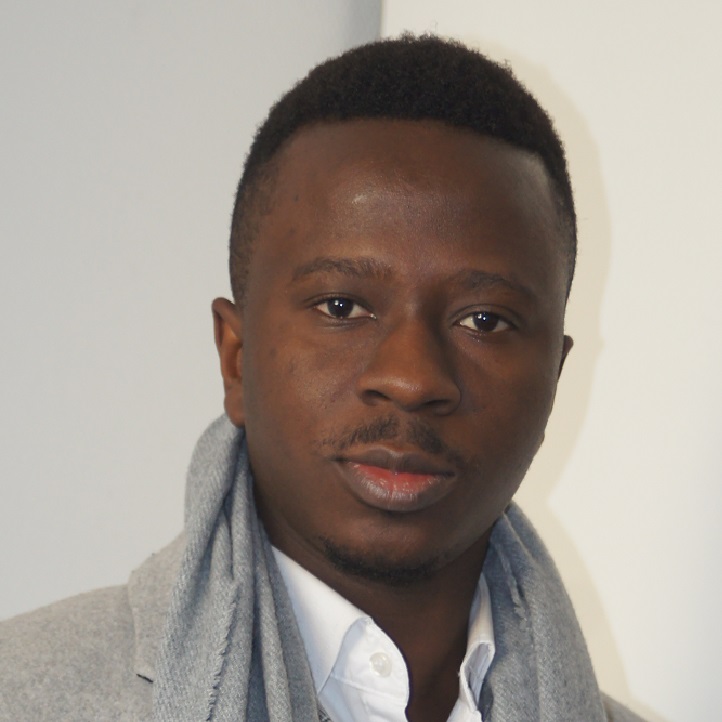
Tobi Oladiran
Choosing HSE University
Before applying to HSE University, I worked at one of the biggest automobile companies in my country. One day I was researching master’s programmes and I saw Strategic Corporate Finance. I thought that I should apply as this can take me to the top. I’m fascinated with strategic decisions so the programmme sounded very interesting.
Then I tried to understand the structure of the programme and I noticed that you can do a double degree programme. Two years, two degrees, two countries—it sounded pretty interesting as not a lot of universities offer this kind of structure, especially two robust programmes combined into a two-year period.
Getting Involved in Research
My motivation for research came after I did some work at the Corporate Finance Lab at HSE University and realized that you can contribute a lot to the world if you're trying to bring theory and practice together.
In addition, in the future I plan to go back to my country to create a business school. Finally, I’m currently doing research work in the areas that I love. One is sustainable finance and two is mutual funds.
I’m looking at sustainable challenges in mutual funds. This means that it is a very practical application and I’m working with real-life data so it's not like I’m just doing theoretical work. Also, sustainable finance is the focus of everyone’s attention now, so it's really the new trend.
Earlier, Tobi’s Ph.D. project The Sustainability Challenge of Mutual Funds was selected for funding by the Luxembourg National Research Fund.
My current programme is almost if not entirely dependent on what HSE University has really done for me. I would like to thank Oxana Budjko, from the International Office of the Faculty of Economic Sciences, because she helped me a lot and gave me information about the double degree programme. She was the one who told me that I’d been nominated to do my second year at the University of Luxembourg!
So, when I got to UniLu started my programme in economics and finance, I realized that the new trend is sustainable finance, which I find quite interesting. Тhat's why I have moved in this direction.
It is HSE University that launched me into this particular field. I enjoyed a lot of support from HSE University even while here at the University of Luxembourg
HSE University Сourses
The most interesting and the most valuable courses at HSE University were Business Valuation and Financial Modeling. I also find Theory of Finance very interesting and that's why I chose Victoria Rodina to be my supervisor for the master thesis.
I would add that I also enjoyed Advanced Microeconomics from Andrey Dementiev. Lastly, I should mention Corporate Finance taught by Professor Irina Ivashkovskaya. She's always very busy, but she always answers all the questions immediately. I want to say that the majority of professors at HSE University welcome students’ opinions. The most challenging course for me was Microeconomics by Alla Fridman. And it was challenging for everybody, not just me.
The Value of Teamwork
The programme involves a lot of group projects, so part of your academic success depends on your team. A strong team will allow you to build good knowledge and also get good grades. Most times, you will learn a lot from your team rather than from your lecturer. The lecturer just comes to give you the skeleton. Then you go back home and you develop the body with the help of contributions from your team members. You have to be willing to work with people because most times you learn from them.
I was really fortunate to work with a very good team—there were two very strong students on my team so I learned a lot from them. When we were asked to change to another team, I wanted to stay with my team and to be able to continue working with them.
Future Plans
My goal in life is to create a business school that is going to train young people to be able to deal with the challenges in my country, so I’m going to retire either as a lecturer or a manager of a business school.
However, before that I’d like to try to create high-quality education back home where the income of the people is relatively low. Right after my studies, I plan to stay in Luxembourg for two years and build my network and after that, I’m going back to my country.
Luxembourg is a developed market and Nigeria is an emerging market. There are a lot of cultural differences between the two. I started to think about this back in Moscow and I discussed this issue with one of my professors, Victoria Rodina, my thesis supervisor. My concern was that I was gaining a lot of knowledge that might not be applicable when I go back to my country.
That is actually also where the idea of this business school is coming from—we should train the next generation to be able to handle the process of moving towards being a developed country. Since I’m going to be educating the next generation, the knowledge I’ve gained should be useful.
That is actually also where the idea of this business school is coming from—we should train the next generation to be able to handle the process of moving towards being a developed country. Since I’m going to be educating the next generation, the knowledge I’ve gained should be useful.
I went back home to do an internship in strategic corporate finance at PWC in order to understand what is really going on in my own markets. What I’m trying to do now is to draw the comparison between the two countries and I believe that when I go back home that might be the first lesson to learn—how different our own market is compared to developed ones. There are some things that are still pretty much applicable when you go back home.
HSE University welcomes applicants from all over the world and offers not only different levels of study, but also different formats in English and Russian, online and offline. International applicants can apply for Bachelor’s and Master’s degree programmes in a separate admissions process for foreign applicants and receive scholarships with full or partial tuition fee coverage.
Master’s applicants also have the opportunity to get a preliminary assessment of their portfolio and communicate with their programme of choice online.
There are also ZOOM consulations available for graduate and undergraduate applicants.
Interview prepared by Aigerim Omarbekova, first-year international student of the Strategic Corporate Finance programme.
Andrei Dementiev
Senior Lecturer at the Department of Theoretical Economics
Irina Ivashkovskaya
Head of the School of Finance
Victoria Rodina
Senior Lecturer at the School of Finance
Alla Fridman
Professor at the Department of Theoretical Economics
See also:

HSE University and University of Campinas Join Forces to Build Alternative Financial System
HSE University and the University of Campinas (UNICAMP, Brazil) have announced the launch of a major joint research project to develop new approaches to an alternative international financial system. The initiative, which brings together leading experts in global economics and finance, seeks to analyse the current state of international financial architecture and explore ways of transforming it in the context of a changing geopolitical landscape.
‘This Programme Helps Me Understand Global Dynamics’
Mahmoud Tarayra, from Jordan, is studying on the HSE University and Kyung Hee University Double Degree Programme in Economics and Politics in Asia. In his interview with the HSE News Service, he talks about his studies in Moscow, the difficulties of adjusting in Korea, and how to enjoy both summer and winter in Russia.
‘HSE Offers a Wealth of Opportunities, but It’s up to You to Take Advantage of Them’
Zhou Jinyu is a third-year student of the Bachelor’s programme ‘Data Science and Business Analytics’ at the Faculty of Computer Science at HSE University. She talked to the HSE News Service about studying on the double-degree programme, her career prospects, her attitude to artificial intelligence, and why it’s important to step out of your comfort zone.
‘Asia Is Fascinating, Rich in Culture, and Expanding in Economic and Political Significance’
Anastasia Baschlykoff is a German citizen who recently enrolled at HSE University to pursue her love of Korean studies. As a student of the Double Degree Programme in Economics and Politics in Asia, she is gaining insight into Asian politics, culture, history, and language, and will spend the third year of the programme on an exchange at Kyung Hee University. In her interview with the HSE News Service, Anastasia explains how the programme aligns with her career plans, considers the potential for collaboration with Asian countries, and shares how life in Russia has managed to surprise her.
‘Teaching Is a Learning Experience for Me—Every Question Is an Opportunity to Update My Lecture Material’
Kemal Kivanc Akoz is an Assistant Professor of the Department of Theoretical Economics at the Faculty of Economic Sciences. He has been at HSE University for six years and his current activities include research into marriage market dynamics and information agreements among groups of agents. In this interview with the HSE News Service, Kemal talks about the subjects of his research, the teaching approach that led to him being named one of the university’s Best Teachers, his favourite places to get a coffee in Moscow, and more.
LFE-ICEF International Finance Conference: Exchanging Ideas and Building Networks
On November 22, 2024, the International Laboratory of Financial Economics (LFE, ICEF HSE) hosted the 13th International Moscow Finance Conference, bringing together researchers and experts from various countries to discuss current issues in financial economics. In his welcoming speech, Vladimir Sokolov, Head of the Laboratory, emphasised the significance of financial market research for the global economy.
‘I Hope You Have Entered the Economic Profession Consciously’
On November 11, 2024, the HSE Faculty of Economic Sciences hosted a celebration for Economist Day. Many of the university's partners came to congratulate HSE on the occasion. The atrium on Pokrovsky Bulvar hosted booths from VkusVill, Ozon, HeadHunter, Wildberries, and other leading companies. Students and professors participated in quizzes, spun the wheel of fortune, painted, and crafted.
Maxim Reshetnikov: ‘An Effective Open Market Economy Has Been Built in Russia’
On November 11, 2024, during Economist Day in Russia, Maxim Reshetnikov, Russian Minister of Economic Development, spoke to students of the HSE Faculty of World Economy and International Affairs about Russia’s foreign economic activities, how the country managed to withstand unprecedented sanctions pressure, and the current state of its development.
FES Announces the Winner of the Nobel Prize in Economics 2024 Prediction Contest
The HSE Faculty of Economic Sciences summarised the results of its traditional prediction contest. FES holds this contest annually on the eve of Nobel Week. This year, the contest once again attracted participants from different regions of Russia and countries around the world. Remarkably, one participant managed to predict all three laureates of the 2024 Economics Prize.
Try Your Hand at Predicting the 2024 Nobel Prize Winner in Economics
The Faculty of Economic Sciences is launching its annual prediction contest. On October 14, the Nobel Committee will announce the winners of the Sveriges Riksbank Alfred Nobel Prize in Economic Sciences live on air. You have time to prepare and explore the landscape of contemporary economic thought. What topics and areas are considered particularly important and promising at the moment? Anyone can win.