

‘We and Our Chinese Colleagues Have a Common Approach to Solving Modern Challenges’
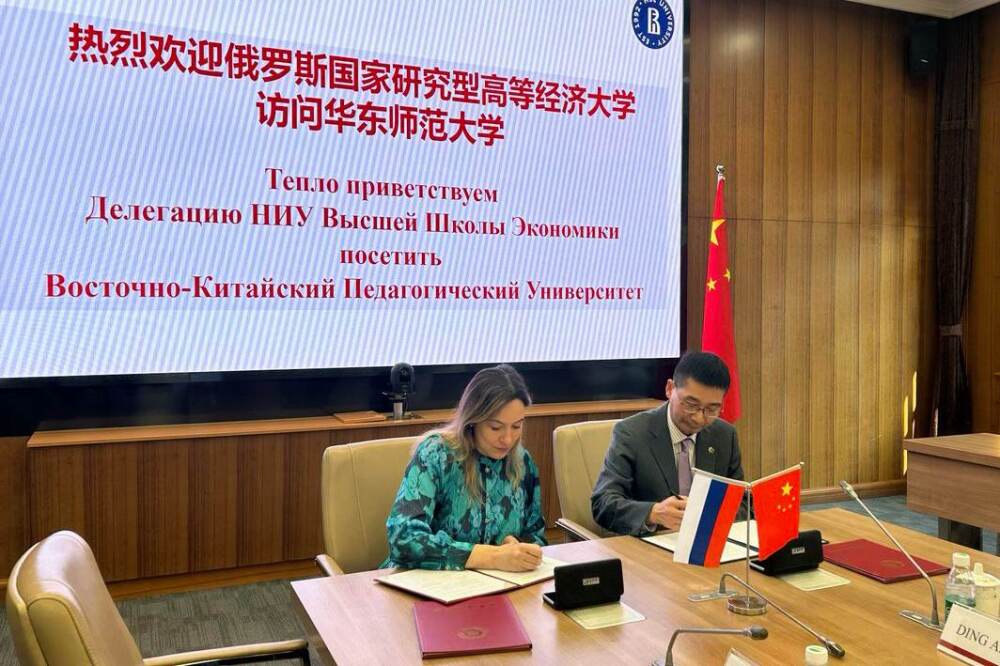

During a visit to China, an HSE University delegation headed by Vice Rector Victoria Panova arranged to extend cooperation agreements with Fudan University and East China Normal University (ECNU). Particular attention was paid to expanding students’ and teachers’ academic mobility between universities.
Headed by Vice Rector Victoria Panova, the representatives of HSE University visited Shanghai on December 4–5 and held several meetings with leading research and educational organisations.
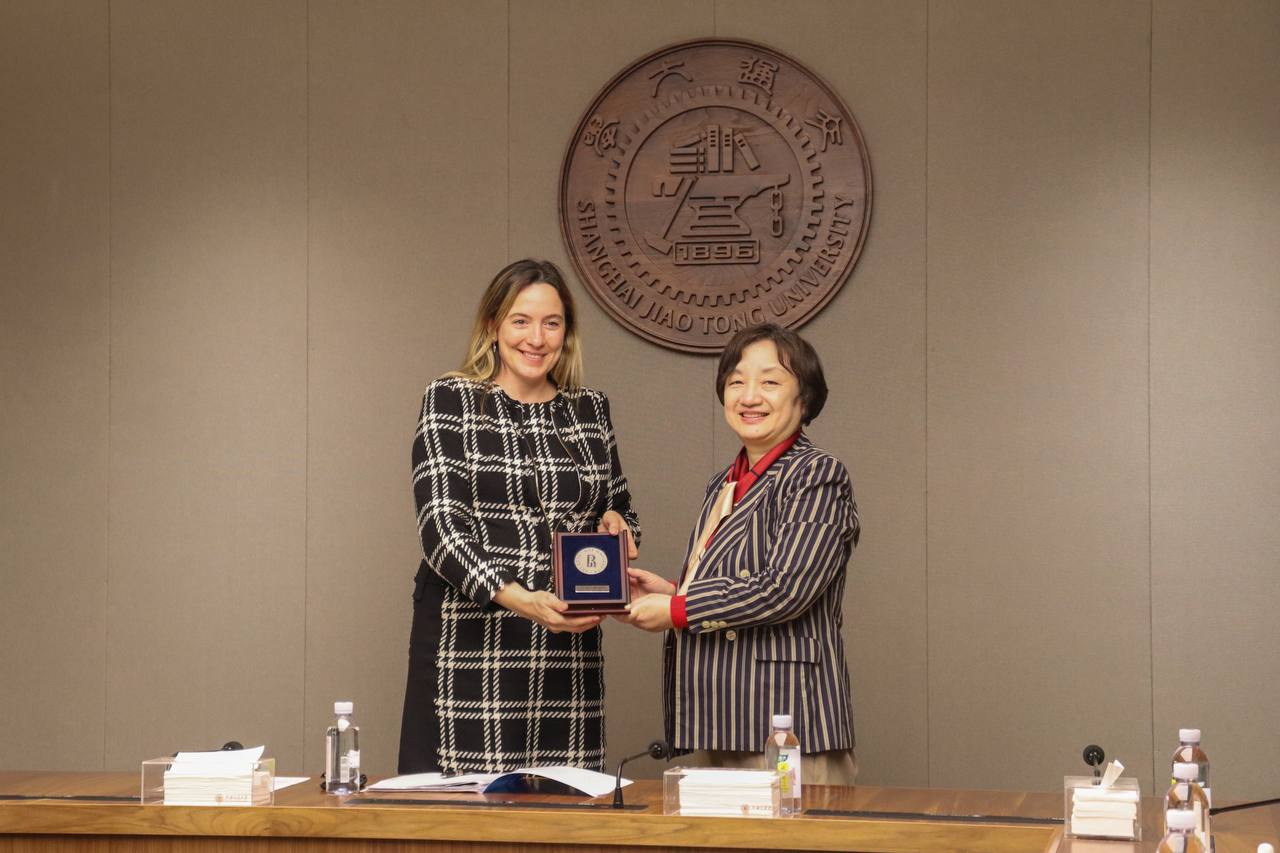
‘Today, universities in Russia and China are faced with the task of not only preparing first-class personnel for various sectors of the economy. We and our Chinese colleagues have a common approach to solving modern challenges: in an effort to provide our students with the best, we interact with leading partners in both education and business,’ said the HSE University vice rector.
In Shanghai, international agreements establishing institutional cooperation between HSE University and the oldest and most prestigious universities in China—Fudan University and East China Normal University—were extended. The agreements provide for deepening interaction in various areas, including academic mobility, joint research and publications, events, work in the fields of Russian and Chinese studies, the development and implementation of online courses, basic and additional educational programmes at the university-wide level, and other forms of cooperation in the most promising areas for the two countries.
According to Victoria Panova, this is an important step in strengthening ties with Chinese partners. ‘As part of the agreements, there is an emphasis on a long-term and stable relationship with our colleagues: HSE University has cooperated with ECNU since 2011, and with Fudan University since 2012, while the first informal contacts were carried out back in 2005,’ she added.
Special attention was paid to expanding students’ and teachers’ academic mobility between universities, which will help enrich the educational experience and promote cultural exchange. ‘China remains our strategic partner, and such agreements reflect our desire for comprehensive cooperation, while also opening up prospects for joint research and educational initiatives for our scientists and professors. They also give students the opportunity to understand another culture and represent their own, making their time at the university even more interesting and memorable,’ emphasised the HSE University vice rector.


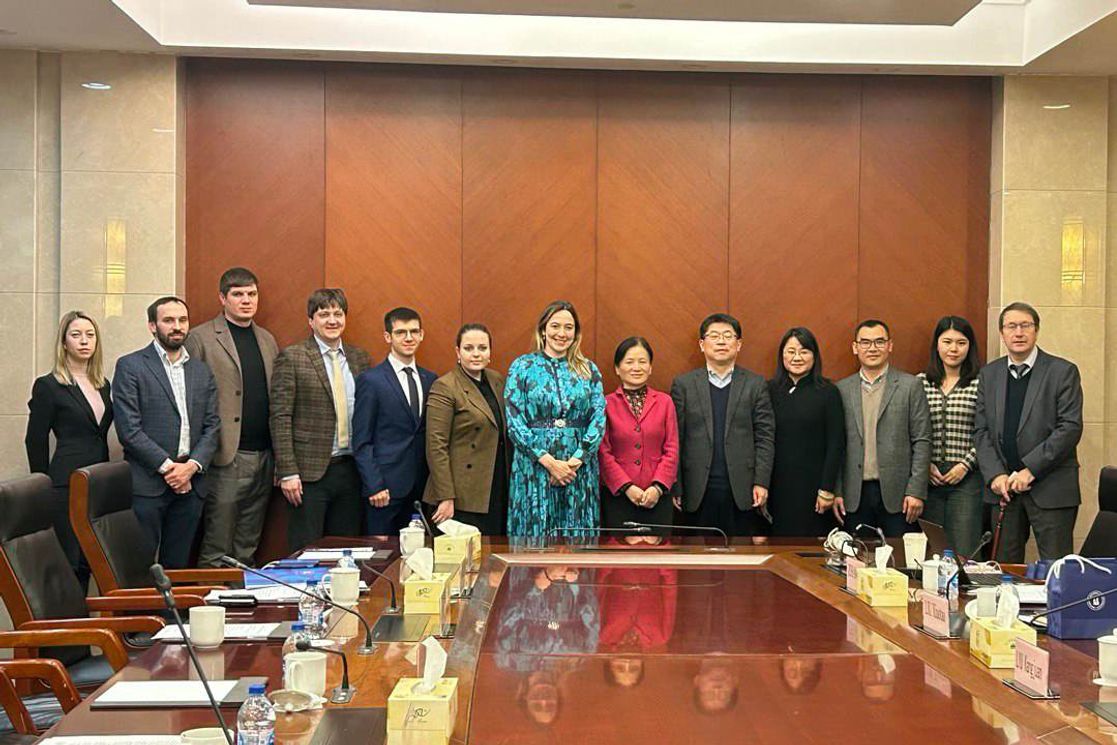
During the meetings in Shanghai, Chinese colleagues expressed satisfaction with the results of the joint work done and also highly praised their cooperation with HSE University. In turn, Victoria Panova invited the representatives of Fudan University and ECNU to take part in International Partners’ Week, a key event to be held in June 2024 at HSE University in Nizhny Novgorod.
Previously, in November 2023, representatives of ECNU visited HSE University campuses in Moscow and St Petersburg, which made it possible to strengthen and expand the existing interaction between the universities.
The representatives of HSE University also met with colleagues from Jiaotong University, Shanghai University, and Shanghai Institute for International Studies. The meetings were an excellent opportunity to discuss prospects for cooperation, scientific research, and ideas for joint projects in the field of education (including the organisation of summer and winter schools in global management and finance), as well as to exchange experiences on the most relevant topics.
See also:

Eighth International U4U Online Seminar Unites Experts from 14 Countries
The HSE Online Campus hosted a two-day international U4U (Universities for Universities) seminar, which traditionally serves as a platform for exchanging expertise in online learning. This year, the event has reached a global scale, attracting international experts and representatives of universities from around the world. Together, they discussed key challenges and strategies for the development of online education. The online meeting was held in mid-November.
‘Keep Working, Keep Publishing—Consistency Matters’
Ziyuan Zhu, from Beijing, China, is an international PhD student at the Institute for Public Administration and Governance at HSE University in Moscow. In this interview with the HSE News Service, Ziyuan talks about how studies can influence one’s outlook on life, comparing public service models in different countries, and why being a Chinese student in Russia is advantageous in research.
Under a Blooming Magnolia: How Russian and Chinese Scientists Create Solar Cells of the Future
Schola continues to introduce the winners of the International Academic Cooperation competition. In today's issue, Professor Andrey Vasenko, Deputy Head of the Scientific and Educational Laboratory of Quantum Nanoelectronics at Tikhonov Moscow Institute of Electronics and Mathematics (MIEM), speaks about the joint project between his laboratory and the Peking University research team— ‘Engineering of highly efficient and stable perovskite solar cells.’
Graduate School of Business MBA Students Take Part in Offsite Module in China
MBA students of the HSE Graduate School of Business HSHSE have recently completed the international component of their studies at the School of Economics and Management at Tsinghua University. The module focused on developing business through innovation. The participants discussed the impact of new technologies on corporate structures and visited companies operating in robotics and renewable energy.
Meeting with Xinhua Delegation: Discussion on Contemporary Journalism at HSE
On October 22, 2025, HSE University hosted an open meeting with representatives of the Chinese news agency Xinhua, led by Sun Zhiping, Chief of Staff to the Director General. Participants discussed current challenges in journalism and the operational specifics of news agencies in today’s media landscape. Many students took the opportunity to ask questions and practise speaking Mandarin. The visit was organised by the Faculty of World Economy and International Affairs in collaboration with the HSE Institute of Media and the TASS news agency.
HSE Participates in Conference on International Exchange of Professionals in China
From October 21 to 24, 2025, the 23rd Conference on International Exchange of Professionals took place in Shanghai and Beijing, bringing together more than 7,000 scientists and experts from around the world. HSE University was represented by Ivan Arzhantsev, Dean of the Faculty of Computer Science, and Vasily Gromov, Head of the Laboratory for Semantic Analysis of the Centre for Language and Semantic Technologies.
‘It Was Interesting to See How Our Chinese Colleagues Work’: HSE Researchers Take Part in Hefei Summer School
This summer, Diana Sukhoverkhova, Daria Mazur, and David Kagramanyan, research assistants at the MIEM HSE Laboratory for Computational Physics, spent five weeks in China. At the Future Scientist Exchange Program (FuSEP) summer school in Hefei, they worked in new fields of science together with their Chinese colleagues. HSE's promising scientists spoke to the HSE News Service about their intense and productive time in China.
Works of HSE Art and Design Students Presented at Pingyao International Photography Festival
On September 19, the 25th Pingyao International Photography Festival (PIP) opened in Pingyao, Shanxi Province, China. The exhibition features the works of 16 students of the Faculty of Creative Industries at the HSE Art and Design School, selected following the results of the HSE Creative Open / Photoproject international competition, which received more than 300 entries.
‘I Wish Summer Were Quarterly’
Practicing and teaching yoga, chilling in Moscow parks, writing academic papers, travelling around Russia, and volunteering—these are only a few of the things HSE international students have tried over their summer break. Now, as they are getting back to studies, the students reflect on their summer experiences in academic work, professional development, travel, and leisure.
Ringing in the New Term
On September 1, campuses across Russia ring in the new academic year with the traditional ‘first bell’—flowers for teachers and welcomes for first‑years—while international students at HSE University share how studies begin in their home countries, from Ghana’s Akwaba week to China’s student club fair, the Democratic Republic of the Congo’s blue-and-white uniforms, and India’s Teachers’ Day.