

‘The Graduation Ceremony Was the First Time We Saw Each Other’: 2023 MASNA Graduates Celebrate in Person
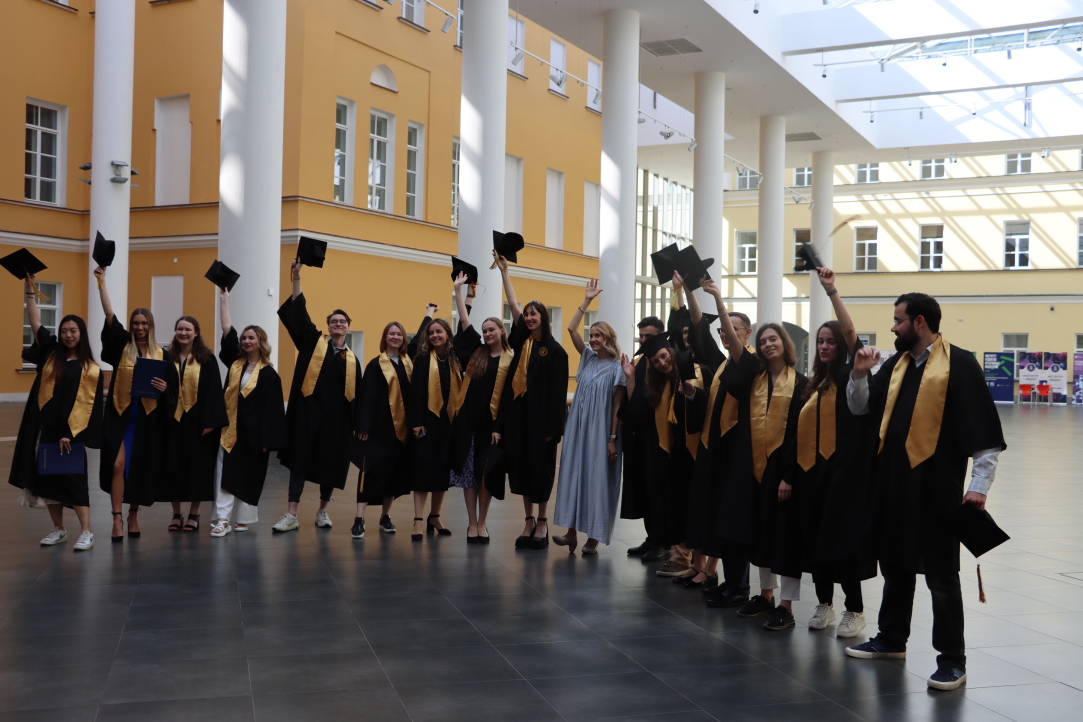
On July 3, the HSE University building on Pokrovka hosted the graduation ceremony of the Master’s in Applied Statistics with Network Analysis (MASNA). The programme, which trains students to use modern approaches in data and network analysis, is taught fully online in English. We spoke to Jiaxuan Wang, Sergio Camposortega, and Iris Cilenšek, three international students who came to Moscow for the graduation ceremony. The recent graduates shared their thoughts about the online format and finally meeting their classmates in person.
Jiaxuan Wang, China
I am a 24 year-old student from Beijing, China. I also work at Volkswagen China. Just a few days ago, I graduated from HSE University’s MASNA programme.
I first got to know HSE University while on an exchange at SPBU. I heard that HSE is a top-tier and unique university.
You come here not just for the diploma—the most important part is that you are actually learning useful things
MASNA gives you the opportunity to gain new and relevant knowledge. Also, Russia has a great reputation in terms of math, and MASNA is about math, so I believed that this programme would give me what I wanted.
I have to admit that studying on the MASNA programme at HSE was intense and difficult. You have 120 credits and tons of classes to finish within two years. Our courses ranged from the basics of statistics and probability theory to network and graph theory. There were also practical courses like programming in python, R, modelling in Excel, data mining and ML courses and so on.
For someone like me who doesn’t have a statistical background, it was hard at the beginning. It took me a year to catch up with my peers (while also working during the day). I especially loved Stanislav Pashkov’s courses. He always gave one or two classes about the super basic and underlying logic of the course or the methodology, which gives you every opportunity to explore the field.
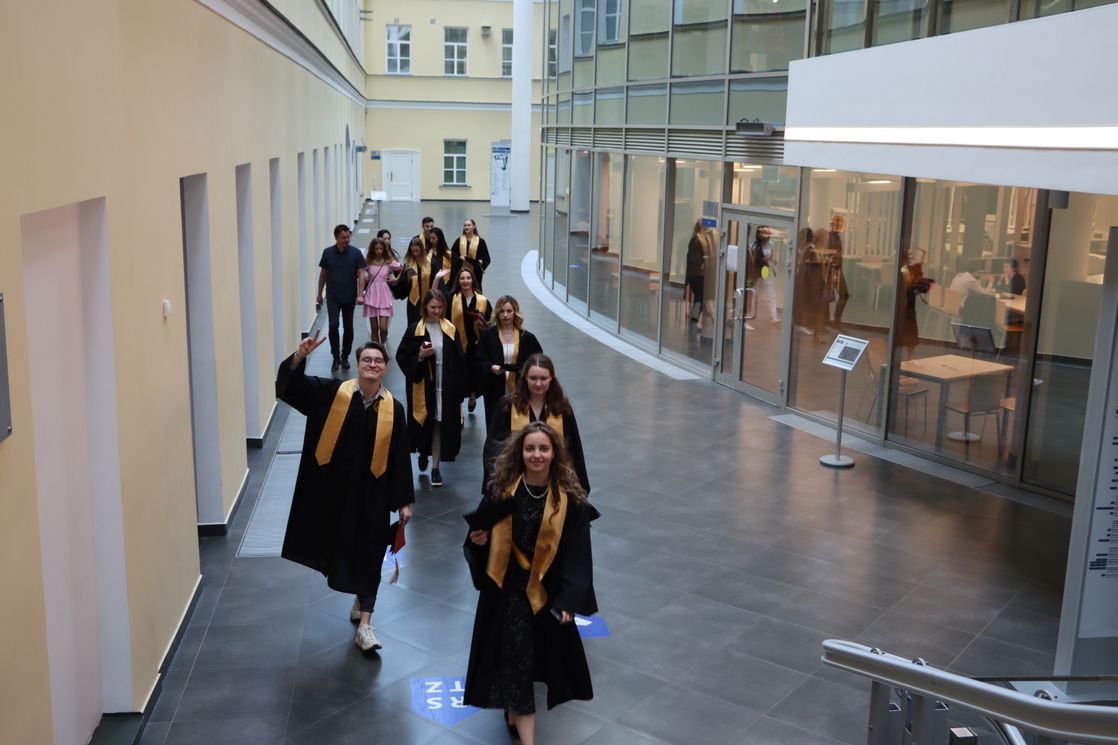
I have been in several different teams over the two years of study, so I got to know all of my classmates and we have helped each other a lot. The graduation ceremony was the first time we saw each other in real life, but we felt so familiar and had a lot of fun at the afterparty
The graduation ceremony was amazing! There was an official party in the main building, and we had champagne and sweets. It lived up to my expectations. I’m currently staying in a hotel in Moscow. I like this city; it’s modern, unique, and has everything you need.
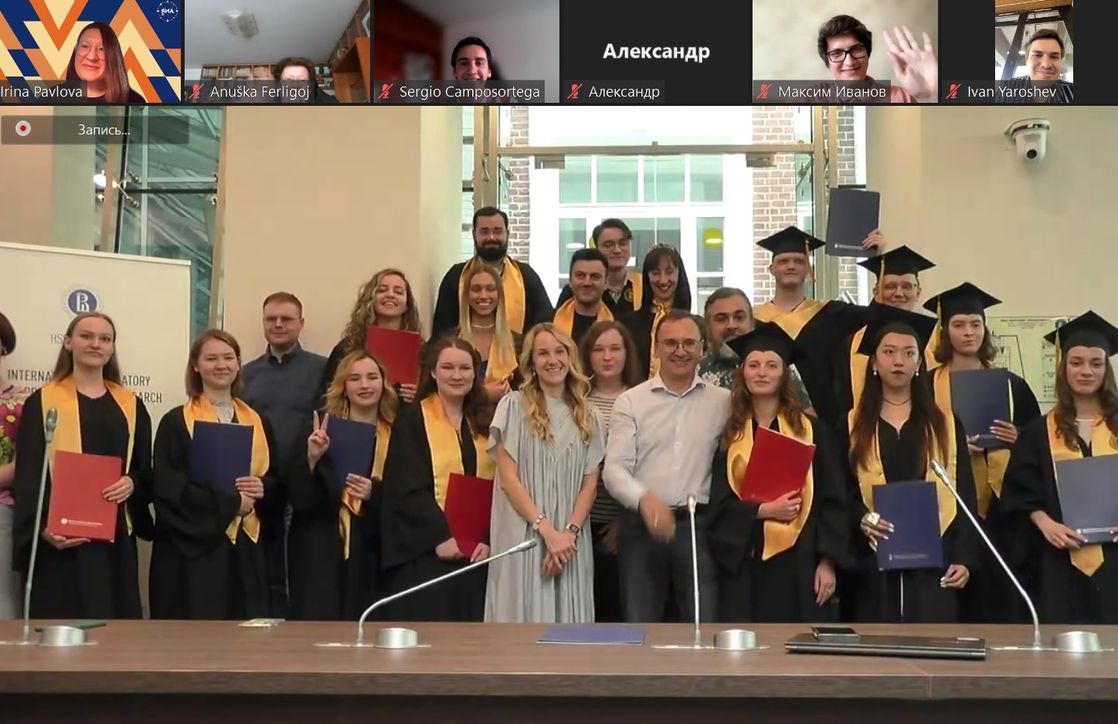
The advantage of online learning is that it gives you the opportunity to multi-task, which means you can study and work at the same time. It saves a lot of time. The disadvantage would be your friendship with your classmates begins at the graduation ceremony. I wish we had met each other in real life earlier, because we really get along.
My advice to students starting the programme is to work hard and play hard. Stay focused and make all the mistakes you can make when you’re young (not serious ones—you know what I mean).
Sergio Camposortega, Mexico
I am 33 years old. I live in Mexico City and I work as a data science consultant at Telefonica Movistar. I studied on the MASNA programme at HSE University.
I found the programme on Coursera. I compared different programmes focused on data science, network analytics and complex systems.
For me, it was a great programme because it is the only one that has a specialisation and a laboratory on applied network research. I was sure about my choice
The admission process was a little difficult because I had to apostille my documents and get official translations of them. The entrance exam consisted of an interview where they asked me about my studies and my job. The communication and the enrolment process were fine.
I chose courses in Categorical Data Analysis, Longitudinal Data Analysis, Social Network Analysis with R, Data Mining, Working with Network Data, Advanced Network Analysis Methods and Network Analysis: Statistical Approaches. The ones I liked most were Advanced Network Analysis Methods and Network Analysis: Statistical Approaches. I found all the methods about network analytics very interesting and applied them in my final project.
My coursemates were very nice, though communication could be a little difficult because of the time difference.
With online learning, you need a lot of self-discipline to manage the schedule, as well as do the homework at your own rhythm but to a deadline
This Master’s programme helped me to reach my academic goal. I would like to do a PhD in Network Science and I hope that in ten years, I will have my own enterprise that helps with the Big Data for Social Good project, data science for business, and conducting research in theoretical network science at a research institute
I am very grateful to the university, my coursemates and teachers for sharing their experiences and knowledge.
Iris Cilenšek, Slovenia
I am 26 years old and from Ljubljana, Slovenia. I recently completed the MASNA programme at HSE University. I am also currently employed as a data science researcher at the Bioinformatics Laboratory at the University of Ljubljana Faculty of Computer Science.
I initially enrolled in the Master's in Applied Social Psychology. I chose HSE University for the diverse range of international programmes, the opportunity for tuition discounts based on academic achievements, and the availability of student residences at affordable prices.
During my Psychology degree, I developed a deep fascination with statistics. I didn’t want to change universities, so I began searching for programmes at HSE that aligned with my newfound passion. That's when I came across MASNA. It not only offered exceptional technical knowledge in statistics, but it also provided a unique opportunity to collaborate with esteemed professors from the University of Ljubljana.
I saw it as a remarkable chance to establish connections with domestic experts while delving into the unexplored potential of network analysis in the world of data
To transfer to the MASNA programme, I simply had to submit a digital request for my academic transcript on the HSE website and wait for the results. Communication primarily occurred via email, and I was impressed with the responsiveness of all the university departments involved in the process.
The curriculum covers a broad range of statistical and technical knowledge, emphasising the utilisation of R software (although Python is also offered as an alternative). Students have the flexibility to select subjects based on their personal interests, with options ranging from data science-related topics to more business-oriented ones. I gravitated towards subjects in the data science field.
Many of the courses left a strong impression on me, but what stood out the most was the collegiate atmosphere that prevailed despite the online format. The professors were highly responsive, fostering an environment that encouraged initiative.
The more interest we showed in specific topics, the more invested the professors became in supporting our learning journey
In addition to traditional online lectures, we frequently had laboratory exercises and assignments that involved working with various kinds of software and completing predefined tasks. Assessment often involved a final group project, which was simultaneously relaxed and stressful, but provided a valuable learning experience.
The online nature of the programme facilitated increased interaction and communication among students compared to a traditional classroom setting. Engaging in group work further encouraged this dynamic, and we made valuable friendships and created our own student community.
At the same time, the online format requires a heightened level of self-discipline and focus to stay engaged. You need to be constantly available and on standby if you want to stay up to date with everything, and that can sometimes disrupt your daily routine and make it harder to balance other responsibilities.
The graduation ceremony holds a special place in my heart. It was an opportunity to finally meet my classmates in person, after having interacted primarily online throughout our studies. Dressed in our master's robes, we celebrated our collective achievements and toasted to our success.
I would highly recommend that future students seize this opportunity and make the most of their study time in acquiring new knowledge and skills
The professors from the MASNA programme wholeheartedly support and encourage new initiatives and endeavours. Embrace the enthusiasm and guidance they provide, as it can truly enhance your learning experience and open doors to remarkable growth and development.
Register for online MASNA admission consultations in July.
See also:

From Mexico to Buenos Aires: HSE University–St Petersburg Enhances Cooperation with Leading Universities in Latin America
New mobility programmes, academic exchanges, and unexpected collaborations—these are the results of the HSE University–St Petersburg delegation's mission to Latin America. Read on to find out about the key agreements made.
Eighth International U4U Online Seminar Unites Experts from 14 Countries
The HSE Online Campus hosted a two-day international U4U (Universities for Universities) seminar, which traditionally serves as a platform for exchanging expertise in online learning. This year, the event has reached a global scale, attracting international experts and representatives of universities from around the world. Together, they discussed key challenges and strategies for the development of online education. The online meeting was held in mid-November.
‘Keep Working, Keep Publishing—Consistency Matters’
Ziyuan Zhu, from Beijing, China, is an international PhD student at the Institute for Public Administration and Governance at HSE University in Moscow. In this interview with the HSE News Service, Ziyuan talks about how studies can influence one’s outlook on life, comparing public service models in different countries, and why being a Chinese student in Russia is advantageous in research.
Under a Blooming Magnolia: How Russian and Chinese Scientists Create Solar Cells of the Future
Schola continues to introduce the winners of the International Academic Cooperation competition. In today's issue, Professor Andrey Vasenko, Deputy Head of the Scientific and Educational Laboratory of Quantum Nanoelectronics at Tikhonov Moscow Institute of Electronics and Mathematics (MIEM), speaks about the joint project between his laboratory and the Peking University research team— ‘Engineering of highly efficient and stable perovskite solar cells.’
Graduate School of Business MBA Students Take Part in Offsite Module in China
MBA students of the HSE Graduate School of Business HSHSE have recently completed the international component of their studies at the School of Economics and Management at Tsinghua University. The module focused on developing business through innovation. The participants discussed the impact of new technologies on corporate structures and visited companies operating in robotics and renewable energy.
Meeting with Xinhua Delegation: Discussion on Contemporary Journalism at HSE
On October 22, 2025, HSE University hosted an open meeting with representatives of the Chinese news agency Xinhua, led by Sun Zhiping, Chief of Staff to the Director General. Participants discussed current challenges in journalism and the operational specifics of news agencies in today’s media landscape. Many students took the opportunity to ask questions and practise speaking Mandarin. The visit was organised by the Faculty of World Economy and International Affairs in collaboration with the HSE Institute of Media and the TASS news agency.
HSE Participates in Conference on International Exchange of Professionals in China
From October 21 to 24, 2025, the 23rd Conference on International Exchange of Professionals took place in Shanghai and Beijing, bringing together more than 7,000 scientists and experts from around the world. HSE University was represented by Ivan Arzhantsev, Dean of the Faculty of Computer Science, and Vasily Gromov, Head of the Laboratory for Semantic Analysis of the Centre for Language and Semantic Technologies.
‘It Was Interesting to See How Our Chinese Colleagues Work’: HSE Researchers Take Part in Hefei Summer School
This summer, Diana Sukhoverkhova, Daria Mazur, and David Kagramanyan, research assistants at the MIEM HSE Laboratory for Computational Physics, spent five weeks in China. At the Future Scientist Exchange Program (FuSEP) summer school in Hefei, they worked in new fields of science together with their Chinese colleagues. HSE's promising scientists spoke to the HSE News Service about their intense and productive time in China.
Works of HSE Art and Design Students Presented at Pingyao International Photography Festival
On September 19, the 25th Pingyao International Photography Festival (PIP) opened in Pingyao, Shanxi Province, China. The exhibition features the works of 16 students of the Faculty of Creative Industries at the HSE Art and Design School, selected following the results of the HSE Creative Open / Photoproject international competition, which received more than 300 entries.
‘I Wish Summer Were Quarterly’
Practicing and teaching yoga, chilling in Moscow parks, writing academic papers, travelling around Russia, and volunteering—these are only a few of the things HSE international students have tried over their summer break. Now, as they are getting back to studies, the students reflect on their summer experiences in academic work, professional development, travel, and leisure.