

Russia’s Economic and Social Development Depends on How It Responds to Technological Challenges
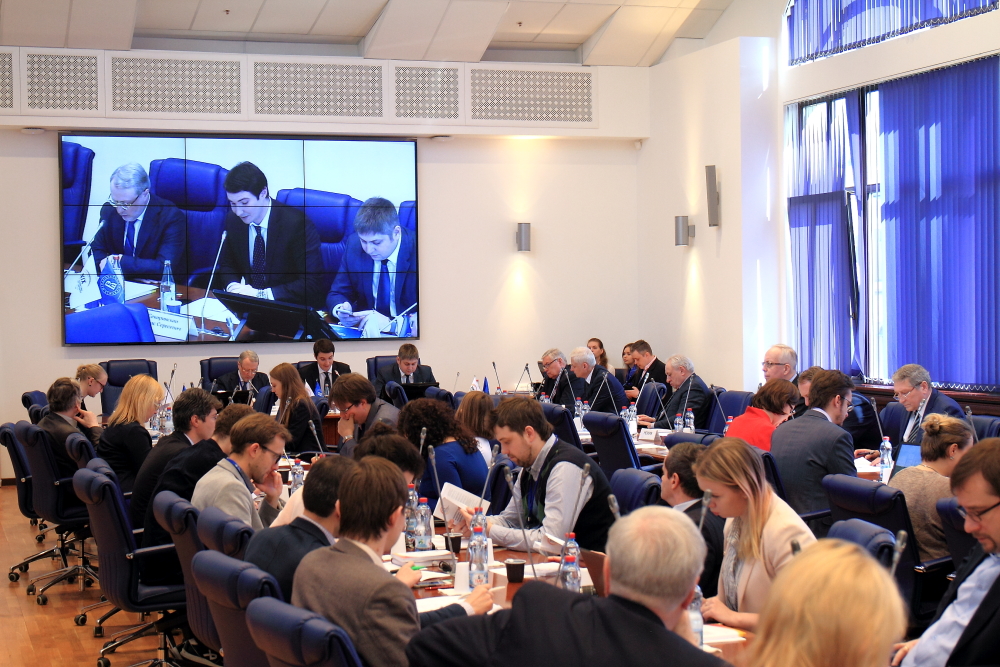
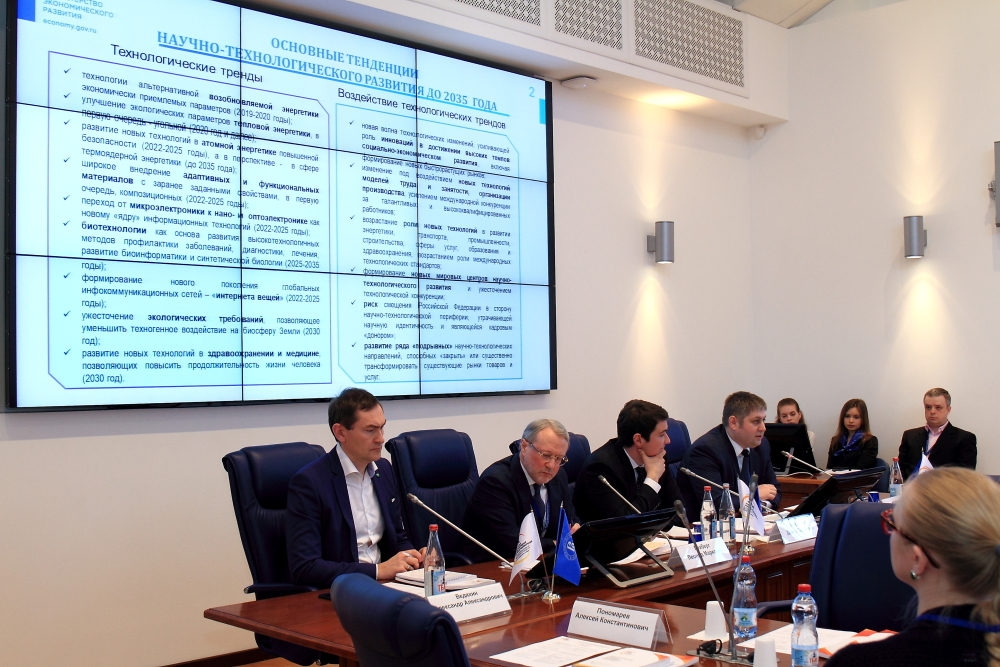
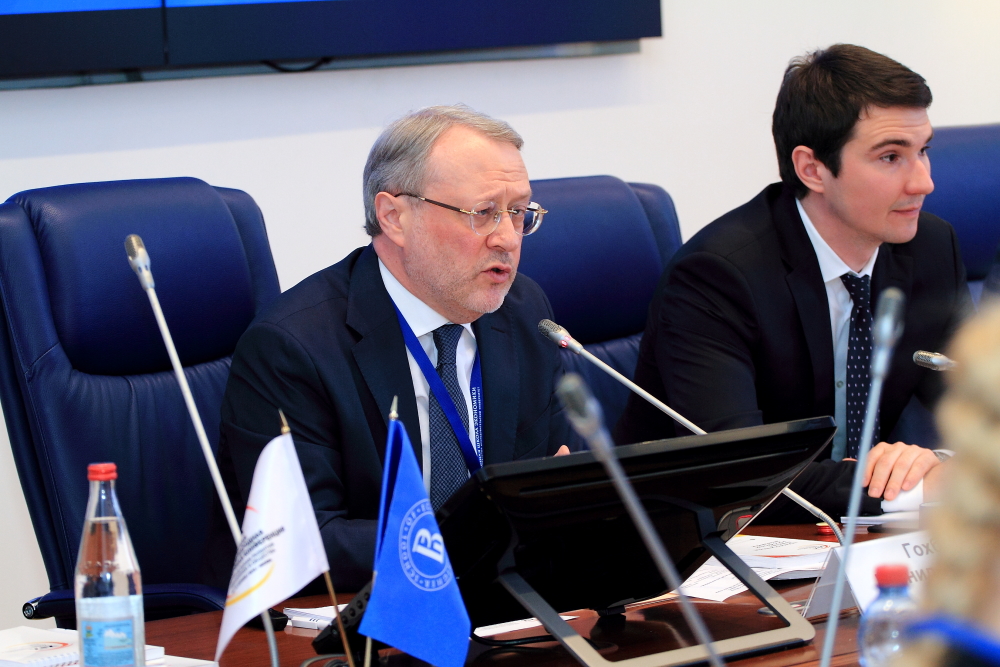
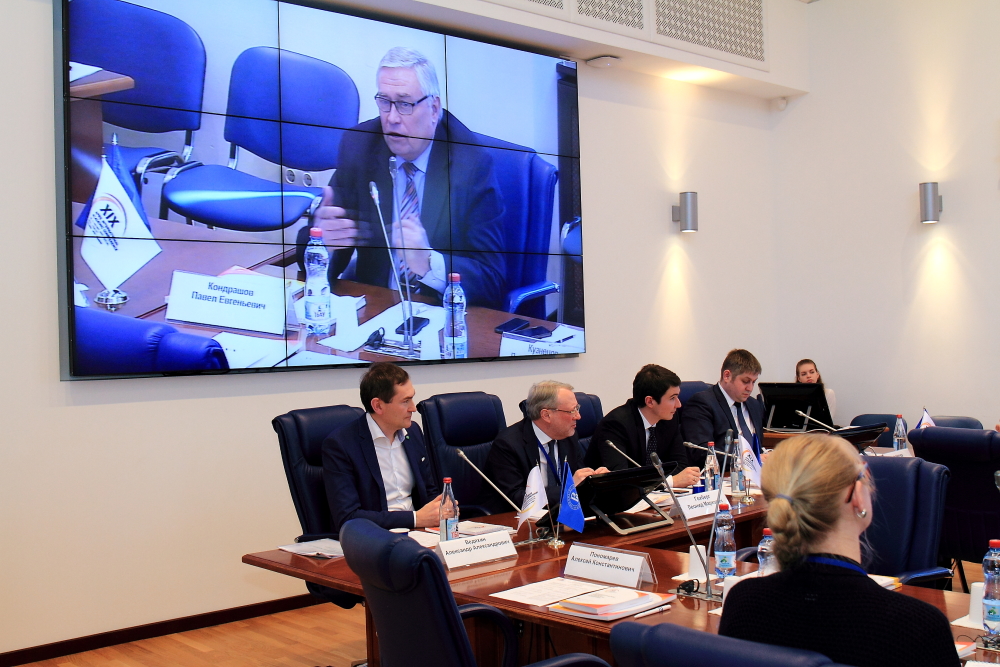
During a plenary session of the HSE XIX April International Academic Conference, participants discussed the technological future of the Russian economy and how it relates to objectives such as speeding up economic growth and improving the quality of life.
Technological Leap or Technological Adaptation?
HSE First Vice Rector Leonid Gokhberg presented a paper on scenarios for the development of Russia’s scientific and technological complex. At the core of the paper is Russian Science and Technology Foresight 2030, which was prepared by the HSE Institute for Statistical Studies and Economics of Knowledge under the auspices of the Russian Education and Science Ministry with the participation of over 2,000 top Russian and foreign experts. This document, first presented in 2014, was recently updated and given to the Russian government.
The updated foresight describes two scenarios for technological development – a baseline foresight (conservative) and a targeted one (assuming a significant technological leap).
The baseline scenario – ‘Technological Adaptation’ – continues the current development trajectory within the scientific and technological complex. In particular, it assumes the fragmentary development of research and development, development that is integrated in global research but maintains a subordinate position within this realm. Its realisation will allow for specific social problems to be solved and will help produce the products and services needed on the domestic market. It will not, however, guarantee a base for moving towards a qualitatively different level of development. ‘Amid global trends and the development of other countries, the technological competitiveness of the national economy will inevitably decline,’ Leonid Gokhberg emphasises. This scenario also describes the risk of losing a number of sectors with advanced technologies.
The target-oriented scenario – ‘Technological Leap’ – paint a different picture envisioning nearly threefold growth for the percentage of the economy held by advanced technologies. If this scenario is carried out, Russia will dominate in individual fields of science and technology, and this will allow for the formation of a contemporary, national, innovative system. In addition, effective mechanisms can be created to increase and effectively use knowledge capital. In order to move in this direction, structural changes in the economy are needed, which will lead to robust growth and allow Russia to become a country with higher economic growth rates.
In many areas, the Russian scientific complex remains one of the largest in the world, but the country’s position on global ratings for scientific resources is generally higher than ratings for achieved results
It is important to choose between the scenarios quickly, Leonid Gokhberg emphasized. ‘If we are unable to create the necessary economic and institutional conditions to move towards a more rapid variant or if this preparatory period drags on, the cost of transitioning to a higher trajectory will become higher and higher. And at a certain point we no longer have the resources to afford the transition,’ he added.
Russian Deputy Economic Development Minister and State Secretary Oleg Fomichev agrees with this assessment. If Russian cannot ‘grab hold’ of the technological wave in the areas described in the scientific and technological foresight, then there will be dramatic consequences for traditional economic sectors and the social sphere, as well as for new and developing sectors of the economy, Fomichev noted.
‘The majority of the population would like to see Russia as, first and foremost, a country comfortable to live in with a high level of economic growth, and secondly as a country that has and is carrying out ambitions for geopolitical leadership,’ he added. It will be impossible to achieve these goals without solving problems with technological development.
Are Russian science and research prepared to meet global technological challenges?
In many areas, the Russian scientific complex remains one of the largest in the world, but the country’s position on global ratings for scientific resources is generally higher than ratings for achieved results. As Leonid Gokhberg noted, while spending on research and development has more than doubled over the last 15 years, the percentage of GDP spent on science has not grown over the last 20 years (Russia is ranked 35th in the world in this area). This is largely related to the insufficient involvement of businesses; the government’s share of scientific financing is reaching 70%, which is close to what it was in the second half of the 1990s.
Russia is significantly behind in terms of unit costs in the field of research when calculated per researcher (there is nearly a threefold gap between Russia and China, for example). Gokhberg believes this is due to gaps in how well the research and development sector is technologically equipped, as well as wages for scientists and scientific mobility, which ultimately lowers the appeal of Russian science for world-class researchers.
Experts from the Institute for Statistical Studies and Economics of Knowledge recently measured the business climate in science by surveying 361 top managers from leading academic organisations and universities. In addition to traditional problems such as an insufficient relationship between science and business, as well as unfavourable institutional conditions for its development, the results of the study identified a number of new ones as well, e.g., a low level of international integration and Russia’s representation in global science, a deficit in managers for research teams, and a general lag in scientific research methods.
We have real problems in the knowledge generation sector, but there are even more problems in the field of innovation policy
At its current stage, the specialisation of Russian science, if measured by publications in international journals, remains at about the same level it was nearly 30 years ago, with physics, chemistry, space research, and earth science being the leaders. Computer science and the life sciences, which are current drivers of global science, account for an extremely low percentage. Russia only makes up 3.9% of global research fronts (the most significant and frequently cited field of global science), and in 96% of global research fronts Russian scientists are simply not publishing in international journals, Leonid Gokhberg said.
He added that the government’s policy in the field of science and technology must be evidence-based and built on principles of continuity, long-term vision, and decision-making speed. A portfolio-oriented approach is also important. Political tools must be applied not separately but collectively, and they must sync with one another so as to constantly adapt to specific requirements.
How can the Economic Development Ministry help?
‘We have real problems in the knowledge generation sector, but there are even more problems in the field of innovation policy,’ Oleg Fomichev said during his presentation. Large companies are the ones mostly dictating the rules of the game on the global market. This is a challenge not only for science, innovative business, and tech companies, but for the government as well.
The Economic Development Ministry is prepared to meet this challenge in three areas. ‘First comes financing, directing investments towards not science-oriented sectors of the economy, but towards the innovative development of companies. Second, [we must] work with companies and support their technological transformation. And third is creating the necessary ecosystem and infrastructure for innovative development,’ Fomichev added.
The majority of developed economies have already announced their priorities for artificial intelligence. The amount of investments in its application has exceeded $10 billion and is growing exponentially
As an example he used the relatively newer tools for stimulating rapidly developing medium-sized tech companies (‘gazelles’), as well as over seven years of programmes that state-owned companies have carried out to transform technologically under a series of innovative development programmes. But there are difficulties here as well.
‘As soon as the government leaves state-owned companies, they lapse into their old ways by firing vice presidents of innovation, lowering spending on innovative development programmes, and more,’ Fomichev said. This is why the government’s plans include training companies’ top managers on modern management technologies and on examples of market entry. But these and other support measures are mostly focused on the regions.
‘Innovative regions and territorial innovation clusters remain our focus. We are working on each cluster’s long-term development programme currently,’ he concluded.
How useful is artificial intelligence to the economy?
We can minimize the impact of the human factor on innovative development management by using AI technologies, Sberbank Senior Vice President Aleksandr Vedyakhin believes. Another advantage of these technologies is that they are ‘transparent,’ that is, they can be used in the most diverse of fields.
For the government, artificial intelligence is an obvious way of increasing budget efficiency, speeding up decision-making, concentrating resources, and achieving full transparency, Vedyakhin added. For citizens this means quality education and access to healthcare. For businesses this is lower costs, more markets, and quicker decision making. And for consumers, which everyone is (government, science, and society), this means speed, lower costs, and interactivity.
The majority of developed economies have already announced their priorities for artificial intelligence. The amount of investments in its application has exceeded $10 billion and is growing exponentially. ‘Some 72% of managers believe that in the future, artificial intelligence will become a success factor for businesses. In my opinion, those 28% who do not believe will simply not exist in the short-term perspective,’ Vedyakhin said. In addition, he noted that the implementation of AI technologies would require new regulation similar to how traffic laws were needed when motor transport developed.
See also:

Applications for Participation in XXVI April International Academic Conference Still Open
Applications can be submitted on the conference website until December 16, 2025. The programme has been developed around five research themes: Economics, Human Capital and Society, Instrumental Methods and Models, Foresight Research, and International Research. The heads of these areas have presented, in video format, the priority topics and sections for which they are expecting submissions.
Applications to Participate in April International Academic Conference Now Open
HSE University is now accepting proposals to present academic reports at the XXVI April International Academic Conference named after Evgeny Yasin. Applications can be submitted until December 16, 2025. The conference events will take place mainly on-site in Moscow from April 14 to 17, 2026.
24 Countries Represented at 25th Yasin International Academic Conference Held by HSE University
The Programme Committee of the 25th Yasin (April) International Academic Conference on Economic and Social Development has summed up the initial results. In 2025, 1,384 people from 24 countries and 29 Russian regions participated in the conference, with 335 of them delivering presentations.
Stuck in the Net: How Much Time Children Spend Online
On average, a schoolchild spends 48 hours a week on studies—equivalent to a six-day working week for an adult. This was highlighted by experts at the round table ‘Domains of Children’s Well-Being Evaluation for Human Potential and Evidence-Based Social Policy Development,’ held as part of the 25th Yasin (April) International Academic Conference.
Russian and Chinese Scholars Share Experience of Transformation of Doctoral Education
The Russian and Chinese postgraduate education systems originally borrowed their institutional frameworks from the Soviet Union. However, in the 21st century, they have evolved along different paths. While key performance indicators for postgraduate programmes in Russia are declining, China is seeing a rapid increase in the number of postgraduate students. These contrasting trajectories and the reforms undertaken in each country in recent decades were the focus of a roundtable discussion held as part of the 25th Yasin (April) International Academic Conference.
Nobel Laureate Proposes Solution to Markov Equilibrium Problem
In dynamic games, a Markov equilibrium involves strategies that guide players' behaviour based on the current state of the game, rather than its entire history. This approach is effective when players have access to complete information. But when uncertainty arises in the game—for instance, when players are unsure of who they are dealing with—this approach can become problematic. Eric Maskin, Nobel Laureate in Economics and Professor at Harvard University, addressed this issue in a paper presented at the XXV Yasin (April) International Academic Conference on Economic and Social Development held at HSE University from April 15 to 18, 2025.
‘The World Is Becoming More Complex and Less Predictable’: What Scientists Say about the Future
The future is now more difficult for researchers to forecast, and events that are hard to predict are playing an increasingly significant role. But there is good news too: scientists are confident that humanity will adapt to any changes. This was the focus of discussion at the International Symposium ‘Foresight in a Rapidly Changing World,’ which took place as part of the 25th Yasin (April) International Academic Conference.
Fragmentation and Bloc Formation: How the Global Economy is Changing
Sergey Dubinin, former head of the Bank of Russia and Professor of Finance and Credit at the Faculty of Economics at Moscow State University, has delivered an honorary address at the XXV Yasin (April) International Academic Conference. He spoke about the transformation of the global monetary and financial system, as well as the Russian economy.
More Children, More Happiness: HSE Experts Study Impact of Number of Children on Russians' Assessment of Happiness
Russians with children feel happier than those without children. At the same time, the number of children influences the assessment of happiness: the more children Russians have, the happier they feel. These conclusions were outlined inthe report ‘More Children, More Happiness: The Impact of the Number of Children on Russians’ Assessment of Happiness,’ presented at the XXV Yasin (April) International Academic Conference on Economic and Social Development, held on April 15–18 at HSE University. The study was conducted by Elena Churilova, Senior Research Fellow, and Dmitry Jdanov, Chief Research Fellowat HSE International Laboratory for Population and Health.
HSE Expands Cooperation with Gulf Countries
HSE University and the Centre for International Policy Research (Qatar) have agreed to collaborate in the field of social sciences, with plans for joint research, academic exchanges, and regular expert engagement. The agreement was signed during the roundtable ‘State Capacity and State Resilience in the Global South,’ held as part of the 25th Yasin (April) International Academic Conference at HSE University.