

Scientists Learn to Better Predict Space Weather
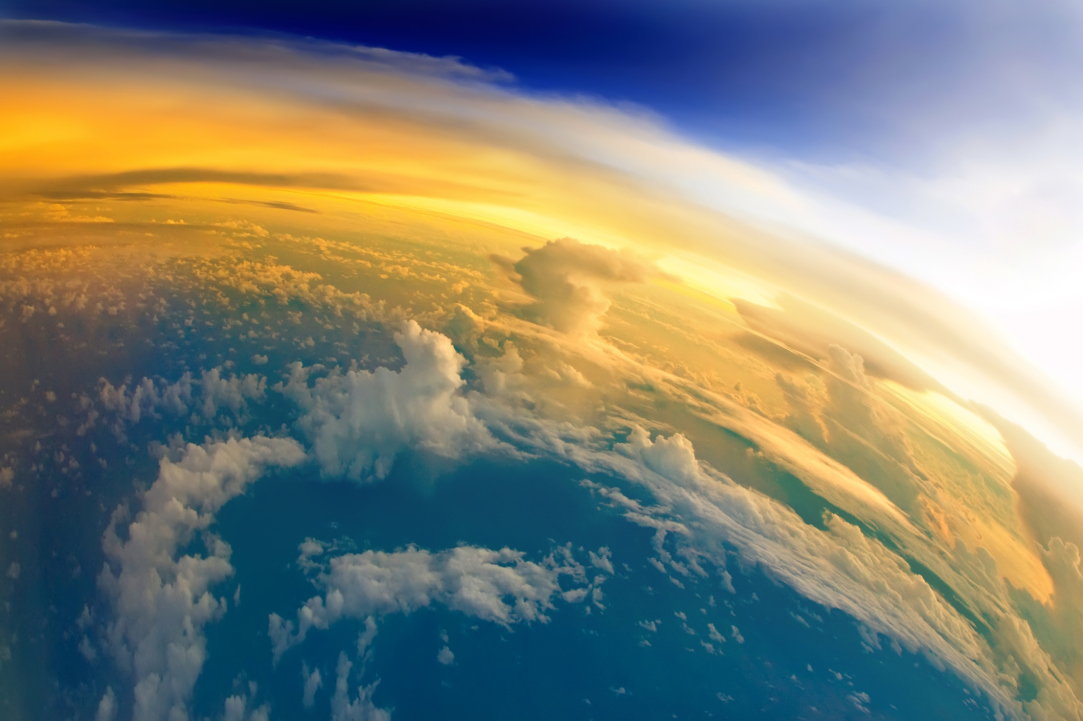
An international team of astrophysicists has been studying the formation of strong electrostatic waves, ion holes, in the Earth's magnetotail and assessing their impact on space weather. They found that ion holes propagate oblique to the local magnetic field. The study's findings can contribute to a better understanding of processes in the Earth's magnetotail which affect space weather in the near-Earth plasma environment and the polar region. The paper is published in Geophysical Research Letters.
Near-Earth space is filled with plasma waves whose dynamics can affect local space weather conditions, crucially important for operating of the communication satellite system. Predicting changes in space weather therefore requires a better understanding of the types and behaviours of these plasma waves. One of a few dozen known wave types are solitary waves with negative polarity, a.k.a. ion holes.
A new generation of satellite missions carrying advanced instruments has made it possible to examine the properties of these waves, which have rarely, if ever, been studied before. Scientists today can investigate wave statistics and parameters to gain a better understanding of their effect on space weather and in order to build models for predicting weather changes in near-Earth space.
A team of U.S. and Russian researchers led by Professor Forrest Mozer used data from four satellites to collect statistics of ion holes. They found an accumulation of these waves in the Earth's magnetotail on the night side – the side on which plasma particles are set in motion to precipitate into Earth as aurorae, also commonly known as the Polar Lights. Four Magnetospheric Multiscale (MMS) Mission spacecraft registered a total 150 ion holes around a fast plasma flow in the Earth's plasma sheet.
The researchers set out to observe the same wave on neighbouring MMS Mission spacecraft so the speed and direction of its propagation could be determined. By combining this data with magnetic field measurements, the observed waves were found to propagate at significant angles to the local magnetic field. Propagating at such large angles enables the waves to effectively scatter and heat plasma particles. In turn, flows of charged particles contribute to the formation of observed waves.
'Our observations and proposed interpretations can inform more detailed and realistic simulations of the near-Earth plasma environment. This will help improve the accuracy of forecasting of space weather near the Earth and in the polar region of the northern and southern hemispheres', says the paper's co-author Sergey Kamaletdinov, student of the HSE Faculty of Physics and senior laboratory assistant at the Department of Space Plasma Physics, RAS Space Research Institute.

Recent interest in the study of plasma physics sprang from the earlier efforts to find new thermonuclear fusion-based energy sources. For a long time, plasma research was mostly laboratory-based, before it was discovered that near-Earth space is not empty but filled with plasma with similar properties. So, in addition to costly laboratory-based studies, space satellites began to investigate the behaviour of plasma in near-Earth space.
Eventually, it turned out that studying near-Earth plasma can be useful for other reasons as well. Space weather changes in near-Earth space can affect satellites – e.g. a solar flare can damage expensive equipment. Understanding the physics of the near-Earth plasma can help predict such adverse events. As a result, an independent area of research, space weather science, has branched off from thermonuclear physics.
'Studying the near-Earth plasma is useful for understanding the behaviour of distant and inaccessible astrophysical phenomena, such as bow shock waves, which cannot be measured directly. Bow shock waves are generated by rapidly expanding plasma clouds containing a multitude of smaller waves, such as ion holes. Understanding the behaviour of these smaller waves by examining the near-Earth plasma is impsortant, because bow shocks are thought to be one of the major sources of cosmic rays, which can have an impact on Earth’s climate and people's health', according to Kamaletdinov.

See also:

Moscow Hosts Closing Ceremony of the First-Ever International Space Games
Teams of young people and students from eight countries—China, India, Kazakhstan, Kyrgyzstan, Mexico, Pakistan, Uzbekistan, and Russia—successfully completed the main mission of the International Space Games (ISG): ensuring the sustainable functioning of an autonomous settlement on another planet. The Games’ unique format, which dispenses with traditional competition aimed at securing victory for a single country, has proved its effectiveness. HSE University is the project operator.
From Moscow to Mars: First International Space Games Get Under Way
The first-ever International Space Games (ISG) have officially opened in Moscow. Students and early-career lecturers from seven countries—China, India, Kazakhstan, Kyrgyzstan, Mexico, Pakistan, and Uzbekistan—have travelled to Russia to take part in this unique new engineering competition. The Russian team consists of students from leading Russian universities who have participated in, won prizes at, or won the National Technology Olympiad (NTO). HSE University is the operator of the ISG.
HSE, University of Delhi, and Geoscan Launch Space Research Project
HSE University and the University of Delhi (India), in partnership with Geoscan (a portfolio company of the Innopraktika non-state development institute), have agreed to establish an international scientific mirror laboratory on data storage, processing, and transmission in space systems. The agreement was signed on January 15, 2025, during a visit to India by an HSE University delegation led by Rector Nikita Anisimov.
‘An Avatar Is an Image of a Posthuman’: Mediacosm Held at HSE University
On February 16, the sixth Mediacosm conference was held. The event traditionally dedicated to discursive and non-discursive ways of presenting the cosmos through media, fashion and music was organised by the HSE Faculty of Creative Industries.
'In Outer Space, Encounters between Humans and Non-humans Could be in a Variety of Languages'
On November 5, the Museum of Cosmonautics in Moscow hosted an HSE-organised event entitled 'Cosmic Bodies: A Philosophical and Musical Party for Cyborgs'. The speakers and the audience reflected on popular-culture depictions of humans as they explore outer space.
HSE University Participates in Satellite Navigation Monitoring Project
A team of HSE students is taking part in the development of a Russian satellite automatic identification system (AIS) to monitor sea navigation. The aim of the project is to track the locations of vessels and adjust their routes, including in the Arctic along the Northern Sea Route.
Researchers Explain Potential Cause of Earth’s Green Airglow
A team of Russian researchers from HSE University, the Russian Space Research Institute, and the Pushkov Institute of Terrestrial Magnetism (Russian Academy of Sciences) has described the development of modulational instability of electromagnetic waves in dusty ionospheric plasma, which is caused by a high intensity of electromagnetic emissions. The researchers considered inelastic collisions of ionospheric plasma particles and formulated new tasks and applications to be addressed at a later stage. The results are published in the Physics of Plasmas journal.
‘The Trip to Baikonur Blew My Mind!’
On Cosmonautics Day, the HSE News Service spoke with the participants of the CubSX-HSE project, which recently launched a satellite into Earth orbit. Students and staff from the HSE Moscow Institute of Electronics and Mathematics (MIEM) spoke about their project and impressions of their trip to Baikonur.
‘Now I Will Pursue a Future Career in Space’
During the ‘Big Challenges’ session at the Sirius Educational Centre, five high school students, under the supervision of mentors from MIEM HSE, assembled a small artificial earth satellite. The participants of the research session were young finalists of a nationwide competition held by the educational centre. All five of the students are Olympiad champions and team members of large-scale projects.
Russian Scientists Discover One of the Mechanisms of Water Formation on the Moon
The results of recent study conducted by the NASA Lunar Reconnaissance Orbiter, the agency’s automatic interplanetary station, show the existence of a ‘permafrost’ near the poles of the Moon with a relatively high content of water ice (up to 5% by weight). It is believed that water ice could supply a life support system for the future Russian Lunar Station and that it could also produce hydrogen-oxygen fuel for flights into deep space.