

Incompatible Alternatives: HSE Researchers on the Ambivalence of Power in the Twenty-first Century Economy

Ambivalence and a combination of contradictory principles are vividly manifested in the actions of government, its individual agents and institutions, as well as the everyday practices of economic subjects and citizens. The participants of the HSE Laboratory for Studies in Economic Sociology seminar discussed the book The Ambivalence of Power in the Twenty-First Century Economy: Cases from Russia and Beyond, recently published in the UK. Prepared by researchers from HSE University and foreign universities, the book focuses on the study of ambivalence in Russia and beyond.
Opening the seminar, HSE First Vice Rector Vadim Radaev, Department Head of the Laboratory for Studies in Economic Sociology (LSES) and one of the co-editors of the book, congratulated the authors on its publication by University College London.
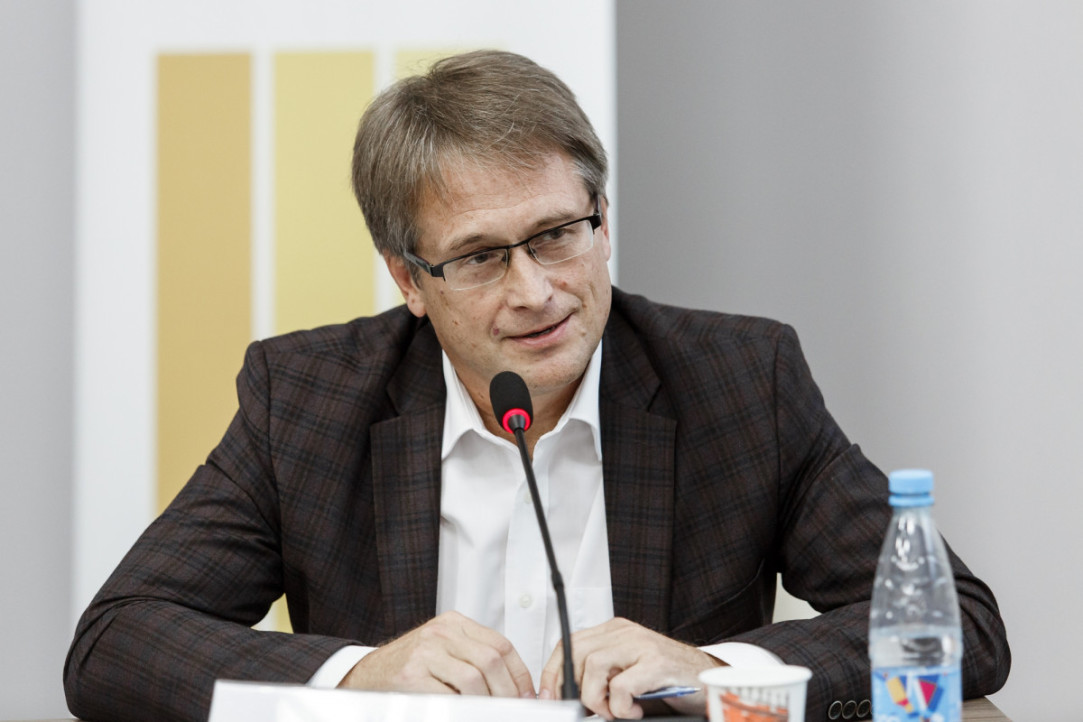
He emphasised that although the authors used different data such as statistics, survey results, interview series, and other materials, all of the chapters focused on the ambivalent nature of power. He explained that the authors define ambivalence as a combination of incompatible alternatives in the actions of different actors. The term developed in psychology, where it reflected the combination of opposing emotions and dual feelings in an individual, such as love and hate, towards the same object. The individual characteristics were then transferred to interpersonal relations and from there to social norms. In the social sciences, including sociology, ambivalence is eventually understood not as the presence of contradictory norms, but as a situation arising from the interaction of different agents.
Vadim Radaev believes that ambivalence is part of power relations, which have never been limited to repression and are characterised by its combination with interaction, oscillating between global and local, formal and informal.
The authors of the book have studied ambivalence at different levels and focused on Russia, where state action permeates all levels of life. ‘However, this is not just a country case, it is an attempt to talk about the specifics of the social structure and to make a broader generalisation,’ he said.
According to the author of the foreword, Alena Ledeneva, Professor of Politics and Sociology at the School of Slavic and Eastern European Studies, University College London, many aspects of ambivalence escape the attention of researchers who study this phenomenon within a single discipline because of the peculiarities of methods and country differences.
Zoya Kotelnikova, Deputy Head of LSES, spoke about the evolution of Russian markets in the 2000s. She said that the domestic market of the 1990s was flooded with counterfeit and low-quality goods, and its transformation was encouraged by the influence of leading international brand owners. Brand owners are ambivalent about counterfeiting, weighing pros and cons and at certain periods preferring to ignore the proliferation of fakes, hiding their scale from consumers for fear of losing the market. However, they eventually began to fight against counterfeiting in Russia, involving the government and its institutions responsible for ensuring order on the market and consumer safety, building and launching appropriate mechanisms.

Leonid Kosals, Senior Research Fellow of LSES and author of the chapter on innovation diffusion and adoption, used facial recognition as an example to explain that an economically beneficial innovation can be morally questionable and destroy the values of society. Therefore, the same innovation could be a boon in one country or region and a detriment in others.
The use of facial recognition has had different effects in the US, Canada, Russia, and China. According to Leonid Kosals, it has led to opposite results in China and Canada, because in China the use of the system has no economic or ethical obstacles, while Canada has adopted a strict working law on personal data and established bodies that closely monitor its implementation and respect for personal rights. The HSE expert also noted that Russia has laws similar to those in the US and Europe, but they are not fully effective because basic values are ambivalent and social immunity and control over possible violations of personal integrity do not work as well as they do in the US or Europe.
Vadim Radaev talked about ambivalence in economic interaction. The work is based on surveys of 2,200 retailers and their suppliers conducted in 2013, 2016, and 2019. It appeared that 75% of those surveyed have unreliable partners, with 25% reporting regular breaches of deadlines or price changes, and the level of competition and government contacts having little impact on supplier reliability. The most serious factor that increases the reliability of contractors, as the survey shows, is personal relationships between managers and long-term cooperation.
LSES Senior Research Fellow Denis Strebkov and his colleague Andrey Shevchuk wrote a chapter on ambivalence in the relationship between freelancers working on different platforms and their customers. Denis Strebkov explained that parties often do not conclude a contract because of the low price of some services or the urgency of the work; moreover, it is not uncommon for the customer and the contractor to live in different regions or even countries, so platforms offer their own regulatory options—‘risk-free deals’ or other insurance instruments.
According to Denis Strebkov, beginners use remote work exchanges to get their first orders and insure their deals, experienced performers conclude contracts, while most freelance workers conclude verbal or informal deals, and the market remains informal.
Tamara Kusimova, Analyst at the HSE Centre for Cultural Sociology, spoke about import substitution practices using the example of new domestic brands and their perception by consumers and producers. According to her, food production has become a more media-driven topic in recent years, with many people caring about where products are produced and who profits from their production.
Regina Resheteeva (Romanova), an independent sociologist and graduate of HSE University with a degree in Sociology, spoke about consumer ambivalence, which combines support for government foreign policy with the need to overcome their own economic problems due to higher food prices caused by foreign sanctions and Russian counter-sanctions.
She used in-depth interviews to conclude that people embed a political agenda in consumption while simultaneously constructing their own subjectivity and practices of individual resistance to turmoil caused by political events in order to maintain autonomy. They support government policy, while noting that food quality has deteriorated, blaming vendors and government agencies responsible for economic growth and price control. Regina Resheteeva believes that this can be explained by the term ‘consumer cynicism’.
Professor Marek Dabrowski, Department of Applied Economics, HSE Faculty of Economic Studies, presented a chapter on the relationship between economic freedom and democracy in post-Soviet countries. Maria Tysiachniouk (University of Eastern Finland) gave a presentation on the chapter that she had prepared with Sara Teitelbaum (University of Montreal), Andrey Petrov (University of Northern Iowa) and Leah Horowitz (University of Wisconsin-Madison). Other speakers at the seminar included: Professor Evgenia Balabanova, Deputy Director of the HSE Center for Social Organization and Business Research, Associate Professor Ivan Pavlyutkin, School of Sociology, HSE Faculty of Social Sciences, Elena Berdysheva, Senior Research Fellow of LSES, Maria Denisova, PhD student at Maastricht University (Netherlands) and an HSE graduate student in Sociology, Alexander Kurakin, LSES Senior Research Fellow, LSES Research Assistant Daria Lebedeva, Alexey Pobedonostsev, Researcher at the European Institute of the University of Florence (Italy), and Valery Ledyaev, Professor of the HSE Faculty of Social Studies.
Evgenia S. Balabanova
Deputy Director, Centre for Social Organization Research of Labour and Business
Elena Berdysheva
Senior Research Fellow, Laboratory for Studies in Economic Sociology
Marek Dabrowski
Professor, Department of Applied Economics
Leonid Kosals
Senior Research Fellow, Laboratory for Studies in Economic Sociology
Zoya Kotelnikova
Deputy Head, Laboratory for Studies in Economic Sociology
Tamara Kusimova
Analyst, Centre for Cultural Sociology
Daria Lebedeva
Research Assistant, Laboratory for Studies in Economic Sociology
Valery Georgievich Ledyaev
Leading Research Fellow, Research and Study Laboratory for Studies in Business Communications
Ivan Pavlyutkin
Associate Professor, Department of Economic Sociology
Vadim Radaev
HSE First Vice Rector
Denis Strebkov
Associate Professor, Department of Economic Sociology
Andrey Shevchuk
Associate Professor, Department of Economic Sociology
See also:

Researchers Examine Student Care Culture in Small Russian Universities
Researchers from the HSE Institute of Education conducted a sociological study at four small, non-selective universities and revealed, based on 135 interviews, the dual nature of student care at such institutions: a combination of genuine support with continuous supervision, reminiscent of parental care. This study offers the first in-depth look at how formal and informal student care practices are intertwined in the post-Soviet educational context. The study has been published in the British Journal of Sociology of Education.
Happiness as an Industry: Why We Want to Be Happy—And What’s Wrong with That
The expansion of ‘happycracy’ into everyday life unfolds against the backdrop of a diktat of positive thinking, mindfulness, and self-improvement. Yet researchers point to the hidden traps in the pursuit of happiness. Why can being happy sometimes be dangerous? Maria Kucheryavaya, sociologist and visiting lecturer at the HSE School of Communication, reflects on this in her column for IQ Media.
‘A Sociologist Is a Curious, Searching and Courageous Person’
One of the oldest programmes at HSE University-St Petersburg is the English-taught Bachelor's programme 'Sociology and Social Informatics'. It has existed for more than ten years, and over this time, the programme has helped many students gain interdisciplinary skills and find their own unique career paths. In this article, Academic Supervisor Anna Nemirovskaya explains how the programme has adapted to modern realities, what sociology truly is, and how one can implement a sociological education.
‘Teaching Is a Learning Experience for Me—Every Question Is an Opportunity to Update My Lecture Material’
Kemal Kivanc Akoz is an Assistant Professor of the Department of Theoretical Economics at the Faculty of Economic Sciences. He has been at HSE University for six years and his current activities include research into marriage market dynamics and information agreements among groups of agents. In this interview with the HSE News Service, Kemal talks about the subjects of his research, the teaching approach that led to him being named one of the university’s Best Teachers, his favourite places to get a coffee in Moscow, and more.
‘I Hope You Have Entered the Economic Profession Consciously’
On November 11, 2024, the HSE Faculty of Economic Sciences hosted a celebration for Economist Day. Many of the university's partners came to congratulate HSE on the occasion. The atrium on Pokrovsky Bulvar hosted booths from VkusVill, Ozon, HeadHunter, Wildberries, and other leading companies. Students and professors participated in quizzes, spun the wheel of fortune, painted, and crafted.
Maxim Reshetnikov: ‘An Effective Open Market Economy Has Been Built in Russia’
On November 11, 2024, during Economist Day in Russia, Maxim Reshetnikov, Russian Minister of Economic Development, spoke to students of the HSE Faculty of World Economy and International Affairs about Russia’s foreign economic activities, how the country managed to withstand unprecedented sanctions pressure, and the current state of its development.
FES Announces the Winner of the Nobel Prize in Economics 2024 Prediction Contest
The HSE Faculty of Economic Sciences summarised the results of its traditional prediction contest. FES holds this contest annually on the eve of Nobel Week. This year, the contest once again attracted participants from different regions of Russia and countries around the world. Remarkably, one participant managed to predict all three laureates of the 2024 Economics Prize.
Try Your Hand at Predicting the 2024 Nobel Prize Winner in Economics
The Faculty of Economic Sciences is launching its annual prediction contest. On October 14, the Nobel Committee will announce the winners of the Sveriges Riksbank Alfred Nobel Prize in Economic Sciences live on air. You have time to prepare and explore the landscape of contemporary economic thought. What topics and areas are considered particularly important and promising at the moment? Anyone can win.
Choosing the Right Server Results in Better Outcomes in Doubles Tennis
The Roland Garros tennis tournament, one of the most prestigious in the world, began on May 26. The prize money for this year's French Open totals nearly 54 million euros, with athletes competing in both singles and doubles events. In doubles tennis, choosing the right strategy for a match is crucial. Athletes' ability to adapt to the dynamics of the match and strategically choose the server can earn the pair up to 5% more points, according to Nikolai Avkhimovich, doctoral student and research fellow at the Laboratory of Sports Studies of the HSE Faculty of Economic Sciences. A paper with the study findings has been published in Applied Economics.
Consumer Prices Decrease in Densely Populated Areas
HSE University economists have proposed a novel approach to modelling monopolistic competition with heterogeneous firms and consumers. The results of collaborative research carried out by Alexander Tarasov from Moscow, his co-authors from HSE University–St Petersburg, together with the Norwegian School of Economics, the University of Pennsylvania, and the Free University of Brussels, have been published in American Economic Journal: Microeconomics.