

School of Cross-Cultural Management
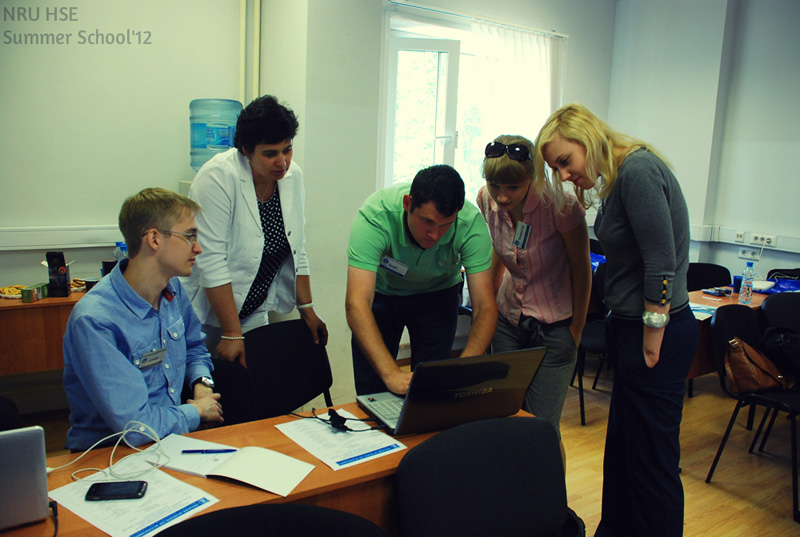


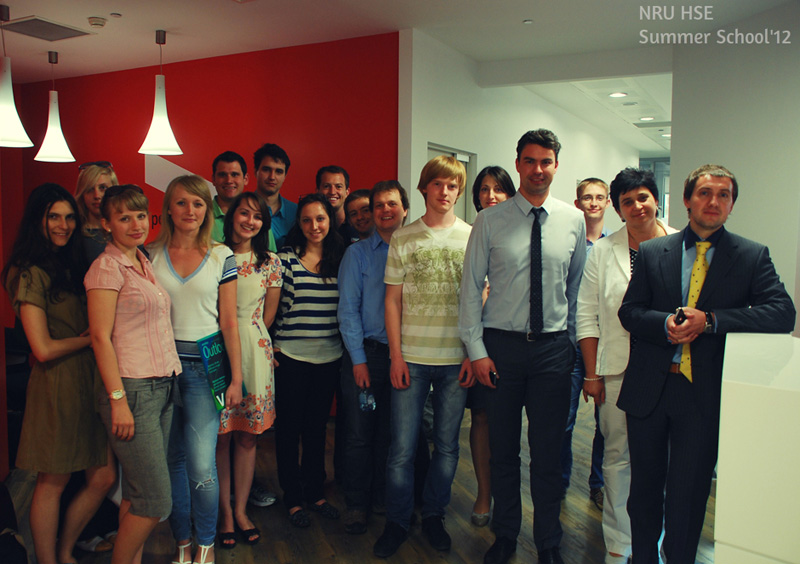
‘Management in Developing Markets: Trends and Strategies’ was the topic of an international summer school which took place at the HSE Faculty of Management. Irina Volkova, organizer of the school and professor at the HSE Department of General and Strategic Management, told us about the event.
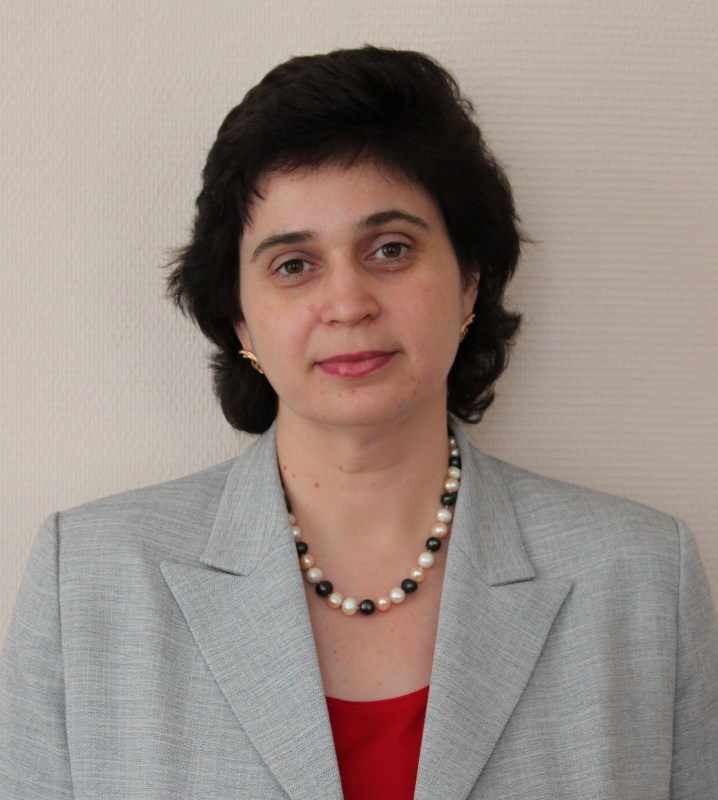 |
| Irina Volkova |
— Dr. Volkova, the format of this school was quite unusual. Besides the fact its working language was English, what else stood out about this school?
— When we organized this school, we decided to use a format which is very well known to our colleagues from international business and management schools. Such schools are organized by all our key partner universities. Since our school was aimed at both international master’s and senior undergraduate students as well as our own master’s students, it had two purposes. It gave the international students coming to Russia the opportunity to immerse themselves in the cultural and economic environment of the host country and to collect material for their future theses while at the same time participating in individual and team tasks, project viva voce processes, marks and credits.
For Russian students, the school was in fact a series of case research projects. In addition to that, they had the opportunity to get experience of joint analytical work in international teams, which is very valuable for managers. This international, cross-cultural aspect was a key part of the school’s work. The educational process was built mainly on the results of research projects which are currently underway at the faculty, not on the basic educational programmes. During the student selection process we also gave preference to those participants who had experience of such research.
— Is a format like this popular? What are its advantages?
— Our school is unusual for the HSE. This was not a research seminar but rather research training for its participants. We did not set ourselves the task of bringing together researchers, and that’s why the results of the school should be seen not in formulated concepts or suggested models, but in the experience and competencies received by the participants. I would emphasize the two key advantages of our school. First, it involves very interesting lecturers-researchers. And second, it studies purely practical cases brought by insiders – owners and top managers of companies.
— How many participants, lecturers and experts came to the school?
— I can give you the exact numbers. The school consisted of 15 students, 16 lecturers and researchers and representatives of 5 companies working in developing countries. Geographically, we ‘covered’ four countries: Russia, USA, Ukraine and Moldova. As regards the HSE, it was represented by students and staff from two campuses: Moscow and Nizhny Novgorod.
— Leading on from the title of the summer school, did any of the speakers formulate the specifics of management in a Russian environment?
— You’ve used a specific term – ‘speakers’. There were no real speakers at our school. There were leading professors and researchers who acted first and foremost as organizers of mutual work among participants from the four countries. Of course, they spoke about the specifics of marketing, staff recruitment and motivation in Russian companies based on the material of their own studies. There were representatives from the business who shared their practical experience of management in Russia. What markets can be considered developed, and which markets are developing, how to act in them – these are the most relevant questions, and some answers to them were provided by research carried out at our faculty and presented at the summer school.
— For you, as an organizer, who were more interesting to work with – Russian or international participants? Didtheyfinda commonlanguage?
— It was sometimes hard to work with both groups together. It is a difficult task – to understand the problems of a company from another country, to collect information, develop the options for action and to make a joint solution involving people with different cultures and languages. But this is what contemporary business is.
See also:

Cardiogenetics of the Future: Sequencing Helps Treat Heart Disease
Future cardiologists, geneticists, and IT specialists gathered at HSE University to learn how to 'read' DNA for diagnosing cardiovascular diseases. They explored modern sequencing methods and the complexities of working with digital twins of cardiac patients.
'When You Transform the Environment around You, That Is Definitely a Success'
A year ago, Inna Andreyanova, Director of Corporate Development at the Foundation for the Development of ISTC 'Intelligent Electronics–Valdai' and graduate of the Master's Programme in Management in Higher Education at HSE University, took up the position of General Director of the Foundation for the Development of the UNITY PARK Innovative Scientific and Technological Centre in Surgut. In this interview, Inna Andreyanova talks about working on the development of a major federal project, her studies at HSE University, and the motivation she draws from a job that makes full use of her skills.
HSE University–St Petersburg and Indian Institute of Management to Launch Joint Seminar for PhD Students
Galina Shirokova, Director of the Strategic Entrepreneurship Centre at HSE University–St Petersburg and Doctor of Economic Sciences, held a series of seminars for students of the Indian Institute of Management in Indore (IIM—Indore). Plans are also underway to launch a joint educational project.
Archival Impulse: Dubna Hosts Summer School Organised by HSE University and JINR
The Joint Institute for Nuclear Research (JINR) in Dubna hosted the Archival Impulse Summer School, co-organised by JINR physicists, historians from the HSE Faculty of Humanities, and staff from the Archives of the Russian Academy of Sciences (ARAS). This first archival summer school continued the joint initiative of HSE University and JINR to examine and preserve the unique historical legacy of physicists.
HSE Shares Its Experience of Urban Strategies at International Summer School in China
In the context of intensifying global geopolitical and technological competition, leading Chinese educational institutions—Zhejiang International Studies University and Peking University—organised an International Summer School. Their joint programme focused on studying global, regional, and urban development strategies. The HSE Faculty of Urban and Regional Development took part in this event.
HSE GSB and Alfa-Bank Host Summer School for Chinese Students
The international summer school Digital Product Management, a joint educational project by the HSE Graduate School of Business (HSE GSB) and Alfa-Bank, brought together over 30 students from leading Chinese universities.
HSE University Students and Postgraduates Take Part in Peking University International Summer School
In July 2025, Peking University hosted its annual Quantum Molecular Dynamics Summer School, which has moved onto an international stage. Its first foreign guests were students and postgraduates from the HSE Tikhonov Moscow Institute of Electronics and Mathematics (MIEM). They took part in an extensive academic programme and had the opportunity to visit a laboratory that works with optoelectronic materials and energy devices.
‘Student Ideas Shed Light on Key Challenges for Urban Development’
The first international joint summer school of the Vysokovsky Graduate School of Urbanism (GSU) at both the HSE Faculty of Urban and Regional Development and Brest State Pushkin University (BrSU), hosted by BrSU, has come to a close. The programme focused on studying buffer zones along the railway lines encircling the city centre. Participants included students from the GSU’s Urban Planning degree programme, as well as students from BrSU and Brest State Technical University.
‘A Laboratory at 3,000 Metres’: HSE University–St Petersburg to Start Call for First Summer School in Himalayas
HSE University–St Petersburg has announced the call for the Summer School in the Himalayas, which will take place from June 30 to July 13, 2025. The Summer School is the follow-up to two expeditions in the Himalayas organised by the St Petersburg School of Social Sciences in 2024. The programme allows bachelor's, master's, and PhD students to immerse themselves in research on climate change and sustainability in local communities in the unique natural laboratory of the Himalayan region.
From Sequencing to Constructing a Cardio Panel: Summer School in Cardiogenetics
From August 19 to 29, the Continuing Professional Development Centre of the HSE Faculty of Computer Science hosted the summer school 'Cardiogenetics: From Sequencing to Constructing a Cardio Panel,' organised in collaboration with the Russian Academy of Sciences' Institute of Analytical Instrumentation (IAI) and Institute of Spectroscopy (ISAN), and the Syntol company. The summer school was conducted within the framework of the Federal Research Programme for Genetic Technologies Development for 2019–2027 (Project 15.IP.21.0004).