

An Excellent Platform for Academic Debate and Public Education
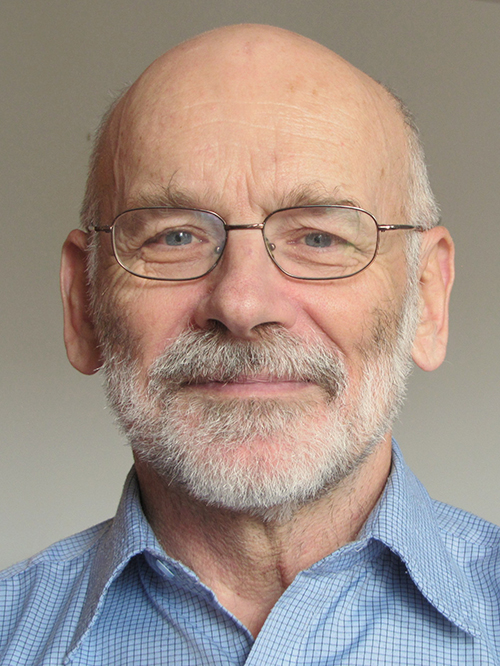 |
| Dr. Marek Dabrowski |
― How would you characterize Russia’s progress in terms of its socio-economic development during this transition from planned to market economy? What progress has Russia made? What obstacles remain to be overcome?
― Russia made great progress during its transition from centrally planned to market economy in the 1990s and early 2000s, in spite of all the policy zigzags and the societal pain that accompanied the transformation. However, since the mid-2000s, market-oriented reforms halted and even regressed in some areas (for example, the state increased its share of ownership in several important sectors, eg the oil industry and banking. This is well illustrated by the subsequent EBRD Transition Reports. In my opinion, Russia’s biggest obstacles to economic reform and economic development stem from the authoritarian tendencies in the political system.
― Would the Russian economy benefit from closer integration with the European Union?
― Obviously, yes — the EU is Russia’s biggest trade and investment partner and a key source of industrial technology and know-how. Various feasibility studies conducted in the last 10 years confirm that the Russian economy could greatly benefit from a deep and comprehensive free trade agreement with the EU, the same kind as those concluded/negotiated by the EU with the Republic of Korea, Ukraine, Canada, the US, and India. And the EU was ready to negotiate such an agreement with Russia on several occasions. This would open the door for a true free trade corridor from Lisbon to Vladivostok—something previously touted by the Russian government. Unfortunately, the latter wrongly chose geopolitical confrontation with the EU over its free trade agreements with Ukraine and other CIS countries, instead of following the same route.
― You have been a policy advisor in many countries that were once in the Soviet Union’s sphere of influence. Have you detected any patterns in the way they are developing now? Is the Soviet socialist legacy an important factor for all of them, or is each case different?
― In the early years of the transition (the 1990s), the post-Soviet institutional and mental legacy was an important obstacle to reforms in countries of the former USSR, with some noticeable exceptions (Estonia, Lithuania, and Latvia). Now it plays a less important role; there exist other kinds of anti-reform obstacles resulting from political authoritarianism, corruption, a deficit of rule of law, a lack of transparency, etc. Also, when one looks at countries of the former USSR, they are becoming increasingly heterogeneous in political, economic, and social terms.
― How significant are cultural differences in economic development?
― That depends on what we mean by cultural differences. If we speak about religious, historical, and societal backgrounds, they play a certain role in economic development, but I would not overestimate their importance. Too often they serve as a good excuse for politicians to avoid painful but necessary reforms that can make their countries economically successful.
Actually, among the countries that have succeeded economically in the last 30-50 years, there are ones representing different continents, ethnic compositions, histories, religions, and legal systems; they vary in size, etc. In my opinion, the quality of economic policy and economic, political, and legal institutions are the most important determinants, and—as empirical examples demonstrate—various nations can succeed (or fail) in this respect.
― How important are conferences like this one and the academic research projects going on at the HSE and other Russian universities in terms of sustaining the economic and social development of Russia and other FSU countries?
― The Annual HSE April Conference is probably the largest academic gathering of this type in Eastern Europe and provides an excellent platform for academic debate, professional contacts, and public education. The HSE belongs to the rather limited and elite group of academic centres in Russia and Eastern Europe that are able to teach modern economics and conduct research on an acceptable international level. This is a huge intellectual asset that should be protected and further developed.
Anna Chernyakhovskaya, specially for the HSE news service
See also:

Applications for Participation in XXVI April International Academic Conference Still Open
Applications can be submitted on the conference website until December 16, 2025. The programme has been developed around five research themes: Economics, Human Capital and Society, Instrumental Methods and Models, Foresight Research, and International Research. The heads of these areas have presented, in video format, the priority topics and sections for which they are expecting submissions.
Applications to Participate in April International Academic Conference Now Open
HSE University is now accepting proposals to present academic reports at the XXVI April International Academic Conference named after Evgeny Yasin. Applications can be submitted until December 16, 2025. The conference events will take place mainly on-site in Moscow from April 14 to 17, 2026.
24 Countries Represented at 25th Yasin International Academic Conference Held by HSE University
The Programme Committee of the 25th Yasin (April) International Academic Conference on Economic and Social Development has summed up the initial results. In 2025, 1,384 people from 24 countries and 29 Russian regions participated in the conference, with 335 of them delivering presentations.
Stuck in the Net: How Much Time Children Spend Online
On average, a schoolchild spends 48 hours a week on studies—equivalent to a six-day working week for an adult. This was highlighted by experts at the round table ‘Domains of Children’s Well-Being Evaluation for Human Potential and Evidence-Based Social Policy Development,’ held as part of the 25th Yasin (April) International Academic Conference.
Russian and Chinese Scholars Share Experience of Transformation of Doctoral Education
The Russian and Chinese postgraduate education systems originally borrowed their institutional frameworks from the Soviet Union. However, in the 21st century, they have evolved along different paths. While key performance indicators for postgraduate programmes in Russia are declining, China is seeing a rapid increase in the number of postgraduate students. These contrasting trajectories and the reforms undertaken in each country in recent decades were the focus of a roundtable discussion held as part of the 25th Yasin (April) International Academic Conference.
Nobel Laureate Proposes Solution to Markov Equilibrium Problem
In dynamic games, a Markov equilibrium involves strategies that guide players' behaviour based on the current state of the game, rather than its entire history. This approach is effective when players have access to complete information. But when uncertainty arises in the game—for instance, when players are unsure of who they are dealing with—this approach can become problematic. Eric Maskin, Nobel Laureate in Economics and Professor at Harvard University, addressed this issue in a paper presented at the XXV Yasin (April) International Academic Conference on Economic and Social Development held at HSE University from April 15 to 18, 2025.
‘The World Is Becoming More Complex and Less Predictable’: What Scientists Say about the Future
The future is now more difficult for researchers to forecast, and events that are hard to predict are playing an increasingly significant role. But there is good news too: scientists are confident that humanity will adapt to any changes. This was the focus of discussion at the International Symposium ‘Foresight in a Rapidly Changing World,’ which took place as part of the 25th Yasin (April) International Academic Conference.
Fragmentation and Bloc Formation: How the Global Economy is Changing
Sergey Dubinin, former head of the Bank of Russia and Professor of Finance and Credit at the Faculty of Economics at Moscow State University, has delivered an honorary address at the XXV Yasin (April) International Academic Conference. He spoke about the transformation of the global monetary and financial system, as well as the Russian economy.
More Children, More Happiness: HSE Experts Study Impact of Number of Children on Russians' Assessment of Happiness
Russians with children feel happier than those without children. At the same time, the number of children influences the assessment of happiness: the more children Russians have, the happier they feel. These conclusions were outlined inthe report ‘More Children, More Happiness: The Impact of the Number of Children on Russians’ Assessment of Happiness,’ presented at the XXV Yasin (April) International Academic Conference on Economic and Social Development, held on April 15–18 at HSE University. The study was conducted by Elena Churilova, Senior Research Fellow, and Dmitry Jdanov, Chief Research Fellowat HSE International Laboratory for Population and Health.
HSE Expands Cooperation with Gulf Countries
HSE University and the Centre for International Policy Research (Qatar) have agreed to collaborate in the field of social sciences, with plans for joint research, academic exchanges, and regular expert engagement. The agreement was signed during the roundtable ‘State Capacity and State Resilience in the Global South,’ held as part of the 25th Yasin (April) International Academic Conference at HSE University.