

First International Recipient of DSc Degree in Mathematics From HSE University
Edmond W.H. Lee, a full professor at the Department of Mathematics, Nova Southeastern University, USA, has recently defended his Doctor of Sciences (DSc) thesis at the Dissertation Council in Mathematics, HSE University. The DSc in Russia is a higher doctoral degree that can be earned after the PhD. Professor Lee’s defence was held over Zoom, with the candidate and his dissertation committee members participating remotely from 5 cities in Brazil, Israel, Russia, and the USA. Lee became the first international recipient of a DSc degree in Mathematics from HSE University.
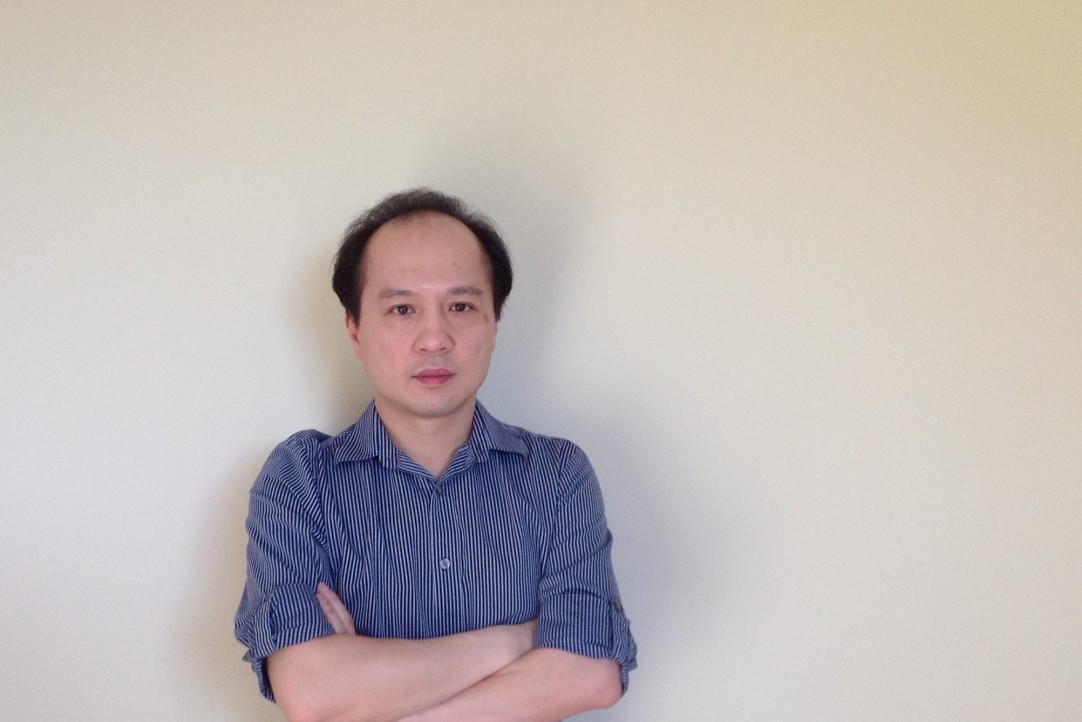
I first became interested in mathematics when I was around 9 years old. I think the initial interest was more about solving arithmetic problems than the subject matter. My interest in mathematics grew by the years as I learned more about different topics. By the time I applied to universities, I had decided to study mathematics.
Prior to earning the DSc degree from HSE University, Professor Lee received a bachelor’s degree from the University of Toronto, followed by master’s and PhD degrees from Simon Fraser University, Canada. The DSc thesis Professor Lee defended—titled ‘Contributions to the theory of varieties of semigroups’—is a collection of results from over 50 papers he published in the past 15 years.
My research interest is in the theory of varieties of semigroups, a topic that belongs to the intersection of semigroup theory and mathematical logic. Mikhail V. Volkov, a professor at Ural Federal University (UrFU), was the first Russian mathematician I communicated with. Our correspondence started back in 2002 when he was the external examiner of my PhD thesis (he was also the scientific consultant of my DSc thesis).
Professor Volkov and colleagues from his department are well known for their accomplishments in semigroup theory over the past few decades. Therefore, it was very natural for me to communicate or collaborate with not only Professor Volkov but also several colleagues from his department.
There is no question that Russians take mathematics very seriously and have made an immense contribution toward its research and education.
Since Russian mathematicians have significantly advanced semigroup theory over the past few decades, it would be a meaningful challenge and an honour for me to complete a DSc, the highest degree in Russia.
The idea to pursue a Russian DSc was conceived when I first read about it back in 2005. It was completely a personal goal; it was not a requirement for career advancement in North America because there was no equivalent degree. (At the time of my thesis defence, I was already a full professor at my university.)
It was difficult to find a dissertation council to defend my DSc thesis because several traditional regulations that were normal for a Russian citizen would be obstacles for me as a foreigner.
Once I found out that the new HSE dissertation councils welcomed DSc theses from foreigners, I submitted my application promptly. The rules and regulations for obtaining a DSc at HSE University were clearly stated. The whole process was very smooth. Leonid Rybnikov and Irina Milovidova, the council’s secretary and manager, helped and advised throughout. I was pleasantly surprised that I was able to defend my thesis about a year after I submitted my application.
Professor Lev Beklemishev
Academician of Russian Academy of Sciences; Deputy Director for Science at Steklov Mathematical Institute of RAS; Professor at the Joint Department with Steklov Mathematical Institute; Member of HSE Dissertation Council in Mathematics
In my opinion, the results of the thesis constitute a major contribution to the theory of semigroups and their varieties. They are on the level of the best results in this field and amply satisfy the requirements for the degree of Doctor of Mathematical Sciences awarded by National Research University Higher School of Economics (HSE University)
Since semigroup theory is not a research topic at HSE University, I did not previously follow their research. But after sending my application to HSE University and learning about its strong research group in mathematical logic, I have started paying attention to their work. Members of this research group can certainly understand my work on varieties of semigroups since the latter is a branch of mathematical logic. In fact, Professor Lev D. Beklemishev from this group was the chairperson of my dissertation subcommittee. In the future, if there is a collaboration between me and a mathematician from HSE University, then he will most likely be from the mathematical logic group.
Presently, Professor Volkov and I are working on a survey article on the finite basis problem for unary semigroups. I hope to visit both HSE and UrFU some day after the pandemic is over. I am sure more collaborations would be developed by then, if not earlier.

Sergei Lando, Professor of the HSE Faculty of Mathematics; Member of the HSE Academic Council; Chair of the HSE Dissertation Council in Mathematics
Professor Lee’s example is unusual due to the following reason. Professors from North American universities are rarely interested in getting a Russian DSc degree or one of its European equivalents (habilitation). The reason is that at these universities, a PhD degree in a certain area (and in mathematics, the Russian Candidate of Sciences (CSc) degree is its acknowledged equivalent) means overcoming a formal barrier, while in the future, one’s employment and career advancement are based on informal milestones. (Meanwhile, there are some exceptions to this rule. For example, the fee paid to a short-term visiting lecturer may depend on whether they have a doctoral degree and/or are a member of an academy.) So, Professor Lee’s desire to get a DSc degree, first of all, means that he wishes to reinforce his connections to Russian mathematics.
Professor Lee’s example is another confirmation that HSE University’s degree system and defence procedure are working.
I hope that in the future, particularly as HSE University’s reputation as an international mathematics centre grows, more international colleagues will be interested in earning a PhD or DSc degree from our Dissertation Council. We expect that those who collaborate with our professors and whose research interests are very close to ours will be most interested in it.
Like all other dissertation councils operating at HSE University, the mathematics council is in its initial stages. The opportunities we are getting with the right to assign our own degrees, without the approval of Russian Higher Attestation Committee (HAC), also imply an increased responsibility on the professional community. The procedure has considerably changed as compared to what is still implemented by most Russian councils according to the HAC rules.
The innovations include:
the opportunity to defend one’s thesis as a sum of published papers, without writing a separate monograph;
the opportunity to defend the thesis in English, without having to translate it into Russian;
the ability to defend the work before a specially gathered committee consisting of specialists on the topic of the thesis, rather than before a council with a small share of targeted professionals.
I believe that these new opportunities will improve the level of research in Russia and its global reputation, but it is still up to us to make society share our perspective.
Undoubtedly, we faced some challenges while organizing the defence, but they were no more than the usual complications characteristic of this year of quarantine: all the discussions by committee members, the defence procedure itself, and the Dissertation Council meetings were held online.
Leonid Rybnikov, Academic Secretary of the Dissertation Council, and manager Irina Milovidova learned how to handle the obstacles effectively, and all of the events went by quite smoothly. (Over a dozen defences have been held this year, and a few more are scheduled before the year ends.) I would also like to mention the support of our colleagues, including those from abroad, who have agreed to become part of the Dissertation Committee.
It’s difficult for me to talk about the level of the research results presented at the thesis defence: the research area is quite far from my own research interests. At the same time, I was thrilled to listen to Professor Lee’s talk, as well as the defence procedure. I hope I managed to understand something, and the results seem substantial to me. I rather rely on the opinions of experts: Lev Beklemishev, member of our dissertation council, RAS member and Professor at the HSE Faculty of Mathematics, who headed the Dissertation Council Commission, as well as other renowned experts – members of the Dissertation Council Subcommittee. Both the commission and the committee agreed that the thesis deserves the degree.
I believe that Professor Lee will now follow mathematics at HSE University and recommend our events, including schools and conferences, to his colleagues. I also hope that the university departments will quickly develop collaborative relationships with his Yekaterinburg colleagues and co-authors from the Krasovskii Institute of Mathematics and Mechanics. Collaborating with Russian colleagues is as important for us as developing international partnerships.

Lev D. Beklemishev
Professor, Joint department with the Steklov Institute of Mathematics (RAS)
Sergei Lando
Professor, Faculty of Mathematics
See also:

'Our Research Can Be Described as Being at the Forefront of Science'
The International Laboratory of Cluster Geometry at the HSE Faculty of Mathematics focuses on establishing a new scientific discipline that brings together knowledge from different areas of mathematics. The laboratory’s research has attracted considerable interest from both Russian and international colleagues. Its researchers study families of curves and develop methods that are used to investigate the physical microworld. The HSE News Service spoke with the laboratory’s head, Prof. Sergei Lando.
‘Seeing Red Square at Night and Sharing Time with Friends from Different Countries are Moments I Will Remember for a Long Time’
Sashadhar Dutta, from India, is a second-year PhD student at the Doctoral School of Economics at the HSE University–Moscow Faculty of Mathematics. He is currently working on his PhD thesis titled ‘On Some New Bounds Connected with Recurrent Sequences Modulo Prime’ under the academic supervision of Associate Professor Ilya Vyugin. Sashadhar spoke to the HSE News Service about why HSE deserves its good reputation, what he likes about Moscow, and how his time at HSE has changed his perceptions of both Russia and his own research.
Algebra, Geometry, and AI: Russian and Vietnamese Mathematicians Discuss Current Research
A delegation of scientists from Hanoi visited the HSE Faculty of Computer Science and then took part in a Russian-Vietnamese conference in St Petersburg. The events were part of the three-year project ‘Flexibility and Computational Methods.’ Over the course of the project, the researchers have prepared joint publications and obtained new mathematical results.
Four HSE Mathematics Graduates Win Russia’s Young Mathematicians Award
The winners of the Young Mathematicians of Russia Award were announced at the 6th Conference of Russia’s Mathematical Centres, held in Kazan in late August 2026. Four of the nine award recipients are graduates of the HSE Faculty of Mathematics: Associate Professor Alexander Kalmynin, PhD students Alexander Zaitsev and Petr Kucheryavyy, and researcher Dmitry Pirozhkov.
HSE Students Win Six Gold Medals at International Mathematics Competition for University Students
Students from the HSE Faculty of Computer Science (FCS) and Faculty of Mathematics have won six gold medals at the International Mathematics Competition for University Students (IMC). HSE students also received silver and bronze medals. One of the world’s most prestigious international university mathematics competitions, IMC 2026 was held in July–August this year in Blagoevgrad, Bulgaria.
‘AI Enables Researchers to Tackle More Complex and Important Problems’
In late July 2026, Dmitry Rybin, a graduate of the HSE Faculty of Mathematics who is now working in China, used ChatGPT to disprove a longstanding mathematical hypothesis. In an interview with the HSE News Service, he discussed AI's ability to make discoveries in mathematics, reflected on his time at HSE University, and spoke about his doctoral research at the Chinese University of Hong Kong.
‘The Conference Strengthened Our Sense of Belonging to the International Mathematics Community’
From July 13 to 17, 2026, the HSE Faculty of Mathematics hosted the international conference ‘Moduli, Dynamics, and Integrability,’ bringing together leading mathematicians from Russia, the United States, China, the United Kingdom, and other countries.
Fair Division: How Mathematics Helps to Divide the Indivisible
How can items be allocated among participants so that no one feels short-changed? Alexander Karpov, Assistant Professor at the Faculty of Economic Sciences, and his Singaporean colleague, Prof. Warut Suksompong, set out to find a mathematical answer to this question. In this interview, they discuss how a model of rational preferences is constructed, why one cannot rely on a simple sum of values, and where an algorithm that asks a minimal number of questions can be useful.
HSE Students Win Gold Medals at International Mathematics Olympiad in Turkmenistan
The VI Open Mathematical Olympiad for University Students (OMOUS-2026) was held in Ashgabat, bringing together teams from Russia, Germany, Greece, Hungary, the Netherlands, Turkmenistan, Tajikistan, Uzbekistan, Iran, and the UAE. Around 600 students took part in the competition.
'Sometimes, Finding Ways to Solve Problems Feels Like Trying to Cross Mountains without a Map'
Yulia Zaitseva became interested in mathematics in third grade, when her parents enrolled her in a math club, and she now holds a PhD. In this interview with the HSE Young Scientists project, she explains what an algebraic variety is, discusses operations beyond addition and multiplication, and shares her love for Kolomenskoye Park.