

‘In a Digital Environment, the Role of Human Teachers Only Becomes More Important’

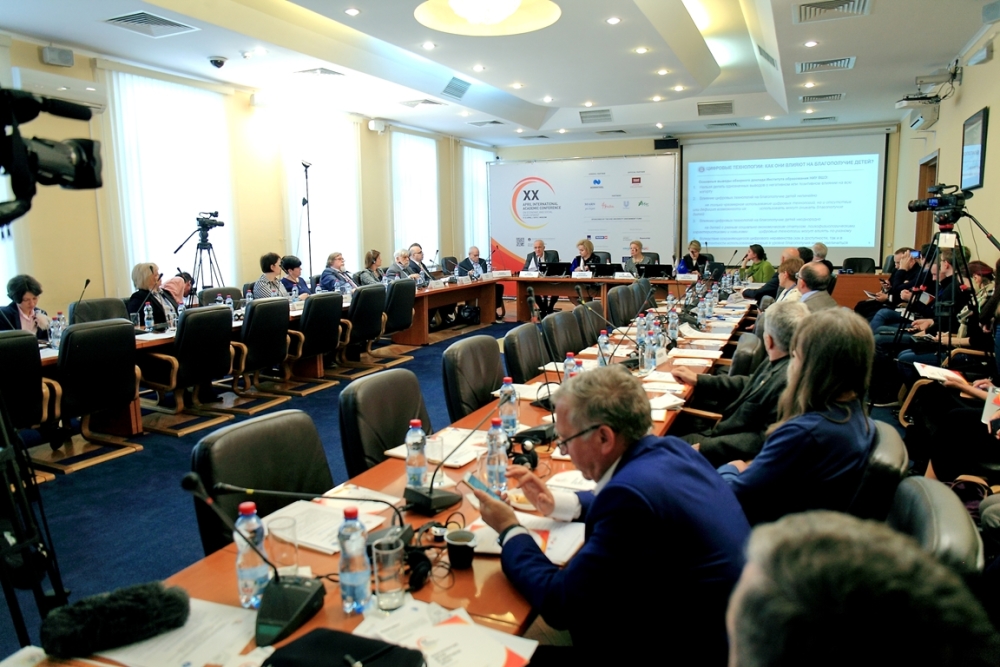

How does digital technology affect the behavior and health of schoolchildren? What opportunities does it proved teachers and school administrators? These and other issues were discussed by participants in the plenary session ‘Children’s Wellbeing in the Digital Age’ at the XX April International Scientific Conference of HSE.
Statistics Don’t Know Everything
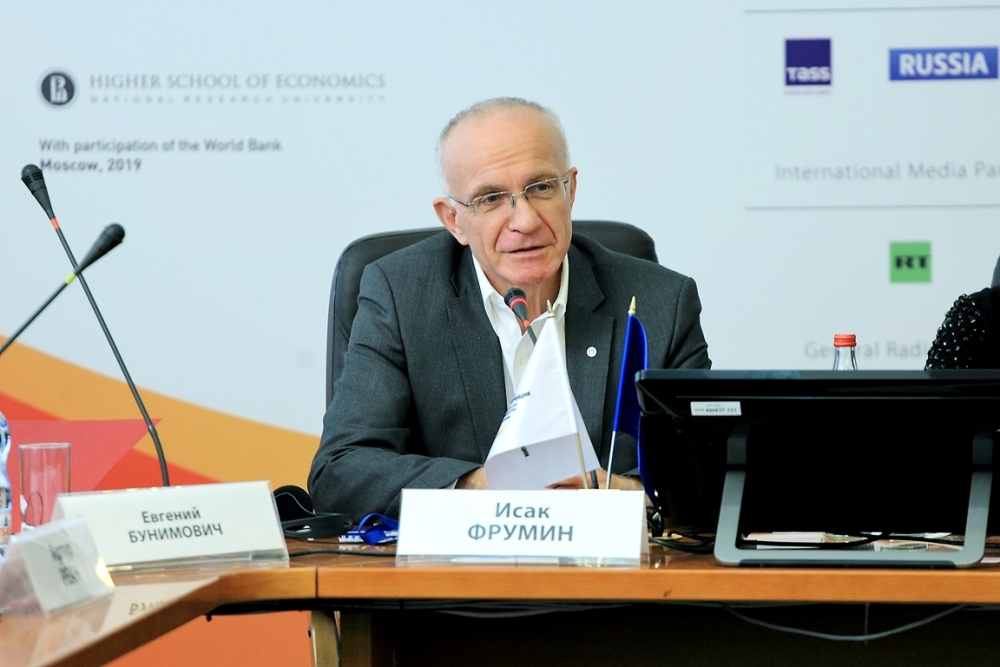
In opening the discussion, Isak Froumin, head of HSE’s Institute of Education, noted that wellbeing is not a very common topic of inquiry in Russian research. There is no established definition of the concept.
According to OECD researchers, wellbeing is an integral characteristic that combines:
mental and physical health
security
subjective life satisfaction
social inclusion
environmental quality
material wealth
accessibility of education and self-development
Statistics do not give a clear answer as to whether digital technology is detrimental to this or whether a cultural shift that is not yet very clear to us is occurring.
On the one hand, adolescents aged 14-17 spend an average of 5 hours per day in front of a screen and send about 470 messages per week.
On the other hand, 57% of adolescents make friends online, while the proportion of adolescents who use alcohol, nicotine and drugs has decreased by 50% since 2007.
(Pew Research Center and UK National Health Service)
The problem may not be with digital technology per se, but rather knowing how to use it
Leading researchers note that it is in this regard that the gap between countries and social groups is widening.
In Professor Froumin’s view, we tend to exaggerate the risks of technology. When the Laboratory for the Prevention of Asocial Behavior at HSE’s Institute of Education studied the prevalence of various forms of aggression, it found that about 30% of children face cyber-bullying. This is a big number. But the proportion of children who suffer from bullies in real life is much larger.
Digital Technology Will Make Education Accessible
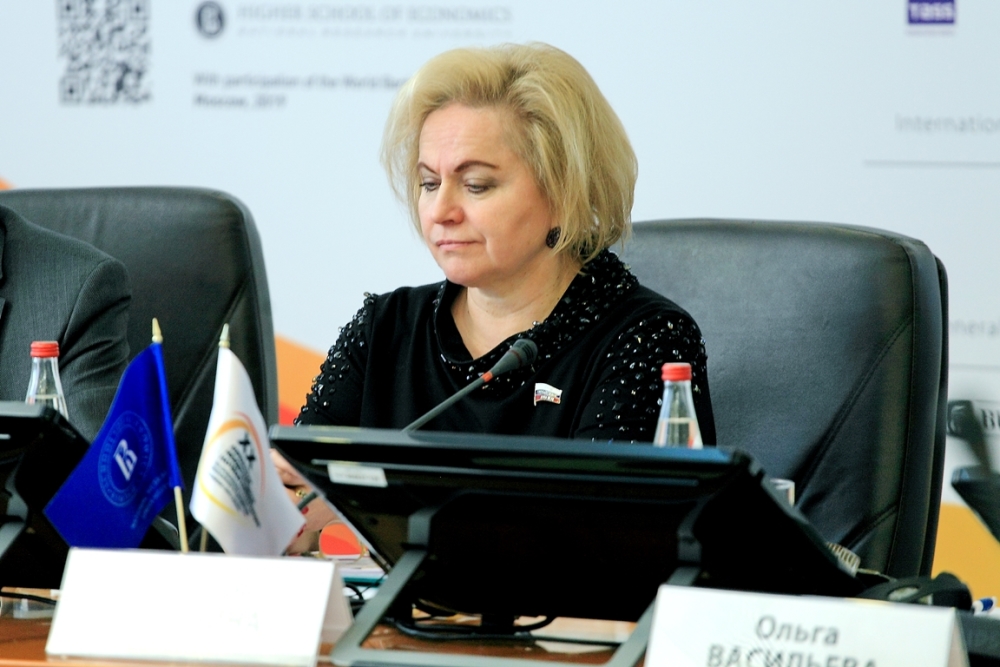
Studying the problem of wellbeing is impossible without basic research on the neurophysiology and psychology of children, believes Russian Minister of Education Olga Vasilyeva.
When it comes to using digital technology when working with children, the minister sees a tool that will help a maximum number of children and adolescents receive quality education.
At the same time, ‘No one is going to replace school with online courses, and teachers with robots and tablets,’ Minister Vasilyeva says.
Vasilyeva identified the main tasks that can be accomplished with digital technology. The first is transferring educational management to a model of decision-making based on big data.
A general database will be developed in order to store information about the education system, its structure, resources and participants
This database will allow us to retrieve information from regulatory and supervisory organs with one click—and teachers won’t have to do such a large amount of paperwork like they currently do.
The second task is creating personal online accounts for students and teachers. This will allow students to track their challenges and successes and receive targeted support and guidance, and it will allow teachers to track their professional growth. A no less significant opportunity that the digital platform will provide is the ability to choose high-quality educational content, which is especially important for rural schools and children living in remote areas.
Schoolchildren Don’t Want to Give Up Their Teachers
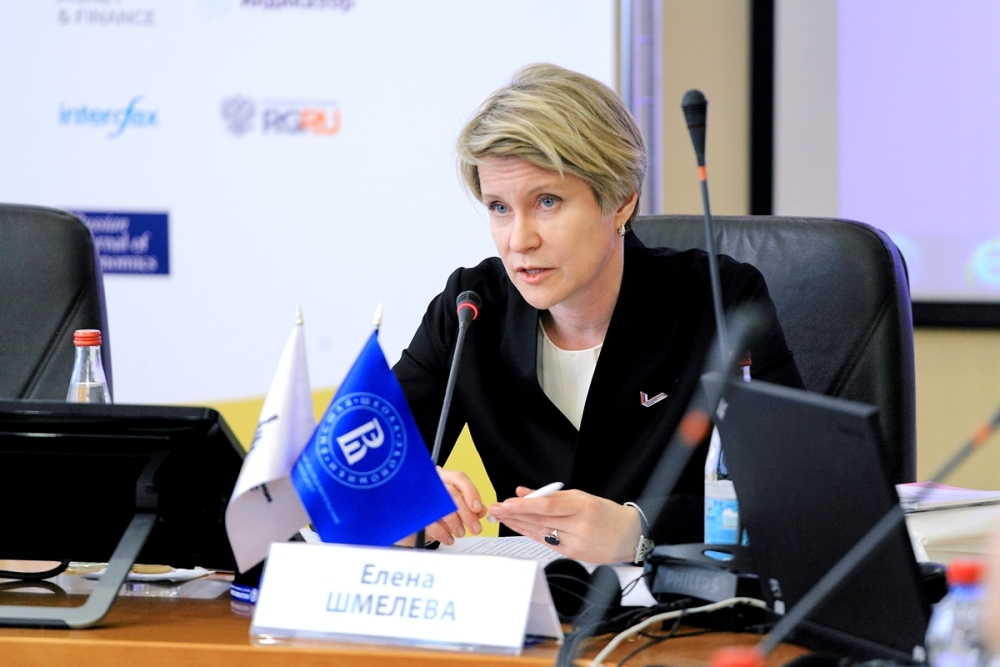
Elena Shmeleva, head of the Foundation ‘Talent and Success’, noted that it is not just the targeted implementation of digital technology that is necessary; it is also necessary to create a new digital environment that includes both children and adults. She proposes a different type of relationship. ‘In a digital environment, the role of a real person, the teacher, only becomes more important,” she says.
The schoolchildren themselves don’t want to give up their teachers in the classroom. Lyubov Dukhanina, deputy chairman of the State Duma Committee on Education and Science, cites data from a survey of students: half of them would like to actively use information technology in the classroom, but almost as many want to receive information from a teacher.
20% of students say that computers should not be used at all lessons
The data of Russian physicians show that ‘school-related diseases’ (conditions related to the musculoskeletal system, vision, and digestion) have been increasing in recent years. Fewer and fewer children leave school completely healthy—a mere 12% do. It is necessary to further investigate the extent to which internet usage and computer games affect this.
See also:

Applications for Participation in XXVI April International Academic Conference Still Open
Applications can be submitted on the conference website until December 16, 2025. The programme has been developed around five research themes: Economics, Human Capital and Society, Instrumental Methods and Models, Foresight Research, and International Research. The heads of these areas have presented, in video format, the priority topics and sections for which they are expecting submissions.
Applications to Participate in April International Academic Conference Now Open
HSE University is now accepting proposals to present academic reports at the XXVI April International Academic Conference named after Evgeny Yasin. Applications can be submitted until December 16, 2025. The conference events will take place mainly on-site in Moscow from April 14 to 17, 2026.
24 Countries Represented at 25th Yasin International Academic Conference Held by HSE University
The Programme Committee of the 25th Yasin (April) International Academic Conference on Economic and Social Development has summed up the initial results. In 2025, 1,384 people from 24 countries and 29 Russian regions participated in the conference, with 335 of them delivering presentations.
Stuck in the Net: How Much Time Children Spend Online
On average, a schoolchild spends 48 hours a week on studies—equivalent to a six-day working week for an adult. This was highlighted by experts at the round table ‘Domains of Children’s Well-Being Evaluation for Human Potential and Evidence-Based Social Policy Development,’ held as part of the 25th Yasin (April) International Academic Conference.
Russian and Chinese Scholars Share Experience of Transformation of Doctoral Education
The Russian and Chinese postgraduate education systems originally borrowed their institutional frameworks from the Soviet Union. However, in the 21st century, they have evolved along different paths. While key performance indicators for postgraduate programmes in Russia are declining, China is seeing a rapid increase in the number of postgraduate students. These contrasting trajectories and the reforms undertaken in each country in recent decades were the focus of a roundtable discussion held as part of the 25th Yasin (April) International Academic Conference.
Nobel Laureate Proposes Solution to Markov Equilibrium Problem
In dynamic games, a Markov equilibrium involves strategies that guide players' behaviour based on the current state of the game, rather than its entire history. This approach is effective when players have access to complete information. But when uncertainty arises in the game—for instance, when players are unsure of who they are dealing with—this approach can become problematic. Eric Maskin, Nobel Laureate in Economics and Professor at Harvard University, addressed this issue in a paper presented at the XXV Yasin (April) International Academic Conference on Economic and Social Development held at HSE University from April 15 to 18, 2025.
‘The World Is Becoming More Complex and Less Predictable’: What Scientists Say about the Future
The future is now more difficult for researchers to forecast, and events that are hard to predict are playing an increasingly significant role. But there is good news too: scientists are confident that humanity will adapt to any changes. This was the focus of discussion at the International Symposium ‘Foresight in a Rapidly Changing World,’ which took place as part of the 25th Yasin (April) International Academic Conference.
Fragmentation and Bloc Formation: How the Global Economy is Changing
Sergey Dubinin, former head of the Bank of Russia and Professor of Finance and Credit at the Faculty of Economics at Moscow State University, has delivered an honorary address at the XXV Yasin (April) International Academic Conference. He spoke about the transformation of the global monetary and financial system, as well as the Russian economy.
More Children, More Happiness: HSE Experts Study Impact of Number of Children on Russians' Assessment of Happiness
Russians with children feel happier than those without children. At the same time, the number of children influences the assessment of happiness: the more children Russians have, the happier they feel. These conclusions were outlined inthe report ‘More Children, More Happiness: The Impact of the Number of Children on Russians’ Assessment of Happiness,’ presented at the XXV Yasin (April) International Academic Conference on Economic and Social Development, held on April 15–18 at HSE University. The study was conducted by Elena Churilova, Senior Research Fellow, and Dmitry Jdanov, Chief Research Fellowat HSE International Laboratory for Population and Health.
HSE Expands Cooperation with Gulf Countries
HSE University and the Centre for International Policy Research (Qatar) have agreed to collaborate in the field of social sciences, with plans for joint research, academic exchanges, and regular expert engagement. The agreement was signed during the roundtable ‘State Capacity and State Resilience in the Global South,’ held as part of the 25th Yasin (April) International Academic Conference at HSE University.