

World Bank Forecasts a Rise in Poverty
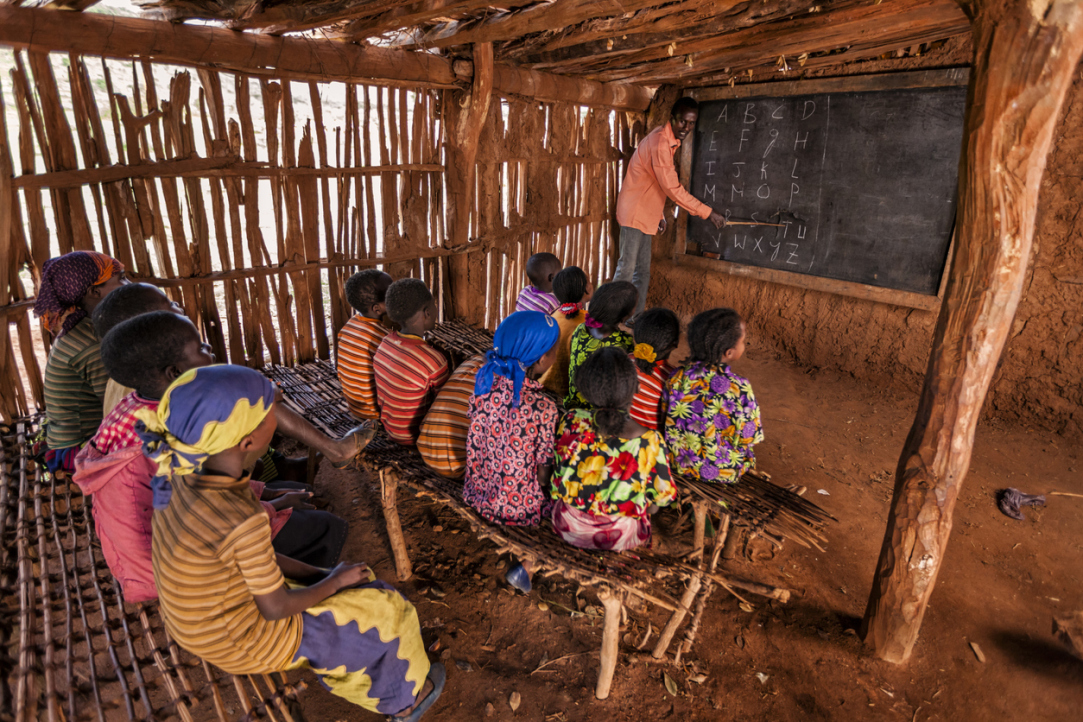
General wealth levels in Eastern Europe and Central Asia have been improving since 2012 — poverty has been decreasing. But due to COVID, global poverty levels, including those of these regions, may increase considerably for the first time in two decades. Samuel Freije-Rodriguez, Lead Economist at World Bank, talked about this at the XXII April Conference organized by HSE University and Sberbank.
In economic terms, poverty refers to the inability to satisfy the basic needs, to sustain a standard of living that is considered acceptable in society. Financial difficulties also impact the individual’s communications, self-perception, and attitudes, Samuel Freije-Rodriguez says. His talk was based on a recent World Bank report, ‘Poverty and Shared Prosperity’.
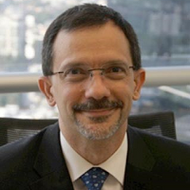
Samuel Freije-Rodriguez
The borderline between poverty and wealth may differ in different societies: what is considered almost poverty in rich countries can look like a decent standard of living in poor ones.
In order to measure and compare the levels of poverty in different countries, it is necessary to develop indicators that correctly reflect the population’s standards of living. Such calculations often use a fixed amount, which is updated once every few years, such as 1.24 or 1.9 dollars a day in 2008 and 2015, but it is universal for all the countries, even though their standards of living are very different. In some cases, threshold values can be used for groups of countries — low-income, lower than average, higher than average, and high-income. But within groups, there are serious differences.
One of the possible solutions is to link the poverty threshold to the average level of consumption in the country
For example, the World Bank uses the ‘Societal Poverty Line’, which is 1.9 dollars a day for poorest countries and half of the median consumption plus one dollar for countries where this figure is higher than 1.9 dollars a day. This way an individual poverty line can be calculated for each country, while the universal formula allows comparing different countries.
‘There is a national poverty line in Russia, the definition of which changes now and then,’ noted Alexandr Surinov, HSE Director for Statistical Studies and Professor at the Faculty of Economic Sciences, after Samuel Freije-Rodriguez’s presentation. ‘We have to understand that the poverty line is a certain standard of consumption, which is eventually changing upwards. The reason is that the needs are changing and growing. That’s why we should re-visit the lines, but not by introducing brand new methods. This would harm ongoing monitoring studies,’ the Prof. Surinov said.
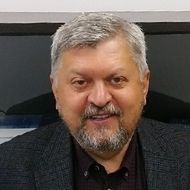
Alexandr Surinov
This indicator is also not ideal: it takes into account only the financial side of wealth. Economists suggest expanding it by indicators of education and medical accessibility, as well as basic infrastructure, such as water supply, wastewater disposal, and electricity, and as a result, they will get a multidimensional evaluation of poverty.
One more method that is used by economists to assess living standards is to compare changes in income of a country’s poorest citizens. This indicator — shared wealth — is taken from the income growth rates of 40% of a country’s poorest residents and the growth rate of their share in the income of all citizens. It helps assess, on the one hand, the growth in wealth of the poorest citizens, and on the other hand, the decrease of inequality in the country. There is a similar indicator — the Palma Ratio (named after its creator, Jose Gabriel Palma) — which is calculated as a ratio of the sum of incomes of 10% of a country’s richest residents and 40% of its poorest. For most countries, the ratio is from one to three, and only for countries with extremely high inequality does it exceed four.
In Eastern Europe and Central Asia, the level of poverty measured at a threshold of 1.9 dollars per day, has not risen over 10% of the region’s population, though it approached this borderline in 1998 and 1999. In the 2000s, it sharply decreased, and since 2008, the decrease has slowed down.
The Social Poverty Line similarly changed, but in absolute terms, the Eastern European and Central Asian countries appeared to be much closer to the rich countries, with almost no difference from the latter by the late 2010s. In all multidimensional indicators, particularly education accessibility and electricity, this region outperforms all others, including East Asia, South Asia, Latin America, Middle East, North Africa, and Sub-Saharan Africa, with the exception of a group of wealthy countries.
In Russia, the share of people with no access to education is particularly low — 0.2% of the population, which is lower than in Germany, Great Britain, and Norway
The level of extreme poverty has been decreasing globally since the early 1990s, by an average of 55 million people annually, except for 1997-1998, when Asia was struck by financial crisis. According to the report authors, due to COVID, poverty levels may increase considerably for the first time in 20 years. According to the forecast, 31 million people were projected to be lifted out of poverty in 2020, but today, economists expect the global poverty level to increase by 120 million people. The highest increases are expected in South Asia, East Asia, and Sub-Saharan Africa.
In Eastern Europe and Central Asia, 5.1 million people were extremely impoverished, and by 2021, according to economists’ forecasts, this number was supposed to fall to 4.3. The new forecast, however, estimates their number at 5.0-5.3 million. Almost all countries in the region are expecting rising levels of poverty, and this indicator will not return to pre-crisis levels by 2022 or 2023.
The XXII April International Academic Conference on Economics and Social Development will be held from April 13 to 30, 2021. For the first time, the conference is co-organized by HSE University and Sberbank. The programme includes a series of academic and expert discussions that will be held as part of the HSE-Sberbank Discussion Club – an expert platform that brings together academics, business representatives, and public officials to discuss critical economic and social challenges and share best practices in the sphere of business and institutional development, thereby laying out a path to the future.
Shared wealth trends have maintained a positive trajectory in almost all countries of Eastern Europe and Central Asia since 2012, and some of the region’s economies, such as Romania, Estonia, and Latvia, have been among the global leaders by this indicator. The World Bank representatives note that in countries with positive shared wealth dynamics, the level of poverty is lower than in the others. By Palma Ration, Eastern European and Central Asian countries are in the upper half of the list, which means that inequality is less acute there than in the world on average. The exceptions in the region are Turkey, Montenegro, and Russia.
‘It is hard to measure poverty, and the 2020 World Bank report is one of the many attempts to do it. Such methods are good for countries that do not have their own national metrics, and they are needed for international comparison,’ said Alexandr Surinov. ‘That’s why the suggested Social Poverty Line is interesting. We are going to work with it, to see how acceptable it is for Russia, and whether it can be used for regional estimations.’ According to Prof. Surinov, the World Bank’s forecast on global poverty expansion is also interesting, particularly since sustainable development goals pay a lot of attention at poverty elimination. ‘It is interesting to analyse poverty and the pandemic as a modern challenge that has put all of humanity in a difficult situation,’ Alexandr Surinov said.
See also:

Applications for Participation in XXVI April International Academic Conference Still Open
Applications can be submitted on the conference website until December 16, 2025. The programme has been developed around five research themes: Economics, Human Capital and Society, Instrumental Methods and Models, Foresight Research, and International Research. The heads of these areas have presented, in video format, the priority topics and sections for which they are expecting submissions.
Applications to Participate in April International Academic Conference Now Open
HSE University is now accepting proposals to present academic reports at the XXVI April International Academic Conference named after Evgeny Yasin. Applications can be submitted until December 16, 2025. The conference events will take place mainly on-site in Moscow from April 14 to 17, 2026.
Early-Career Researchers Discuss Cooperation between Russia and Arab States
HSE University has hosted a conference entitled ‘Russia—The Arab World: Digital Future and Youth Cooperation,’ organised by the Faculty of World Economy and International Affairs (WEIA). The meeting took place in the run-up to the first Russian–Arab summit, due to be held in Moscow on October 15, 2025.
24 Countries Represented at 25th Yasin International Academic Conference Held by HSE University
The Programme Committee of the 25th Yasin (April) International Academic Conference on Economic and Social Development has summed up the initial results. In 2025, 1,384 people from 24 countries and 29 Russian regions participated in the conference, with 335 of them delivering presentations.
Stuck in the Net: How Much Time Children Spend Online
On average, a schoolchild spends 48 hours a week on studies—equivalent to a six-day working week for an adult. This was highlighted by experts at the round table ‘Domains of Children’s Well-Being Evaluation for Human Potential and Evidence-Based Social Policy Development,’ held as part of the 25th Yasin (April) International Academic Conference.
Russian and Chinese Scholars Share Experience of Transformation of Doctoral Education
The Russian and Chinese postgraduate education systems originally borrowed their institutional frameworks from the Soviet Union. However, in the 21st century, they have evolved along different paths. While key performance indicators for postgraduate programmes in Russia are declining, China is seeing a rapid increase in the number of postgraduate students. These contrasting trajectories and the reforms undertaken in each country in recent decades were the focus of a roundtable discussion held as part of the 25th Yasin (April) International Academic Conference.
Nobel Laureate Proposes Solution to Markov Equilibrium Problem
In dynamic games, a Markov equilibrium involves strategies that guide players' behaviour based on the current state of the game, rather than its entire history. This approach is effective when players have access to complete information. But when uncertainty arises in the game—for instance, when players are unsure of who they are dealing with—this approach can become problematic. Eric Maskin, Nobel Laureate in Economics and Professor at Harvard University, addressed this issue in a paper presented at the XXV Yasin (April) International Academic Conference on Economic and Social Development held at HSE University from April 15 to 18, 2025.
‘The World Is Becoming More Complex and Less Predictable’: What Scientists Say about the Future
The future is now more difficult for researchers to forecast, and events that are hard to predict are playing an increasingly significant role. But there is good news too: scientists are confident that humanity will adapt to any changes. This was the focus of discussion at the International Symposium ‘Foresight in a Rapidly Changing World,’ which took place as part of the 25th Yasin (April) International Academic Conference.
Fragmentation and Bloc Formation: How the Global Economy is Changing
Sergey Dubinin, former head of the Bank of Russia and Professor of Finance and Credit at the Faculty of Economics at Moscow State University, has delivered an honorary address at the XXV Yasin (April) International Academic Conference. He spoke about the transformation of the global monetary and financial system, as well as the Russian economy.
More Children, More Happiness: HSE Experts Study Impact of Number of Children on Russians' Assessment of Happiness
Russians with children feel happier than those without children. At the same time, the number of children influences the assessment of happiness: the more children Russians have, the happier they feel. These conclusions were outlined inthe report ‘More Children, More Happiness: The Impact of the Number of Children on Russians’ Assessment of Happiness,’ presented at the XXV Yasin (April) International Academic Conference on Economic and Social Development, held on April 15–18 at HSE University. The study was conducted by Elena Churilova, Senior Research Fellow, and Dmitry Jdanov, Chief Research Fellowat HSE International Laboratory for Population and Health.