

Human Capital, Innovation, and Fintech: What the Future Holds for Eurasian Integration
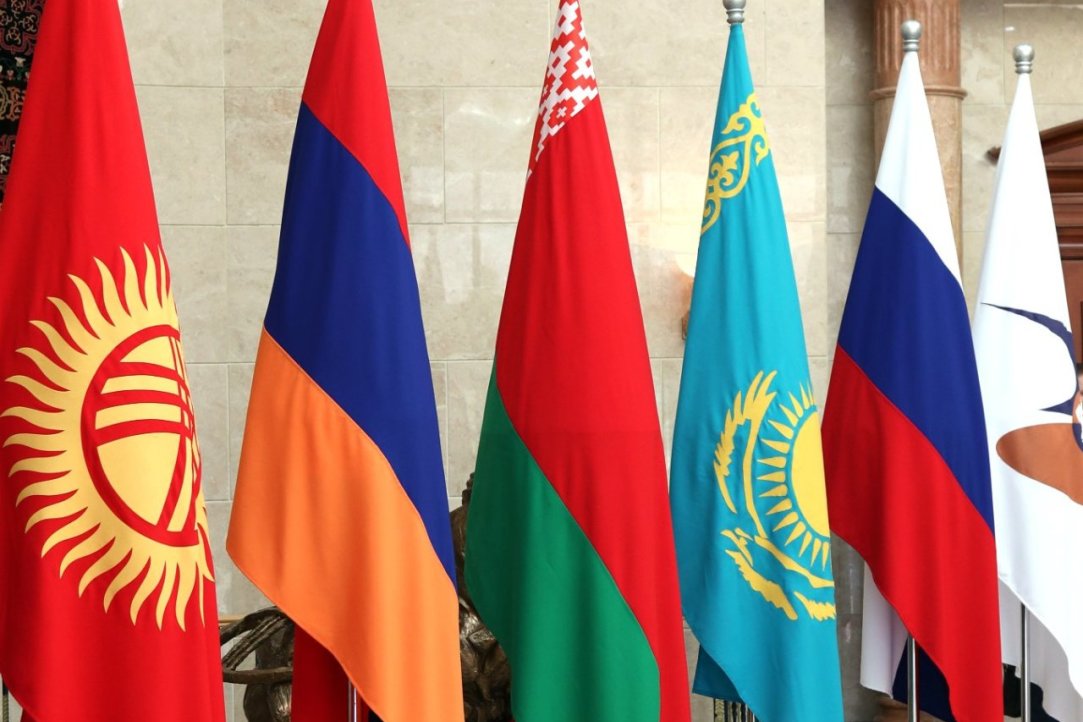
To what extent do the countries of the Eurasian Economic Union (EAEU) benefit from an open economy? What financial, scientific, and educational policy tools will contribute to the implementation of the recently approved ‘Strategic Directions for the Development of Eurasian Economic integration until 2025’? These questions were discussed by participants in a series of expert discussions at the XXII April International Academic Conference on Economic and Social Development organised by HSE University and Sberbank.
A Barrier-Free Environment within EAEU
At the end of last year, the ‘Strategic Directions for Developing Eurasian Economic Integration until 2025’ were approved. The document includes about 330 measures, the implementation of which will ensure the accelerated development of national economies through the growth of investment and innovation activity.
The dynamics and prospects of Eurasian economic integration were correlated with the goals and objectives of the document at a special round table, ‘Strategy for EAEU Development until 2025: Drivers and Breakthrough Tools’, moderated by Tatyana Meshkova and Vladimir Izotov of the Institute for Statistical Studies and Economics of Knowledge (ISSEK).
Gohar Barseghyan, Director of the Eurasian Economic Commission’s Integration Development Department, presented the central report at the round table. She highlighted new areas of strengthened cooperation in education, science, health, tourism, and sports. ‘These are promising facets of enhanced integration that aim to develop human potential as a major factor of sustainable and balanced economic growth,’ she said.
The digital tools being implemented in the EAEU provide the five member states with opportunities to build a supranational ecosystem that supports the realisation of four freedoms — barrier-free movement of labour, goods, services, and capital, said Tigran Sargsyan, Deputy Chairman of the Board of the Eurasian Development Bank (EDB) in an honorary lecture entitled ‘The role of supranational and international institutions in the digital transformation of Eurasian countries’.
Open Banking
Tools for the digitisation of common markets were the focus for participants of the round table, ‘Modern Digital Technologies in the Financial Sector: Global Trends and Prospects for Implementation in the EAEU Countries’.
Yury Dranev, Head of Quantitative Modelling Unit at ISSEK, commented on the possibilities of digital currency implementation and its positive effects for EAEU countries.
Fintech start-ups have demonstrated significant flexibility compared to traditional banking during the pandemic, making them a key factor in the post-crisis recovery, said Konstantin Vishnevskiy, Director of ISSEK’s Digital Economics Research Centre.
ISSEK researchers Anastasia Nazarenko and Sofya Privorotskaya spoke about the fastest-growing areas of fintech, which are significantly transforming the work of financial institutions in the Eurasian space. Yaroslav Kabakov, Director of Strategy at FINAM Investment Company, believes that human involvement in routine operations in the banking sector will soon be reduced to a minimum as robot advisers, digital assistants and other solutions based on AI and blockchain will facilitate this.
Nikita Lomov, who recently earned his Master’s in Governance of Science, Technology and Innovation at ISSEK and now heads the analytical department of the Fintech Association, discussed the possibilities of introducing the largescale use of open banking concept in the EAEU countries (by combining solutions based on open universal APIs). He noted the activity of regulators in Belarus and Kazakhstan in implementing this concept.
General Contours of a Common Science and Technology Policy
Approaches to building a system of effective management and the financing of joint research and innovation projects were considered by the participants of the round table, ‘Prospects of Implementing Cooperative Projects in the Field of Science and Technology to Build a Eurasian Innovation Area’, which included employees of relevant ministries of EAEU member states, Eurasian Economic Commission (EEC) development institutions, and universities.
The main sources of funding for collaborative projects are the Eurasian Development Bank and the Eurasian Fund for Stabilisation and Development, noted Zhaslan Azenov, Deputy Director of the EEC Industrial Policy Department. These also include resources of the Astana International Financial Centre, national government programmes, and funds from non-governmental investors.
Alexander Sokolov, Director of the International Research and Educational Foresight Centre and Deputy Director of ISSEK, proposed to develop a forecast of the EAEU's scientific and technological development up to 2040. Evgeniy Kutsenko, Director of the 'Russian Cluster Observatory' Centre at ISSEK, drew attention to the tools of smart specialisation and cluster policy as a resource for interregional cooperation and integration development.
Representatives of the HSE University campuses in Moscow and St. Petersburg and the University of Central Asia shared their successful experiences of already implemented projects in science and technology. The participants emphasised the role of universities and research centres as the main initiators of research and innovation projects with a potential for replication in the EAEU, and they also presented recommendations on enhancing the effectiveness of horizontal cooperation between universities and research centres of the Union states.
HSE University provides analytical support for integration processes within the EAEU on a wide range of topics, from digital transformation to identifying priorities for scientific and technological development; it also implements a number of joint educational programmes with the EEC. Areas of cooperation with the EEC are defined in two-year cooperation programmes. The next one (up to 2022) was signed at an event at the XXII April conference. Overall coordination of HSE University’s involvement in the Eurasian integration area is provided by the Competence Centre for Cooperation with International Organizations, ISSEK of HSE University.
The XXII April International Academic Conference on Economics and Social Development will be held from April 13 to 30, 2021. For the first time, the conference is co-organized by HSE University and Sberbank. The programme includes a series of academic and expert discussions that will be held as part of the HSE-Sberbank Discussion Club – an expert platform that brings together academics, business representatives, and public officials to discuss critical economic and social challenges and share best practices in the sphere of business and institutional development, thereby laying out a path to the future.
See also:

Applications for Participation in XXVI April International Academic Conference Still Open
Applications can be submitted on the conference website until December 16, 2025. The programme has been developed around five research themes: Economics, Human Capital and Society, Instrumental Methods and Models, Foresight Research, and International Research. The heads of these areas have presented, in video format, the priority topics and sections for which they are expecting submissions.
Applications to Participate in April International Academic Conference Now Open
HSE University is now accepting proposals to present academic reports at the XXVI April International Academic Conference named after Evgeny Yasin. Applications can be submitted until December 16, 2025. The conference events will take place mainly on-site in Moscow from April 14 to 17, 2026.
24 Countries Represented at 25th Yasin International Academic Conference Held by HSE University
The Programme Committee of the 25th Yasin (April) International Academic Conference on Economic and Social Development has summed up the initial results. In 2025, 1,384 people from 24 countries and 29 Russian regions participated in the conference, with 335 of them delivering presentations.
Stuck in the Net: How Much Time Children Spend Online
On average, a schoolchild spends 48 hours a week on studies—equivalent to a six-day working week for an adult. This was highlighted by experts at the round table ‘Domains of Children’s Well-Being Evaluation for Human Potential and Evidence-Based Social Policy Development,’ held as part of the 25th Yasin (April) International Academic Conference.
Russian and Chinese Scholars Share Experience of Transformation of Doctoral Education
The Russian and Chinese postgraduate education systems originally borrowed their institutional frameworks from the Soviet Union. However, in the 21st century, they have evolved along different paths. While key performance indicators for postgraduate programmes in Russia are declining, China is seeing a rapid increase in the number of postgraduate students. These contrasting trajectories and the reforms undertaken in each country in recent decades were the focus of a roundtable discussion held as part of the 25th Yasin (April) International Academic Conference.
Nobel Laureate Proposes Solution to Markov Equilibrium Problem
In dynamic games, a Markov equilibrium involves strategies that guide players' behaviour based on the current state of the game, rather than its entire history. This approach is effective when players have access to complete information. But when uncertainty arises in the game—for instance, when players are unsure of who they are dealing with—this approach can become problematic. Eric Maskin, Nobel Laureate in Economics and Professor at Harvard University, addressed this issue in a paper presented at the XXV Yasin (April) International Academic Conference on Economic and Social Development held at HSE University from April 15 to 18, 2025.
‘The World Is Becoming More Complex and Less Predictable’: What Scientists Say about the Future
The future is now more difficult for researchers to forecast, and events that are hard to predict are playing an increasingly significant role. But there is good news too: scientists are confident that humanity will adapt to any changes. This was the focus of discussion at the International Symposium ‘Foresight in a Rapidly Changing World,’ which took place as part of the 25th Yasin (April) International Academic Conference.
Fragmentation and Bloc Formation: How the Global Economy is Changing
Sergey Dubinin, former head of the Bank of Russia and Professor of Finance and Credit at the Faculty of Economics at Moscow State University, has delivered an honorary address at the XXV Yasin (April) International Academic Conference. He spoke about the transformation of the global monetary and financial system, as well as the Russian economy.
More Children, More Happiness: HSE Experts Study Impact of Number of Children on Russians' Assessment of Happiness
Russians with children feel happier than those without children. At the same time, the number of children influences the assessment of happiness: the more children Russians have, the happier they feel. These conclusions were outlined inthe report ‘More Children, More Happiness: The Impact of the Number of Children on Russians’ Assessment of Happiness,’ presented at the XXV Yasin (April) International Academic Conference on Economic and Social Development, held on April 15–18 at HSE University. The study was conducted by Elena Churilova, Senior Research Fellow, and Dmitry Jdanov, Chief Research Fellowat HSE International Laboratory for Population and Health.
HSE Expands Cooperation with Gulf Countries
HSE University and the Centre for International Policy Research (Qatar) have agreed to collaborate in the field of social sciences, with plans for joint research, academic exchanges, and regular expert engagement. The agreement was signed during the roundtable ‘State Capacity and State Resilience in the Global South,’ held as part of the 25th Yasin (April) International Academic Conference at HSE University.