

HSE Urban Specialists Create New Profession
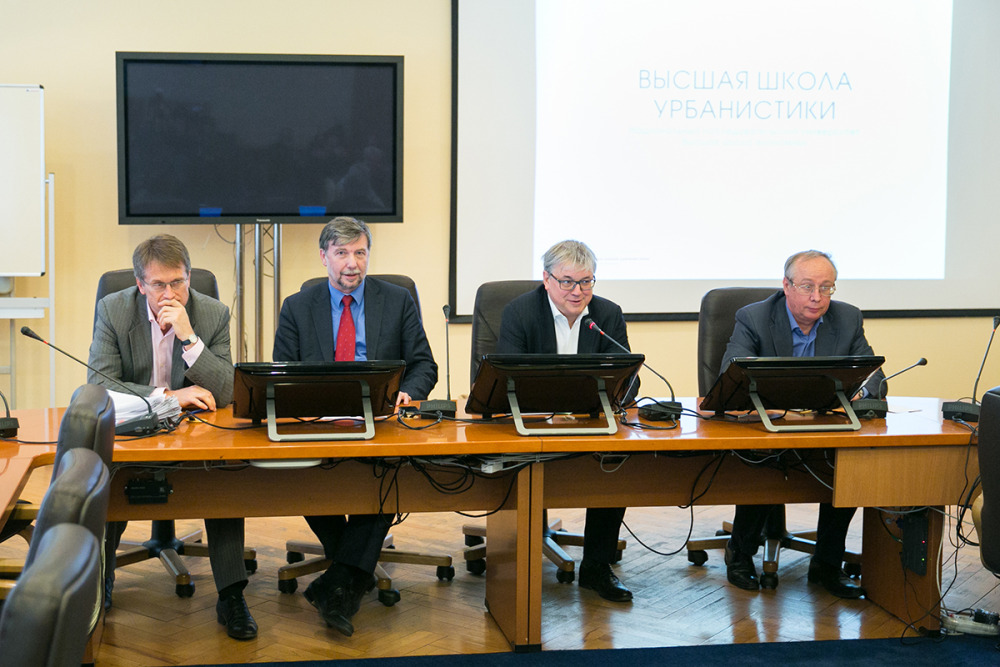
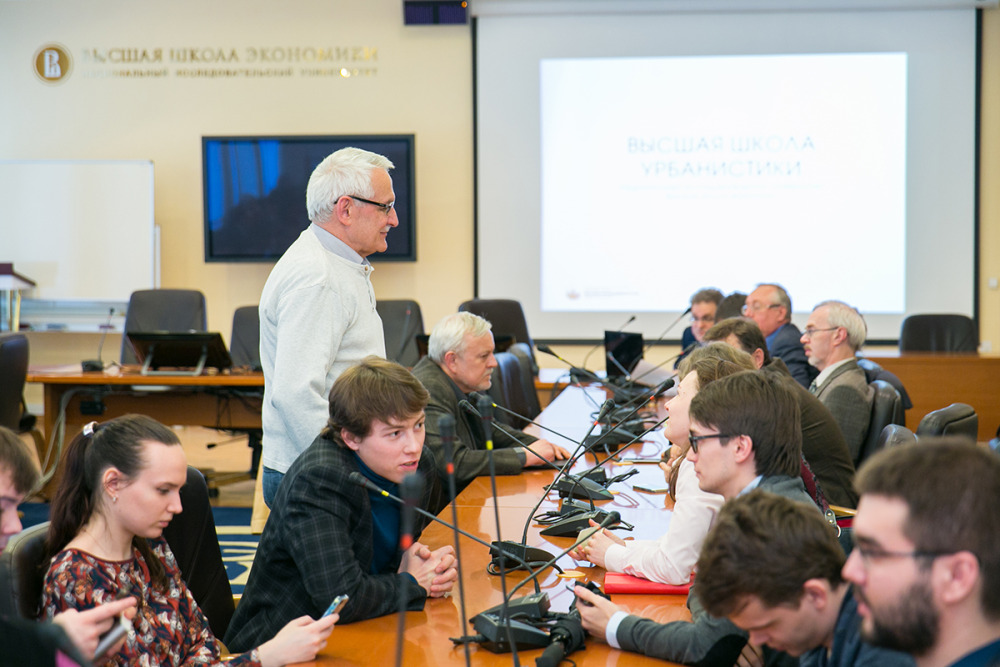


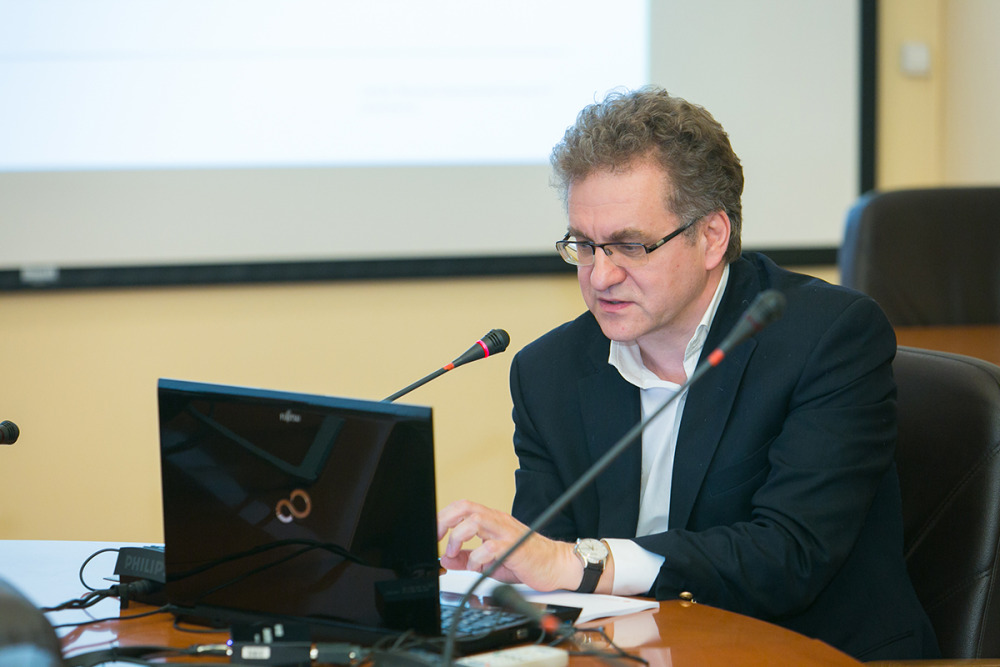

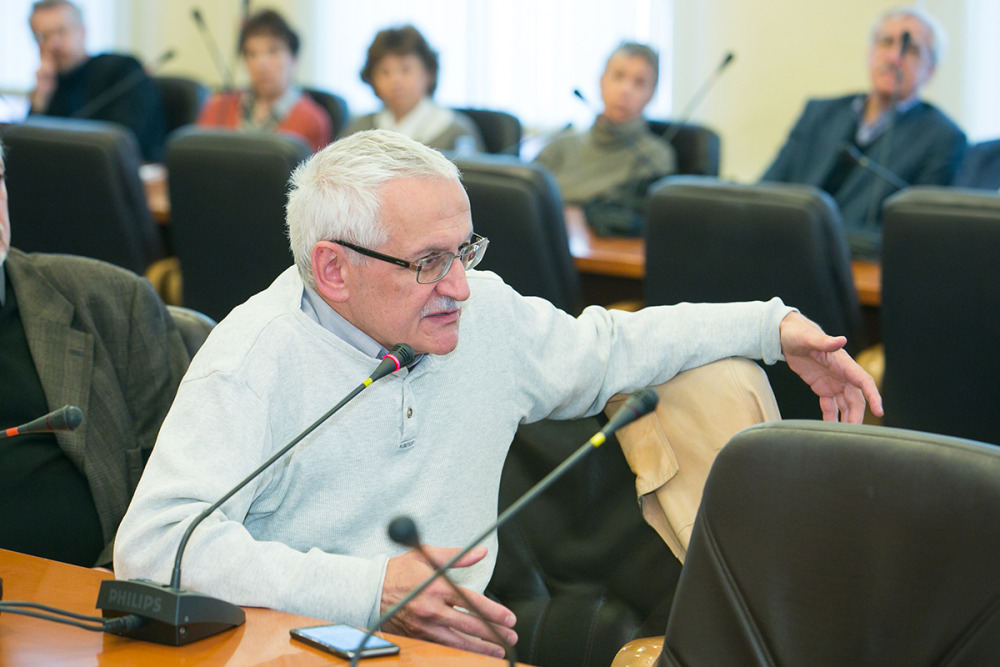

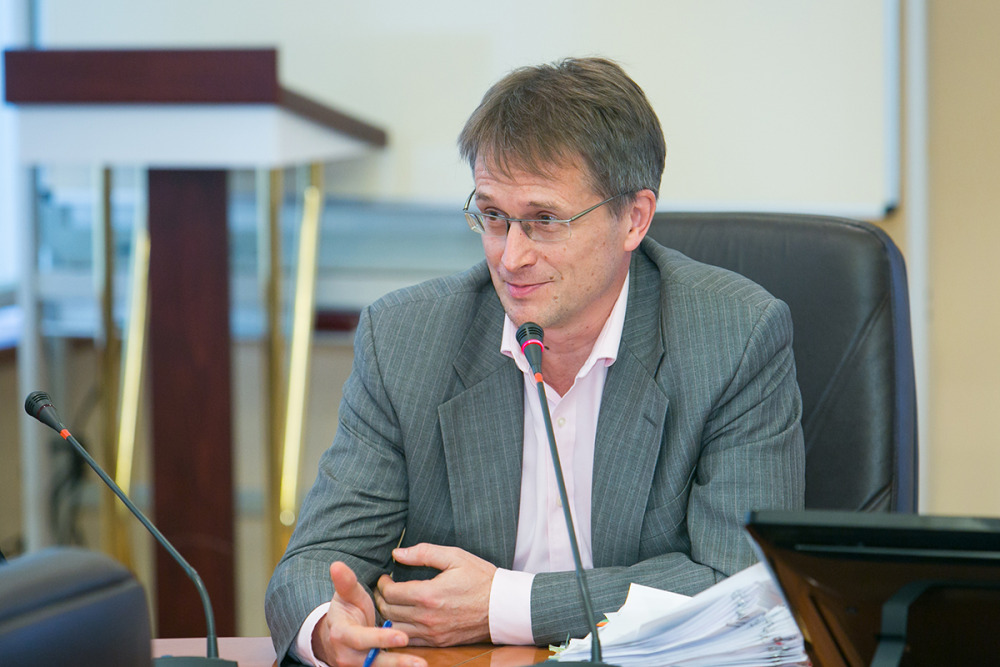
Staff and students of HSE Vysokovsky Graduate School of Urbanism discussed the prospects for the development of Urban Studies at HSE and in Russia at a meeting with the university’s senior management.
Why does HSE need Urban Studies?
Rector Yaroslav Kuzminov said that HSE has developed to become what is in the English-speaking world seen as a ‘comprehensive university’. The HSE has been expanding its remit beyond economics, to engineering, physics, and life sciences. The university was created on the initiative of a group of academics, and its growth continues to be generated by academics’ initiatives, the Rector stressed. That is what happened with Urban Studies specialists, who are to establish their own academic discipline, while also engaging with society, implementing applied projects and interacting with colleagues from other faculties. This collaboration is not limited to joint research. The rector suggested that the staff of the Graduate School of Urbanism consider holding a Road Show at HSE, that would enable students and teachers from other schools and faculties to learn about the opportunities for working with Urban Studies specialists.
Will Urban Studies become its own profession?
In creating the HSE Graduate School of Urban Studies, founder and first dean Alexander Vysokovsky sought to reflect the fact that urban research and development can no longer be limited to traditional disciplines such as architecture and urban development. ‘Essentially, we’re talking about the creation of a new profession,’ the current Dean Alexei Novikov said. ‘One that represents a synthesis of classical urban development with a wide variety of different subject areas: urban economics, urban sociology, work with spontaneous data generated by the urban environment, among others.’ However, lists of contemporary Russian professions and specialisms do not include urban studies. No professional or educational standards for urban studies have been developed to date. Much of the discussion focused on how this can best be corrected.
Back in the late 1980s, there was the Union of Soviet Urban Studies Specialists, noted director of the Institute for Transport Economics and Transport Policy Studies at HSE Mikhail Blinkin. But it ceased to exist in 1991, and urban studies specialists were again lumped in with architects. ‘That is how we came to have the situation we see today, where there is not seen as being any distinction between urban studies specialists, urban development specialists and architects.’
This issue should not be exaggerated, but nor should it be underestimated, Academic Supervisor of the School Nadezhda Kosareva, noted. ‘This debate is not only being had within the education system, but also in decision-making circles’ she said. ‘The battle to have a role in city management is raging at all levels.’ In order to win official recognition, urban studies specialists must institutionalize themselves, for example by setting up an association, and by developing their own standards, as well as by presenting the academic results of their work, Yaroslav Kuzminov said.
What has already been achieved?
In the five years of its existence, Graduate School of Urbanism has achieved significant successes in education and research, Alexei Novikov said. In 2016, along with the now-traditional MA programme 'Urban Development and Spatial Planning', the School has launched a joint programme with Strelka Institute in Advanced Urban Design, which combines a research-based approach typically seen in university education with a project-media-based segment of the type Strelka is known for. There are a number of different research groups and laboratories operating under the Graduate School of Urbanism including a Laboratory of Urban Field Research with a Сentre for the Analysis of Spatial Data, and a Laboratory of Advocacy Planning. The School hopes that this laboratory will help the idea of planning advocacy (professional representation for the interests of different groups in the urban planning process) develop into an institution.
Under the auspices of the former chief-architect of Barcelona, Vicente Guallart, an international Laboratory for Experimental Urban Design has been set up, with the hope that it will become a ‘magnet’ for Russian and international students and researchers. Guallart also plans to set up a ‘fab lab’ and observation programme covering the city and technology rooted in the principle of ‘learning by doing’.
In 2016, the School launched a new journal ‘Urban Studies and Practices’. The Graduate School of Urbanism will continue to develop its broader educational projects: public lectures on Wednesdays in the Dostoyevsky Library, a school for prospective students, and presentations delivered as part of architecture and urban studies biennales (this year to be held in Rotterdam and Venice).
The Graduate School of Urbanism is one of the youngest sections at the university, not only by the date on which it was founded but also judging by the average age of its staff – the majority of whom are under 30.
Vicente Guallart
Nadezhda Kosareva
Alexei Novikov
See also:

Researchers at HSE University Identify the Most Walkable Areas in Moscow
Experts at HSE University and Lomonosov Moscow State University examined the available data on Moscow's walkability and found the central and south-western parts of the city to be more walkable than others. However, the eastern and south-eastern areas are in need of improvements to make them more pedestrian-friendly. The study has been published in Cities.
HSE University Urban Planners Take Part in Global Mayors’ Forum in Guangzhou, China
A team from HSE University's Faculty of Urban and Regional Development took part in the Global Mayor’s Forum—a global event in urban development. Held in December 2023 in Guangzhou (PRC), the largest congress of urban planners brought together more than 800 guests from 65 cities and 37 countries, as well as nine international organisations.
Card File: Travel Diary
Optimising a city's transportation system requires insights into the dynamics of urban traffic to understand where, how, when, and to what extent people travel within the city. The rationale behind route selection and the choice of transportation mode are also of importance. The primary source of this data is the travel diary, a tool designed to survey people's transport behaviour. Based on a paper by Maria Sergienko, a master's student of the HSE Faculty of Urban and Regional Development, IQ.HSE examines how people's daily travel can be described in detail and why an automated diary cannot yet completely replace its manual counterpart.
‘Seeing Moscow Ranked First among the Cities of BRICS Countries Is Pleasant, but Not Surprising’
An international consortium of research organisations from China, India, and Russia, including HSE University’s Faculty of Urban and Regional Development represented by experts from the Vysokovsky Graduate School of Urban Studies and Planning and the Centre for Social Research and Technological Innovation (CITY), is developing an index of technological and spatial urban development (the Urban & Innovation Environment Index). Recently, a list of the top 10 largest cities of the BRICS countries was published on the project’s website. The Russian capital took the first place in the ranking, followed by Beijing, Shanghai, Sao Paulo, and Guangzhou.
Summer University 2023: ‘A Good Introduction to Urban Studies’
At the start of August, HSE University held the tenth annual Summer University. This year’s programme took the form of a workshop on urban studies. The participants attended four courses from HSE University faculty and invited experts and worked on their own projects to develop a cultural heritage site. Jung Woo Lee, from South Korea, shares his impressions of the Summer University.
‘The Virtual City Is Joining the Real One at the Forefront’
HSE University has launched enrolment in a new online Master’s programme in Digital Urban Analytics. In this interview, the programme’s Academic Supervisor Ekaterina Zarudnaya and its Scientific Supervisor Kirill Puzanov speak about the processes and tasks generated by the online city, the demand for urban analysts, and the specifics of studying in the programme.
A City in Your Mind: HSE Urbanists on Perceptions of Place and Imagined Neighbourhoods
Associate Professor Kirill Puzanov of the HSE Vysokovsky Graduate School of Urbanism and HSE University Professor Oleg Baevskiy have held lectures at the Red Square Book festival. They talked about perceptions of the city, its private and public aspects, chamber and representative spaces, and imaginary (or ‘vernacular’) areas. The open lectures took place as part of the HSE University Open to the City project.
Two Worlds of Residents: Car Owners Look at Shared Urban Courtyards Differently from Pedestrians
Researchers from HSE University and St. Petersburg State University of Architecture and Civil Engineering (SPSUACE) used eye tracking to study how residents who own cars and those who don’t look at the shared courtyards of multistorey apartment buildings. The study was published in Urban Forestry & Urban Greening.
Back to the Future: Is Manufacturing Returning to Cities?
Are cities set to become industrial centres again? Are migrants integrating in Russia? How are city dwellers taking advantage of micro-mobility? Experts from the HSE Faculty of Urban and Regional Development (FURD) took part in Moscow Urban Forum. This year the topic of the Forum was ‘Superstar Cities: Transforming for Success’.
‘It Takes a Team to Develop a City’
What is urban planning? What is the ‘stranger effect’ and why do we need a multidisciplinary approach in education? School Head and Associate Professor Kirill Puzanov spoke with the News Service about what students learn and how in the Vysokovsky Graduate School of Urbanism, which celebrates its 10th anniversary this year.